Full Article
about Pasarón de la Vera
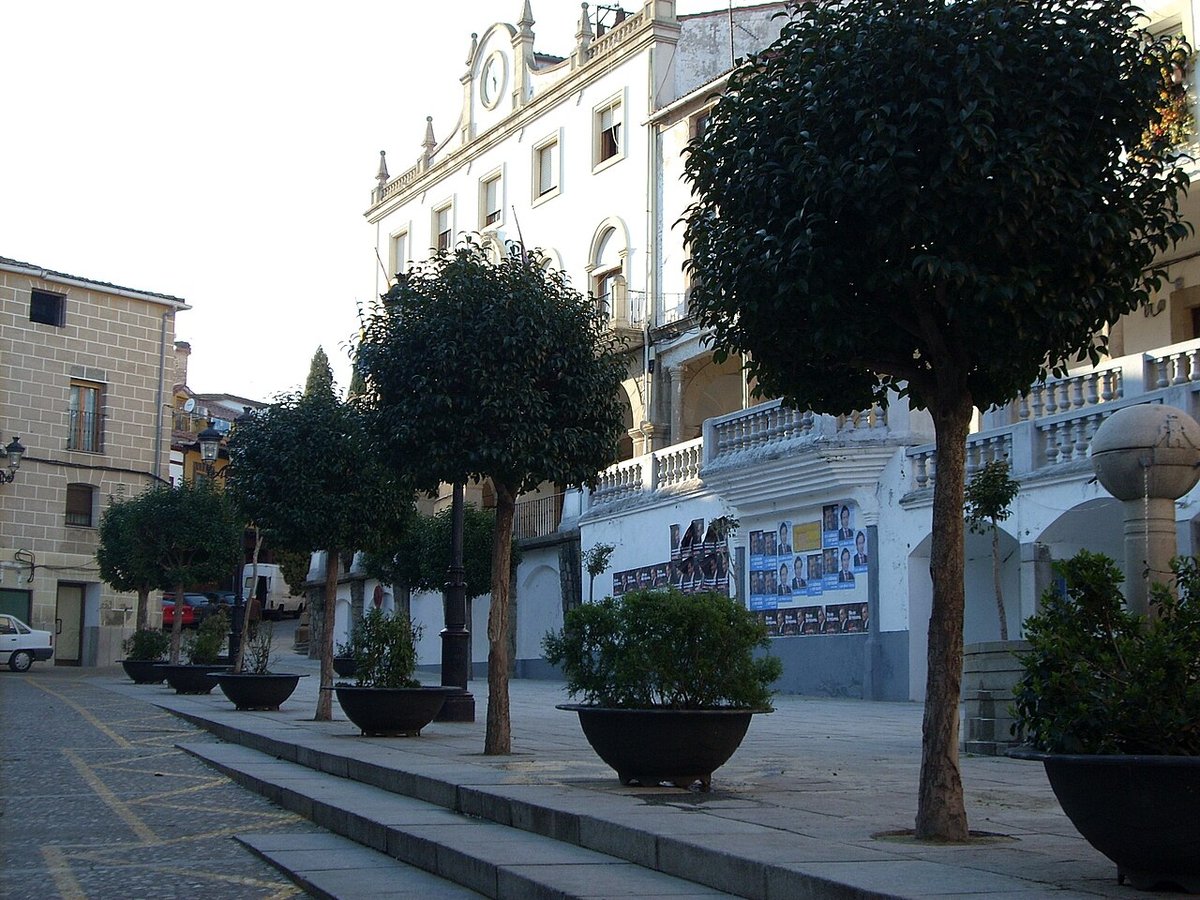
Declared a historic site, this noble town features a Renaissance palace and museum.
Ocultar artículo Leer artículo completo
The Village That Smells Like Sunday Barbecue at Dawn
By seven o’clock the air in Pasaron already carries a faint whiff of oak smoke. It isn’t chimneys or campfires; it’s the pimentón mills on the edge of the village grinding last year’s peppers into the brick-red dust that colours every local stew. The scent drifts uphill, slips between wooden balconies and settles on the cobbles outside the 16th-century church of San Sebastián, a useful reminder that you are 250 km from the nearest sea breeze and very definitely on the southern flank of the Gredos mountains.
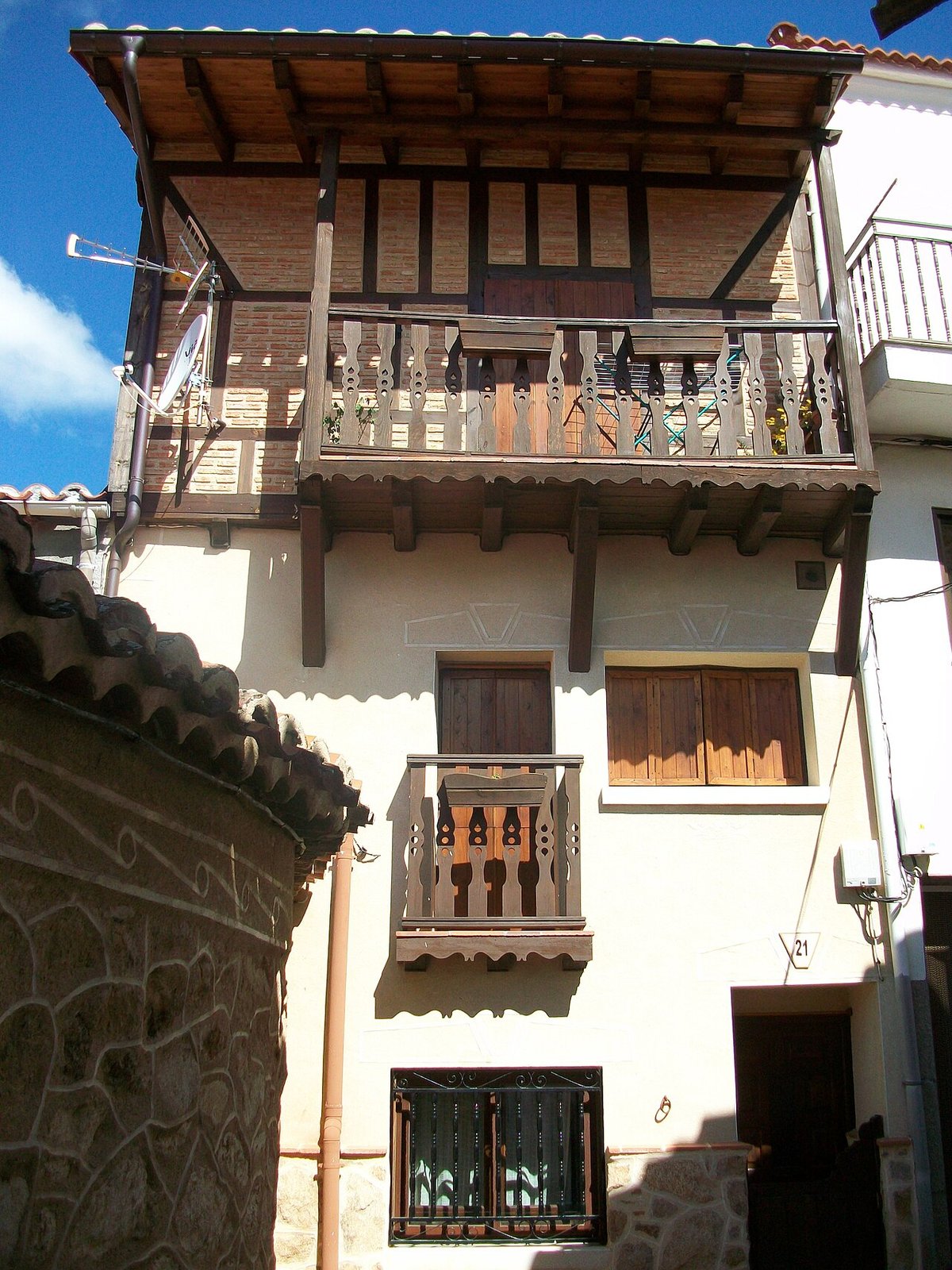
Five hundred-odd people live here, give or take the grandchildren who arrive for August and leave before the school run. Their houses—whitewashed adobe below, dark timber above—cling to a slope that drops 120 m in little more than a kilometre. What the gradient lacks in wheelchair-friendliness it repays in views: chestnut woods above, the flat heat-shimmer of the Alagón valley below, and, on clear April mornings, the snow stripe of the Almanzor summit 40 km away.
Cobbles, Chestnuts and the Occasional Cherry
The village is small enough to map in half an hour, large enough to keep you guessing. One minute you’re on a lane barely wider than a supermarket trolley; the next it widens into a tiny plaza where the only bench faces an 18th-century stone cross and a fig tree growing out of a wall. Turn left and the street dives towards the arroyo; turn right and you’re climbing past azoteas (roof terraces) where washing flaps beside satellite dishes. There are no souvenir shops, no multilingual menus, no guided groups wearing name badges. The nearest thing to a gift outlet is the cherry stall in June: a card table, a set of scales and a hand-written note—“1 kg 3 €, help yourself, leave money in jar”—that would last five minutes in any British city.
Chestnut trees dominate the surrounding hills, their leaves turning the colour of burnt sugar by late October. Locals still collect the nuts, roast them in perforated drums outside the bar, and serve them with tiny glasses of pacharán. If you arrive after heavy rain the forest paths smell of wet moss and pepper; if you come in late spring the same tracks are edged with wild peonies and the sound of cuckoos that shouldn’t, strictly speaking, be this far south.
How to Arrive Without Cursing the Sat-Nav
Madrid-Barajas to Pasaron is 198 km on the motorway, then 38 km of mountain road that the Spanish call carretera comarcal and the British call “are you sure this is tarmac?” Leave the A-5 at Navalmoral de la Vera, fill the tank—petrol stations thin out afterwards—and follow the EX-203 via Jarandilla. The final 12 km wriggle through sweet-chestnut forest, dropping suddenly into the Vera gorge. First-time drivers usually meet a local pick-up halfway round a blind bend; the etiquette is to stop, smile, reverse uphill. Mobile coverage dies two kilometres before the village; download offline maps while you still have 4G.
There is no bus on Sundays and only one on weekdays, departing Plasencia at 14:30 and returning at 06:00 next morning—fine for insomniacs, useless for everyone else. Without wheels you are hostage to the one taxi driver in Jarandilla, who charges €35 and switches his phone off during siesta.
What You’ll Eat and What You Won’t Find
Breakfast is toast rubbed with tomato, a glug of olive oil and a dusting of pimentón dulce that tastes like smoky Walkers crisps. Lunch might be judías del Barco, white beans the size of marbles stewed with pork tail and clove; dinner could be a chuletón for two, a rib of beef the thickness of a Penguin Classic, served rare unless you specify “muy hecho”—in which case the chef will regard you with the suspicion reserved for people who put milk in tea.
Vegetarians survive on migas (fried breadcrumbs with grapes) and torta del Casar, a runny sheep’s cheese that costs €18 a wheel but justifies the expense by making ordinary cream cheese taste like Polyfilla. Vegans should self-cater: the nearest health-food aisle is 70 km away in Cáceres. Gluten-free bread is still regarded as a form of sorcery; Coeliacs pack their own loaf or eat a lot of potato.
Supper service stops at 22:30 sharp. After that the only calories available come from the bar opposite the church, which stays open until the last villager leaves—usually around midnight, occasionally 01:00 if the mayor’s nephew is in town. Bring cash; the card machine broke in 2019 and no one has rushed to replace it.
Walking Off the Paprika
Three way-marked trails start from the upper edge of the village. The shortest (4 km, 90 min) loops through chestnut woods to the Charco de la Nutria, a granite pool deep enough for a swim when the arroyo isn’t carrying winter rain. The longest (11 km, 4 h) climbs to the abandoned village of Risco at 1,100 m, then contours along an old drove road used until the 1950s for moving pigs to the dehesa. Stone walls still stand, but roofs have collapsed under the weight of fig roots; the only sound is bee-eaters arguing overhead.
Paths are stony, way-marking sporadic. A painted horseshoe on a boulder may indicate the route—or may be the leftover of someone’s DIY fencing. Boots with ankle support save sprained knees; poles help on the 25 % gradients. In August, start before 08:00; by 11:00 the thermometer kisses 36 °C and shade is theoretical.
When to Come and When to Stay Away
April–mid-June delivers 22 °C afternoons, night-time lows of 10 °C, cherry trees in bridal white and the arroyos still gushing with snowmelt. Mid-September–October brings 25 °C days, golden chestnut foliage and the pig-slaughter scent of woodsmoke. Both seasons suit hikers, photographers and anyone who thinks Spain is unbearably hot.
August is party time: the Virgen de la Asunción fills the streets with brass bands, paella cooked in a tractor trailer and temporary bars selling plastic cups of tinto de verano for €1.50. It is also 38 °C by 15:00, the pool is jammed with teenagers blasting reggaetón, and every spare room is booked by second-cousins from Madrid. If you crave silence, pick another month.
January belongs to San Sebastián: processions, drums, villagers in fur-trimmed capes, and an outside temperature that hovers at 2 °C. The stone houses have no central heating; guestrooms rely on plug-in radiators that sound like pocket battleships. Lovely if you enjoy authenticity and own thermal underwear; miserable if you don’t.
Where to Sleep (All Twelve Rooms)
Accommodation totals one hotel, two rural cottages and a loft above the bakery that the owner rents out when she remembers to renew the licence. La Casa de Pasarón has six rooms overlooking the cherry orchard, a tiny infinity pool that appears in half of Instagram’s Spanish countryside posts, and rates from €95 B&B. Book six weeks ahead for April blossom or October colour; mid-week discounts appear in February when the only guests are bird-ringers and the odd travel writer hiding from deadlines.
The cottages sleep four, cost €120 a night and include a basket of firewood, two bottles of local wine and a note asking you not to feed the semi-wild cat. Mobile signal reaches the kitchen table if you stand on the left leg of the dining chair and don’t breathe.
The Bottom Line
Pasaron will not change your life. It has no Michelin stars, no craft breweries, no souvenir selfie frames. What it offers is a scale model of old Extremadura: smoked paprika in the air, chestnut woods you can reach in five minutes, and a bar where the television is switched off when the swifts start their evening circuit. Come for the silence, the pimentón and the realisation that Spain still has places where the loudest noise at 22:00 is a donkey complaining about the dark. Just remember to fill the car, download the map and bring cash—because no one here owes you a thing, and that, frankly, is the point.