Full Article
about Pueblonuevo de Miramontes
A young municipality split from Talayuela; farming community in the Tiétar valley.
Hide article Read full article
A Place You Don’t Plan For
Some places are chosen in advance, for a castle, a famous square or a photo seen countless times. Others simply appear along the way. Tourism in Pueblonuevo de Miramontes works more like the latter. You might be heading somewhere else in La Vera, take a small detour, stop the car for a moment, and end up staying longer than expected.
Life here remains closely tied to the land. It shows in the vegetable plots, in the paths that lead out of the village and in the steady, unhurried pace of the streets. There are no major monuments or grand stories, but there is a strong sense of a lived-in place, one that exists for its residents rather than being arranged for visitors.
With around 760 inhabitants and sitting just over 280 metres above sea level, the village is easy to explore on foot. You can walk through it in a short time. The interest lies in the details: the smell of damp earth at dusk, the cultivated plots surrounding the village and the importance of pimentón, the smoked paprika that defines much of La Vera.
The landscape shifts noticeably with the seasons. In summer, the ground becomes dry and dusty. In autumn and spring, everything turns a deep green, typical of this part of northern Extremadura.
Walking Through the Village
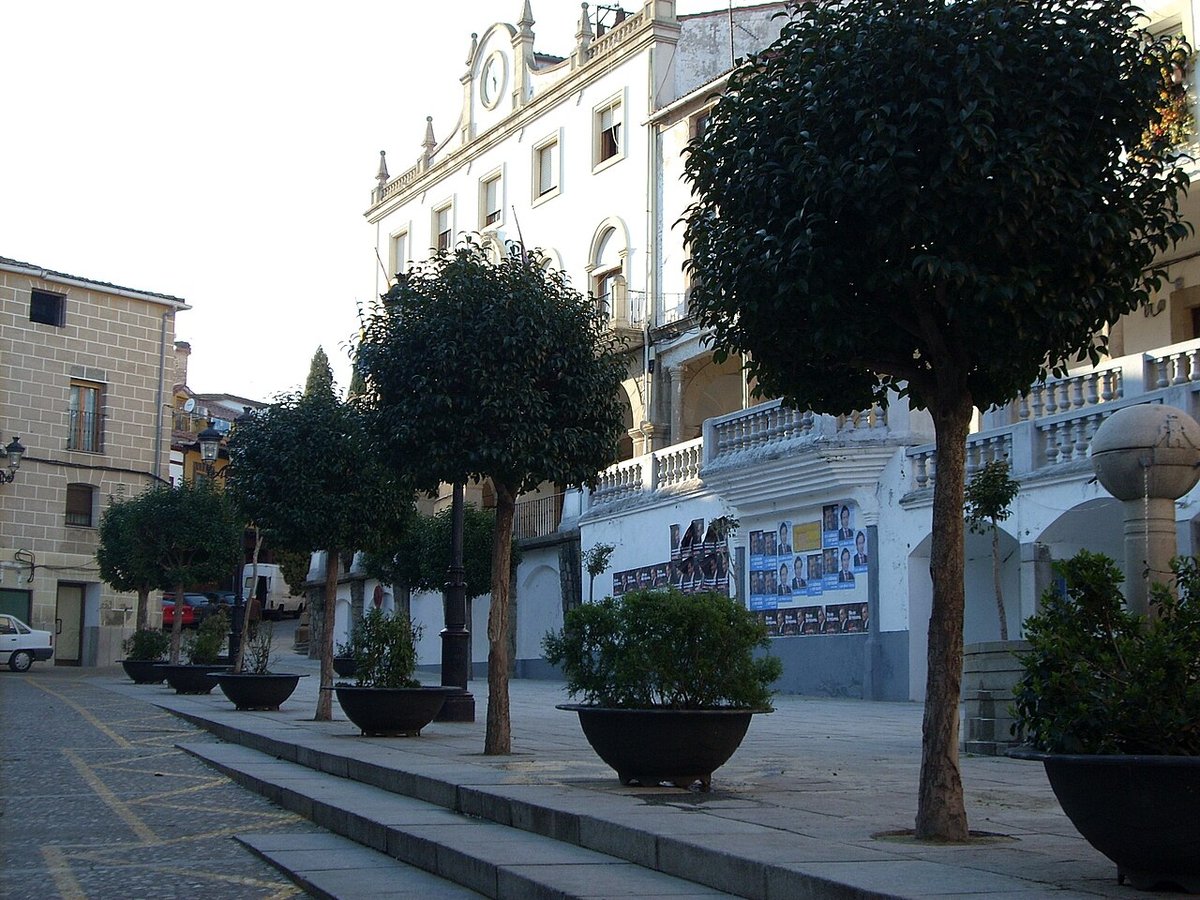
The clearest point of reference is the parish church of San Pedro. It is not striking in size or decoration, but it anchors the centre of the village and sets the rhythm of the square around it. It is one of those simple churches built to last rather than to impress.
Walking through the streets, you will see many whitewashed houses, stone bases along the lower walls and balconies where pots often appear in season. Nothing feels excessive. Everything is practical. This is architecture shaped by agricultural life, designed to stay cool in summer and to be durable and easy to maintain.
The more revealing part of the visit begins just beyond the built-up area. Within minutes, paths appear between vegetable gardens and small family plots. These are not marked trails or designed routes. They are the working paths that have always been used. Walking along them, even briefly, gives a clearer sense of how this part of La Vera actually functions.
There are also several fountains scattered around the village. Some are still in use and they hint at something essential across the region: water. Even though summers can be harsh, the presence of natural springs and small mountain streams, known locally as gargantas, helps sustain the agricultural landscape.
A Short Visit, Unrushed
Pueblonuevo de Miramontes is not a place for ticking off sights. It suits a slower approach, where the main activity is simply walking and observing.
A gentle loop through the centre, a stop near the church and then a short wander along one of the paths leading towards the cultivated land is usually enough to get a feel for the place. On clear days, the nearby sierra forms a backdrop and adds character to the view.
Traditional celebrations still play a role in local life. In winter, there are the bonfires of San Antón, a festivity linked to Saint Anthony. During Semana Santa, or Holy Week, processions take place as they do across much of Spain. In summer, there are usually local patron saint festivities, with an atmosphere geared more towards residents than visitors.
Food in La Vera revolves around pimentón. This smoked paprika appears in many dishes from Extremadura, including migas, guisos and patatas revolconas. These are hearty meals that originated as sustenance for long days of agricultural work, and they remain a defining part of the region’s identity.
When to Go
Spring and autumn tend to be the most pleasant times to explore the area. Temperatures are mild enough for walking without hurry, and the landscape is at its most vibrant.
Summer can be intense during the middle of the day. If visiting at that time of year, early morning or late afternoon is more comfortable. As the heat eases, the village becomes a little more active again, with more life in the streets.
Even with just a couple of hours, a slow walk through the village and a short stretch towards the surrounding fields is enough to form a lasting impression: reddish soil, neatly arranged plots and the sense of being in a quieter, less known corner of La Vera, where everyday life continues much as it always has.