Full Article
about Valverde de la Vera
Declared a historic site, this museum-village is famous for the Empalaos at Easter.
Hide article Read full article
By mid-morning, when the sun begins to warm the stones of the cobbled streets, Valverde de la Vera still carries a faint trace of smoke drifting from a late chimney. Shutters lift gradually and voices travel from one window to another. The village wakes slowly, guided more by daylight than by the clock.
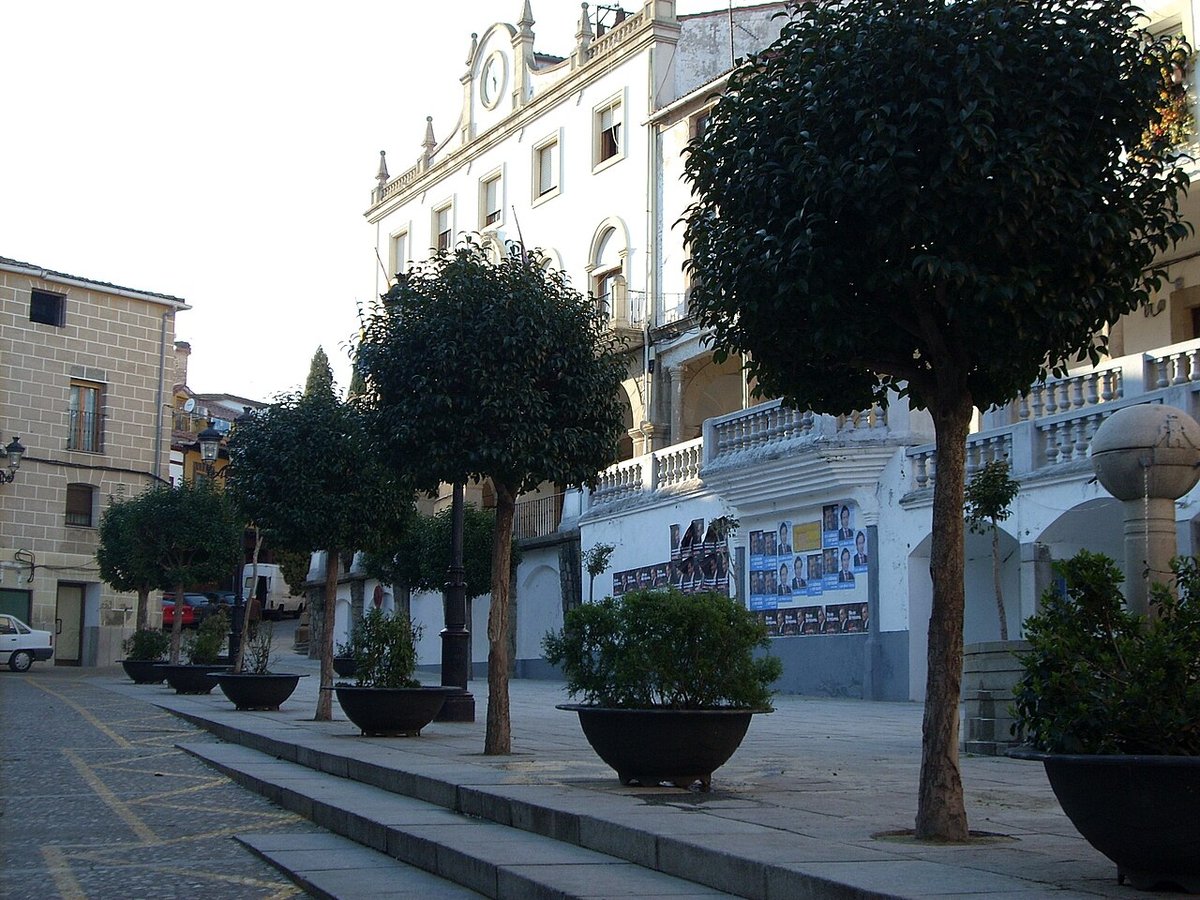
Set on the southern slopes of the Sierra de Gredos, this small municipality of a little more than four hundred residents preserves a style of architecture common across La Vera, though here it remains especially compact. Timber-framed houses line the streets, their upper storeys jutting out over the ground floor. Whitewashed walls sit alongside dark stone, and wooden beams show their age without ceremony. These are not decorative façades. Laundry hangs from balconies and plant pots rest on window ledges, clear signs of daily life.
The streets are narrow and sometimes uneven. Walking slowly is advisable, not only because the cobbles can become slippery after rain, but because details appear every few steps: an old beam protruding beneath the eaves, a small trough of cold water, a wooden door worn smooth by decades of use.
Beyond the last houses, the landscape changes quickly. Within minutes, chestnut and oak groves spread across the slopes. Paths descend towards mountain streams, known locally as gargantas, where the water runs more forcefully in spring. When summer heat arrives, some of the natural pools fill with people looking for a spell in cold water after a walk. The flow varies considerably depending on the year; it’s worth asking in the village about the state of the gargantas before heading out.
From higher points nearby, the Tiétar valley opens up below. On clear days, the Sierra de Gredos forms a sharp outline in the distance. As evening approaches, light falls sideways across the façades, turning them a warmer shade, while the surrounding meadows take on a drier tone.
Caminos de agua y castaños
One of the simplest ways to understand Valverde de la Vera is to follow the footpaths that link it with other villages or with nearby wooded areas. These are not alpine routes, yet they reveal how closely the village has always been tied to the surrounding hills.
In autumn, the ground beneath the chestnut trees is covered with leaves and split husks. It is mushroom season, and also the time for gathering chestnuts. It is common to pass neighbours collecting sacks of fruit or checking small fenced plots. Many of these plots are privately owned, and not all woodland is open land; a little awareness goes a long way.
The paths are generally easy to follow, though stretches can turn muddy after several days of rain. Footwear with a firm sole makes the walk more comfortable.
Back in the village, small visual details draw attention for those exploring with a camera. Dark beams gather moss in shadier corners. Whitewash flakes from old walls. Stone fountains release a steady thread of water that echoes along the street. In winter, when fog rolls up from the valley, the entire village can fall into a particular kind of silence that feels almost suspended.
Una cocina de sierra
Food in this part of Extremadura remains closely linked to pimentón de La Vera, the region’s distinctive smoked paprika. Its aroma appears in slow-cooked meat dishes and in hearty stews designed for colder months. Goat’s cheese is also common, sometimes fresh, sometimes more mature depending on the season.
This is not a cuisine shaped for display. It reflects what has traditionally been prepared in family kitchens: substantial dishes suited to agricultural work and to the damp winters of the sierra. The flavours are direct and often robust.
The connection between land and table is clear when walking through the surrounding countryside. Chestnut groves, small plots and grazing areas are never far from view. The rhythms of cooking follow seasonal changes.
Fiestas del calendario
Festivities in Valverde de la Vera remain closely tied to its own calendar. At the end of November, San Andrés is usually celebrated with simple events and strong participation from residents. It is not designed to attract large crowds; it functions more as a gathering point for the community itself.
August brings livelier days. During summer nights, activities and open-air dances are typically organised in the square or along main streets. People stay outside until late.
Semana Santa also has its place here. Processions move through narrow streets on a small scale: religious floats carried through lanes barely wider than they are, neighbours accompanying them close enough to touch.
Llegar y elegir el momento
Valverde de la Vera lies in La Vera comarca. The usual approach is by road via Plasencia, continuing east across the region before joining local roads that climb towards the village. The final stretch winds between small holdings and trees.
In July and August, avoid walking through old streets or along nearby paths during central hours of hottest days; shade is limited in certain sections. Early morning or late afternoon offers softer light and more comfortable temperatures.
At those times of day, Valverde’s pace feels especially clear: morning light gradually reaching timbered façades; evening bringing longer shadows and quieter streets. Throughout year it maintains rhythm shaped by landscape weather habits residents It does not present itself as spectacle It continues simply as lived-in place on southern slopes Gredos