Full Article
about Torreorgaz
Near the city of Cáceres; known for its church and Humilladero chapel.
Hide article Read full article
A village that doesn’t try too hard
Some places make an effort to be noticed, with viewpoints, signs and carefully mapped routes. Torreorgaz works differently. It feels more like visiting a friend who lives in the countryside: you arrive, take a short walk, chat for a while, and realise everything moves at a gentler pace.
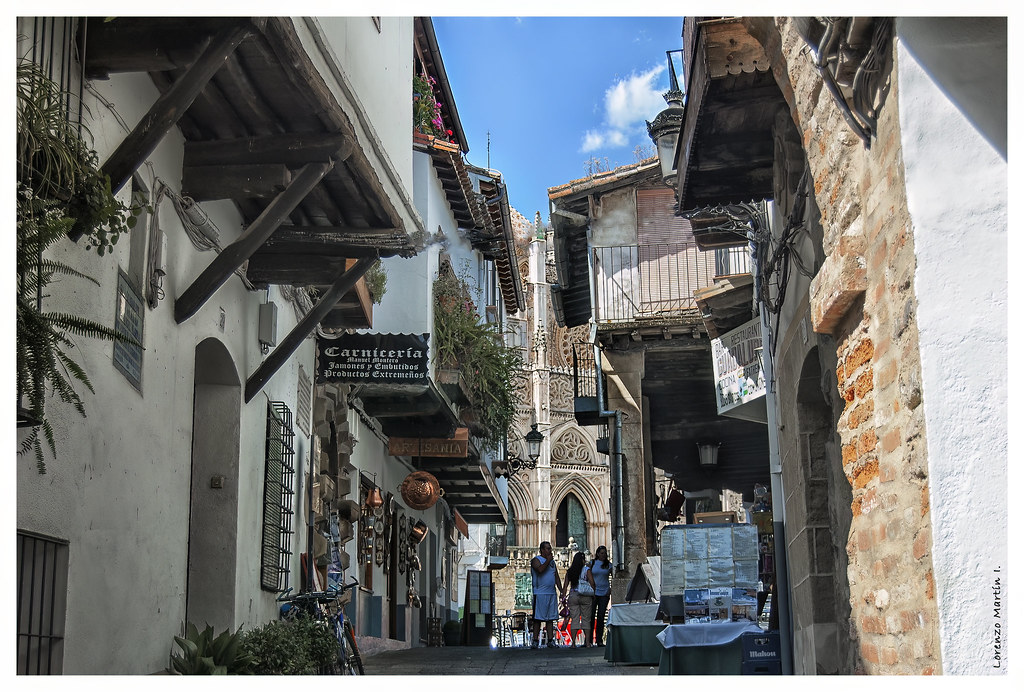
Tourism here has little to do with ticking off landmarks. Torreorgaz, in the Llanos de Cáceres in Extremadura, has around 1,600 residents and still revolves around ordinary things: the countryside, the main square, and long conversations as evening settles in. At about 425 metres above sea level, the town keeps the straightforward layout typical of agricultural communities, straight streets, white façades worn by the Extremaduran sun, and iron window grilles that often hold a plant or two.
It doesn’t take long to understand how the place works. Not only because it is small, but because life here is direct and unembellished.
Santa Catalina and the life around it
If there is a focal point in Torreorgaz, it is the parish church of Santa Catalina. It is not the kind of building that overwhelms you, but it has the solid presence of a church that has watched daily life pass by for centuries.
The bell tower can be seen from several streets, guiding you towards the centre almost without trying. Inside, the atmosphere is restrained. There are no elaborate altarpieces or heavy decoration. It is easy to picture baptisms, funerals and Sunday services unfolding here as naturally as the ringing of the bells.
Around the church, everyday life continues at its usual pace. People cross the square, neighbours pause for a quick conversation, and time seems to stretch slightly if you sit on a bench and watch. Spending a while here is enough to get a feel for the rhythm of the town.
Walking through the old streets
A walk through Torreorgaz has something in common with wandering around the old quarter of a city, just on a smaller scale.
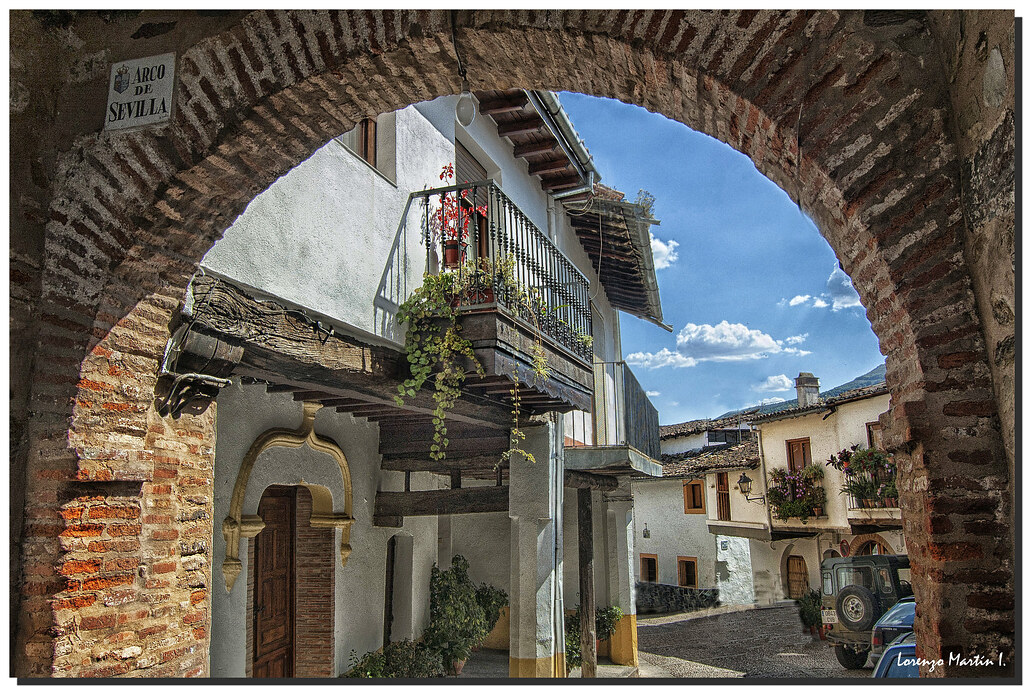
The houses still hint at their agricultural past. Large wooden gates, thick walls and interior courtyards that are barely visible from the street give a sense of how homes once functioned. In some façades, reused stones or long-standing iron grilles quietly reveal traces of earlier times.
There are no grand historic buildings competing for attention. What stands out are the smaller details: a former animal pen turned into a patio, a heavily worn granite doorway, or a street where the silence is broken only by a slow-moving car.
The simplicity is part of the experience. You are not moving from one attraction to another, but noticing how the town holds together through these small elements.
The dehesa beyond the houses
Step just outside the built-up area and the landscape shifts quickly into the defining scenery of this part of Extremadura. Holm oaks are scattered across open grassland, with dry stone walls marking out plots of land.
The dehesa, a traditional agro-pastoral landscape common in western Spain, surrounds Torreorgaz and remains a working environment. Livestock, rural tracks and family-owned plots shape what you see. This is not a park arranged for visitors. It is active countryside.
Walking along one of the paths, especially towards sunset, brings subtle movement into focus. You might hear animals among the trees, sometimes deer, sometimes livestock moving between the oaks. In spring, the green lasts only a few weeks, but it changes the entire appearance of the landscape while it does.
The transition between the town and the countryside is almost immediate. Within a short distance, the streets give way to open land without any clear boundary.
A short visit, at your own pace
Torreorgaz does not take long to explore, and that is part of its appeal rather than a drawback.
A walk through the centre, a stop by the church, and some time wandering nearby streets already offer a clear sense of the place. From there, it is worth heading outwards to see how quickly the urban area blends into the countryside.
If you arrive by car, you can reach the surrounding dehesa within minutes. After that, the best approach is simple: walk along a rural path without rushing. Comfortable shoes are enough, though after rainy days the ground can become muddy, which is quite normal in the area.
When night falls, the sky often appears much clearer than in a city. For anyone used to streetlights and tall buildings, the difference is noticeable.
When to come and what to expect
Spring and autumn tend to be the most comfortable seasons for walking around Torreorgaz and its surroundings. Summer in the Llanos de Cáceres becomes hot early in the day, so it makes sense to head out in the morning or later in the evening if visiting at that time of year.
It helps to understand one key point: Torreorgaz is not shaped around tourism. There is no infrastructure designed to guide visitors from one activity to the next. Instead, it is a place to pause and observe how a working agricultural town continues its routine.
In the surrounding area, livestock farming and dehesa estates remain central, particularly those linked to Iberian pigs and family-run operations. This activity defines the rhythm of both the land and the village itself.
Getting there
From the city of Cáceres, Torreorgaz is about a half-hour drive along quiet regional roads through the Llanos. The approach is straightforward, and once in the village, parking is usually simple as long as entrances to houses and narrow streets are kept clear.
Many people visit as a short trip from Cáceres. A few hours are enough to walk around, take in the countryside and experience the steady pace of a place that continues to function much as it always has. It is a glimpse of everyday life in rural Extremadura, nothing more, but also nothing less.