Full Article
about Torrequemada
Famous for its suckling-pig fair and holm-oak pastures.
Hide article Read full article
A village that wakes slowly
Early in the morning, before the sun settles heavily over the plains, Torrequemada carries the smell of dry earth and freshly opened animal pens. A door creaks open, a car passes at low speed, and from the edges of the village comes the low sound of livestock. Tourism in Torrequemada does not revolve around ticking off monuments. It begins more simply, walking without hurry through a place that takes its time to wake.
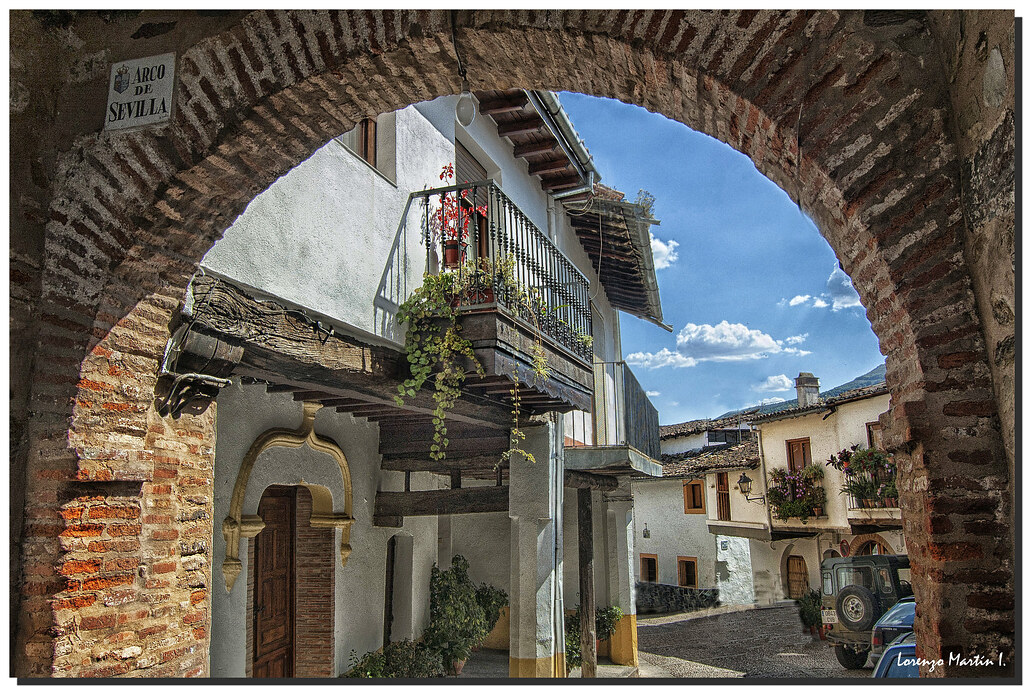
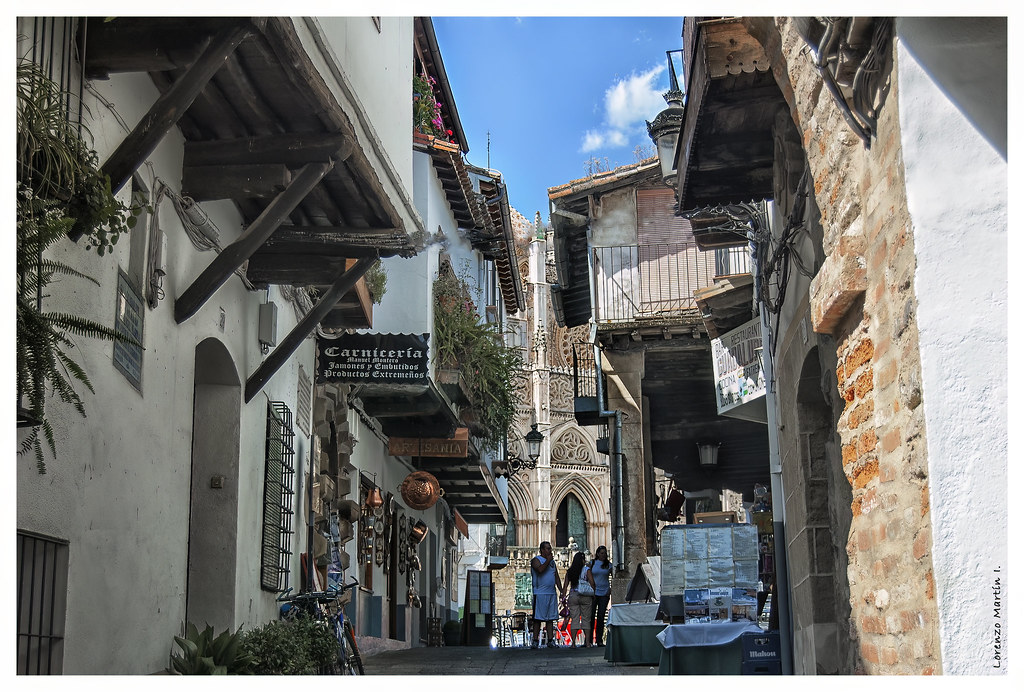
The houses are whitewashed, many with dark lower bands painted along the base of the walls to protect them from dust and rain. On some façades, the whitewash has softened into a muted grey that shifts with the light. Iron window grilles sit low, almost at hand height, and behind them a light curtain often moves with the breeze.
The layout of the village is straightforward, without dramatic turns. Straight streets lead into small squares where daily life gathers at certain times of day. Along this route stands the parish church of San Esteban, the main visual reference point when moving through the centre. Its façade shows additions and repairs from different periods. Inside, when open, there is a clean, uninterrupted quiet, broken only by footsteps or the brief echo of a door.
Where the village meets the dehesa
The countryside begins almost immediately. As soon as the last houses fall behind, the dehesa appears. This is a characteristic landscape of western Spain, with scattered holm oaks spaced across open land. Each tree casts a dense, rounded shade that becomes a real refuge in summer.
The ground is hard, stony in places, and agricultural tracks cut straight lines between stone walls and metal gates. These paths are practical rather than scenic, shaped by daily use. Towards evening, movement among the trees becomes more noticeable as animals emerge when the heat drops.
The dehesa explains much of what happens in and around Torrequemada. It is not a backdrop but a working environment, with grazing animals and long, uninterrupted views stretching towards the horizon. When the sun lowers and the light turns more oblique, the landscape takes on the golden tone typical of the plains around Cáceres.
Food that follows the land
Local cooking moves at the same pace as the landscape, based on what is available nearby. Iberian pork features heavily, especially in cured meats and traditional preparations that remain part of everyday life.
In many homes, migas are still prepared. This is a simple dish made with stale bread, olive oil and garlic, reflecting a cuisine built on making the most of basic ingredients. Soups also appear regularly, particularly garlic soup, along with gazpacho extremeño during the hotter months. Sheep’s and goat’s cheeses are common on the table and tend to accompany most meals without much ceremony.
Nothing here feels designed for display. The food fits naturally into the rhythm of the place, tied closely to the surrounding land and to habits that have changed little over time.
A short walk through Torrequemada
Torrequemada is easy to cover on foot. From the main square, several streets branch out where wide gateways can still be seen, originally built for carts or to store machinery. Walking without a fixed route works well here. Within minutes, the streets tend to lead back towards the area around the church.
For those who want to extend the walk, any of the tracks heading out into the countryside will do. They are not marked hiking routes, but they are used daily by local residents. With comfortable shoes, it is possible to walk among the holm oaks for a while and return to the village in under an hour.
There is no need for planning or maps. The scale of the place keeps everything within reach, and the surroundings remain open and easy to read.
The changing rhythm of the year
The appearance of the plains shifts noticeably with the seasons. In spring, after the rains, the dark soil turns green beneath the trees, and the contrast across the landscape becomes more pronounced. Autumn also offers good conditions for walking, with less intense sun and a softer, more golden afternoon light.
Summer requires a different rhythm. Early starts make a difference, as by midday the heat settles close to the ground and the streets empty out. Movement slows, and activity picks up again later in the day when the air begins to circulate between the houses.
Winter brings its own character. The wind sweeping across the plains can move through the village without obstruction, making its presence clearly felt in the streets.
What you will actually find
Torrequemada is small, even within a region known for quiet villages. There is no long list of monuments, nor a historic centre filled with landmark buildings. What exists here is something more direct: an agricultural village surrounded by open countryside, where daily life remains closely tied to what happens beyond the streets.
The nearby dehesa sets the tone. Scattered trees, pale soil in places, animals grazing calmly, and tracks that seem to run straight towards the horizon. This is where the interest lies, in observing how the landscape and the village connect.
Many visitors spend a short time here, take a walk, and then continue towards other villages in the Llanos de Cáceres or return to the city of Cáceres, where more services are concentrated. Torrequemada does not attempt to compete with that. Its appeal rests in something quieter and more immediate: the chance to see how life unfolds in a small municipality shaped by its surroundings.
Practical notes
Torrequemada sits about 25 kilometres from Cáceres and is reached by car in just over half an hour, along open roads that cross farmland and stretches of dehesa.
Parking is usually straightforward on the wider streets in the centre or along the edges of the village. In the height of summer, it makes sense to look for shade first and then head out on foot.
There is no extensive tourist infrastructure. Visits tend to be brief and unstructured, focused on walking, observing the landscape and getting a sense of the everyday pace of the place.