Full Article
about Villanueva del Fresno
Border municipality with Portugal; known for its dehesa landscape.
Hide article Read full article
Where Spain and Portugal blur
There is a moment, just as you cross the bridge over the Arroyo de los Cuncos, when the GPS loses its bearings. “Welcome to Portugal,” it says. A few seconds later: “Welcome to Spain.” It feels like walking through the wrong door in a bar and ending up in the storeroom, except here the “storeroom” is another country.
Villanueva del Fresno sits right up against the border, known locally as la raya. Life here has always been shaped by that closeness. Children grow up with the smell of bread from the Alentejo drifting across, and older residents still tune into Portuguese radio stations alongside Spanish ones. The boundary is real, but it is also part of everyday life rather than something distant or abstract.
A town rebuilt with purpose
The story of Villanueva del Fresno is one of starting again after a heavy fall. During the 17th century, in the wars with Portugal, the town was almost completely destroyed. When people returned, there was little left beyond ruins.
So the rebuilding was practical rather than sentimental. Streets were laid out straight, the plan was orderly, and open squares were created. Walking through the centre today brings a slightly unexpected feeling: the place has centuries of history, yet its layout can seem almost modern.
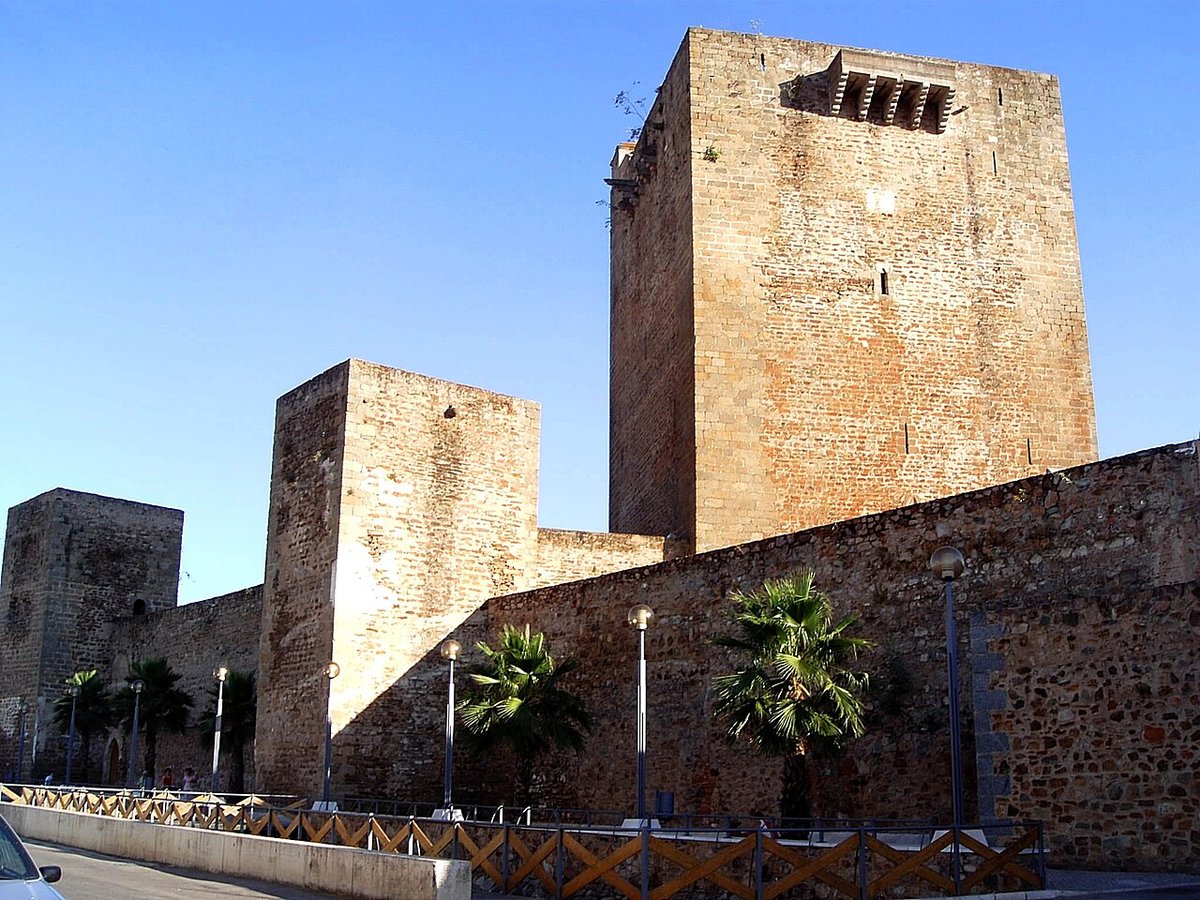
Above it all stands the castle on the hill, usually linked to the presence of the Knights Templar in the area. It is not a fairy-tale structure. What remains are solid walls and the sense of a defensive stronghold watching over the land. From the top, looking out towards Portugal, the location makes immediate sense. The wide plain stretches out in every direction, and from here it can all be seen.
Open plains and skies full of birds
The first thing that stands out on arrival is the quiet. Not an empty silence, but one that lets other sounds come forward: wind moving through holm oaks, the faint clink of a distant bell, birds passing high overhead.
This whole area forms part of protected spaces for birdlife. In winter, cranes are often seen in the surrounding countryside, and with patience it is possible to spot other species typical of these plains. There are no formal viewpoints or raised walkways. This is open land. Watching birds here usually means pulling over on a dirt track and waiting.
For those who prefer to explore on foot, there are several straightforward routes. The Ecological Corridor of the River Alcarrache runs for about eight kilometres following the water. It is not a demanding walk in terms of elevation, more a long, steady route through riverside vegetation and dehesa, the characteristic landscape of scattered trees and pasture found across this part of Extremadura.
When bread sets the tone
The cooking in Villanueva del Fresno comes from what was available, and very often that meant bread.
Caldillo is a clear example. Bread, garlic, paprika and broth. It sounds simple, and it is, but it is also the kind of dish that works precisely because it is not overcomplicated. Served hot and eaten with a spoon, it is filling and direct.
Then there is caldereta de borrego, a lamb stew found across this area of Badajoz. The meat is cooked slowly, potatoes soak up the broth, and the smell lingers long after the meal is over.
If visiting during gurumelo season, a wild mushroom that is widely gathered here, it often appears scrambled with eggs or simply grilled. Its flavour is strong, very much tied to the countryside, and makes more sense after spending time walking through the fields where it grows.
Celebrations that belong to the people
Some local festivals were not created with visitors in mind, and that shapes their atmosphere.
In August, the Fiesta de los Conductores usually takes place. It is closely linked to transport traditions and to the border life of the town. It feels more like a reunion than a show: music, people returning to the town for a few days, and conversations that begin with “it’s been a while”.
The romería of San Ginés, normally held in spring, works differently. People head out into the countryside carrying folding tables, cool boxes and whatever else they need to spend the day outdoors. It is not tightly organised. It feels more like a large shared picnic.
Anyone passing through at the right moment is likely to be offered something to eat or drink before even being asked where they are from.
Taking it slowly on the border
Villanueva del Fresno is not a place that suits a checklist approach to sightseeing. The rhythm is different. A walk, a pause in a square, perhaps crossing into Portugal out of curiosity and then returning.
In spring, the plains turn green and the air carries the scent of grass and rosemary. Summer brings a shift in pace, with more life in the evenings and quieter streets during the day.
The best approach is simple: arrive without a tight plan. Park near the centre, take a long walk, and notice the small details. Conversations happening in doorways, cars heading across the border mid-morning, the sense that here the line between countries is part of daily routine.
By the time you leave and the GPS hesitates again between Spain and Portugal, the appeal of the place will likely be clearer. It is less about specific sights and more about how life unfolds along this stretch of the border.