Full Article
about Mirabel
Town with a castle and a striking cattle pasture; tied to the Marqueses de Mirabel
Hide article Read full article
A place you almost didn’t plan to visit
Some places are reached almost by accident. You are heading somewhere else, glance at the map, notice a short detour, and decide to stop for five minutes. Mirabel, in the comarca of Monfragüe, fits that pattern. It is not a place that demands attention or appears constantly on social media. Yet once the car is parked and the walking begins, the pace shifts.
Mirabel has around six hundred residents and is surrounded on all sides by dehesa, a traditional landscape of scattered holm oaks, open pasture and farmland typical of western Spain. The village itself is small and calm. Stone houses, many whitewashed, line narrow streets that rise and fall gently without much warning. On some façades, old coats of arms remain visible, reminders of families who once held influence here.
There are no attention-grabbing museums or installations designed for visitors. What exists is simply what is there: neighbours coming and going, the occasional tractor moving slowly through the streets, and a quiet that belongs to places where the countryside sets the rhythm more than the clock.
The castle above and the view across the dehesa
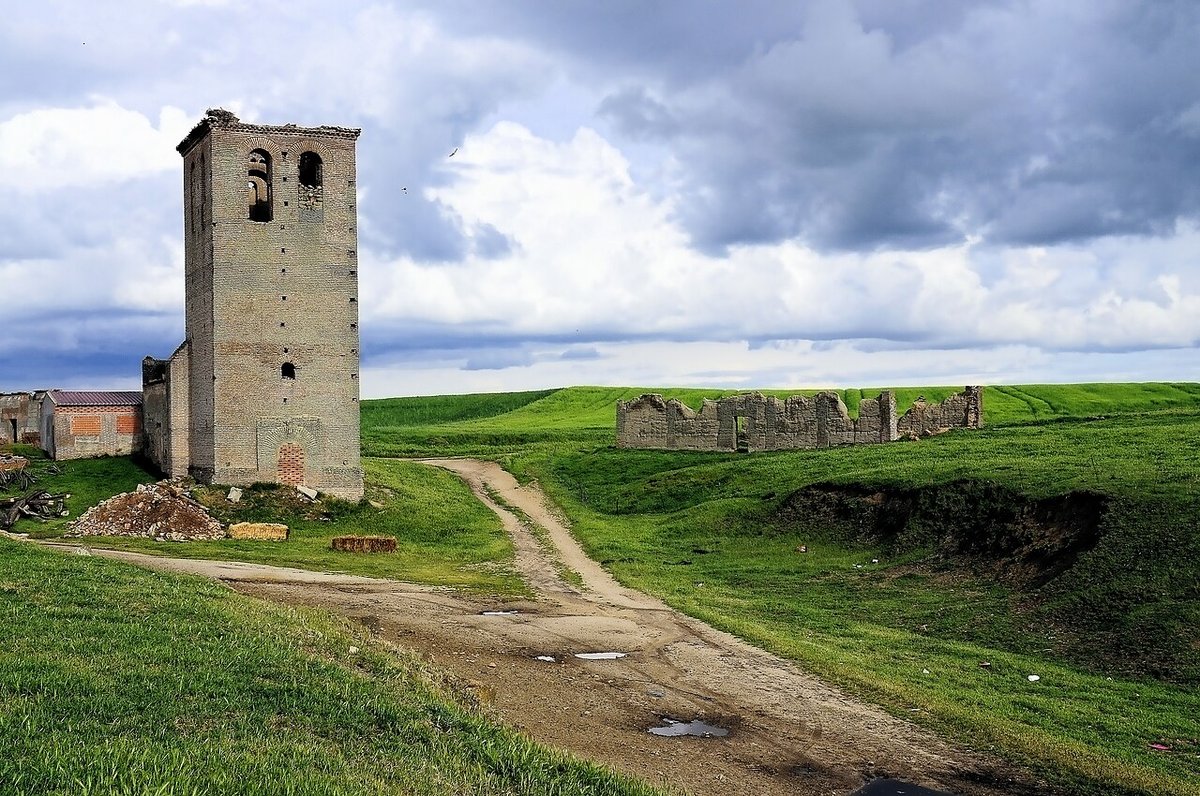
Above the village stand the remains of the castle of Mirabel. It has not been restored or turned into a formal visitor site. What survives are ruins that hint at its past importance centuries ago. Even so, the walk up is worthwhile.
The climb is not long, though the slope is noticeable. Nothing extreme, but comfortable shoes make a difference. From the top, the setting becomes clear: dehesa stretching as far as the eye can see, with an open landscape that changes with the light, especially later in the day.
It is the kind of place where time passes without much happening, just looking out across the land.
Close to Monfragüe National Park
Mirabel sits very near the Parque Nacional de Monfragüe, and that proximity shapes everything around it. The surrounding landscape shares the same character: Mediterranean woodland, holm oaks, cork oaks and wide open spaces.
The area is well known among birdwatchers. With some patience, and a bit of luck, it is fairly common to see black vultures gliding overhead or large birds of prey riding the air currents. Early morning and late afternoon tend to be the liveliest times.
For those who enjoy walking, rural tracks and paths lead out from the village into the dehesa. These are not mountain routes or technical trails, but long, steady walks between trees and dry stone walls. The experience is simple and grounded in the landscape rather than in marked attractions.
A small centre best explored without a map
Mirabel’s centre can be seen quickly. In about an hour, most of its streets can be covered.
Still, it rewards a slower pace. Some houses preserve small details that catch the eye: old iron grilles, stone doorways, inner courtyards glimpsed in passing. These are modest elements, but they say a lot about the village’s past.
The streets give the impression of gradual change over time. A window closed off, a balcony added, an old door still in place because no one has felt the need to replace it. Nothing feels staged, and that is part of the appeal.
Food shaped by the land
The cooking in this part of Extremadura relies on local produce and long-standing recipes. Iberian pork features heavily, along with homemade cured meats and cheeses from the comarca. It is not elaborate cooking, but it is hearty and closely tied to the rural setting.
After a morning walking through the dehesa, a meal like this tends to feel more satisfying than something overly refined. The connection between the food and the landscape is direct and easy to understand.
Festivities and village life
As in many villages in the region, the main celebrations are concentrated around the patron saint festivals. In Mirabel, these traditionally take place in summer, around the Virgen de la Asunción, when many former residents return for a few days.
There are also festivities linked to the Virgen de los Remedios at another point in the year. These are not events designed to draw large crowds. They are local gatherings, with processions, music, time spent in the square, and families using the occasion to reconnect.
Is it worth stopping in Mirabel?
Mirabel works best when approached with the right expectations. It is not a destination packed with activities at every hour. Instead, it suits a calm stop as part of a wider route through Monfragüe.
The plan is simple: walk up to the castle, wander through the streets, eat well, and perhaps head out for a walk in the surrounding countryside. In a morning or a long afternoon, the village can be comfortably explored.
For those drawn to places where everything moves a little more slowly, Mirabel fits naturally into the journey. Sometimes the most rewarding moments in rural travel come from stopping somewhere small, without expecting too much, and letting time pass at its own pace.