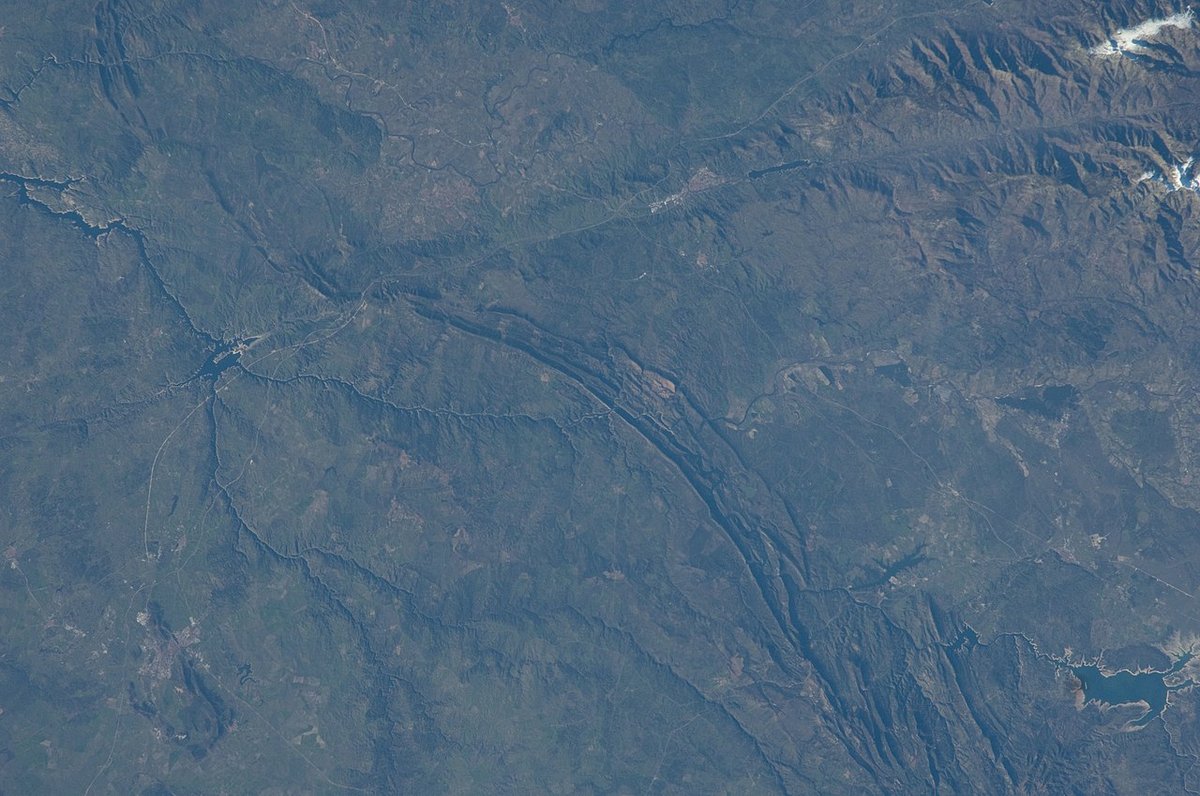
Serrejón - Flickr
Cotallo-nonocot · Flickr 4
Extremadura · Meadows & Conquerors

Serrejón

The vultures arrive first. By mid-morning, hundreds spiral above Serrejón's stone bell tower, riding thermals that rise from the granite outcrops o...

410 inhabitants · INE 2025
341m Altitude

Why Visit

Church of San Ildefonso Routes through Monfragüe

Best Time to Visit

spring

Virgen de la Oliva festival (August) agosto

Things to See & Do
in Serrejón

Heritage

  • Church of San Ildefonso
  • Monfragüe

Activities

  • Routes through Monfragüe
  • Birdwatching

Festivals
& & Traditions

Fecha agosto

Fiestas de la Virgen de la Oliva (agosto)

Las fiestas locales son el momento perfecto para vivir la autenticidad de Serrejón.

Full Article
about Serrejón

Gateway to Monfragüe National Park; surrounded by dehesa and silence

Ocultar artículo Leer artículo completo

The vultures arrive first. By mid-morning, hundreds spiral above Serrejón's stone bell tower, riding thermals that rise from the granite outcrops of Monfragüe. It's a sight that stops visitors mid-stride on the village's only paved street, though locals barely glance up. They've seen it every day for centuries.

At 341 metres above sea level, Serrejón sits just high enough to catch the breeze that carries these birds from the national park three kilometres away. The altitude makes a difference. Summer mornings arrive cooler here than in the parched valley below, while winter brings sharp winds that whistle through gaps in the stone houses. The village's 406 inhabitants have learned to read these aerial displays like weather forecasts. When the vultures fly low, rain's coming. When they disappear entirely, the temperature's about to soar.

The houses themselves tell a more grounded story. Built from local granite and adobe, their walls absorb the day's heat and release it through cool nights. Arab tiles, curved like inverted boats, channel what little rain falls towards stone gutters worn smooth by generations of water. Whitewashed walls glare brilliant white under the Extremaduran sun, though many now flake to reveal centuries of previous colours—ochre, mustard, pale blue—like geological layers of rural fashion.

Walking the main street takes four minutes at a stroll, assuming you don't stop to examine the heavy wooden doors. Some still bear iron knockers shaped like hands, a Moorish tradition that survived the Reconquista. Behind them, interior patios hide fig trees and grapevines, their roots searching through cracked concrete for the same earth that feeds the surrounding dehesas. These ancient oak pastures, spread like a rumpled blanket across rolling hills, produce the acorns that fatten black Iberian pigs. The ham from these animals sells for £90 a kilo in London delicatessens. Here, it hangs in family larders, each leg stamped with the date of last winter's matanza.

The pig slaughter remains private, a three-day ritual of blood, fire and community that outsiders rarely witness. Families still measure wealth in sausages—chorizo, salchichón, morcilla—each variety tied to specific days of the killing season. The resulting pantry determines whether a household eats meat through the year or returns to the chickpea and cabbage stews that sustained their grandparents through Franco's hunger years.

For visitors, the village's single bar opens at seven for coffee and brandy, though the brandy's for the farmers. By nine, tractors rumble towards fields where cork oak bark, stripped every nine years, dries in stacks that smell of honey and mushrooms. The bar closes at ten, reopens at twelve for beer and tapas, then shuts again until evening. Time here moves to agricultural rhythms, not tourist convenience.

Those rhythms shift dramatically with the seasons. Spring brings wild asparagus and bee-eaters—brightly coloured birds that nest in riverbanks. The surrounding dehesas explode with flowers, attracting photographers who've read about Monfragüe's wildlife in BBC magazines. They arrive expecting facilities and find instead a village where the nearest cash machine stands twenty kilometres away in Trujillo. Summer drives everyone indoors between two and five, when temperatures hit 40°C and even the vultures seek shade. Autumn means mushroom hunting and the start of olive harvest, while winter brings migas—fried breadcrumbs mixed with garlic and grapes—a dish invented to use stale bread when snow blocked roads to the bakery.

The roads still matter. The EX-390 from Cáceres sweeps through forty-five kilometres of dehesa, past medieval watchtowers and modern solar farms that glitter like alien arrivals among the holm oaks. Rental cars need to be returned with full tanks; the village's single pump closes for siesta and all day Sunday. In winter, morning frost makes the final approach hazardous—last January, a delivery van slid into a dry stone wall, blocking access for three hours while farmers discussed the best way to shift it over brandy and cigarettes.

Walking tracks radiate from the village like spokes, following livestock paths established during the transhumance when shepherds drove millions of sheep between summer and winter pastures. These routes, marked by centuries of hoof and boot, climb gently through scrubland where wild thyme releases scent underfoot. Griffon vultures nest in cliffs two hours' walk north, while Spanish imperial eagles—fewer than fifty pairs remain worldwide—hunt the valleys to the south. The tracks demand proper footwear; the limestone eats through cheap trainers, and mobile reception disappears within minutes of leaving the tarmac.

Cycling offers faster access to neighbouring villages, though "faster" remains relative. The road to Villarreal de San Carlos climbs 200 metres over five kilometres, enough to make amateur legs burn. Professional cyclists train here; Team Sky used these roads before the Tour de France. They stayed in Trujillo's paradors rather than Serrejón's single rental apartment, a converted barn where Wi-Fi works only when the wind blows from the south.

That apartment, La Jara, represents the village's entire tourist accommodation. Three rooms, stone walls half a metre thick, a kitchen that stays cool even in August. It books months ahead for April and May, when English birdwatchers arrive hoping to tick off species they've only seen in books. They bring expensive optics and ask directions to "the vulture restaurant"—local slang for the Monfragüe viewpoint where park rangers leave carcasses. The villagers point them towards the cliffs, then discuss their odd waterproof clothing over evening cards.

Food happens at set times or not at all. Lunch finishes at four, dinner starts at nine, and nothing opens in between except the bar for coffee. The menu reflects poverty cooking elevated to art form. Gazpacho arrives thick enough to hold a spoon vertical, flavoured with vinegar made from last year's wine surplus. Wild boar stew contains meat from animals shot by local hunters who sell excess to the restaurant. Partridge season runs October through January; the birds arrive whole, legs splayed like crucifixions, accompanied by grapes that sweeten the gamey flesh. Prices shock those expecting rural cheapness—£15 for main courses, more for the good ham—because everything travels distances that would span countries in Britain.

The church of San Bartolomé anchors the village physically and socially. Its tower, rebuilt after lightning struck in 1873, provides the reference point for giving directions: "second left after the tower" or "the house opposite where the bells ring." The bells themselves mark time more accurately than clocks. They toll for deaths, weddings, and the daily Angelus, their bronze voices carrying across the dehesas to shepherds who can't see the village but know its rhythms. Inside, the church holds a baroque altarpiece gilded with American gold—the only obvious wealth in a village that prefers to hide its assets in sausages and stone.

August transforms everything. The fiesta brings back descendants who left for Madrid and Barcelona, swelling the population to maybe seven hundred. Suddenly streets fill with teenagers who speak Spanish, not the local dialect, and look embarrassed by their parents' enthusiasm for ancient dances. A temporary bar appears in the square, serving tapas until three in the morning. The bakery, normally closed Sundays, opens daily to feed visitors who complain about the heat and the flies and the fact that nothing works like it does in the city. By September's end, they're gone. The village exhales, returns to its proper size, and the vultures reclaim the sky.

Winter brings different challenges. The altitude that cools summer days turns January nights bitter. Pipes freeze, electricity fails, and the road to Cáceres ices over. Villagers burn oak prunings in open fireplaces, filling houses with smoke that stings eyes but keeps away the damp that seeps through stone walls older than Shakespeare. It's then, when the tourists have gone and the vultures perch hunched against the cold, that Serrejón reveals its truth: not a destination but a working village that happens to have a view of famous cliffs, a place where life continues regardless of who arrives or leaves, measured in pig legs and oak trees and the ancient patience of people who know their grandchildren will walk the same streets under the same vultures' gaze.

Key Facts

Region
Extremadura
District
Monfragüe
INE Code
10176
Coast
No
Mountain
No
Season
spring

Livability & Services

Key data for living or remote work

2024
Connectivity5G available
TransportTrain 13 km away
HealthcareHospital 22 km away
Housing~5€/m² rent · Affordable
Sources: INE, CNMC, Ministry of Health, AEMET

Planning Your Visit?

Discover more villages in the Monfragüe.

View full region →

More villages in Monfragüe

Traveler Reviews