Full Article
about Torrejón el Rubio
Tourism heart of Monfragüe; home to the main visitor center and astronomical observatory
Hide article Read full article
A village on the threshold
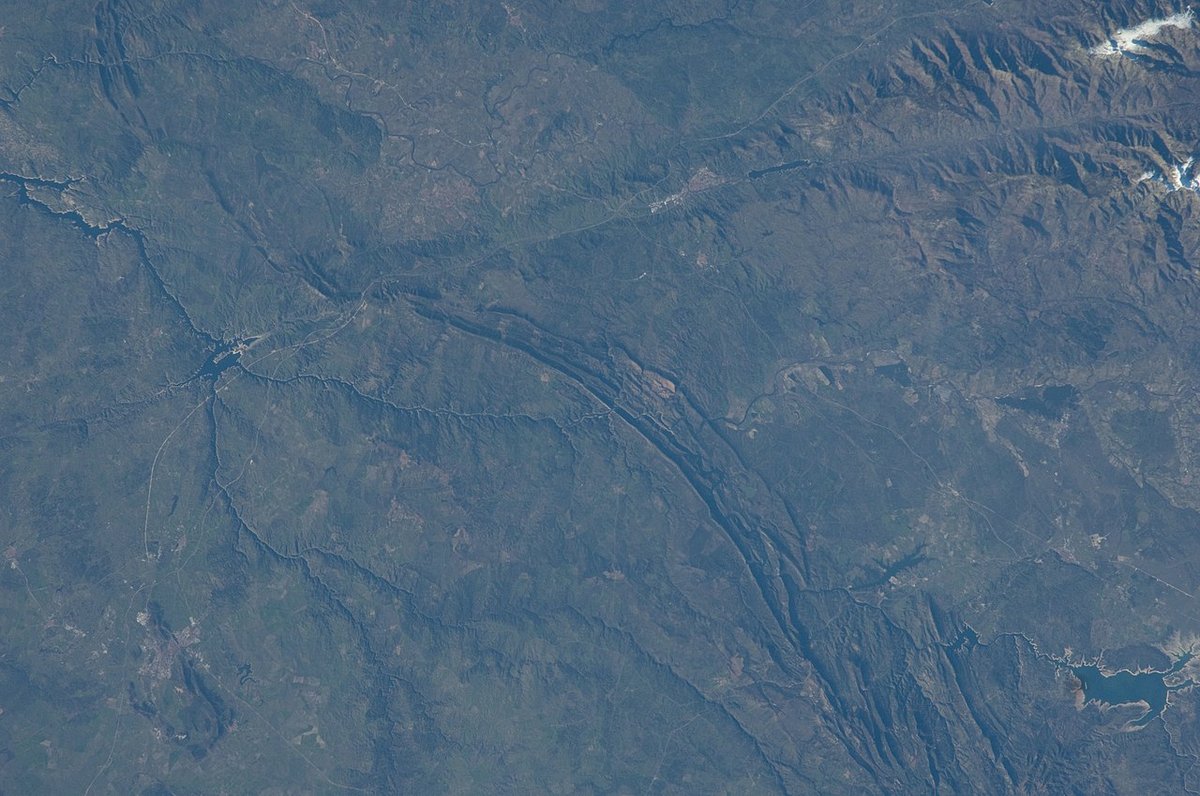
Torrejón el Rubio appears on maps of Monfragüe as a place you pass through. It sits on the eastern edge of the national park, in a landscape of open dehesa and low sierras that begin to hint at the more rugged terrain carved by the River Tagus. With just over five hundred inhabitants, the village has long been shaped by livestock and agriculture. Its connection to the national park is relatively recent in historical terms, yet today many travellers arrive here before heading into Monfragüe.
The built-up area is small and easy to get around. Short streets, whitewashed houses and roofs of curved Arab tiles define the centre, with a few newer buildings on the approaches. There is no monumental quarter in the strict sense. What gives the place its identity is its position in the landscape and its proximity to one of the best preserved natural areas in Extremadura.
The church and the shape of the village
At the centre stands the church of San Miguel Arcángel. It is a sober stone building, remodelled in the eighteenth century as happened with many rural parishes in the region. Inside, simple altarpieces remain, along with a dim atmosphere that feels more about community use than artistic display.
Around the church lies the main square and several streets that slope gently away from it. The layout is practical. For generations the village functioned as an agricultural and livestock base, and the houses reflect that purpose. Compact homes, rear yards and spaces designed for daily work form the basic pattern.
Monfragüe on the doorstep
The proximity to Monfragüe National Park now shapes much of the village’s activity. Within a few minutes by car, the protected area begins, along with the first viewpoints and marked routes.
One of the most recognised spots is the Salto del Gitano, a rocky cliff above the Tagus where griffon vultures and other birds of prey often gather. It is common to see people with binoculars at dawn or late in the day, when air currents make flight easier.
Further into the park, routes lead up towards Monfragüe Castle or Cerro Gimio. These are walks with some ascent, best taken at a steady pace, particularly in the hotter months. The reward lies in the views over the river and the surrounding sierras.
Food shaped by the dehesa
The cooking found in Torrejón el Rubio follows what the surrounding land provides. The dehesa, a traditional system of open woodland and pasture, supplies Iberian pork, cured meats and honey. There are also dishes such as migas, made from breadcrumbs, and various rural soups designed to sustain long working days outdoors.
This is not an elaborate cuisine. It is direct, based on local ingredients and recipes that have remained largely unchanged in the area.
Festivities and the rhythm of the year
The main celebrations remain tied to the religious calendar. San Miguel, towards the end of September, is the clearest reference point in the village. During those days, events combine religious tradition with more popular activities.
Holy Week is marked in a quieter way than in larger towns and cities of Extremadura. Processions pass through narrow streets, with participation mostly local. In summer, local associations often organise cultural activities or food-related gatherings that bring some life to the evenings.
A short walk through Torrejón el Rubio
The village can be explored without hurry in a short amount of time. A walk around the main square, a visit to the church and a look at a few nearby streets are enough to understand its scale.
Many travellers use it as a stop before entering Monfragüe or on the way back from the park. In those cases, it is worth taking a few minutes to walk and observe everyday life, which follows a very different rhythm from the busier viewpoints nearby.
When to go and what to keep in mind
Spring and autumn are usually the most pleasant times to move around this area. The landscape is greener and bird activity increases. In summer, the heat can be intense, especially in the middle of the day.
Within the park, getting around takes time. Roads are narrow and it is common to stop at viewpoints or trailheads. If planning to walk, carrying water and wearing suitable footwear is advisable. The environment is both valuable and fragile, so park rules and signage deserve careful attention.