Full Article
about Acebo
Mountain village known for its bobbin lace and natural pools; surrounded by orange and olive trees in a green setting.
Hide article Read full article
The slate roofs are still dark when the first light touches the valley. At that hour, the only sound in Acebo is your own footsteps on the damp cobbles, a dense quiet held by the stone until a wooden shutter groans open somewhere above. The village, home to just over five hundred people in the Sierra de Gata, belongs to itself for a little while longer.
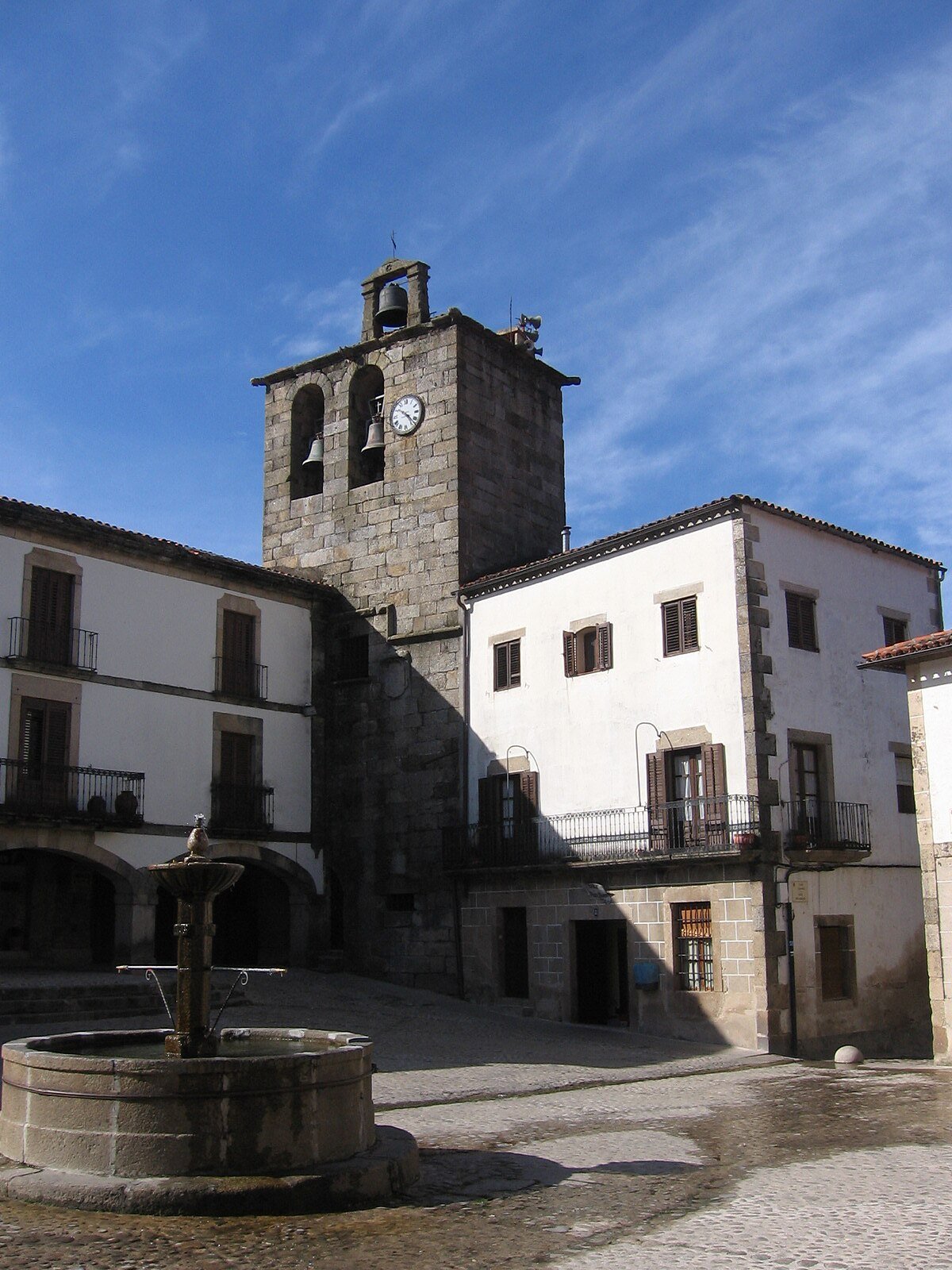
Life here is paced by the land. The narrow streets were laid out for shade and shelter, not for postcards, and they lead you past vegetable plots and olive groves that begin where the last house ends. Work starts early; you’ll see it in the hands of someone carrying tools, or hear it in the distant ring of a bell from the hills. The parish church of Nuestra Señora de los Ángeles, with its square 18th-century tower, is less a monument and more a landmark—a useful point of reference when the lanes climb and turn. Look closely at the façades around it: at the iron grilles pitted with rust, the weight of oak doors, the lintels where chisel marks haven’t been worn smooth.
Leaving the streets behind
Walk for five minutes in any direction and the houses give way to chestnut trees. The paths here are old, made for carts and herds, and they follow the logic of water. You’ll hear a stream before you see it, running over mossy stone. In autumn, the ground is littered with split chestnut casings and yellow leaves, and you might pass someone with a basket, scanning the leaf litter. This is also mushroom country. If you’re not sure what you’re doing, just look—foraging is taken seriously here, and the woods are treated with a quiet respect.
The walking isn’t strenuous. It’s a landscape of gentle slopes and oak canopy, where movement catches the corner of your eye: a flash of a roe deer, a hawk circling on a thermal. It doesn’t perform for you; it just goes on.
The weight of the afternoon sun
Summer heat here is dry and heavy. By late morning, the light turns white and the village retreats indoors. This is when you head for water. Up in the sierra, along the streams, there are natural pools—not facilities, just places where the water has worn basins into the rock. They’re shaded by trees, cold enough to make your breath catch. Go in the early afternoon, when the sun is at its peak; you’ll have the sound of moving water and the dappled light through the leaves. The walk back feels different once you’ve cooled your skin.
The rhythm of gathering
In August, for the fiestas of the Virgen de los Ángeles, the tempo changes. Relatives return, filling houses that are often quiet, and there’s music in the square after dark. It’s louder, more crowded, a brief collective exhalation. Come autumn, the focus turns to what comes from these hills: there might be a gathering centred on chestnuts or honey, though it’s never quite the same from one year to the next. It feels less like an event for visitors and more like an old excuse for neighbours to talk about the season’s yield.
A slow turn through the lanes
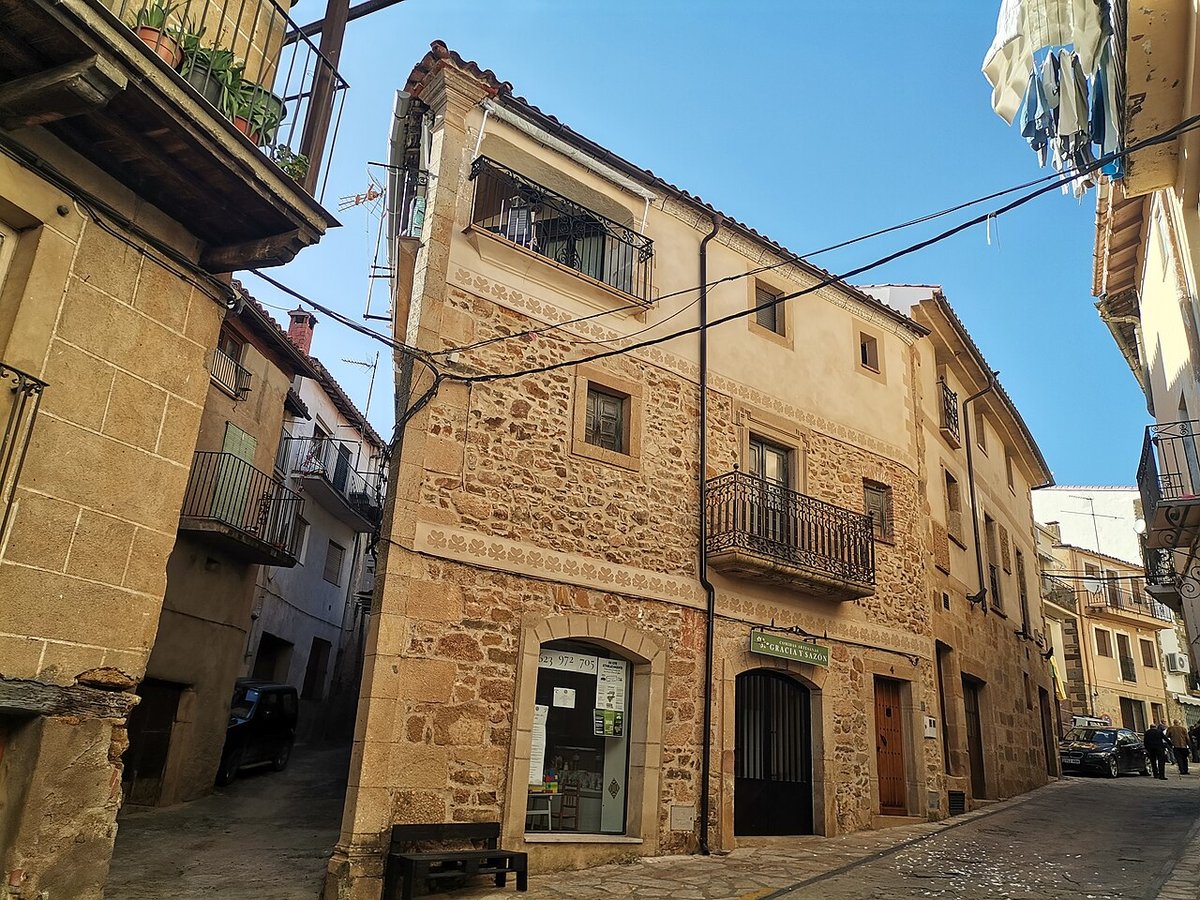
If you only have a few hours, let yourself get lost in the streets that spiral away from Calle Mayor. There’s no route to follow. You’re looking for texture: the grain of weathered timber, a coat of arms carved into a doorjamb, the scent of woodsmoke from a horno that’s still used. The best light comes late, when the sun slants between buildings and warms the stone to a soft gold. That’s when people reappear on their doorsteps, and the village settles back into its evening quiet.
Come in spring or autumn if walking is your aim. The air is clear, the hills are green or flushed with colour, and you can spend hours outside without feeling drained. Summer requires a different rhythm—early starts and long siestas—but rewards you with those cold mountain pools. In any season, this is a place that feels lived-in, not staged. You adapt to its pace, or you miss it entirely.