Full Article
about Cadalso
Quiet village in the Sierra de Gata, ringed by pine woods and home to a historic fortified house.
Hide article Read full article
A Place That Reveals Itself Slowly
Some villages make an instant impression the moment you step out of the car. Cadalso, in the Sierra de Gata, works differently. What you notice first is the silence and the feel of granite underfoot. Only after a while does the place begin to make sense.
Tourism here is not about large monuments or viewpoints with queues. It is about paying attention to smaller things: how the houses are built, the way a narrow street bends, or a stone bench that fills up in the early evening.
Cadalso does not try to impress. It settles into its own rhythm, and visitors tend to follow.
A Small but Coherent Town Centre
Cadalso is easy to walk around. Within ten minutes you will have a sense of the main streets. Yet it is the kind of place where a second or third lap feels worthwhile.
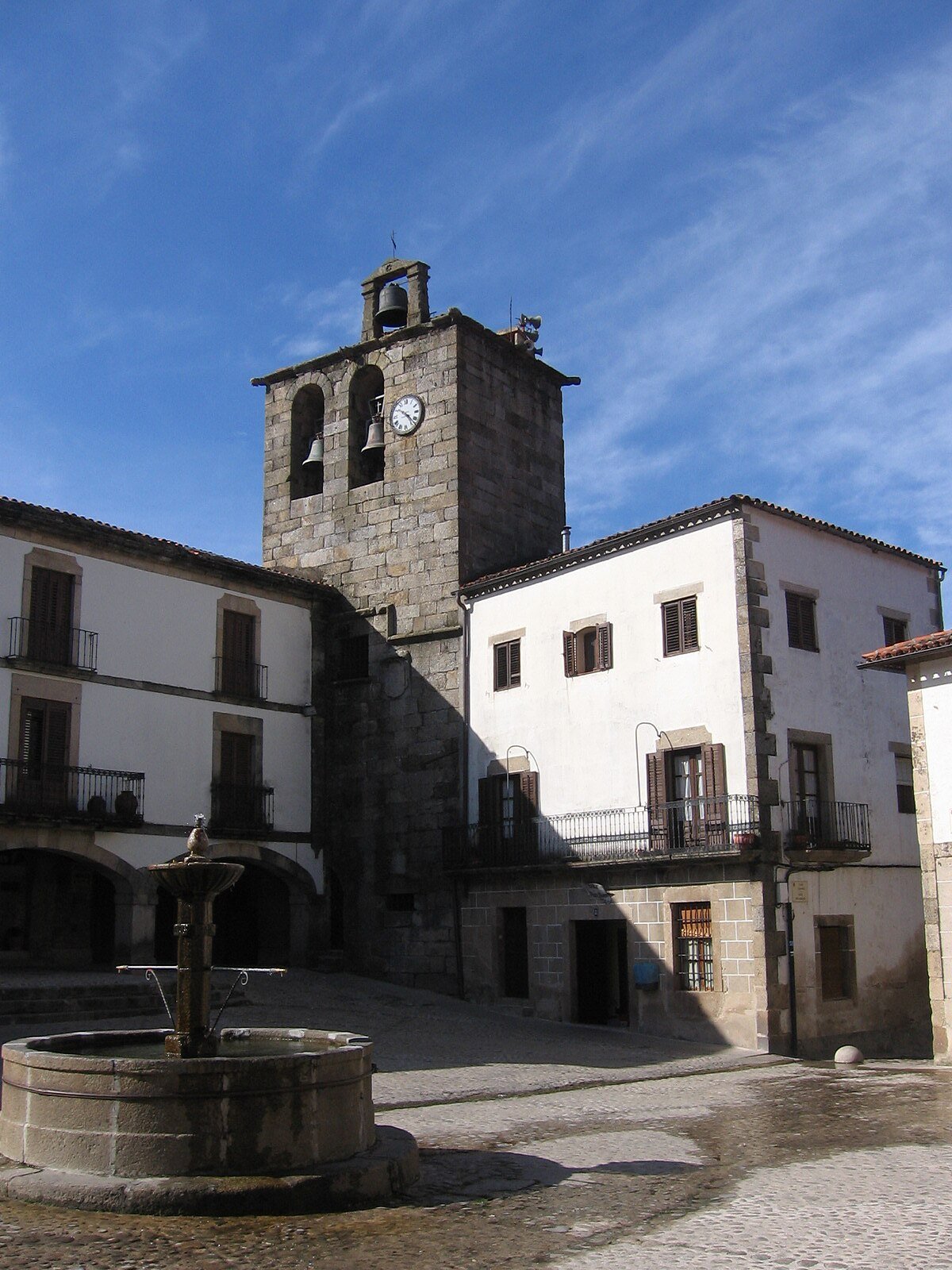
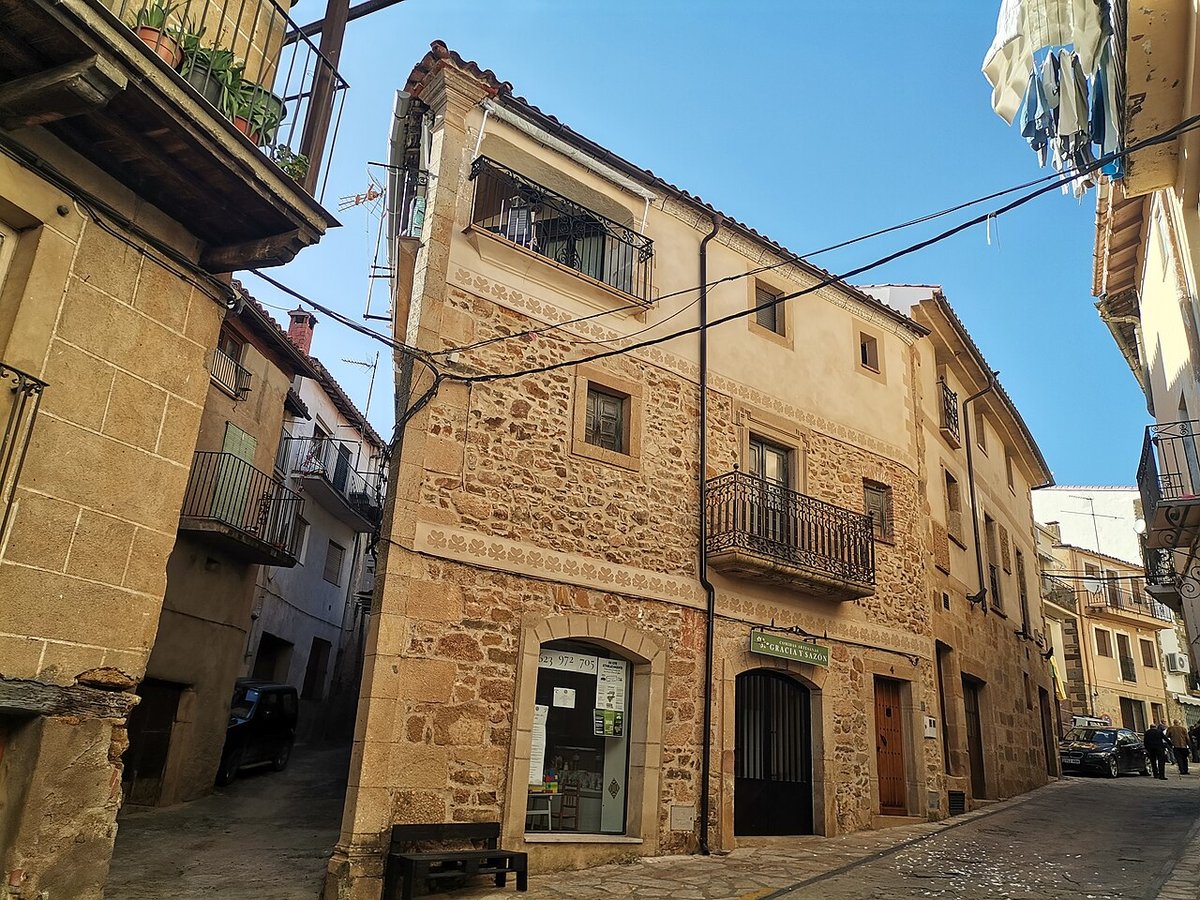
The Plaza Mayor sets the tone. It is simple, framed by granite walls, with a well at its centre. It does not feel designed to stand out. Instead, it works as a place to gather, chat for a while, then carry on with the day.
A short walk away stands the church of San Pedro, built in the 16th century. It is not monumental in scale. Like the rest of the village, it keeps to a restrained style: stone construction, balanced proportions and very little ornament.
The houses follow the same pattern seen across much of the Sierra de Gata. Granite and slate appear together again and again. There are iron balconies, solid doorways and interior courtyards where pots of mint or rosemary are often kept. These details may seem minor, but they give a clear sense of how life has been lived here over time.
The Landscape Around Cadalso
Step beyond the village and the setting becomes just as important as the streets.
The surrounding land is made up of gentle hills and open cork oak groves. If you have travelled through this part of the Sierra de Gata, the scene will feel familiar: dirt tracks, scattered plots of land and streams that appear unexpectedly.
In some fields, Iberian pigs can still be seen moving between holm oaks. There are also old olive groves, some of them so longstanding that no one can say exactly how long they have been there.
As evening approaches, the nearby hills change colour. Among them are the Cerro de San Pedro and the Cerro del Sauce. The shift is not dramatic or showy. It is a softer golden light that tends to hold your attention a little longer than expected.
A Base for Exploring Sierra de Gata
Many people pass through Cadalso while travelling around the Sierra de Gata, and its location makes that a practical choice. It sits close to several other villages in the region, as well as a network of traditional paths.
Some of these routes link nearby settlements, following old tracks once used by farmers and shepherds. They are not always marked like modern walking trails, so it helps to take things slowly and carry water, especially in warmer weather.
The reward is a quieter kind of walking. If the idea is to move through the landscape without many people around, this area still allows for that.
Local Food and Seasonal Traditions
The food in and around Cadalso reflects a rural way of life. Dishes tend to be hearty and straightforward.
Goat meat, or cabrito, appears regularly on local tables. So do cured meats made from Iberian pork, which are common throughout the Sierra de Gata.
In autumn, once the rains arrive, mushrooms begin to appear in nearby pine forests. Many people from the area go out to collect them. For those unfamiliar with the different varieties, it is best to go with someone who can recognise them properly. In the countryside, mistakes are rarely harmless.
When the Village Comes to Life
For much of the year, Cadalso is very quiet. At times, it can feel almost empty. But there are moments when that changes.
Festivities dedicated to San Pedro bring back residents who live elsewhere and return for a few days. The main square becomes busier than usual, and the village briefly recaptures a sense of activity that likely used to be more common.
During Semana Santa, or Holy Week, there are also processions. They are simple and unadorned. Neighbours walk slowly through the familiar streets, accompanied by traditional songs that are still preserved.
When to Visit and How to Approach It
Spring and autumn are usually the most comfortable seasons for walking in the surrounding countryside. The landscape shifts noticeably between them.
Summer brings strong heat in the middle of the day, although nights tend to cool down. Winter has very quiet stretches, when it can feel as though the village is only half occupied.
Whenever you come, the approach is the same. Take it slowly. Park, walk through the streets without rushing, then head out along one of the nearby paths. Cadalso does not require much effort to understand. That, in a way, is where its appeal lies.