Full Article
about Hernán-Pérez
Olive-growing village with major Bronze Age archaeological finds.
Ocultar artículo Leer artículo completo
The church bell strikes seven and the only reply is a dog barking somewhere beyond the stone walls. At 441 metres above sea-level, Hernán Pérez wakes reluctantly; lights come on in granite houses, wood smoke drifts above the roofs, and the village’s 424 inhabitants begin another day that will finish much as it started—slowly, quietly, within earshot of the Sierra de Gata’s first oak woods.
Granite, Castaños and the Art of Doing Very Little
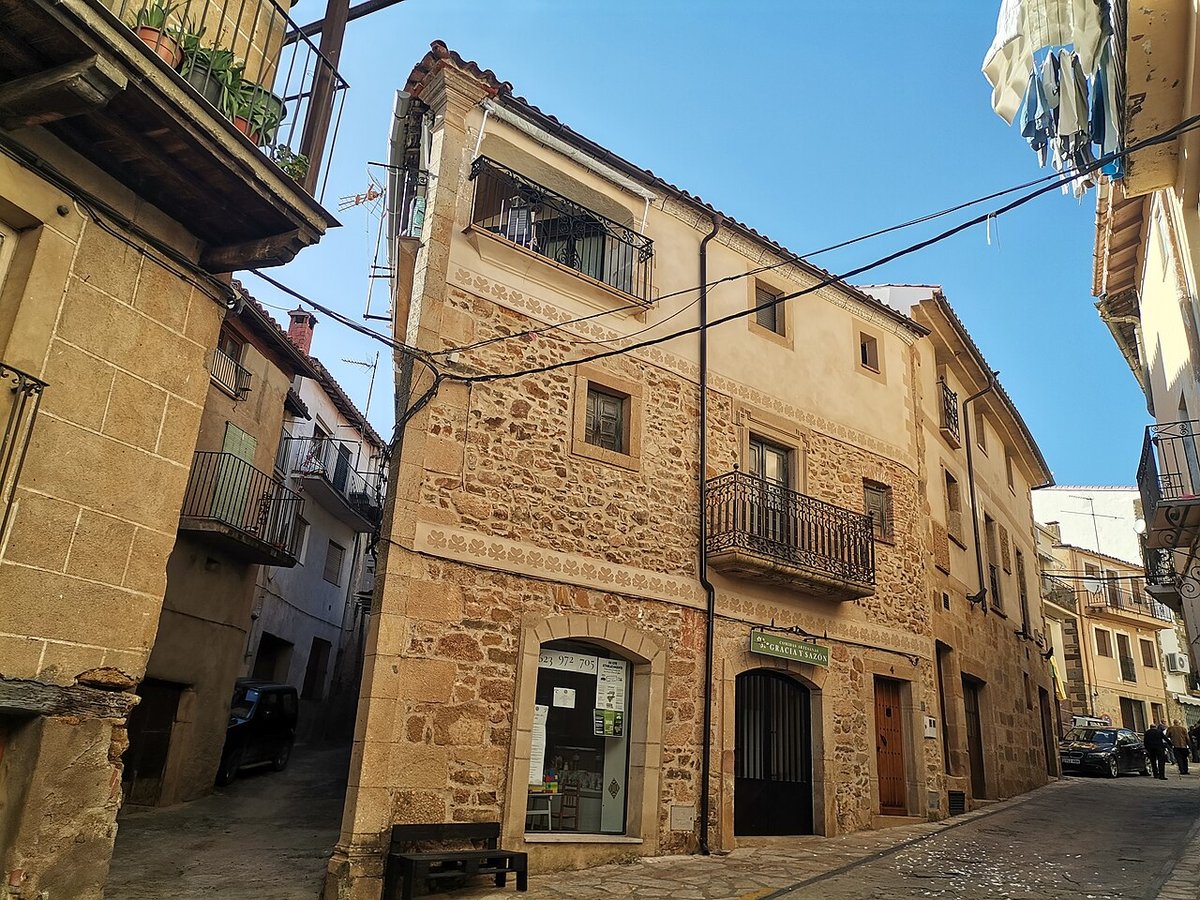
There is no high street, no souvenir shop, no ticketed attraction. Instead, three parallel lanes climb a modest ridge, narrow enough that a Seat Ibiza fills the gap wall-to-wall. Doorways are painted the traditional Extremaduran palette—ox-blood red, indigo, faded green—and every second one has a hand-written note taped to the iron grill: “Se vende huevos, 3€ docena”. The eggs are from hens you can hear gossiping behind the house; money goes in an old Marmite jar.
Architecture is pure mountain pragmatism: thick stone to blunt winter’s knife, Arab tile to shrug off summer fire, tiny windows to keep both extremes outside. Look up and you’ll see balconies no wider than a dinner tray, built for airing blankets rather than romantic declarations. Granite quoins sparkle when the sun breaks through; after rain the whole village smells of wet rock and wood smoke, a scent that lingers in jumper sleeves long after you leave.
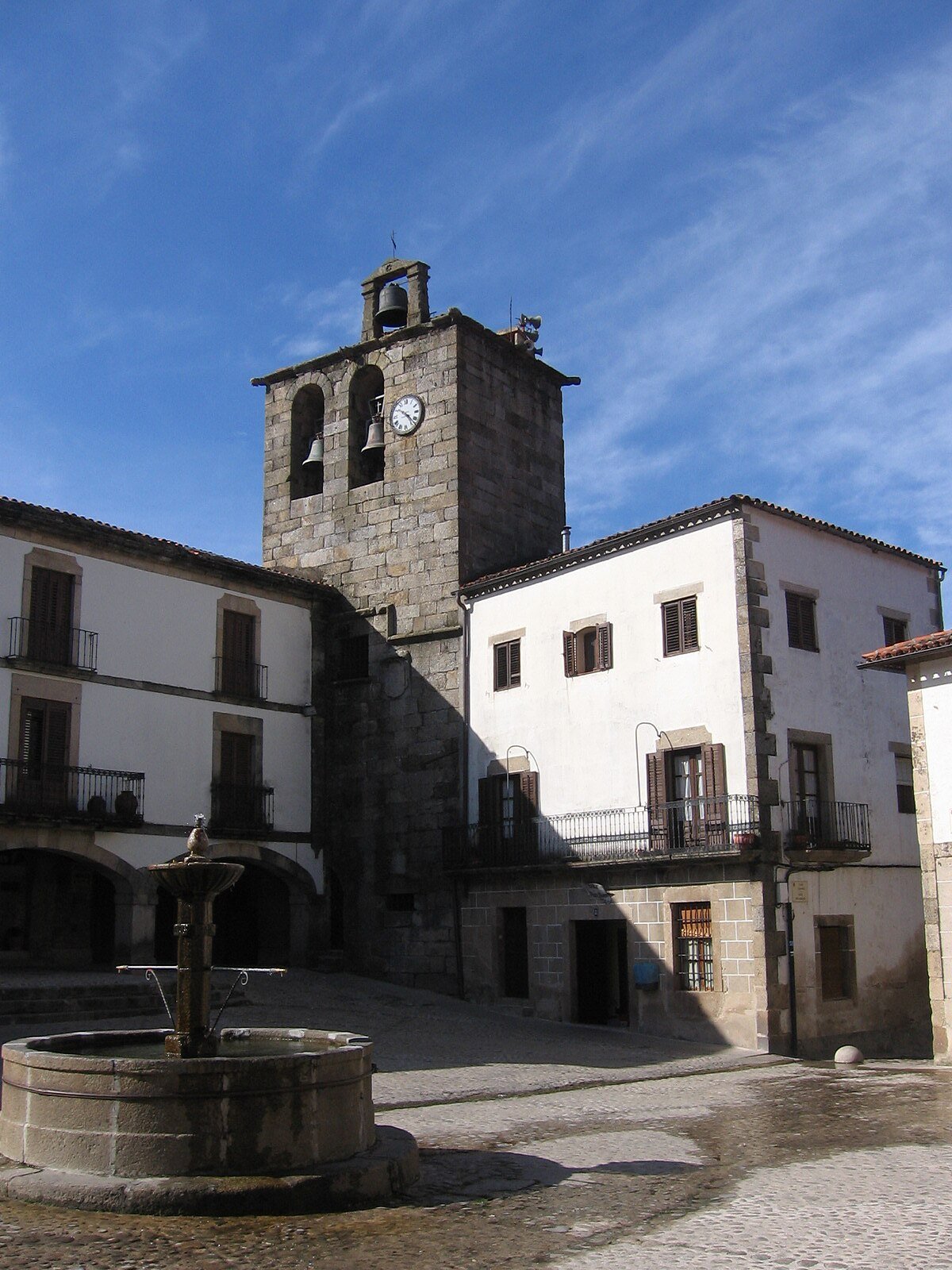
The parish tower, square and unadorned, acts as visual compass. From the tiny plaza in front you can pick out three distinct layers of landscape: the last houses, then a belt of sweet-chestnut, then the higher ridges where wild boar root among heather. Autumn saturates the view—leaves turn copper, ochre and rust-red until the hills look like oxidised iron. Photographers arrive expecting postcard perfection; they leave with memory cards full of half-shutters and blurred leaves because the wind, funnelled up from the Águeda valley, refuses to keep anything still.
Paths that Remember More than Maps Do
Footpaths leave the village like spokes, following drove-roads older than the Reconquest. One hour south-east drops you into the Arroyo de los Molinos, where two stone mills still hold their wheels, now jammed with sycamore seed. Another hour north gains 300 metres of altitude to the Puerto de Honduras, a grassy saddle where shepherds once counted flocks before crossing into neighbouring Salamanca province. Spring brings orchid fireworks—Anacamptis, Ophrys, tiny purple explosions among the bents. In July the same meadows are yellow with rock-rose and the air vibrates with bee wings; take water, because shade is negotiated, never guaranteed.
Maps mark most routes as “linear”, but locals treat them as larder runs. October weekends see grandparents in boiler suits and carpet slippers, wicker baskets on hip, scanning leaf litter for boletus and amanita caesarea. They’ll nod at passing hikers, offer a perfunctory “muchas setas”, then disappear among the trunks. Follow at your peril: knowledge here is generational, not instructional, and the hospital in Ciudad Rodrigo is 45 minutes away.
Wildlife follows the same code of discretion. Roe deer drift across clearings at first light; Iberian wolves have been heard but never Instagrammed. Golden eagles ride thermals above the chestnut canopy, yet the typical sighting is a single feather on a path, impaled by a boot print. Patient sitters—those who find a fallen trunk and keep still for thirty minutes—might earn a wild boar sow and striped young crossing a stream, but the forest repays silence, not selfie sticks.
Eating What the Woods and Backyards Give Back
There is no restaurant in Hernán Pérez. Meals happen in kitchens that open only when you phone ahead, and even then the menu is whatever Tía Concha bought from her neighbour at dawn. Expect migas—breadcrumbs fried in chorizo fat until they resemble savoury granola—followed by jabugo cheek slow-cooked with bay and pimentón. Chestnuts appear in everything: puréed under roast pork, candied in syrup, or simply split on the brasero until they pop like chestnut-flavoured popcorn. The local wine is a young tinto from Tierra de Barros sold in unlabelled litre bottles; it costs €3 and tastes of blackberries with a faint diesel note that somehow works.
If you prefer self-catering, the Thursday market in nearby Robleda de la Sierra (20 min drive) sells lettuce still warm from sunrise, cheese wrapped in chestnut leaves, and morcilla so fresh it’s advised to carry it in the boot, not the boot-seat. Cooking facilities in village rentals are basic—four-ring gas hob, dented paellera, knives that have seen sharper days—yet the raw ingredients forgive blunt steel.
When to Arrive, How to Leave Without a Dent
Public transport is a myth. The last bus that dared climb the CC-134 turned round in 2011 and never returned. A hire car from Madrid-Barajas (2 h 45 min on the A-5 and EX-390) is the realistic route; fill the tank at Navalmoral de la Mata because the final 40 km offer nothing but stone walls and suspicious goats. Roads twist, GPS wavers, and the verges are littered with wing-mirrors sacrificed to oncoming tractors—drive slowly, use the horn at blind bends, and you’ll still meet someone’s grandfather leading cows who refuse to yield.
Accommodation is limited to three privately owned casas rurales, each sleeping four to six and charging €80–€120 a night. Heating is by pellet stove; instructions are in Spanish, but the gist is “don’t touch the red button”. Hot water is plentiful once the fire’s been coaxed for twenty minutes—plan evening showers, not dawn dashes. Phone signal fades in direct proportion to cloud cover; WhatsApp works from the church steps if you stand on the left side, face north, and hold your breath.
The village festival, honouring the Virgen del Rosario, erupts for three days around the first weekend of August. Population swells to 1,200, every bocadillo sells out by 11 p.m., and the plaza becomes an open-air ballroom where grand-daughters of emigrants dance pasodobles with cousins they last saw at the previous funeral. It’s hot, loud, generous—book a year ahead if you insist on witnessing communal joy. Come any other time and you’ll share the night silence with one bar, two streetlights and the bell that still can’t believe anyone bothered to listen.