Full Article
about Moraleja
Commercial and service hub of the Sierra de Gata; urban feel in a rural setting
Hide article Read full article
A town that keeps things simple
Moraleja has around 6,500 inhabitants and sits at the lower end of the Sierra de Gata, in northern Extremadura. It is better understood as a place you pass through or use as a base rather than a classic weekend destination. Life here is organised around services and everyday routines more than sightseeing.
If you arrive by car, it makes sense to leave it on one of the main approach avenues and continue on foot. The centre includes several pedestrian streets, and in summer it can be difficult to find a space close to the main square. Once you are walking, distances are short and easy to cover.
What you will find, and what you will not
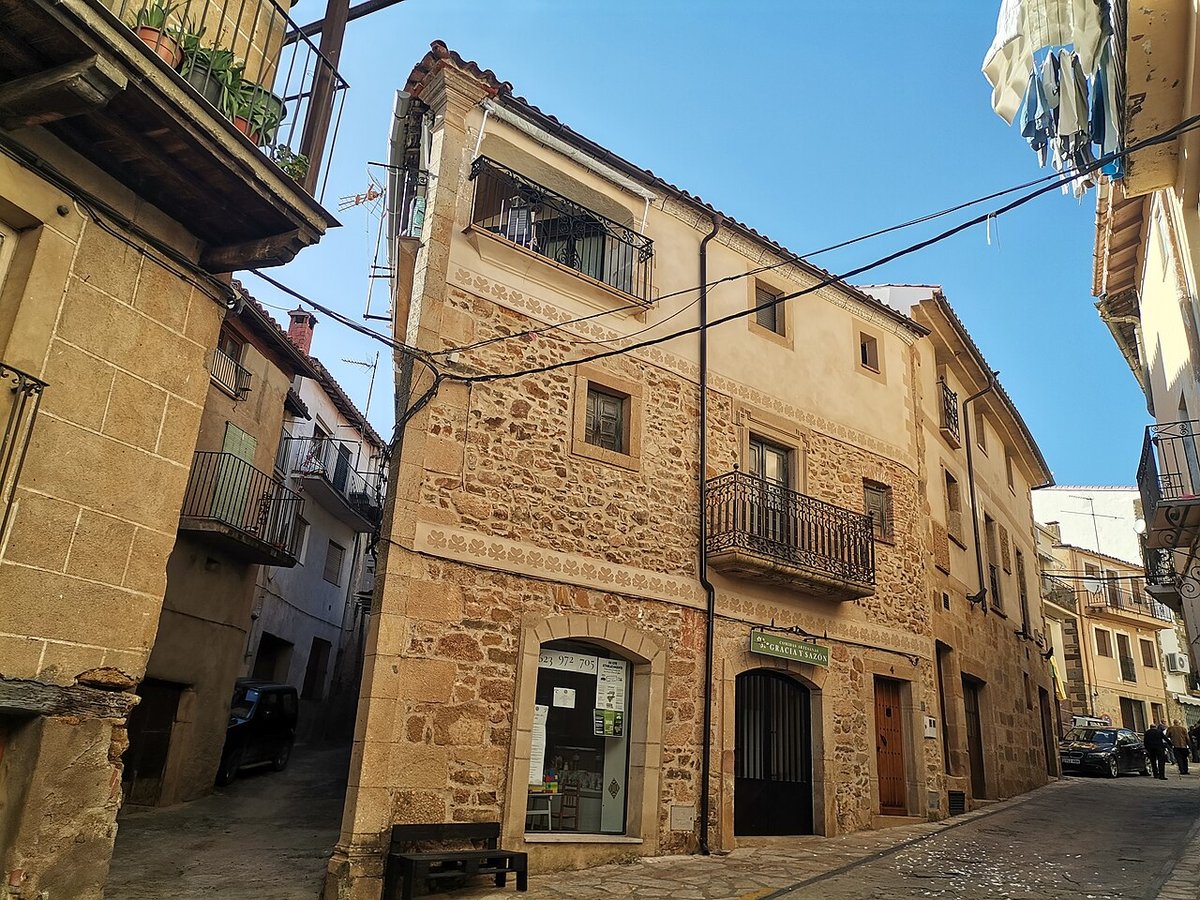
Moraleja does not have a large historic quarter. The core is limited to four or five streets around the main square, and that is largely it. The town expanded mainly during the 20th century, so most buildings are relatively recent and built with function in mind rather than decoration.
In the centre stands the casa‑palacio de la Encomienda. The building is old, often described as having medieval origins, although today it serves as municipal offices. It is something you view from the outside rather than a place to explore inside. There is a local story that Felipe II passed through Moraleja on one of his journeys to Portugal. It is the kind of tale repeated over time without much documentary evidence to support it.
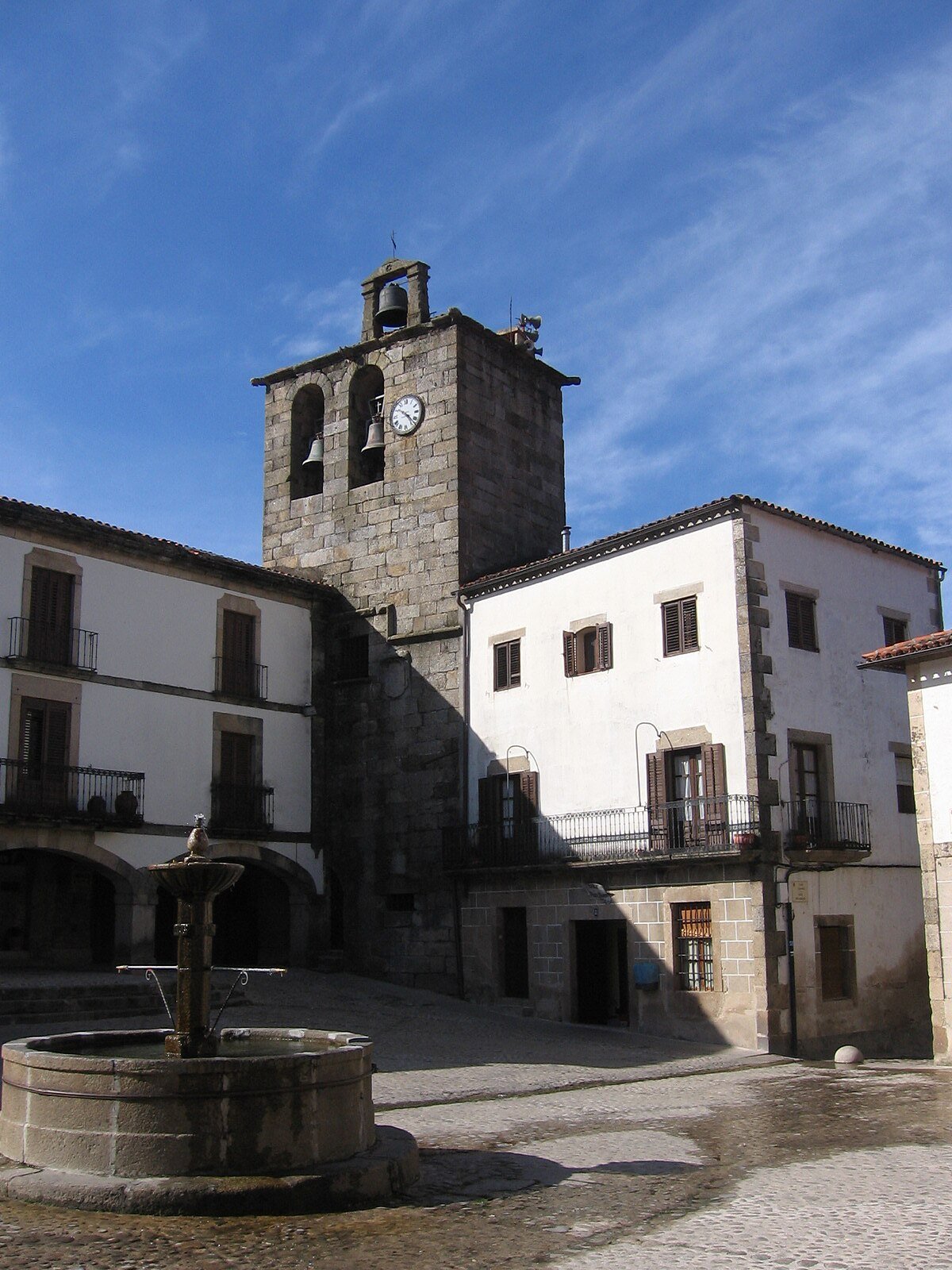
The iglesia de Nuestra Señora de las Angustias occupies the main square. Dating from the 16th century, it is more interesting inside than out. The interior contains Baroque altarpieces that tend to draw attention once you step in. It is usually open in the morning or during services, so timing matters. If the doors are closed, the only option is to return later.
A few kilometres outside town, heading into the countryside, are the remains known as the castillo or torre de Milana. The final stretch is typically done on foot along a rural path. At the top, there are fragments of walls and little else in terms of structure. What makes the walk worthwhile are the views across the plain and towards the Portuguese border, which lies not far away.
After dark: skies and quiet routes
One of Moraleja’s quieter strengths appears when the sun goes down. The area is known for its dark skies, with relatively low light pollution compared to larger cities. For that reason, stargazing activities are sometimes organised in the surrounding area.
Some night routes start on the outskirts of town and follow simple paths through open countryside. They are not complicated walks, but they do require a bit of preparation. If you head out on your own, a torch is essential, and an extra layer is a good idea even in summer. Temperatures drop quickly after sunset in this part of the sierra.
Moonless nights are the best for seeing the sky clearly. On those evenings, the absence of artificial light becomes very noticeable, and the landscape feels more open and quiet than during the day.
Eating in Sierra de Gata style
Food in Moraleja follows the traditions of the Sierra de Gata. The dishes are straightforward and tied to local produce. Migas, a dish based on fried breadcrumbs, appears when the weather turns cooler. Pork is common in many forms, reflecting the livestock of the region. Olive oil from the area is widely used, often with a strong flavour.
The local oil carries the Sierra de Gata designation and tends to be quite intense. It is a defining element of many meals rather than a background ingredient.
Honey from the dehesa landscape also shows up frequently, along with traditional sweets. These desserts do not hold back on sugar and are firmly rooted in older recipes.
Local wine is present but without big ambitions. It does its job alongside a meal without trying to stand out.
Festivals and busy moments
Moraleja has several points in the year when the pace changes and the town fills up.
In July, the celebrations for San Buenaventura bring music, bull-related events and a noticeable increase in activity in the centre. Streets that are usually calm become more crowded during these days.
At the end of August come the Ferias Rayanas. The proximity to Portugal, with the border a short drive away, means many visitors arrive from across the frontier. The town becomes busier than usual, and the atmosphere reflects that mix of local and cross-border presence.
San Blas is celebrated in February, with the feel of a winter festival. Later in the year, usually in May, the romería of the Virgen de la Vega takes place in a nearby meadow. Families gather outdoors and spend the day together, turning the countryside into a temporary meeting point.
A place to pass through, or to base yourself
Moraleja is quick to explore. A walk around the main square and the surrounding streets, followed by a short outing into the nearby countryside, is enough to get a sense of it. In summer, it is more comfortable to do this in the late afternoon when the heat begins to ease.
For travellers specifically interested in historic architecture, other towns in the Sierra de Gata offer more to see. Moraleja works better as a practical base for moving around the region than as a destination filled with landmarks.
That balance defines it. It does not try to impress with grand sights, but it provides a functional, accessible place from which to explore a wider landscape.