Full Article
about Pozuelo de Zarzón
Agricultural village with olive-growing tradition at the entrance to the Sierra de Gata
Hide article Read full article
A village you arrive at by chance
Some places are not planned. You are heading somewhere else, glance at the map, notice a turning and think it might be worth a look. Pozuelo de Zarzón, in the Sierra de Gata, fits that idea quite well. It is a small municipality, with just over four hundred residents, where daily life stays closely tied to the land and where time is shaped more by tasks than by the clock.
The setting explains a lot. Around the village you find olive groves, small cultivated plots and areas of dehesa, the traditional pastureland of western Spain. These landscapes are not decorative, they are part of how people live here in the north of Cáceres. This is not a place for ticking off a long list of sights in a single morning. It suits a slower visit: a short walk, a pause on a bench, a chance to take in how things work.
It also avoids the kind of image that circulates widely on social media, and that is part of its appeal. Pozuelo de Zarzón makes more sense without expectations, simply by wandering and noticing what everyday life looks like in a small Sierra de Gata village.
The proximity to Portugal adds another layer. In this part of the province, crossing the border has been routine for generations. That shows up in small ways, from Portuguese words slipping into conversation to family stories that stretch across “la raya”, the line that separates the two countries.
The village, in its own quiet way
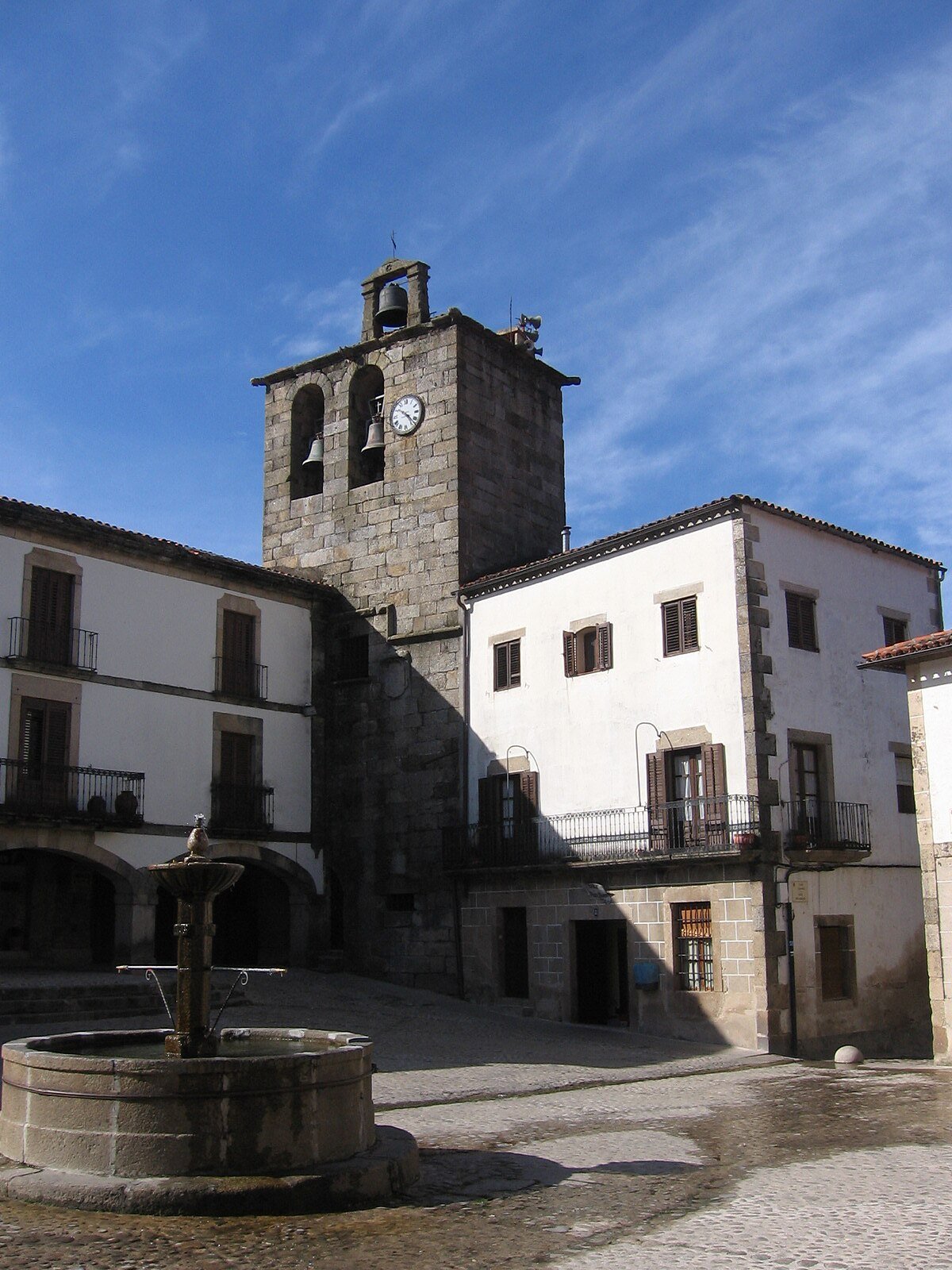
The main point of reference as you walk through Pozuelo de Zarzón is the parish church of San Pedro. It is not grand or elaborate. Instead, it is solid and straightforward, built with local stone, with a tower visible from different parts of the village. It helps you find your bearings as you move through the streets.
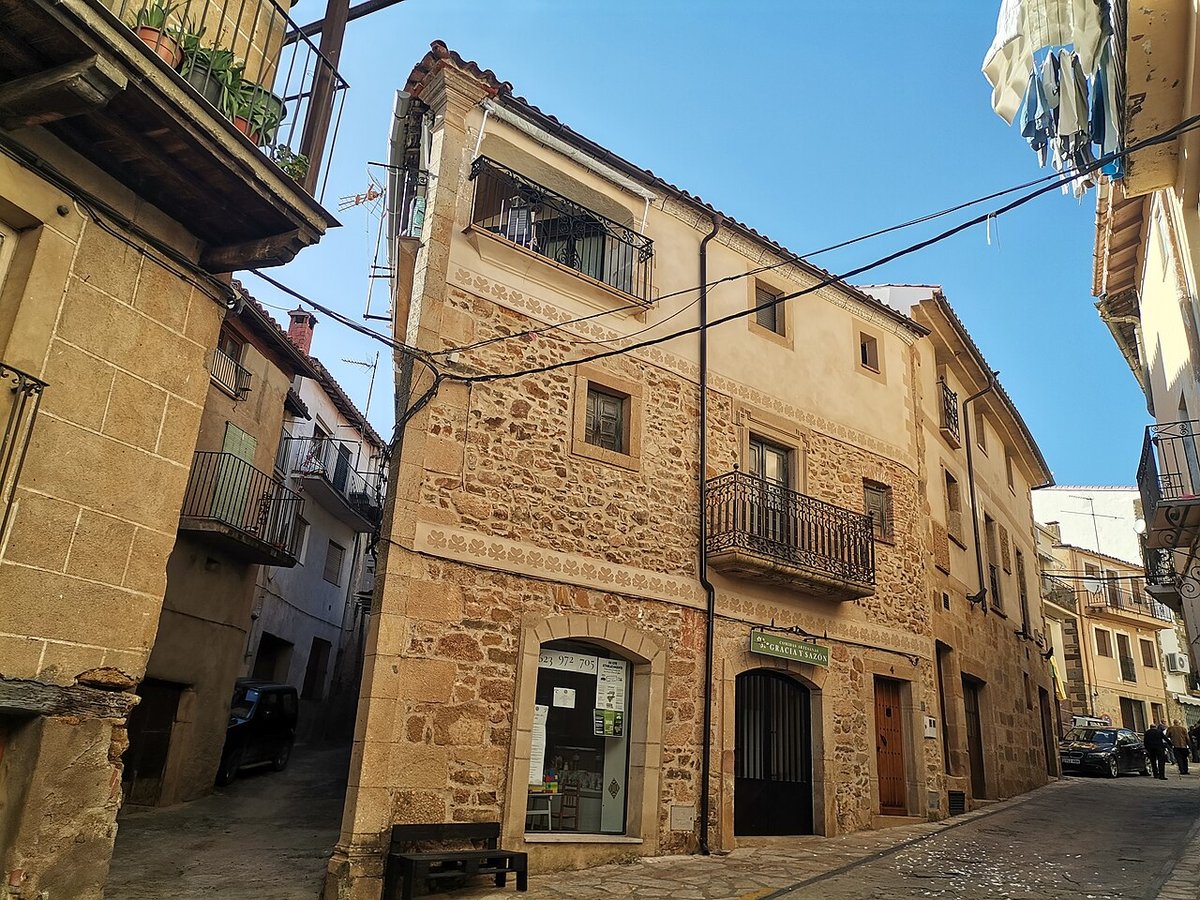
Beyond that, the interest lies in details rather than headline sights. Houses with granite doorways, restrained iron balconies and interior courtyards where traditional tasks still take place. In some homes, old cellars or spaces once used for making wine remain. These elements point to a time when many families produced much of what they consumed.
There is no monumental historic centre to speak of. What stands out is more ordinary: a well-crafted old door, a narrow shaded street in summer, the sound of church bells marking the hours. It is a place where attention shifts to small things.
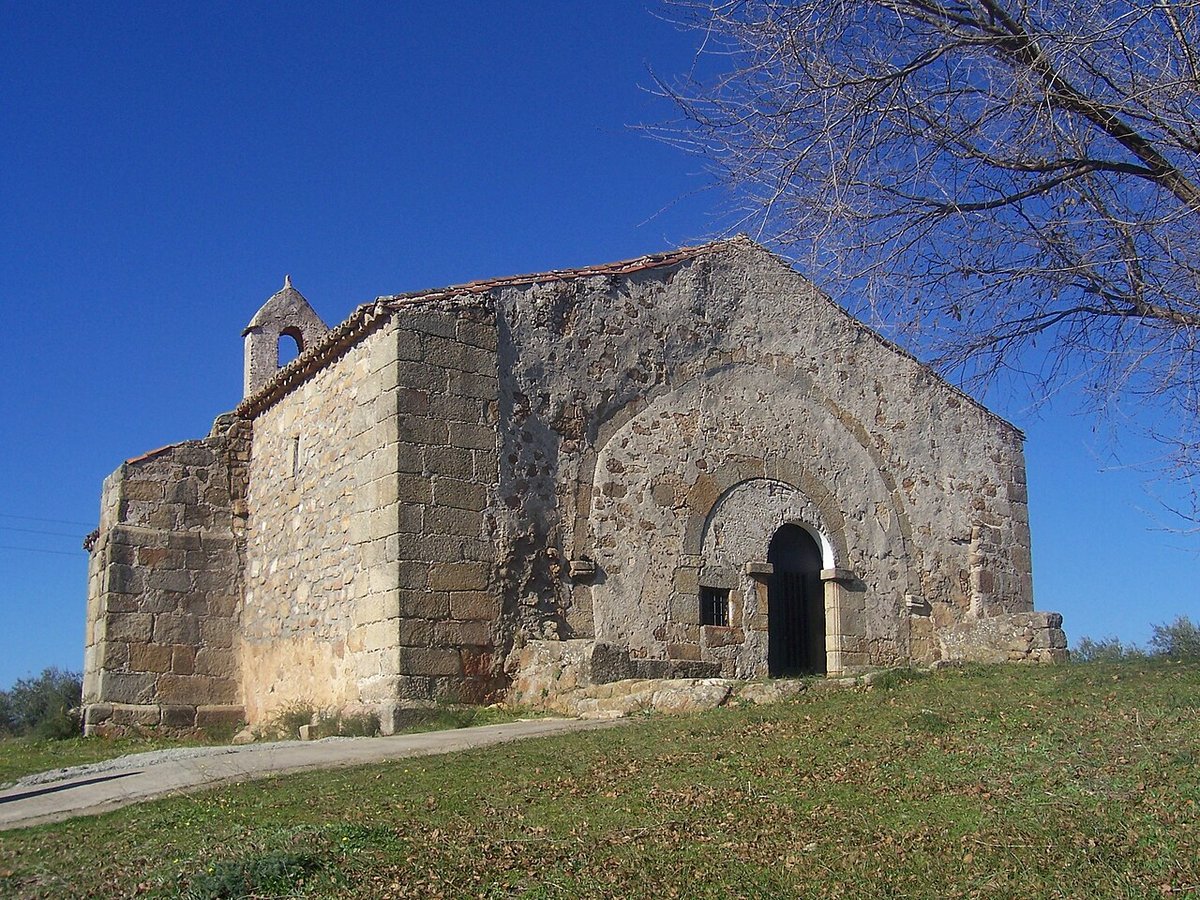
Step outside the village and the landscape changes quickly. Scattered holm oaks, agricultural plots and extensive olive groves define the surroundings. In spring the fields turn green and fill with wildflowers. In summer, the ground dries out and takes on yellow tones, with the olive trees creating a strong contrast.
Walking the old paths
Several traditional paths lead out from Pozuelo de Zarzón towards farmland and neighbouring villages. Many of them have been in use for decades, shaped by farmers, shepherds and anyone moving between nearby settlements.
They are not laid out as marked tourist routes. It makes more sense to think of them as gentle walks rather than formal hiking trails. For anyone who enjoys walking without rushing, there is plenty to notice: dry stone walls, birds crossing the sky, old threshing floors that recall earlier ways of working the land.
This is also a place that appeals to those who like photographing small details. Worn doors, agricultural tools, ancient olive trees or façades where time seems to pass more slowly all offer quiet points of interest.
Food rooted in the land
Local cooking stays closely linked to what the surrounding land provides. Dishes such as migas, along with hearty stews and home-made cured meats, form part of the culinary tradition in the area. Olive oil is present in almost everything, which is no surprise in a village surrounded by olive groves.
During festivals or family gatherings, traditional sweets from the province appear. Perrunillas, a type of biscuit, and home-made roscas are shared and passed around. These recipes are part of everyday culture rather than special occasion showpieces.
In some households, wine is still made in a traditional way. It is less about commercial production and more about maintaining a family custom that has continued over time.
Festivities and everyday life
The main celebrations usually take place in August. This is when the rhythm of the village changes, as many people who live elsewhere return. The streets become busier, neighbours reconnect and activities are organised locally.
At Christmas, traditions remain simple. There are gatherings among neighbours, carol singing and home-made sweets shared between households. These are small-scale celebrations, very much rooted in village life, where people know each other well.
The road in
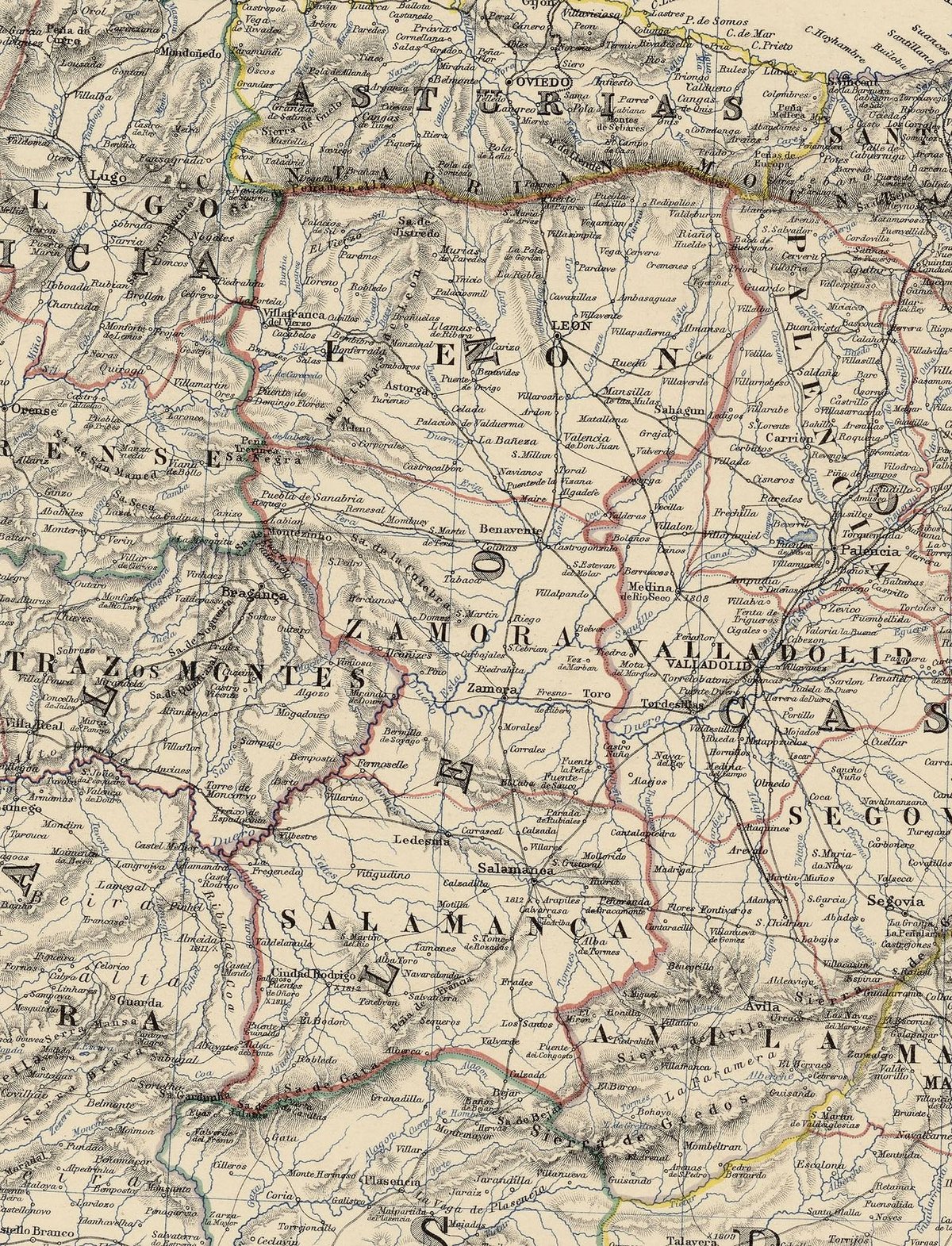
Reaching Pozuelo de Zarzón involves taking things steadily. From Cáceres, the usual approach is to head northwest and then continue along local roads that cross the Sierra de Gata.
It is not a particularly fast journey, though that works in its favour. The landscape shifts gradually along the way, easing you into the setting before you arrive.
A visit here works best without rushing or trying to compile a checklist. A walk through the streets, a look at the surrounding paths and a bit of observation go a long way towards understanding how a small municipality in this part of Extremadura functions. Sometimes that is more meaningful than any single landmark.