Full Article
about San Martín de Trevejo
Historic-Artistic Site where 'A Fala' is spoken; streets with water channels
Ocultar artículo Leer artículo completo
San Martín de Trevejo doesn’t shout. It murmurs, in a voice half Portuguese, half mediaeval Castilian, that locals call A Fala. Stand in the Plaza Mayor at eight o’clock on a weekday and you’ll hear it rising above the clatter of walking sticks and coffee spoons—an accent that turns Spanish jamón into xamõ, English “yes” into something like xá. The village is 180 km west of Salamanca, 40 km beyond the last proper supermarket, and it feels it.
The road in leaves the A-66 at Plasencia, wriggles past oak woods, then corkscrews up to 600 m. Mobile signal drops out long before the stone arch that reads “Bienvenido a San Martín de Trevejo”. Park where the tarmac ends; beyond that the lanes are barely shoulder-width and the granite sets are slick even in July. A hire car the size of a Fiesta will scrape both walls—ask the man from Cáceres reversing his Volvo with the mirrors folded in.
Stone, timber and lives still being lived
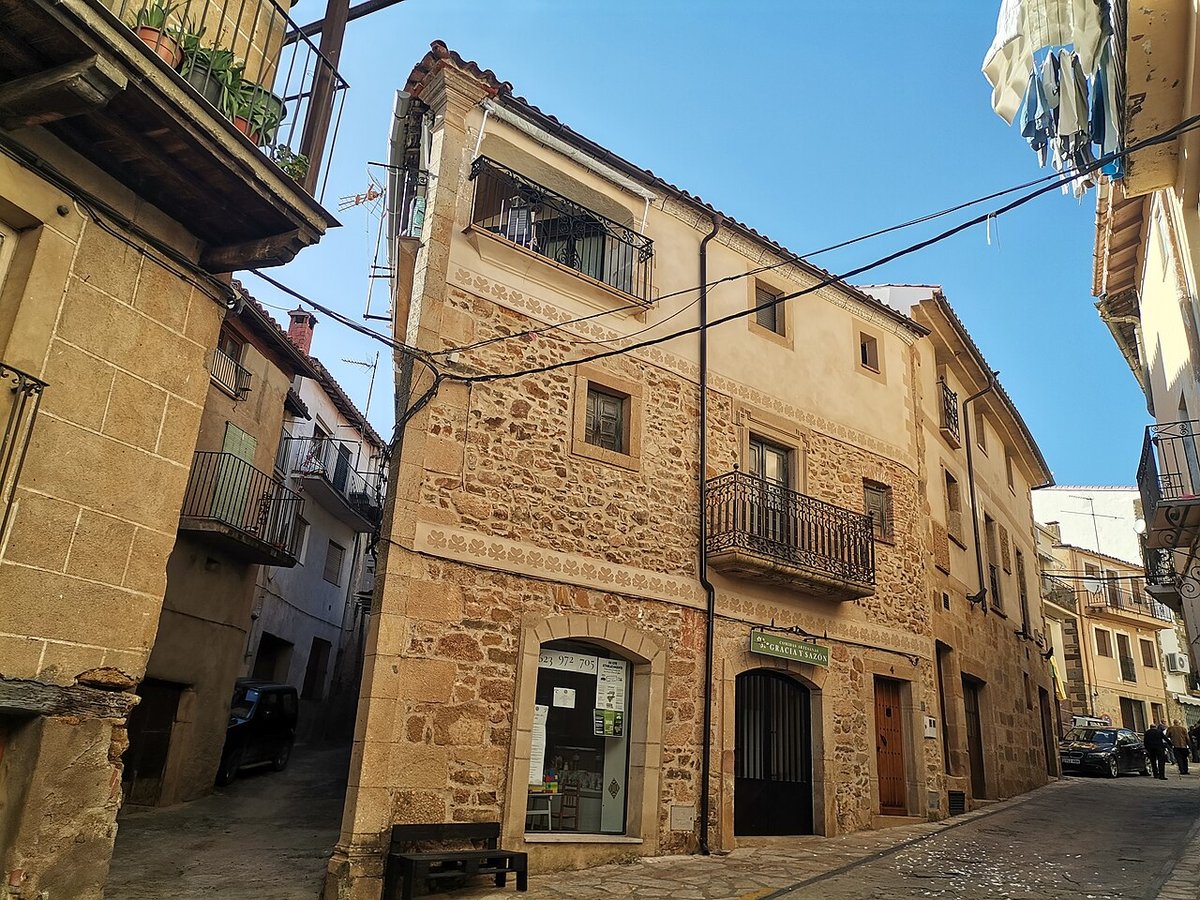
Houses here stack in three layers: a granite cellar for wine or chestnuts, timber beams stuffed with adobe for living, and a cantilevered balcony that throws afternoon shade onto the street below. It is the sort of carpentry you’d pay to see in an English open-air museum, except the washing lines are full of Real Madrid shirts and someone’s parked a quad bike in the hallway. The façades are rosier than the Cotswolds, the stone darker than the Picos, and there isn’t a single gift-shop selling lavender bags.
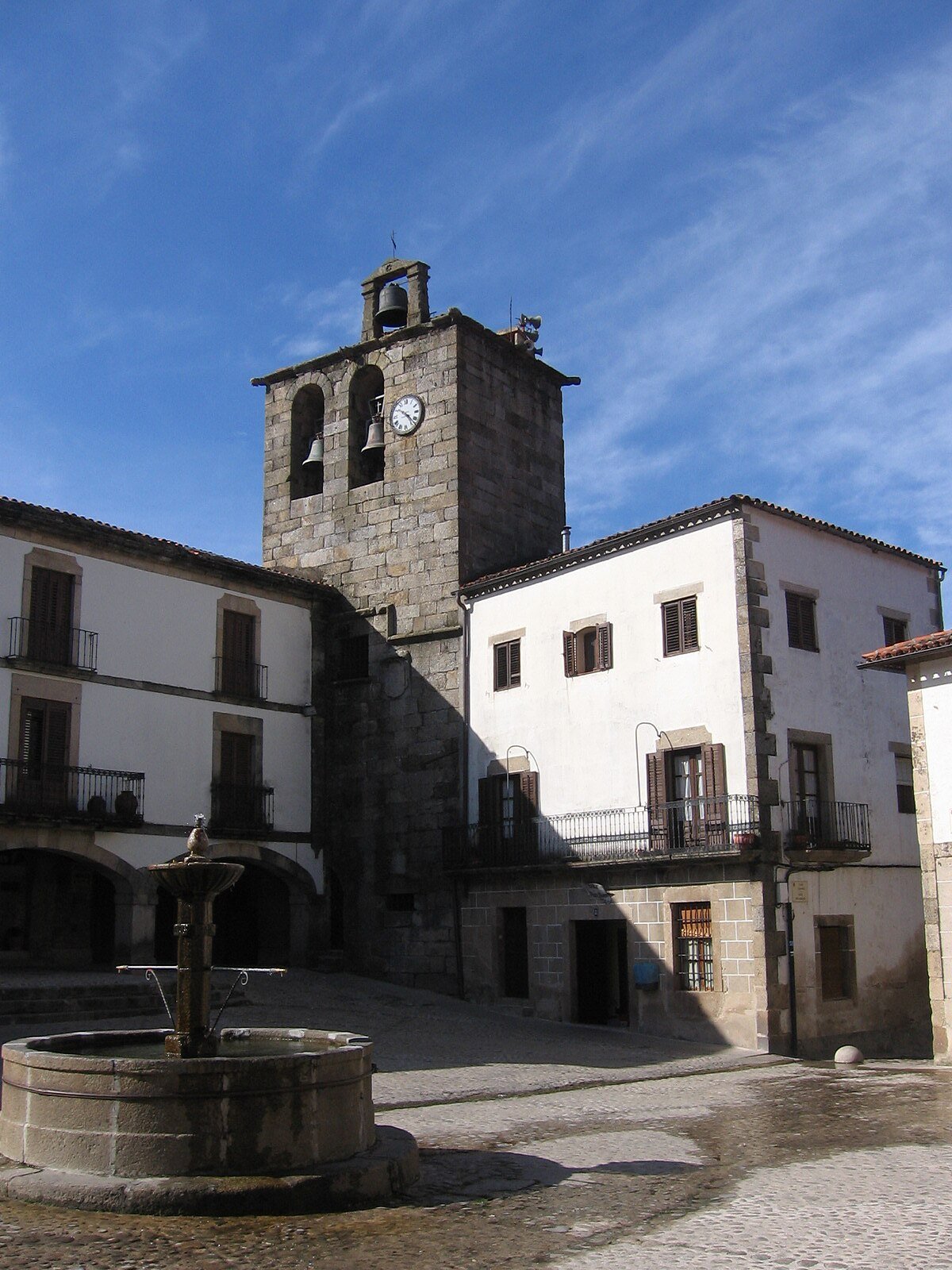
Start with the church tower—visible from every alley—and you won’t get lost. The Iglesia de San Martín de Tours is 16th-century pragmatic: thick walls, small windows, a Baroque altar inside that glints when the sacristan remembers to switch the lights on. Opening times are written in chalk on the door and change with the priest’s rheumatism. Donations go to roof slates; the box is nailed down so tightly you’ll need a 50 c coin and determination.
Next door, the Museo de la Fala is two rooms knocked together, admission free, labels in Spanish but easy enough to follow. You’ll learn that A Fala is recognised by UNESCO as a “language in danger”, though danger here looks like three grandmothers gossiping on a bench, fluent and unbothered. A short film plays on loop; turn the volume up because the soundtrack competes with the bakery fan next door.
Water, mills and a waterfall you can’t rely on
Leave the plaza by the upper gate, signposted Chorrera de la Miacera, and the houses thin out into olive terraces. Ten minutes on, a stone channel still carries drinking water from the mountain; the council refreshes the chlorine tablets every Monday, according to a handwritten note tied on with wire. Follow the channel and you reach a string of ruined mills—stone wheels, rye-drying floors, roofs long gone. Interpretation boards have faded to pale blue, but the engineering is clear enough: water hits the paddles, the grindstone turns, flour drops into sacks. No gift shop, no audio guide, just the smell of fennel crushed underfoot.
The path climbs another 45 minutes to the waterfall. In April, after the sierra snow melts, the cascade is a 20 m ribbon that soaks the path; in August it can dwindle to a damp streak on the rock. Go early, before the sun disappears behind the ridge, and take the detour to As Ellas, a chestnut grove where pigs still forage for fallen mast. The loop back to the village is 7 km, boots useful, water essential—there’s no café until you reach the plaza.
What to eat when the baker decides to open
Food is seasonal and proudly local. Inside the bakery on Calle Corredera, glass cases hold bizcocho mañegú, a feather-light sponge scented with aniseed that travels well in a rucksack. Arrive after 11 a.m. and you’ll find the shutters half down; the owner only bakes while the wood oven keeps its heat. Across the lane, Bar Trevejo serves migas extremeñas—fried breadcrumbs laced with garlic and chorizo—for €7, portion big enough for two unless you’ve just walked the mills circuit. Ask for pitarra wine; it’s served chilled in a plain tumbler, halfway between Beaujolais and cranberry juice, and at 11% won’t floor you before the hike back.
Sunday is problematic. The bar closes at 3 p.m., the bakery never opens, and the nearest cash machine is 25 km away in Valverde del Fresno. Fill the petrol tank and stock up on water before Saturday night. Picnic tables beside the plaza fountain are tolerated, but the locals prefer you take scraps home—village cats are already overweight.
Fiestas where the secret language sings
If you can, time a visit for the Fiestas de San Martín, 11 November. Morning mass is followed by a procession: brass band in fluorescent anoraks, children waving paper flags, mayor in a tricorn hat that predates the euro. The band strikes up a pasodoble and lyrics slip into A Fala—a moment when language, rather than fireworks, carries the celebration. Afterwards everyone crowds into the bar for caldo, a clear broth spiked with paprika and chunks of pork spine. It’s free if you buy a €1.50 caña, and the barman keeps ladling until the pot is empty.
Summer fiestas in mid-August are larger, noisier, designed for returning emigrants rather than outsiders. There’s a foam party in the football pitch, a drag act from Cáceres, and a marquee that thumps with reggaeton until 5 a.m. Book accommodation months ahead or stay 20 km away in Valverde, where the evening bus still runs.
Beds, bears and patchy Wi-Fi
Accommodation is limited to six self-catering houses and one rural hotel, all inside the old walls. Expect stone floors, wood-smoke aroma, Wi-Fi that drops when someone microwaves chorizo. Prices hover around €80 a night for two, breakfast not included. The hotel has a small pool carved into the rock—unheated, 20 degrees at best, and shaded by 4 p.m. Perfect after a July hike, less enticing in November.
Mobile reception is patchy on every UK network; Vodafone cuts out entirely by the church. The village depends on a single mast on Puerto de Honduras; if storms topple it, you’ll be reading paperback covers by candlelight. Bring an OS-style map: Google’s lanes stop halfway up the mountain and the waterfall path isn’t flagged.
Leaving without understanding a word
Drive out at dawn and the sierra glows rust-red behind you, olive terraces still dark in the valley. You will have spent two days nodding at conversations you couldn’t follow, dipping sponge cake into coffee thick as mud, and walking trails where the only interpretive sign is a arrow scratched onto a chestnut trunk. That is San Martín de Trevejo’s bargain: nothing is handed to you, but nothing is withheld either. The village keeps its language, its bread timetable, its stone mills and its Sunday silence. Visit once and you become a footnote in someone else’s ongoing story—an English accent remembered in the bakery, a pair of muddy boots rinsed under the plaza tap.