Full Article
about Valverde del Fresno
The largest village in the Jálama valley where 'A Fala' is spoken; a landscape of chestnuts and olives.
Hide article Read full article
First impressions on the hillside
Tourism in Valverde del Fresno starts with something very simple: finding a place to leave the car and continuing on foot. The approach comes via the EX-390, a road of steady bends. Then the village appears all at once, clinging to the slope, its slate roofs tightly packed together. Below runs the Jálama river, already close to Portugal. Above rises the sierra. There is also something else here that sets the tone from the outset: the sound of a different language, the local fala valverdeiru.
Getting in and getting around
The road has improved over time, though it remains narrow. At night, a GPS helps. The turn-off is not always obvious and signage is limited.
Inside the village there are a couple of places to leave the car. One sits by the sports centre, another higher up near the cemetery. They are usually free and there is normally space, although August can be busier.
The centre is best explored on foot. Streets are narrow and there is little sense in trying to drive through them.
What actually stands out
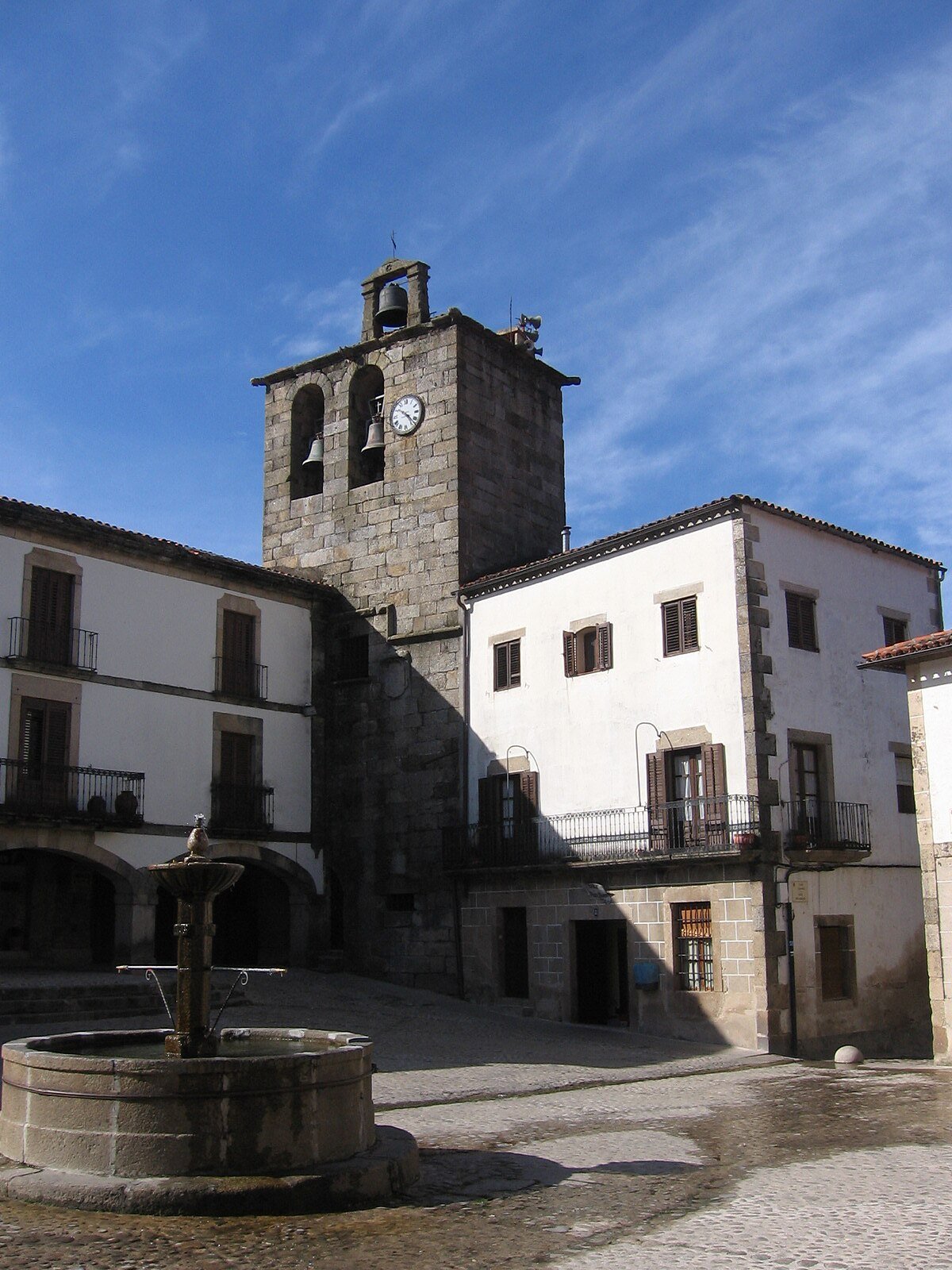
The Iglesia de la Asunción dominates the main square. Work began in the 15th century and never fully reached completion. That unfinished feel is visible in the façade and the portico. Inside are Baroque altarpieces and an old baptismal font. It is fine rather than remarkable. The exterior draws more attention, especially for the views across the valley.
From there, Calle Real leads downhill to the Ermita del Cristo del Humilladero. This small chapel, generally said to date from the 16th century, marks one of the historic entrances to the village. The door is often open. Inside there is the scent of wax and aged wood, and a noticeable quiet.
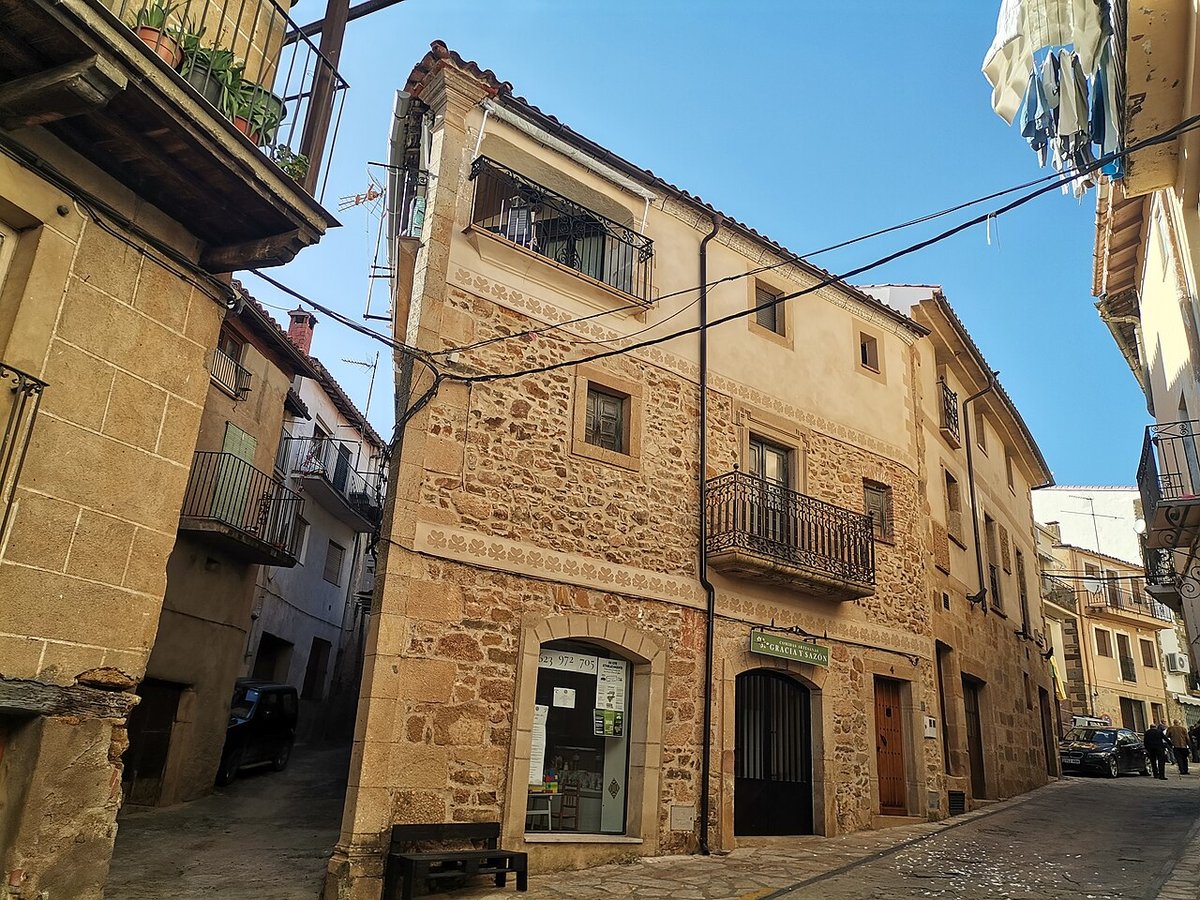
The historic centre does not take long to see. Streets are short, with granite houses and dark roofs. Some façades carry coats of arms. There is also a large 18th-century house with a wrought-iron balcony that stands out. The rest is ordinary housing. This is a working village rather than a display piece.
Woodland and walking routes
Part of the municipality falls within the Natura 2000 network, a European designation for protected natural areas. In practical terms, that means well-preserved woodland. Chestnut trees grow alongside oaks and quejigos. In autumn, mushrooms appear and people head out to collect chestnuts.
Several walking routes begin directly from the village. One of the better known follows nearby streams and returns to its starting point after a few kilometres. The route has little elevation gain and works well for an easy walk through the forest.
Longer walks are possible by following the road towards the Puerto de Jálama, which leads into higher parts of the sierra. Water is worth carrying, as many stretches have very little around.
Local food, without labels
Food here revolves around a few recognisable local products. The pimiento morrón is dried using smoke from holm oak. It is later rehydrated and used in tortillas, stews or scrambled dishes. It is one of the clearest culinary markers of the village.
Olive oil from the Sierra de Gata area is also present, often with a slightly peppery finish. Cheese is typically made from goat’s milk or a mix with sheep’s milk, and production remains quite artisanal. Asking around in the village usually leads to someone who sells it.
Heather honey tends to be dark and strong in flavour. In season, roasted or home-cooked chestnuts are a regular feature.
When to go and what it feels like
Several festivals take place throughout the year, linked to the religious calendar and to rural life. Some are held within the village, while others involve walking out to nearby hermitages. They are simple gatherings, shaped by neighbours, music and shared food.
The quietest period usually arrives after summer. Early autumn brings greener hills, lower temperatures and more activity in the countryside as chestnuts and mushrooms are collected.
A straightforward suggestion closes the visit. Head up to the viewpoint near the cemetery towards the end of the day. From there, the whole Jálama valley comes into view, along with the cluster of slate roofs below. The walk back down to the centre is short. Sitting for a while in the square, it is easy to hear someone speaking in fala. It may not be fully understood, but that is part of the place.