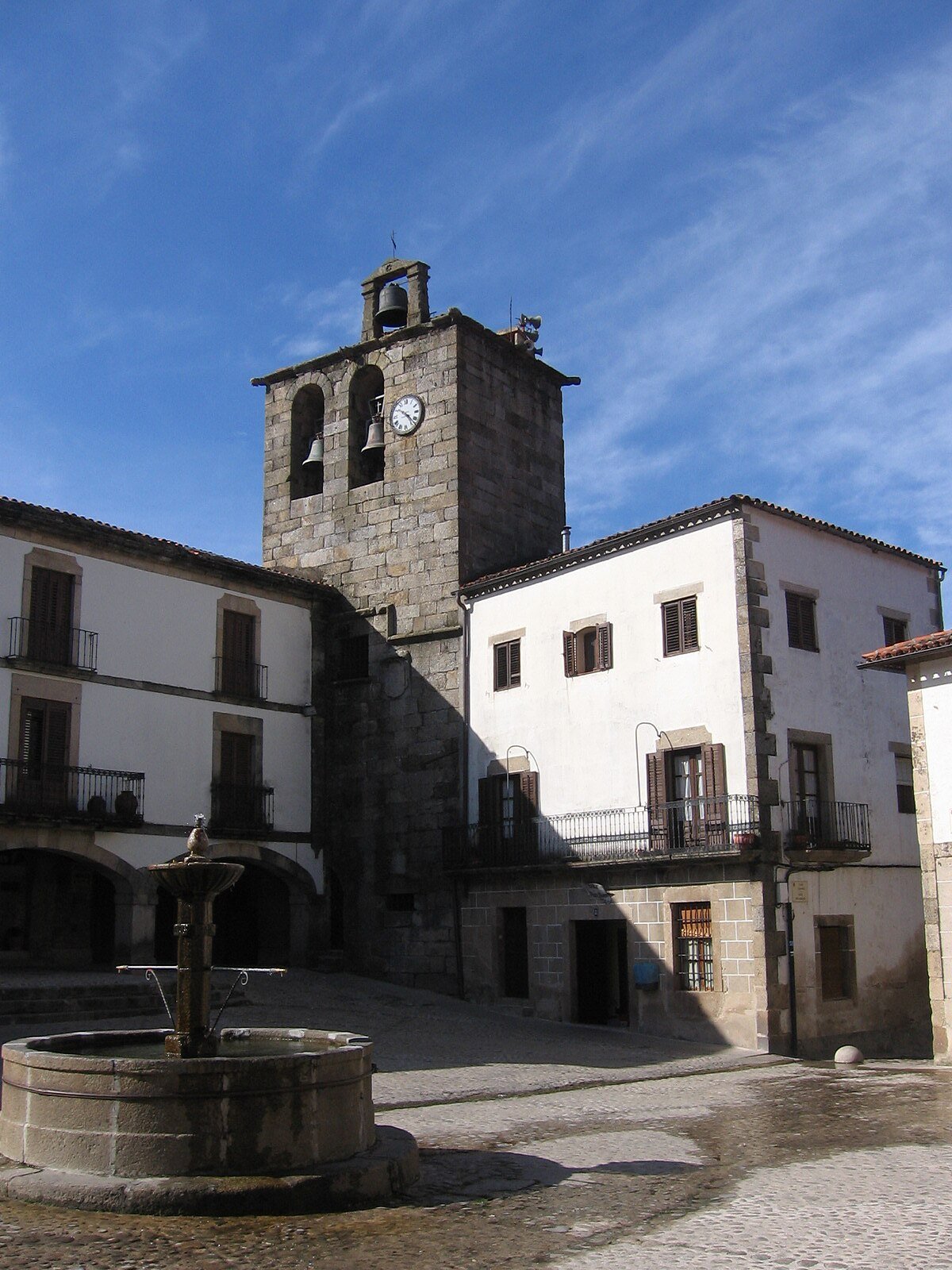
Vista aérea de Villamiel
Instituto Geográfico Nacional · CC-BY 4.0 scne.es
Extremadura · Meadows & Conquerors

Villamiel

The church bell strikes noon. A farmer leads three goats past the stone doorway of the Virgen de la Asunción, wheels them round the corner, and dis...

379 inhabitants · INE 2025
733m Altitude

Why Visit

Mountain Trevejo Castle Hike to Trevejo Castle

Best Time to Visit

summer

Santiago Festival (July) agosto

Things to See & Do
in Villamiel

Heritage

  • Trevejo Castle
  • Church of la Magdalena
  • Trevejo (medieval hamlet)

Activities

  • Hike to Trevejo Castle
  • Hiking
  • Photography

Festivals
& & Traditions

Fecha agosto

Fiestas de Santiago (julio)

Las fiestas locales son el momento perfecto para vivir la autenticidad de Villamiel.

Full Article
about Villamiel

Mountain village with the castle of Trevejo in its municipal area; stunning views

Ocultar artículo Leer artículo completo

The church bell strikes noon. A farmer leads three goats past the stone doorway of the Virgen de la Asunción, wheels them round the corner, and disappears. Nothing else moves. At 700 metres above sea-level, Villamiel keeps its own pace: the granite houses warm slowly, the chestnut canopy flickers between sun and cloud, and the only soundtrack is the click of cicadas and the faint clank of a distant cattle grid.

This is the Sierra de Gata in microcosm. The village sits on the first serious ridge west of the Cáceres plateau, close enough to town for a weekend dash yet high enough for Atlantic weather to muscle in. Mornings can be 10°C cooler than the provincial capital 95 km away; by dusk the air smells of wet fern even in July. The payoff is clarity: night skies dark enough to catch the Milky Way without squinting, and walking trails that start literally at the last lamppost.

Granite, Wood-smoke, and the Smell of Autumn

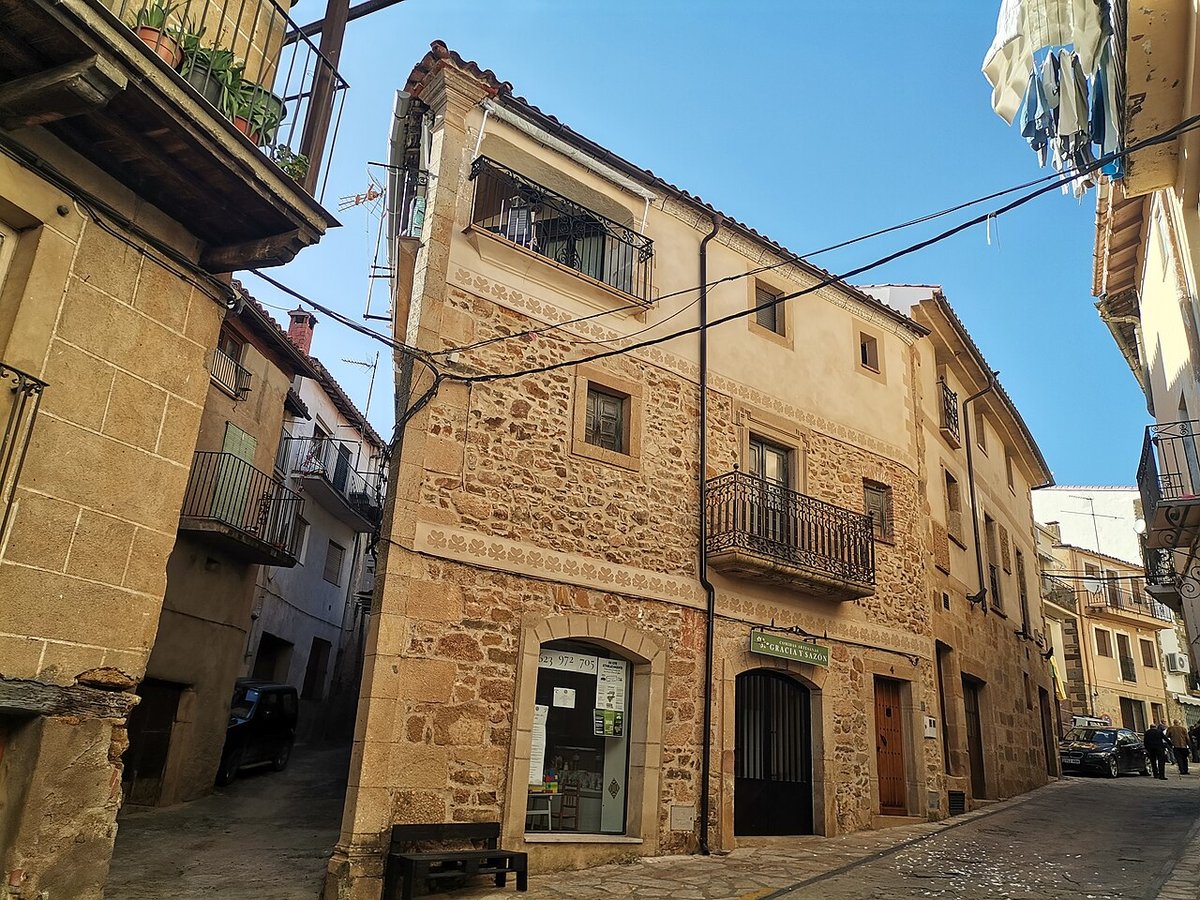
Villamiel’s houses were built for winter. Walls are 60 cm thick, chimneys angled against mountain gales, and every façade hides a tiny patio where firewood is stacked with cabinet-maker precision. Nothing is painted in the pastel south-coast palette; instead the village glows the colour of storm clouds—grey stone, russet timber, the sudden orange of a persimmon tree leaning over a wall. Between late October and early November the surrounding chestnut woods ignite into copper and bronze; locals set out tarpaulins and long-handled rakes, and the lanes smell of smoke and caramelising husks. Visitors are welcome to buy a sack for a few euros—ask at the bakery opposite the church before 11 a.m. and someone will weigh it on the antique scales.

Walk south along Calle de los Hornos and the settlement dissolves into meadow within 200 metres. A granite cattle grid marks the boundary; beyond it a forestry track climbs gently through rebollo oak and sweet chestnut, crossing a seasonal stream that doubles as a frog chorus in spring. The gradient is modest but the surface is loose—proper footwear matters. After 40 minutes the path breaks onto a basalt outcrop known locally as El Mirador de la Muela. From here you look north across three provinces: the patchwork of irrigated tomatoes around Coria, the quartzite crest of the Sierra de Francia, and on very clear days the silhouette of the Gredos range 120 km away. There’s no ticket booth, no interpretive panel, just a flat rock warm enough for lunch if you remembered to pack it.

What Comes to the Table

Villamiel doesn’t do tasting menus. The single café-bar, Casa Manolo, opens at seven for coffee and churros, shuts at three, then re-opens for beer and tapas around eight. Order a caña and you’ll get a saucer of local chorizo sliced so thin it curls like silk; the house speciality is patatas revolconas, a smoky paprika mash topped with crisp pork belly that tastes like Spanish comfort food engineered for hill-walking appetites. Vegetarians are limited to tortilla or cheese, but the queso de oveja is mild, nutty, and nothing like the eye-watering torta del Casar sold down the road. If you need supplies, the village shop keeps eccentric hours—morning only on Tuesday and Thursday—and the nearest supermarket is 19 km away in Caminomorisco, so stock up in Cáceres before you leave the A-road.

Between May and mid-June the neighbouring Jerte valley floods British supermarkets with glossy cherry punnets; up here the crop arrives a fortnight later and arrives by wheelbarrow. A kilo costs about €4 from the orchard gate on the El Gasco road, and the flavour is explosively sweet thanks to the 500-metre altitude. Bring a plastic bag; the juice stains everything it touches.

Getting Up (and Down)

The easiest approach is from Madrid: M40 west, swing onto the A5 past Talavera, then peel off onto the EX-A1 for Plasencia. From there the CC-17 twists north through 45 km of cork-oak country before tipping you into Villamiel. The final 12 km are tight but newly surfaced; nevertheless, meet a hay lorry on one of the hairpins and you’ll be reversing uphill. In winter the same road ices quickly—chains are rarely mandatory but they’re not a bad idea between December and February. Public transport exists, just: one ALSA bus leaves Cáceres at 15:15, reaches the village at 17:40, and turns round at dawn next day. Miss it and you’re sleeping among the goats.

High summer brings a different access problem: heat. Daytime temperatures can nudge 38°C, and the mountain breeze that makes evenings bearable deserts the valley between noon and five. The municipal pool (€2, open mid-June to August) becomes the social hub—bring your own towel and expect to share the water with the village under-12s, who treat it as a gravity-defying trampoline. Serious walkers start at sunrise and are back under a shower before the sun climbs above the ridge; the only shaded trail is the Arroyo de los Berros gorge, but even there carry at least a litre of water per person.

Honest Appraisal

Villamiel is not for tick-box tourists. The castle is a tumble of masonry sprouting fig trees; the museum is a single room above the town hall open by appointment with the mayor’s cousin. Mobile data drops to 3G in the main square and the ATM ran out of cash the weekend I researched this piece. What the village offers instead is a scale model of rural Extremadura that you can walk across in an afternoon: oak forest, allotments, stone threshing circles, and shepherds who still count their flock by name. Stay a night and you’ll hear the church bell count the hours you forgot existed; stay two and you’ll start recognising the goats by the colour of their ribbons.

Book accommodation ahead—there are only eight rooms in the whole pueblo. Casa Rural La Piedra Viva (doubles €70) has under-floor heating and a roof terrace that catches sunrise over the chestnuts; Hostal El Molino is cheaper but shares walls with the village generator, so light sleepers should pack ear-plugs. Check-out is 11 a.m. sharp; the owners need to get back to harvesting, not hang around for your Instagram shoot.

If that sounds like hard work, drive on to Cáceres for medieval pageantry. But if you want Spain without the soundtrack of clattering suitcases on cobbles, pull up by the cattle grid, roll down the window, and listen. The sierra starts here—and it doesn’t do encores.

Key Facts

Region
Extremadura
District
Sierra de Gata
INE Code
10210
Coast
No
Mountain
Yes
Season
summer

Livability & Services

Key data for living or remote work

2024
Connectivity5G available
HealthcareHospital 17 km away
EducationElementary school
Housing~5€/m² rent · Affordable
CoastBeach nearby
Sources: INE, CNMC, Ministry of Health, AEMET

Planning Your Visit?

Discover more villages in the Sierra de Gata.

View full region →

More villages in Sierra de Gata

Traveler Reviews