Full Article
about Villasbuenas de Gata
Quiet village surrounded by riverside forests and natural pools
Hide article Read full article
Villasbuenas de Gata: cuando un pueblo se toma su tiempo
Villasbuenas de Gata es de esos sitios que no te reciben con un cartel de "bienvenido al lugar más bonito". Es más bien como llegar a casa de unos tíos lejanos: al principio parece que está todo en una sola habitación, pero luego, según avanzas, descubres un patio, un pasillo que no habías visto, una ventana con geranios. Te hace bajar el ritmo sin pedirte permiso.
Está metido en la Sierra de Gata, ya casi lindando con Salamanca, donde el paisaje de Extremadura se pone serio y empiezan las cuestas de verdad. La vida aquí tiene otro compás. Se nota en cómo la gente habla en la plaza, en el ruido que hace tu propio coche al pasar por las calles estrechas.
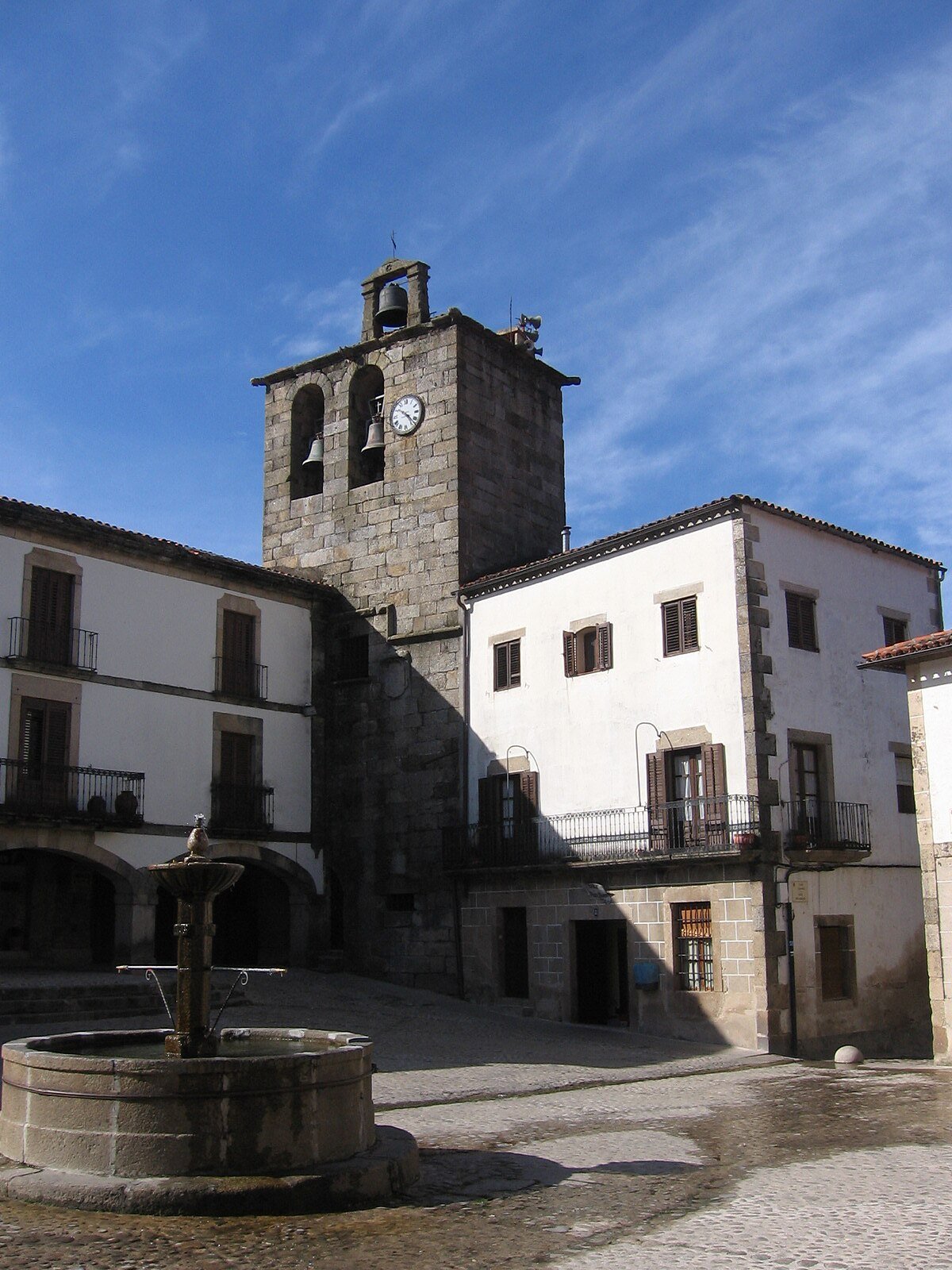
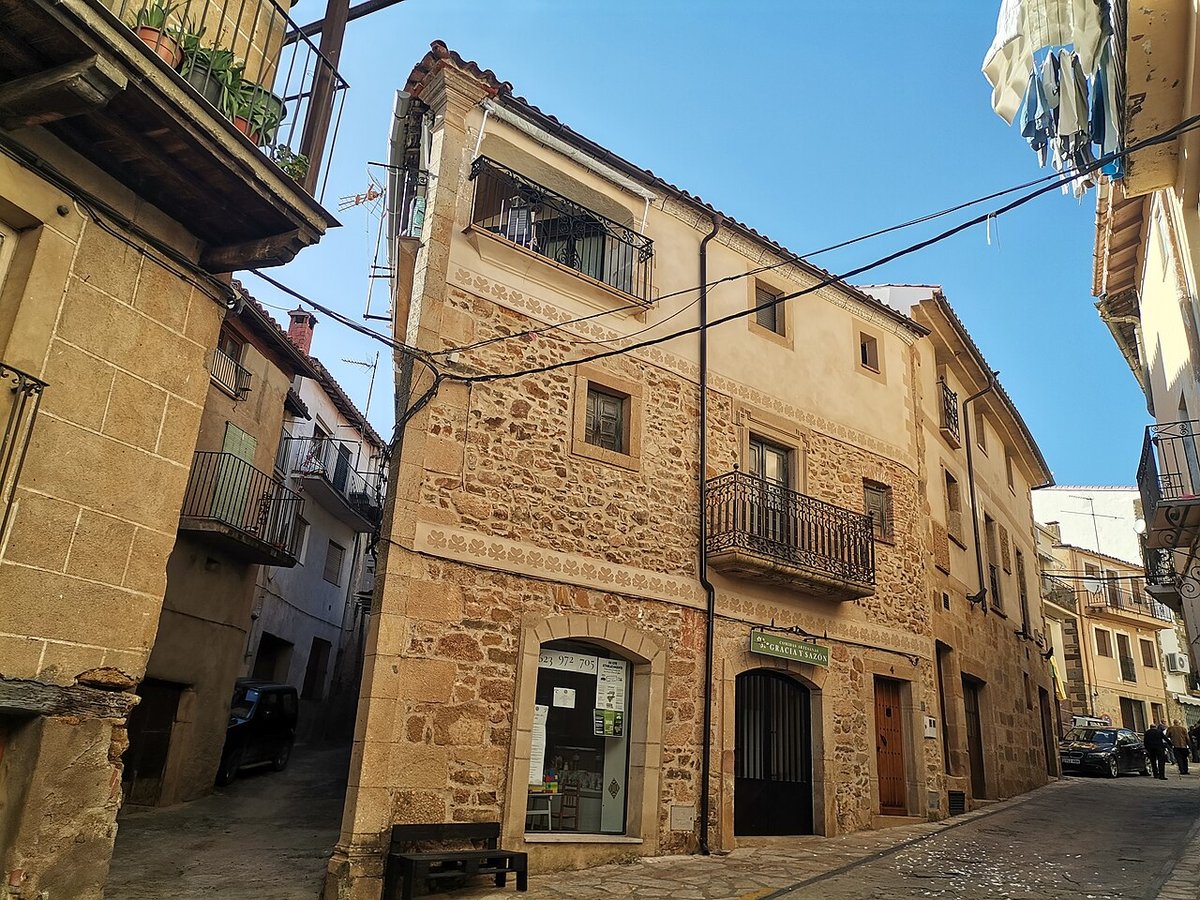
Lo primero que ves es la piedra. Granito por todas partes. En las fachadas, en los dinteles de las puertas, en los muros bajos que separan las huertas. No es una decoración pensada para gustar; es lo que había. Y con la luz del atardecer, ese gris se vuelve casi dorado.
Perderse (literalmente) por sus calles
Lo mejor que puedes hacer aquí es aparcar y olvidarte del plano. El núcleo antiguo es pequeño, pero está lleno de recovecos. Calles que suben tres escalones y se bifurcan, pasadizos cubiertos, portones macizos de madera con herrajes oxidados. Tiene esa lógica laberíntica de los pueblos que crecieron antes de los coches.
La iglesia de la Asunción aparece de repente, cuando la calle se abre un poco. No es una catedral; es más bien el tipo de iglesia donde cabría todo el pueblo sin apretarse demasiado. Con una fachada sencilla y un banco fuera donde suele haber alguien sentado.
La arquitectura no tiene pretensiones. Son casas hechas para aguantar inviernos fríos y veranos calurosos: muros gruesos, balcones justo para tender o poner unas macetas, patios interiores donde se oye el rumor de la radio. No hay mucho "rehabilitado con gusto". Se ve desgastado, vivido.
Puedes recorrerlo todo en cuarenta minutos si vas directo, pero entonces te lo pierdes. La gracia está en fijarte en lo otro: la piedra del quicio de una puerta gastada por el roce, el sonido del agua corriendo por una reguera escondida bajo la calle, el olor a leña quemándose en alguna chimenea cercana.
Salir a caminar sin un destino claro
Desde el pueblo salen varias veredas y caminos vecinales. Algunos empedrados, otros simplemente huellas en la tierra. No son rutas señalizadas para turistas; son los caminos de siempre para ir al campo o al pueblo de al lado.
Caminar por aquí tiene ese punto desorganizado de una excursión con amigos. Sabes que vas a subir cuesta, que probablemente te encontrarás con una vaca o dos pastando libremente, y que las vistas aparecen cuando menos te lo esperas—entre un bosque de robles o al doblar una curva.
El terreno tiene sus subidas y bajadas honestas. Lleva calzado cómodo y agua; no es un paseo urbano.
La comida sigue siendo la de la sierra: platos contundentes para cuando refresca. Migas extremeñas, embutidos locales—chorizo y salchichón que saben a lo que son—y hornazo no como curiosidad folclórica sino como comida real. La matanza sigue siendo un ritual invernal para algunas familias; si vas en esa época puede que notes el ambiente o incluso veas algún cartel anunciándola como fiesta local.
Si te gusta hacer fotos encontrarás motivos sin buscarlos: muros de piedra seca trazando líneas en el paisaje encajonado entre montañas; senderos flanqueados por castaños centenarios; alguna rapaz volando bajo sobre los campos.
Y por la noche pasa algo raro hoy en día: se ven las estrellas. De verdad se ven. Basta alejarse doscientos metros del último farol para tener el cielo encima como un manto lleno de puntos brillantes. No hace falta ser astrónomo; solo mirar hacia arriba un rato.
Un ritmo marcado por las estaciones
En agosto cambia completamente el ambiente con las fiestas patronales dedicadas a San Bartolomé (el 24). Las calles tranquilas se llenan durante unos días: música hasta tarde (conviene saberlo si buscas silencio absoluto), procesión y ese aire a reunión familiar grande donde todo el mundo se conoce.
Villasbuenas no es un pueblo espectacular ni "de postal". Es más bien uno de esos lugares honestos donde lo interesante no está en una lista de monumentos sino en cómo se vive. ¿Merece una parada? Sí—si tienes tiempo para andar sin prisa y prefieres ver cómo funciona realmente un pueblo serrano antes que buscar tiendas souvenir. Mi consejo sería venir sin expectativas altísimas pero con ganas de observar los detalles pequeños: cómo están colocadas las piedras del muro junto al arroyo o qué charla mantienen dos vecinas junto a la fuente. Es ese tipo sitio cuyo atractivo no grita; susurra