Full Article
about Fregenal de la Sierra
Historic-Artistic Site with a Templar castle that holds a bullring and market; birthplace of Iberian culture and folklore
Hide article Read full article
A castle that holds daily life
The bells of Santa María begin to ring close to seven, while the sky still hangs grey over the sierra. From the castle, early in the day, a low mist often settles across the dehesa, clinging to cork oaks and holm oaks. The air carries the scent of damp earth and last night’s firewood. Below, inside the castle itself, the municipal market starts to wake up. Metal shutters rattle open and someone remarks on the weather while weighing meat on an old set of scales.
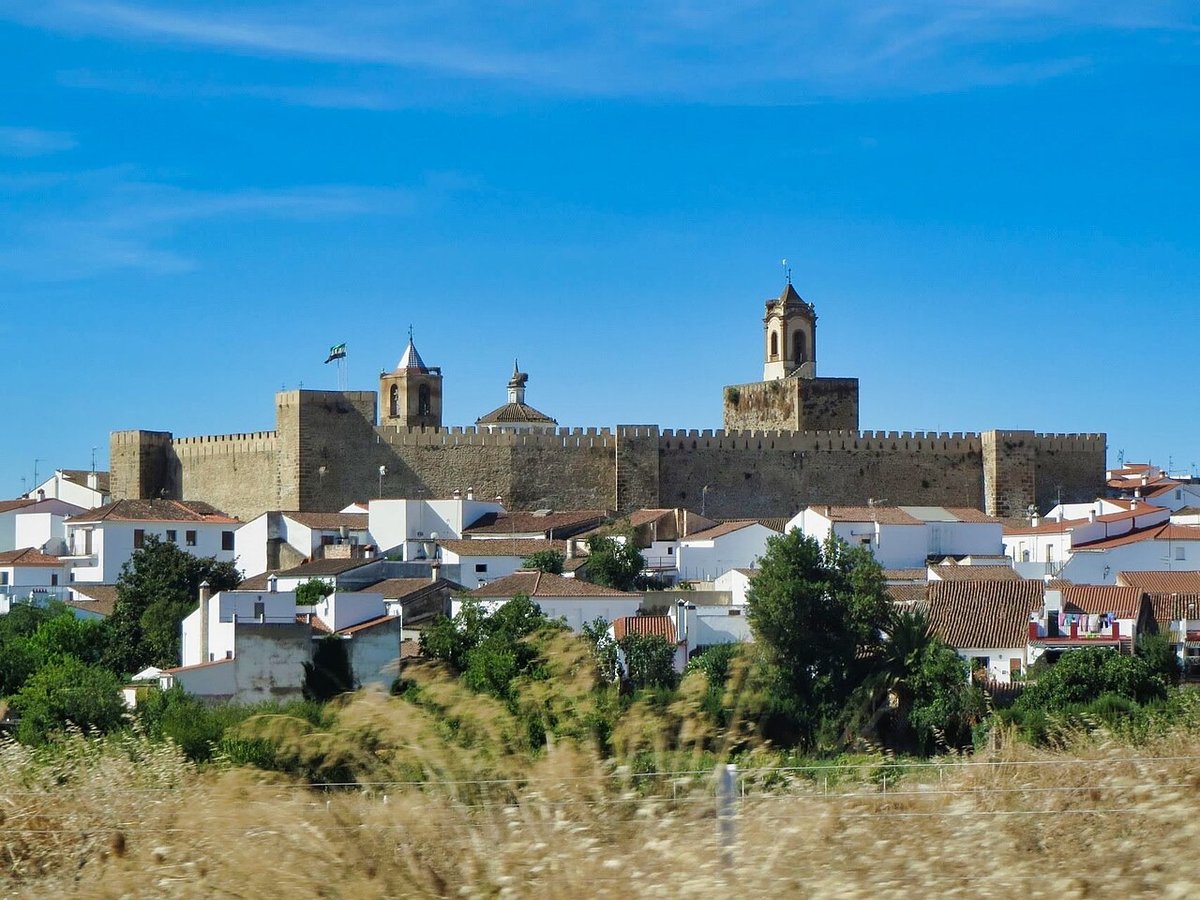
The walk up to the castle is best taken slowly. Streets narrow between whitewashed houses, and in places the ground has been worn smooth by decades of footsteps. The fortress dominates the town from above. Its stone walls, a muted ochre colour, enclose a space that surprises many first-time visitors.
Inside sits a bullring.
The seating is set against the inner walls, while the ring fills most of the courtyard. This is not a recent addition. It has been part of the town’s daily life for generations. At this hour, the atmosphere is calm. Pigeons shift along the battlements, and footsteps echo as people cross the space on their way to the market.
Because the market is here too. Stalls are arranged within the castle’s rooms, and the air carries a mix of scents: wood, cured meats, paper wrapping, and the faint dampness of old stone. It feels like a place that has continued without much reinvention.
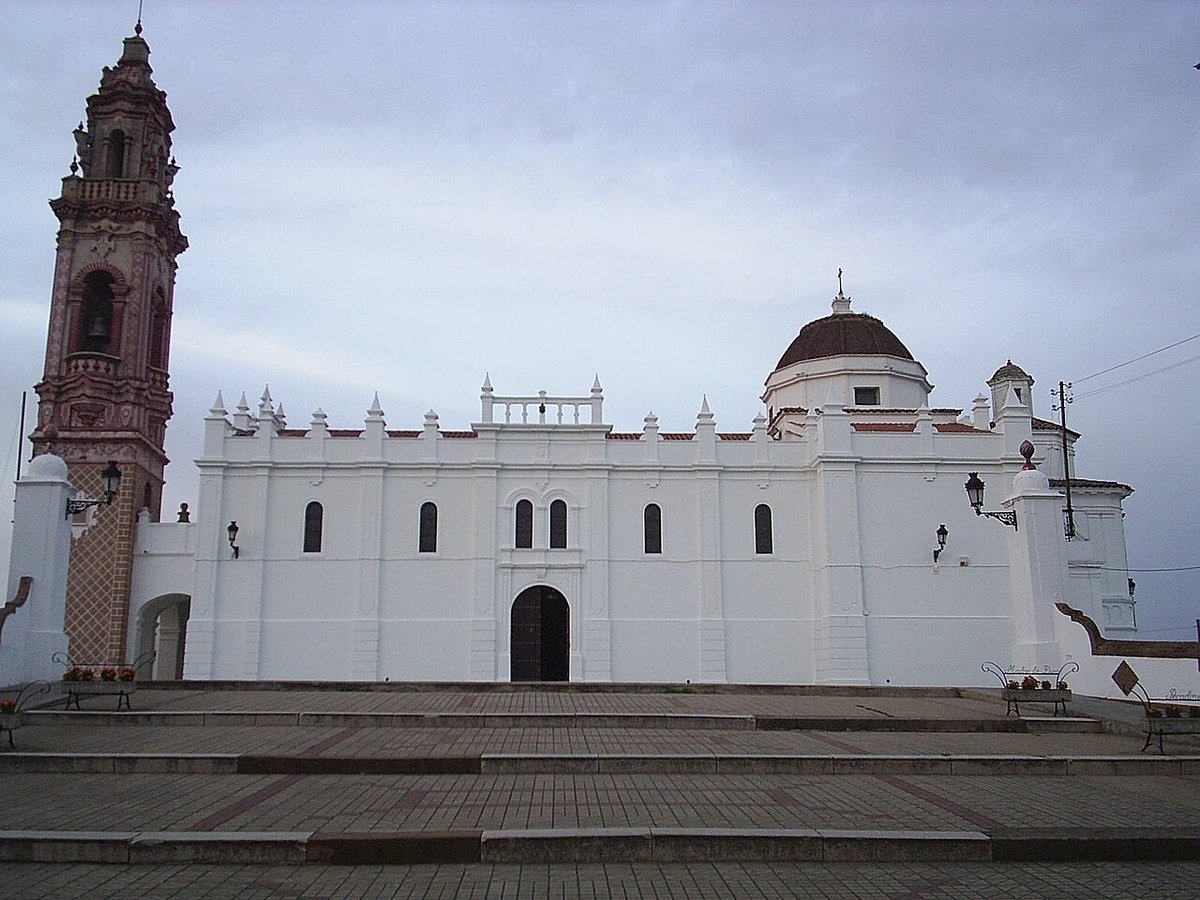
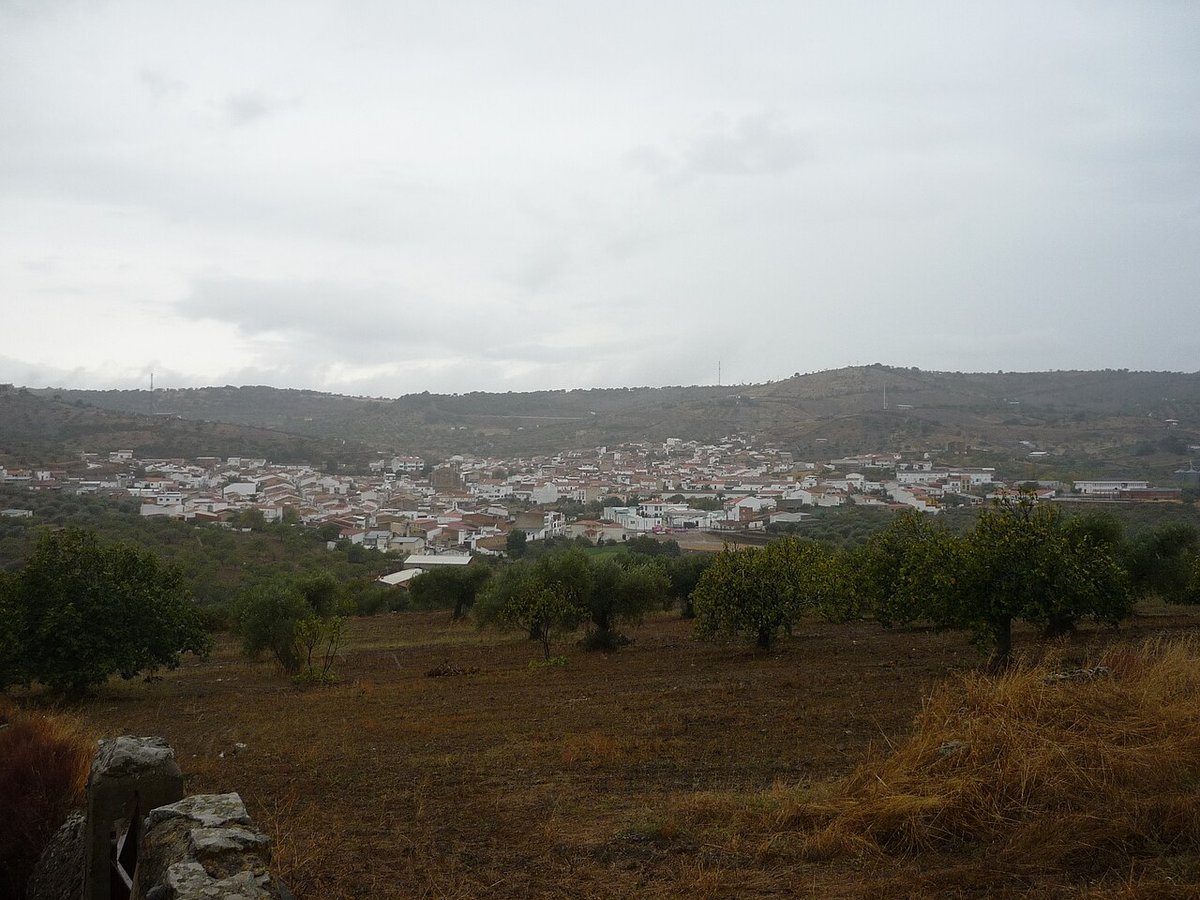
Above the rooftops rises the tower of Santa María. From certain points within the castle, it stands out over the white buildings and darker roofs below. Beyond the town, the dehesa stretches in every direction. Holm oaks spaced apart, low stone walls, and dirt tracks that fade gently into the rolling landscape define the view.
November and the rhythm of the danzas
In November, Fregenal shifts its pace for a few days. This is when the danzas dedicated to the Virgen de la Salud take place, a tradition with a strong presence in the town. The dancers, known locally as danzaores, move through the streets accompanied by tambourine and flute, repeating steps that have been performed for a long time.
It is not a show in the modern sense. The movement is restrained, almost ritual. Short steps, controlled turns, and the steady beat of the drum set the rhythm. The procession passes through the narrow streets of the centre as the afternoon light fades across the whitewashed façades.
During these days, patience helps. The centre fills with people and many streets are closed as the procession moves through them.
The dehesa on the table
At midday, especially in warmer months, the sun falls strongly on open squares. Tables in the shade fill gradually, and before long one product appears that is closely tied to this area: Iberian pork raised in the dehesa.
Thinly sliced ham shows a soft sheen of fat that turns almost translucent in the heat. Alongside it come simple dishes that have long been prepared here. Migas, cooked in a large pan with bread, olive oil and paprika, sometimes arrive with grapes or pieces of meat.
What appears on the plate reflects the landscape surrounding the town. The holm oaks and cork oaks visible from almost any viewpoint are not there simply for scenery. They are part of a livestock system that has been in place for centuries in this part of Extremadura.
Nightfall over the sierra
Once night arrives, the town quietens quickly. After a certain point, very few cars pass through and many central streets fall silent. From the hill of San Cristóbal, one of the higher points near the urban area, the whole town can be seen lit by a soft yellow glow.
Beyond the built-up area, darkness settles fast. Dirt tracks, stone walls and scattered trees fade into the night. On many evenings, the sky is clear. In summer, the air tends to be dry, and the stars become sharp and visible once you step away from the streetlights.
When to go
Spring and autumn are usually the most comfortable times to walk through the town and its surroundings without the intensity of summer heat. November brings more activity thanks to the traditional danzas. In July and August, earlier starts or late afternoons are more manageable, as midday heat in the Sierra Suroeste can be intense.