Full Article
about Jerez de los Caballeros
Templar town and birthplace of conquistadors (Núñez de Balboa); striking collection of baroque towers and walls
Hide article Read full article
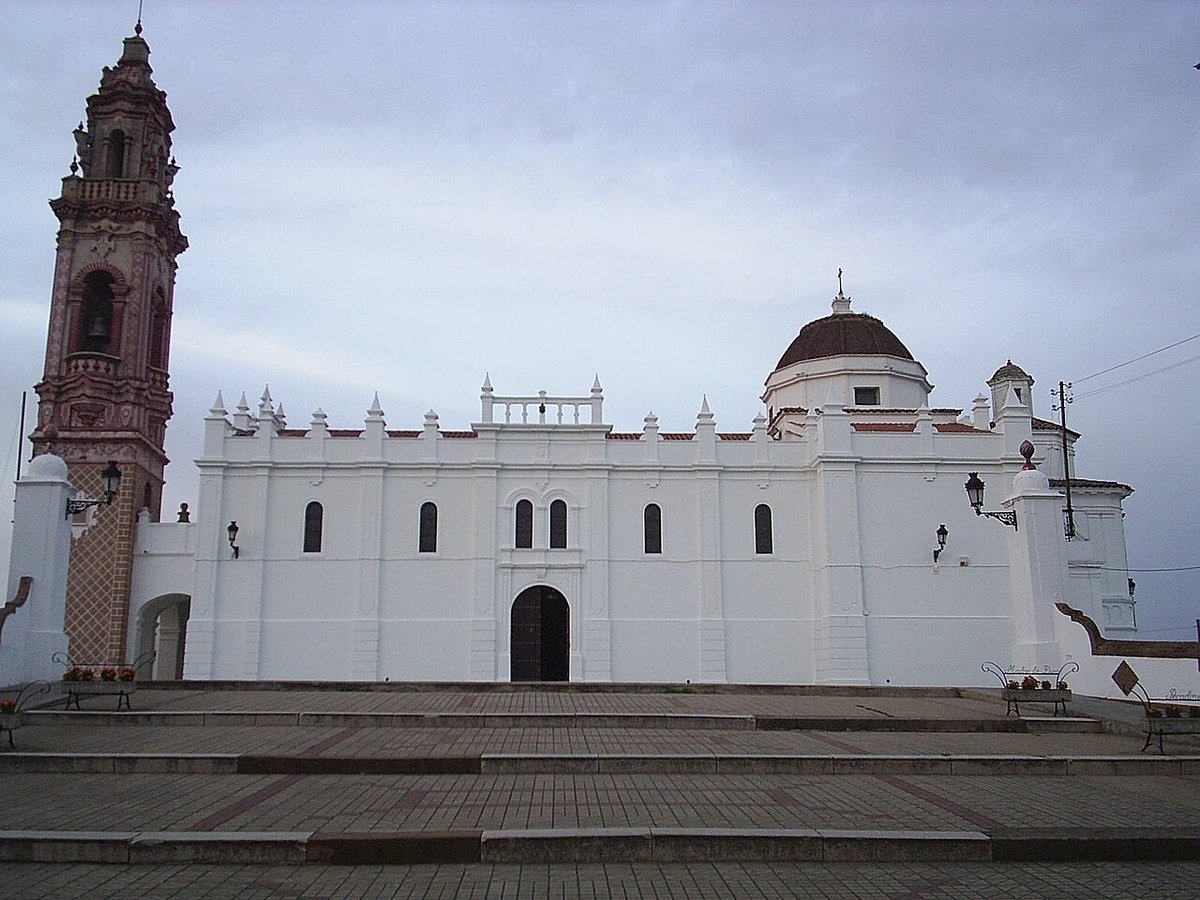
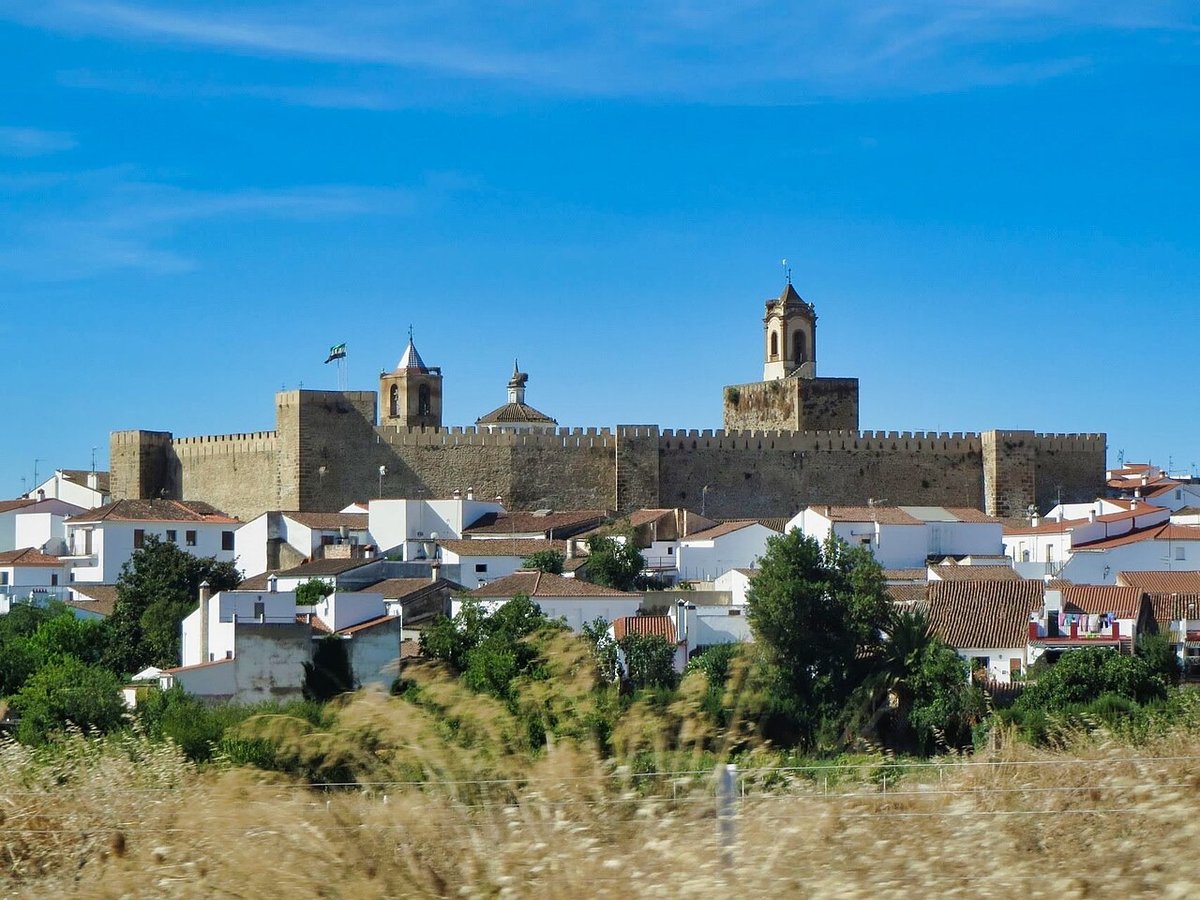
The scent of cured ham and damp stone hangs in the air before the sun crests the castle walls. From the base of the Torre de San Bartolomé, one of the tallest bell towers in Jerez de los Caballeros, the red rooftops seem to climb over each other. Starlings wheel around its Baroque dome, their calls sharp in the cool air. This is a town built for looking out from, and for being seen from a distance.
Morning light turns the brick of the towers a deep, glowing red. They are not mere ornaments. Their bells mark the hours with a sound that carries over the dehesa. You notice the textures first: the rough-hewn stone of a Templar-era archway, the smooth wear on a granite threshold carved with a Latin inscription, the crumbling plaster on a Mudejar niche along Calle San Marcos. History here is structural, not staged.
The castle grounds offer a clear view of the so-called Torre Sangrienta. Local stories about the last Templars cling to it. Beyond its silhouette, a gentle sierra rolls into haze. With patience, you can spot dark shapes moving under the holm oaks—Iberian pigs during the montanera, foraging for acorns.
By midday, wood smoke from kitchen chimneys mixes with the smell of baking. The food tells you exactly where you are. Long-simmered calderetas appear in deep earthenware dishes. In spring, wild asparagus gathered from nearby hillsides might be served simply with eggs. Migas extremeñas come with a handful of grapes to cut the richness. The bollo turco, a crumbly pastry of almond and sugar, leaves a fine dust on your fingers.
Lunch is a slow affair. Tables on shaded terraces stay occupied well into the afternoon. The sobremesa, that lingering post-meal conversation, unfolds without any sense of rush.
During Semana Santa, the town’s sound changes entirely. The deep roll of drums echoes up the narrow streets before the pasos appear. Warm wax drips onto cobblestones from carried candles. The air fills with the scent of lilies and orange blossoms. Locals follow each route with a deep knowledge, noting which corners are tricky, where the music resonates best.
At other times, usually in early spring, a different past is recalled. A Templar festival takes over the castle grounds. A market springs up around its walls. It feels less like historical reenactment and more like a local conversation about identity, played out with white tunics and red crosses.
The best way to understand Jerez is to walk until you lose your bearings. Let your nose guide you—the smell of baking will lead toward the main square; the scent of cured pork hints at older artisan streets. A path behind the castle winds directly into the dehesa. It leads to the Encina de la Terrona, an ancient oak whose canopy creates a room of shadow and quiet. Here, the relationship between town and countryside makes immediate sense.
Come in spring or autumn if you prefer to walk in solitude and milder air. Summer heat settles into these slopes and radiates from the stone well past midnight. Park your car in the upper town and explore everything on foot.
As evening falls, return to the castle walls. The sun drops behind the low sierras to the southwest, turning the sky a muted purple. The towers become dark cut-outs against it. Bells ring for the last time that day. Below, someone crosses Plaza de la Constitución with a loaf of bread under their arm, heading home.