Full Article
about Salvaleón
Set in the dehesa and known for its Iberian pork; a landscape of high ecological and scenic value.
Hide article Read full article
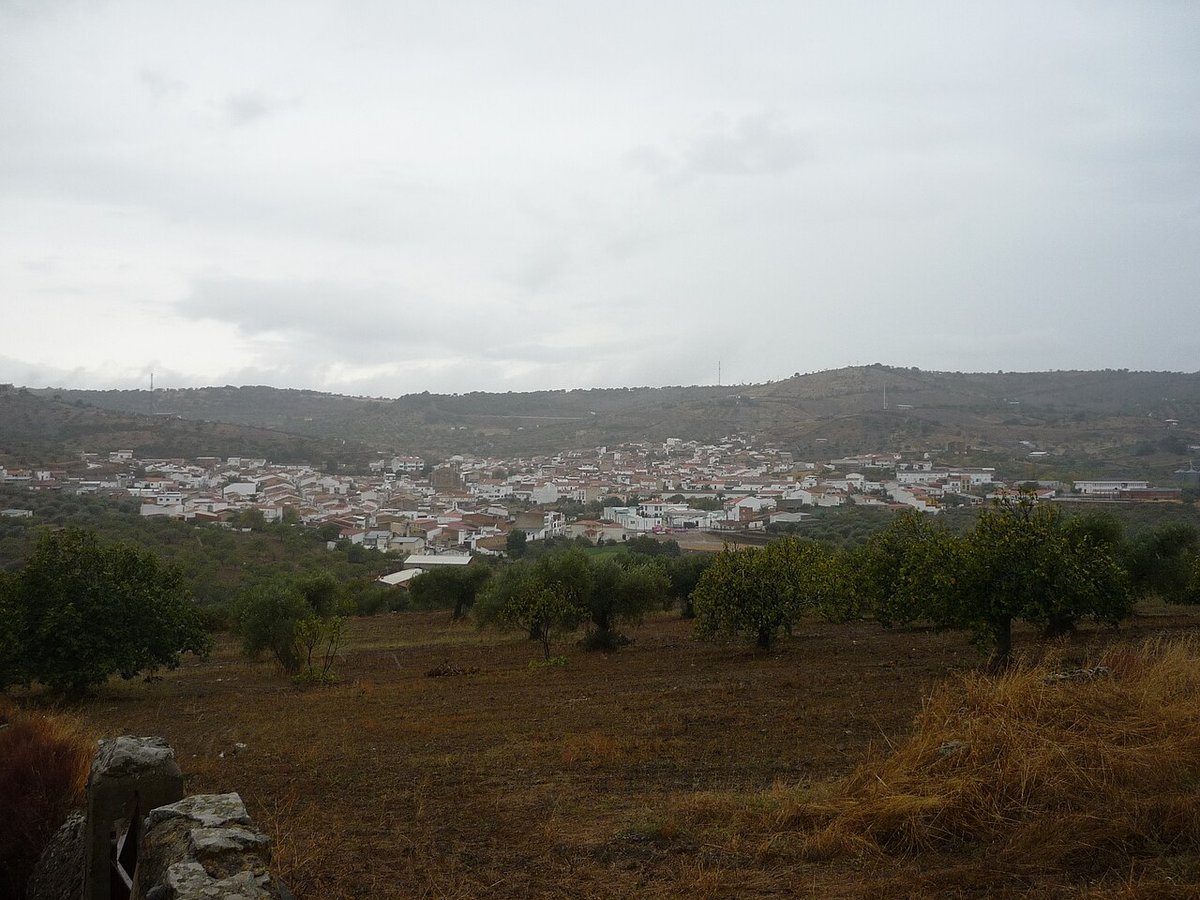
The first scent is often woodsmoke, a thin blue thread rising from a chimney against the white of a house. It’s the smell of a winter morning in Salvaleón, when the village on its gentle rise in the Sierra Suroeste feels carved from the same quiet as the surrounding holm oaks.
This is a place of 1,600 souls, where the clock is set by the dehesa. You hear it in the distant bell of a sheep flock, see it in the mud on a pickup truck parked by the square. The rhythm is agricultural, patient, and the light here has a particular weight to it.
A walk that follows the slope
You explore on foot because the village asks you to. The streets are a gentle climb, paved with worn cobbles that gleam after a rain. Houses are mostly two stories, whitewashed so brightly it almost hurts your eyes at noon. Look lower, and you’ll see the stone foundations on some, rough and cool to the touch. Old iron window grilles throw latticed shadows that stretch slowly across the pavement as the sun drops.
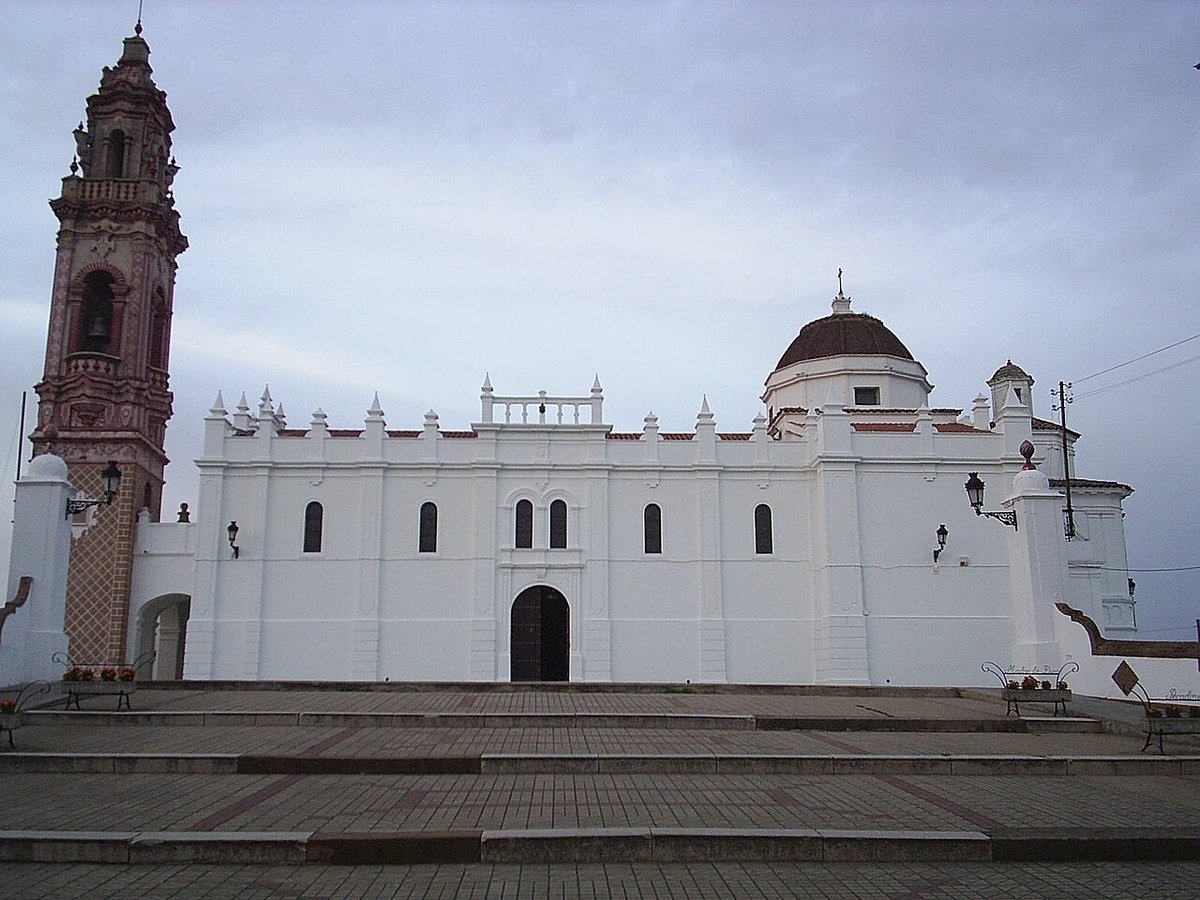
The plaza is where life converges. Before lunch, it’s a practical place: people with shopping bags, brief greetings. Later, it becomes a living room. Benches fill, conversations meander, and time seems to pool there. On one side stands the church of Nuestra Señora de la Asunción. Its architecture is a quiet conversation between centuries—Gothic origins speaking through later renovations. If you find the heavy door ajar, step inside. The air is several degrees cooler, and the silence has a different texture, broken only by the faint echo of your own steps on stone.
The climb to what’s left above
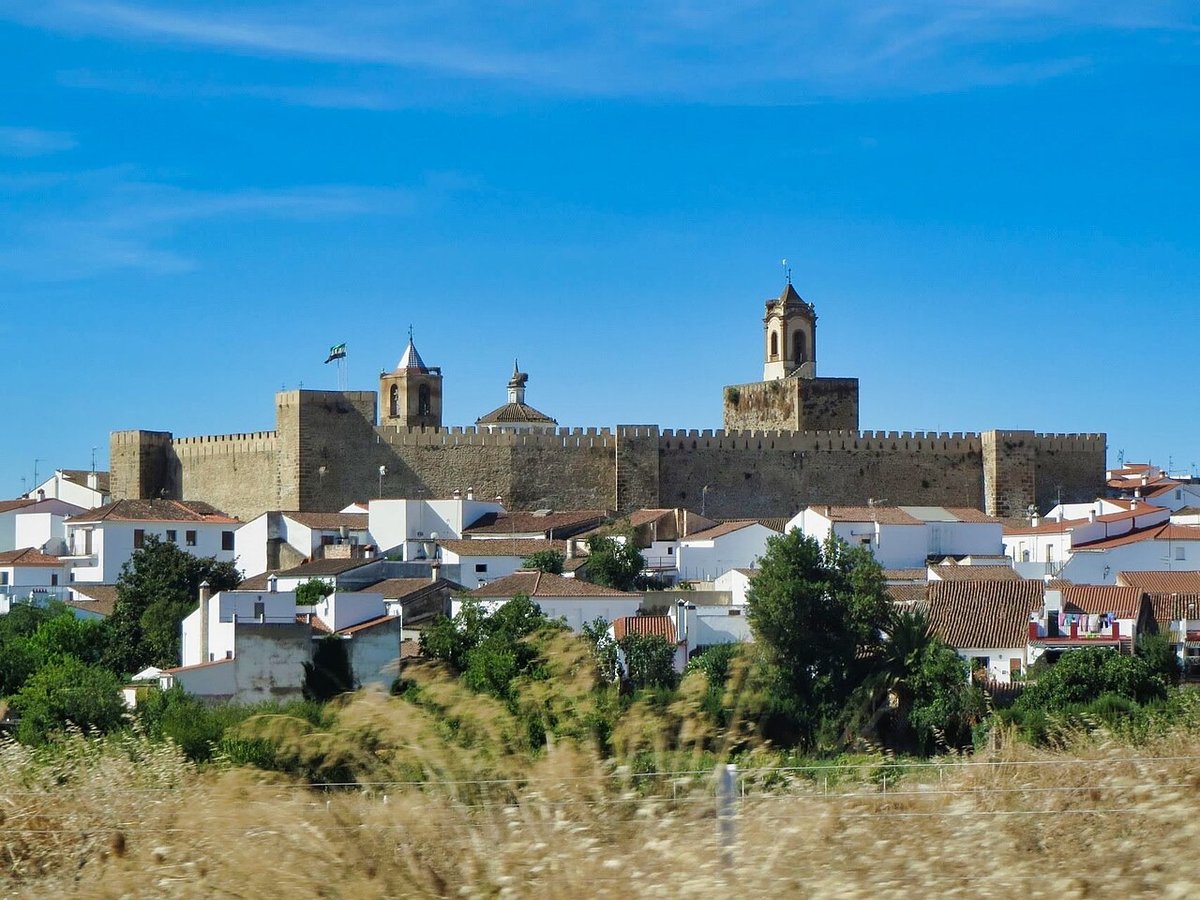
Above the last white house, the castle remains are not so much a monument as a suggestion. You walk up on those same cobbled streets, past gardens fenced with old stones. What’s left are fragments: sections of wall that follow the hill’s contour, outlines of rooms open to the sky. Its purpose was frontier defense, but now it’s a perch.
The reward is the view south. It unfolds all at once: an endless dehesa of holm oaks like green brushstrokes on a canvas of burnt umber, olive groves silvering in the breeze, soft hills rolling toward Andalucía. On a very clear day, you can make out the faint blue line of mountains in Huelva. Come up here too near midday in summer and you’ll feel the sun press down; it’s a walk for early morning or when the light turns long and honeyed.
Paths into the working dehesa
Step beyond the last streetlamp and you’re on a dirt track. These are working routes, packed hard by tractor tires and livestock. They cut through estates marked by simple metal gates—always close them behind you. Not every path is public; if you plan a long walk or cycle, it’s wise to ask someone in the village first.
This is not wilderness; it’s a managed landscape. In autumn, you might hear the rustle and grunt of Iberian pigs foraging for acorns in the montanera. Kestrels hover over open clearings, and sheep move as a single, dusty cloud across a field. For birdwatching, dawn is when the world is still theirs. After rain, this earth turns to a clinging, reddish mud that will coat your boots halfway to the knee.
What comes from the land, goes on the table
Menus here are a direct reflection of what’s outside. Iberian pork is central—not as a concept, but as chops grilled simply over oak embers, or transformed into cured hams hanging in cool rooms. In colder months, kitchens turn to spoon dishes: stews of game bird or rabbit, pulses cooked slowly.
It’s cooking of circumstance and season. If there’s been rain, wild mushrooms might appear. The cheeses are local, often firm and sharp. This isn’t about innovation; it’s about what sustains.
A note on light and timing
Spring and autumn are when Salvaleón breates most easily. The dehesa shifts from green to gold to green again, temperatures allow for aimless wandering, and that late afternoon light does something remarkable to the white house walls—it turns them briefly into panels of glowing amber.
Summer requires recalibration. Move with the light: be out at dawn, retreat indoors during the searing quiet of siesta, emerge again as shadows return. Winter has a crisp, sharp edge; the wind picks up on these hills, cutting through a jacket that felt sufficient in Badajoz.
Wear shoes that can handle cobbles and slopes. Parking is seldom an issue if you’re mindful not to block garage doors or narrow passageways.
The road here
From Badajoz, you take the N-435 south. This isn’t a road to rush. Traffic thins quickly, and the landscape begins its slow repetition of holm oak pastures, stone walls, and distant farmsteads. You pass through small villages that seem to hold their breath as you drive by. The point isn’t to arrive quickly at Salvaleón, but to let the space and the gradual change in light prepare you for its particular quiet