Full Article
about Valencia del Mombuey
Border town with Portugal on the 'Raya'; dehesa landscape and frontier culture
Hide article Read full article
The splash of water against the stone fountain carries across the square at mid-afternoon, the only sound in the silence. An elderly woman places a chair on the pavement and looks out towards the horizon, where the flat land breaks into a line of bluish hills. Even the dog asleep by a doorway turns in slow circles before settling again. Valencia del Mombuey is a village that holds its breath in the heat of the day.
Where the streets end
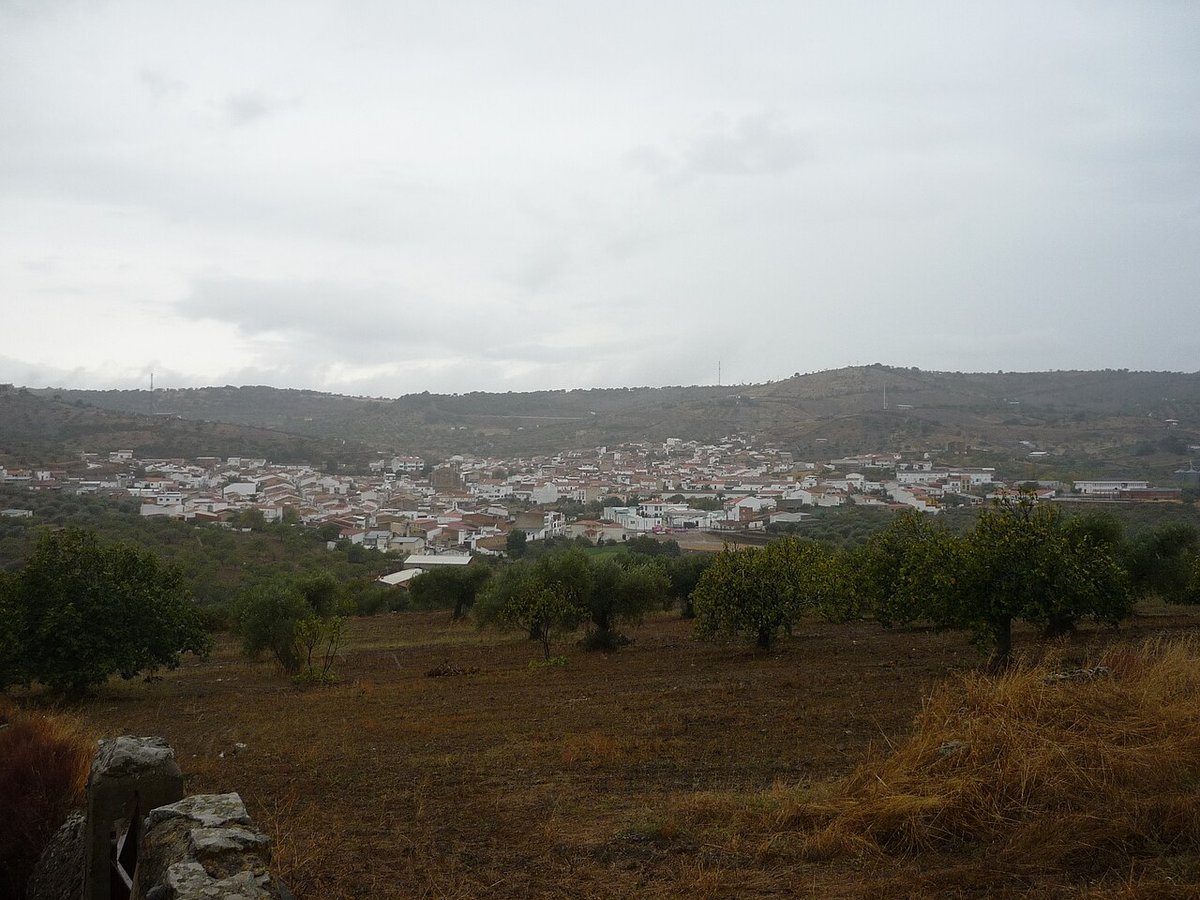
The village has grown slowly, without a plan. Streets lined with whitewashed houses stretch outward until the pavement ends, turning into dirt tracks that dissolve into olive groves and small plots of cultivated land. In summer, the air carries the scent of warm soil and dry rosemary, and the steady hum of insects lingers above low walls.
Walking without a fixed route around the outskirts often leads to one of the old circular stone mills. Many are partially collapsed, their sails gone for decades, doors warped by damp. Several remain scattered across the farmland. Some residents still remember when these structures formed part of everyday working life, not relics of it.
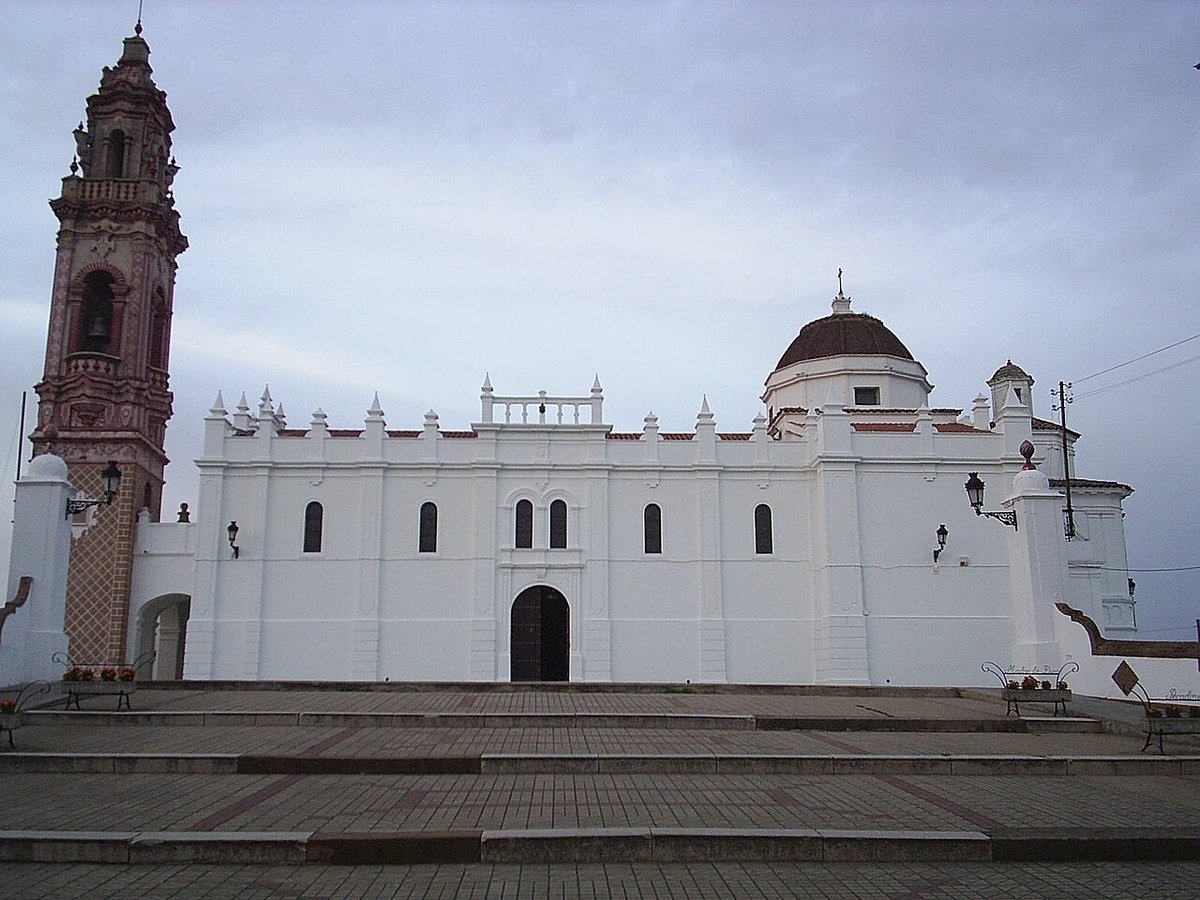
The church of the Purísima Concepción stands on higher ground, its reddish brick tower shifting in tone as the light changes. Inside, there’s a smell of wax and aged wood. When the bell rings nearby, the sound echoes off thick walls and spreads across the square like a long breath.
Stone and silence: Piedra Pinchá
A couple of kilometres from the village, following agricultural tracks along the Ardila river, lies Piedra Pinchá. The dolmen rises among scrub as a tilted block of stone, rough to the touch and marked with pale lichen. It dates back thousands of years and stands alone in open countryside.
Early morning or the end of the day suit it best. Low light draws out the cracks in the stone, and the surroundings are almost silent, broken only by the sound of water or a passing flock.
Further south, on Nijata hill, there are rock engravings spread across several surfaces. Reaching them involves a walk through heather and rockrose. The carvings are not obvious. Circles and lines have been etched into the rock with repeated small strikes; without knowing where to look, you’ll walk right past them.
A line of lights at dusk
From near the hermitage of Santa Bárbara, the village’s position becomes clear. As evening falls, lights appear in Amareleja, just across in Portugal and only a few kilometres away in a straight line. It often feels closer than other settlements in Extremadura.
Here, the border is subtle. By day it’s just agricultural tracks and shifts in the landscape. At night, it becomes a line of distant lights. In summer, a cross-border gathering usually takes place here. Stalls, music and open-air food create an atmosphere that carries on late into the night when the heat finally eases.
The weight of darkness
This municipality lies within an area recognised for its dark skies. It doesn’t take much distance from the last streetlight to notice. On clear nights, the Milky Way stretches from one side of the sky to the other as a pale, dusty band.
In summer, astronomical observation sessions are sometimes organised near Santa Bárbara or at other high points. Even without equipment, it stands on its own. First come the sounds: a goat shifting somewhere nearby, wind moving through holm oaks. Gradually, your eyes adjust.
Bring an extra layer, even after a hot day. Once the sun dips behind those bluish hills, the temperature drops more than you’d expect.
The rhythm of hours and seasons
Spring is often comfortable for walking here; the ground is firm and small flowers appear among the grass. In September, during the fiestas of Cristo de las Penas, people return for a few days and fill the streets with a different energy.
August brings more movement, especially at weekends when families gather at the municipal pool or spend long afternoons in any patch of shade they can find.
If you head out towards Nijata or Piedra Pinchá, carry water and wear shoes that can handle loose stone and dirt tracks. The routes are straightforward but offer little shade between noon and four o’clock. Distances can be deceptive under this wide sky; what looks close can feel long under an intense sun. The pace here is unhurried for a reason.