Full Article
about Valle de Santa Ana
Town near Jerez de los Caballeros; noted for its granite pulpit in the church and mountain setting.
Hide article Read full article
A hillside village at day’s end
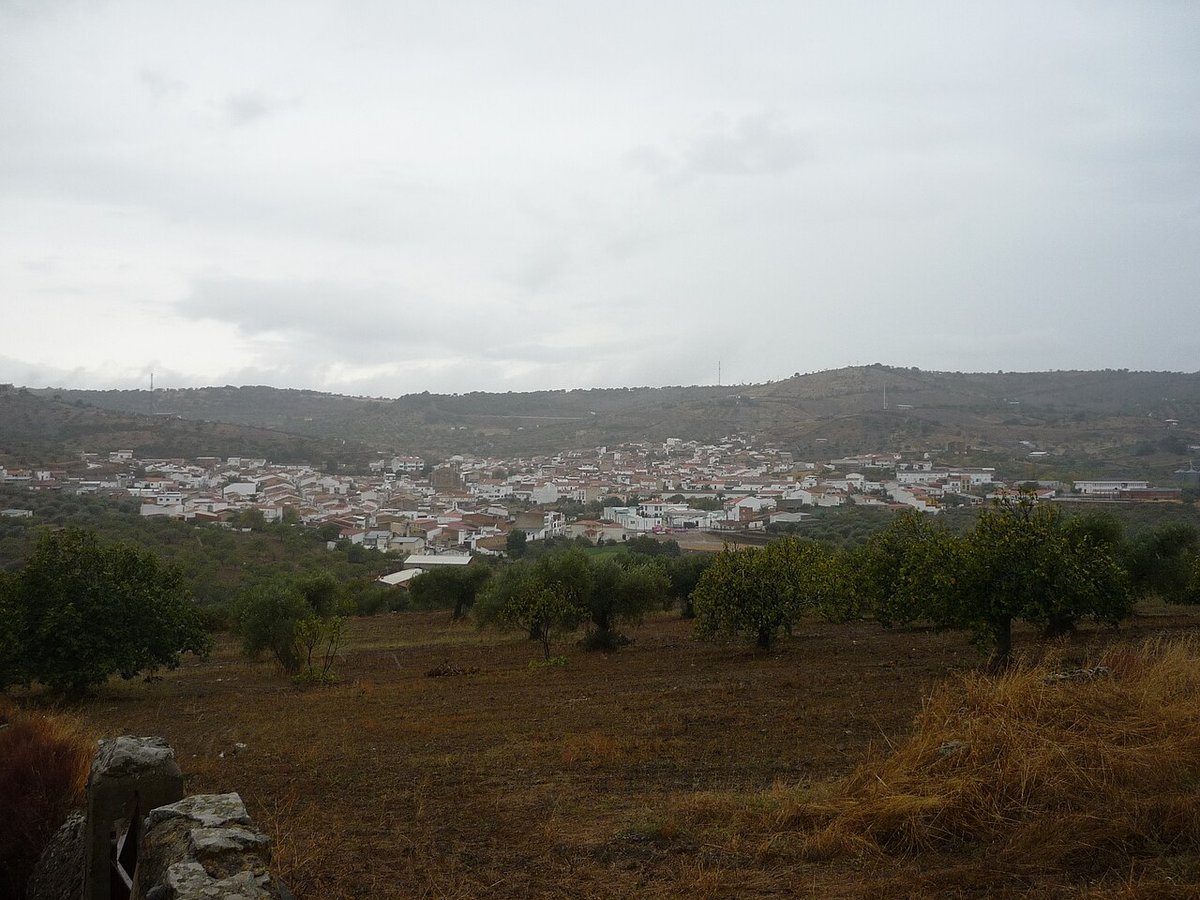
As the afternoon fades and the heat loosens its grip, the whitewashed façades of Valle de Santa Ana begin to reflect the light in softer, almost orange tones. The village sits gathered along a slope, compact in form, with low roofs and streets that narrow without warning. It lies around 80 kilometres from Badajoz, reached for much of the way via the N‑435. Before arriving, the road passes through open countryside and dehesa, a traditional landscape of scattered holm oaks where the trees stand far apart.
Just over a thousand people live here. The pace of daily life shows in small details: cars parked beside large gate entrances to courtyards, tractors moving slowly along the main street, shutters pulled down during the harshest summer hours. Nothing feels hurried.
Santa Ana church and the heart of the village
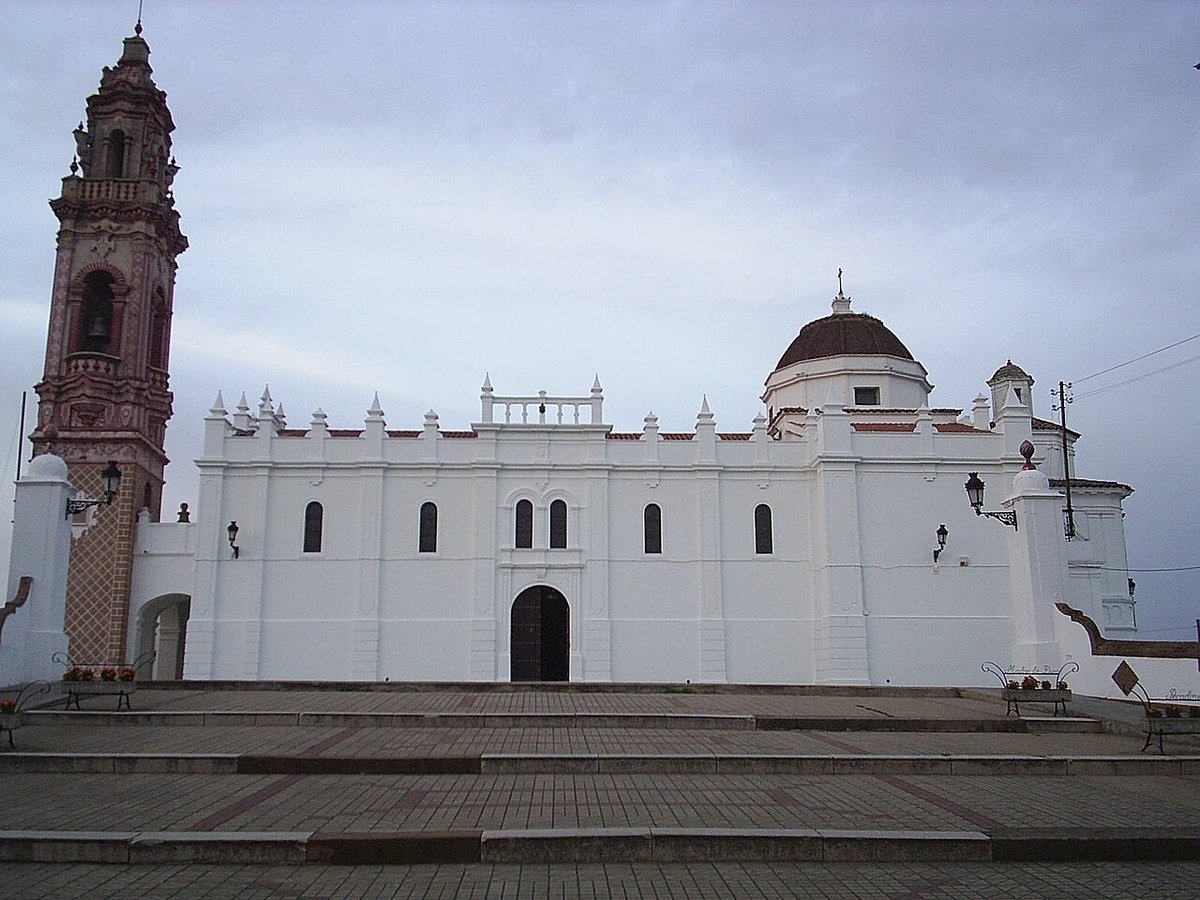
At the centre stands the parish church of Santa Ana. It does not dominate through size, but through its position. The square forms around it, and by early evening the stone benches often fill with people sitting and talking.
Its origins are linked to the 16th century, although the building reflects work carried out across many periods. Parts of the walls change in colour and texture depending on the materials used in each repair. Inside, there are simple altarpieces and several devotional images that are still carried in procession on certain dates.
The surrounding streets preserve low houses with whitewashed walls and heavy wooden doors. Many conceal interior courtyards. Looking up, dark beams and curved roof tiles come into view. Towards sunset, the light arrives at an angle, casting long shadows across the façades and giving the streets a quieter, more defined shape.
The dehesa beyond the last houses
A few minutes on foot is enough to reach the dehesa. The shift is immediate. The ground becomes more earthy, and scattered holm oaks appear, their branches letting light filter through.
Livestock is a common sight within fenced plots. After rain, the ground often shows signs of wild boar, where they have turned the soil in search of food. The dominant sounds are not those of traffic, but distant cowbells and birds moving between the trees.
The paths leading out of the village are not always marked. Some are traditional routes between properties rather than formal walking trails. Asking locally before setting out is usually the most sensible option. In the wide skies above, birds of prey can often be seen circling, particularly buzzards and, with luck, larger species. On the ground, fox tracks also appear from time to time.
Food shaped by the iberian pig
In this part of the Sierra Suroeste, the kitchen revolves around the Iberian pig. The surrounding dehesa explains much of what ends up on the table.
The recipes are straightforward and filling. Migas with chorizo and panceta, a dish based on fried breadcrumbs, appear regularly. Meat stews are prepared with seasonal vegetables. Garlic soups are made using bread from the previous day. These are meals designed to follow long hours of outdoor work.
The traditional pig slaughter, known as the matanza, was for decades a central moment of the winter. It is no longer carried out in every household, but many kitchens and outbuildings still keep the tools associated with it. From this practice come cured meats and sausages that later appear at family gatherings or during village celebrations.
Traditions that follow their own rhythm
The festive calendar becomes more active in summer. During these weeks, residents who live elsewhere return, and the streets take on more movement.
The patron saint celebrations usually include processions and activities in the square. They are not large events, but rather gatherings where most people know each other. It is also common to see visitors arriving from Fregenal de la Sierra and other nearby villages.
Holy Week here is restrained. Processions move slowly along the main streets, with little noise surrounding them. In winter, the village turns inward. Much of what can be seen relates to livestock or the upkeep of the surrounding land.
Getting there and moving around
The most direct route is via the N‑435 towards the area of Fregenal de la Sierra, followed by secondary roads. The final kilometres cross open countryside. The entrance to the village is narrow and not heavily signposted.
The urban area can be covered quickly. A calm walk from one side to the other takes around twenty minutes. It is often more pleasant to leave the car in the lower part and walk up towards the church square.
From the last houses, several dirt tracks lead out into the dehesa. After fifteen or twenty minutes on foot, the atmosphere shifts noticeably, with less noise and wider spaces between the holm oaks.
When to go
Spring and autumn tend to be the most comfortable times to walk around Valle de Santa Ana. In spring, the countryside turns greener and the air often carries the scent of damp grass at dawn. Autumn brings more ochre tones and increased activity on the land.
Summer brings intense heat from midday onwards. During these months, it makes more sense to head out early or wait until late afternoon, when the streets regain some life.
Winter days are shorter, and temperatures drop quickly after sunset. Time outdoors then depends more on daylight, especially if walking beyond the village into the surrounding fields.