Full Article
about Brozas
Noble town with a striking cluster of palaces, churches, and a castle that speak of its past grandeur.
Hide article Read full article
Getting your bearings
Brozas is easy to handle on foot. Leave the car near the entrance to the village and continue walking from there. The historic centre is compact, so distances are short and most of the key spots sit close together. Some streets slope gently, though nothing too demanding.
Summer brings strong heat in the middle of the day. Early morning or late afternoon suits a stroll far better. The layout helps: once you start heading towards the centre, everything draws in around the Plaza Mayor and a small group of nearby streets. Stray too far and you quickly reach newer neighbourhoods or the roads that circle the village.
From the parking areas on arrival, the route naturally rises towards the highest point, where the castle stands. It does not take long to see the main sights, which makes Brozas a straightforward stop rather than a place that requires careful planning.
Up to the castle
The castle sits at the top of the village and dates in general terms to the 15th century. Sections of wall remain, along with clearly defined circular towers. The structure is not extensive, so a visit here is brief.
What matters most is the view. From this height, the surrounding plain stretches out in every direction. The landscape becomes easy to read from above: open countryside, wide horizons and land that leads towards the area of the Tajo. It gives a clear sense of this part of Cáceres, where space dominates and settlements feel small within it.
Churches and religious traces
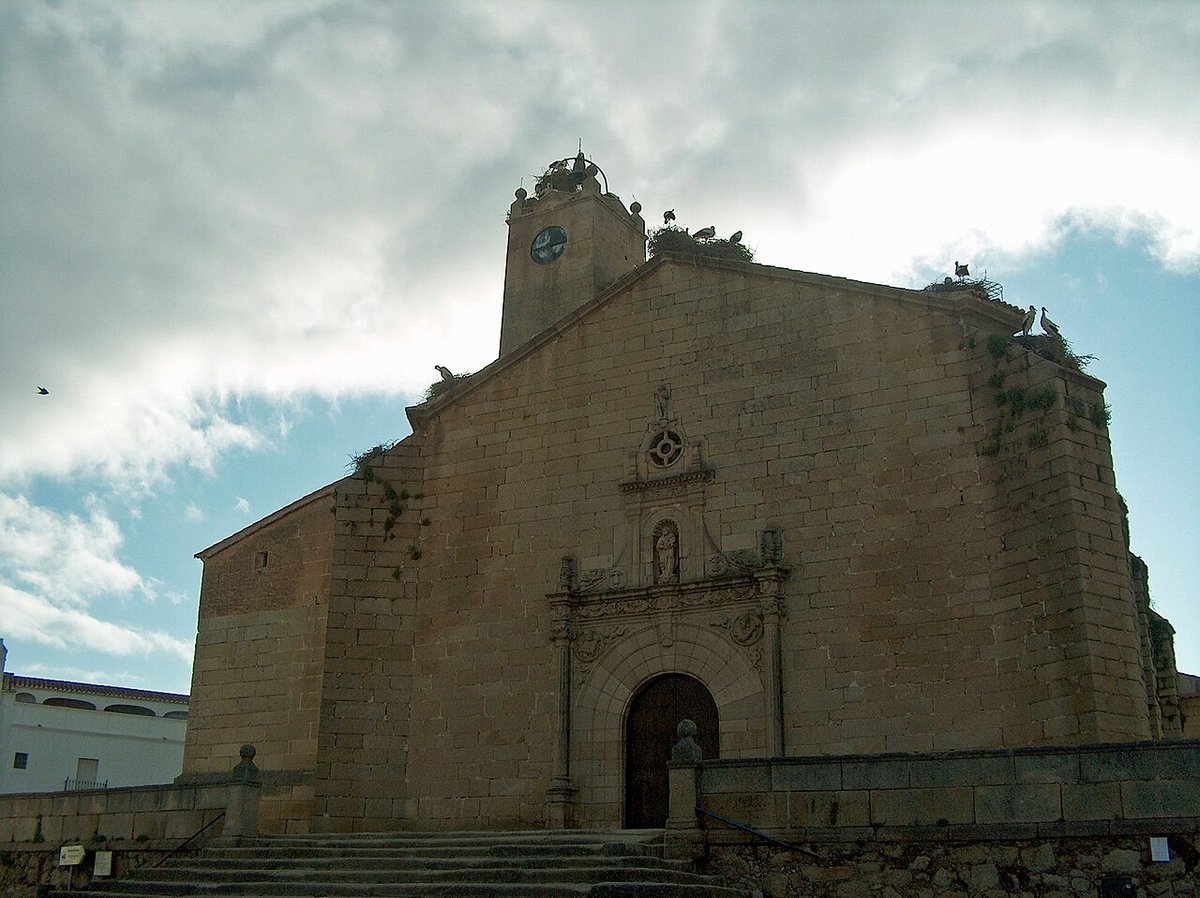
At the centre of Brozas stands the Iglesia de Santa María la Mayor. The building has its origins in the late Gothic period and saw changes during the 16th century. Inside, there is a Baroque altarpiece and a funerary chapel linked to local families.
It is not a large or imposing church, yet it fits closely with the scale and history of the village. As in many small places, access depends on whether it happens to be open when you arrive.
On the outskirts lies the convento de la Luz, founded in the 16th century. Its Plateresque doorway is the most striking feature. The complex does not survive intact, and parts are either in ruins or heavily altered. A visit here is short, though it helps explain the role that religious orders once played in the area.
Houses, square and everyday life
Walking through the centre, several houses display coats of arms on their façades. These details point to a time when Brozas had a noticeable presence of hidalgo families, minor nobility, along with lineages connected to administration and links with the Americas.
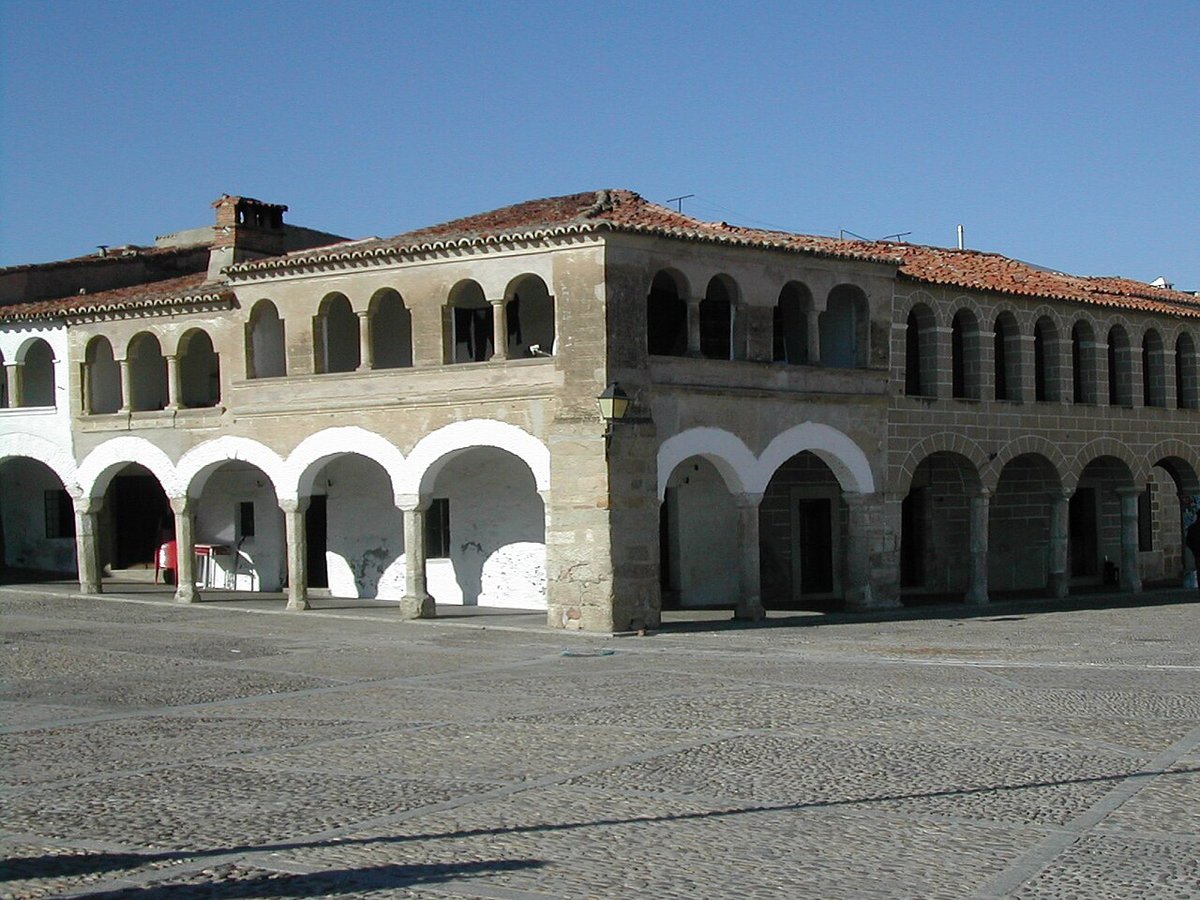
The Plaza Mayor forms the heart of the village. It is arcaded and slightly irregular in shape. The square is not large, yet it continues to function as a place people pass through and gather in. Daily life still moves across it, which gives it more relevance than its size might suggest.
References to Brozas’ connections with the Americas appear in small ways around the historic centre. One of the names often mentioned is Francisco de Montejo. There is no dedicated museum for this aspect of the past, though plaques and scattered notes bring it into view as you walk.
The land around Brozas
Step outside the village and the setting changes immediately to dehesa. This is a traditional landscape in Extremadura: open land dotted with holm oaks, used for grazing and agriculture. Fields spread out with few interruptions, creating a broad and mostly flat terrain.
There are no visible rivers or areas of water close to the urban centre. The environment feels dry and expansive, shaped more by farming and livestock than by waterways.
Several rural paths begin near the village. These tracks are flat and easy to follow. They suit a short walk rather than long-distance hiking. The ground mixes low scrub with scattered holm oaks, and birds of prey sometimes circle above the open fields.
Festivities and local rhythm
Brozas follows a calendar of local celebrations that reflect the character of the area. Semana Santa, the Easter week, is typically sober, in line with many villages in this part of Spain.
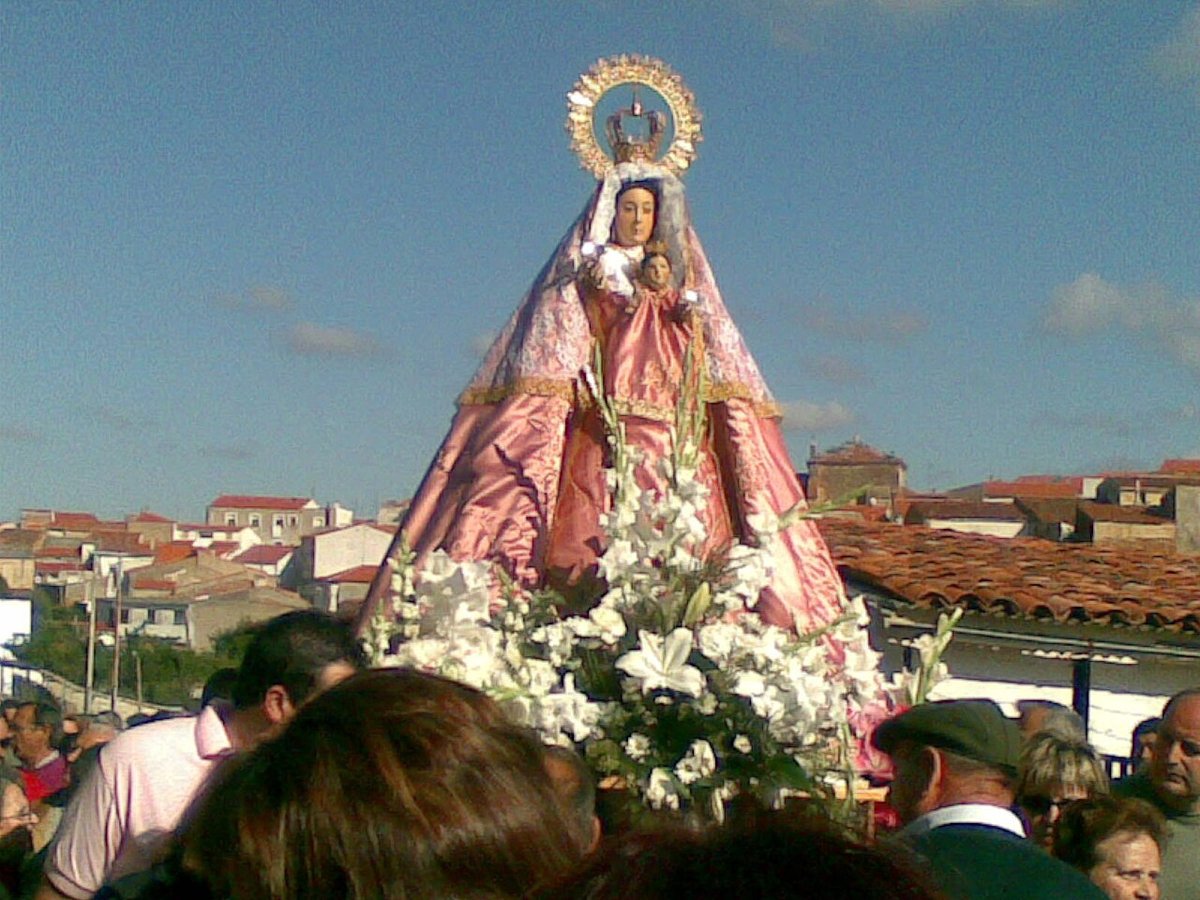
September brings the fiestas of the Virgen de los Remedios, when the Plaza Mayor sees more activity. January includes the celebration of San Antón, which often features the blessing of animals and a bonfire.
In summer, cultural activities sometimes take place outdoors, either in the square or near the castle. These events are simple and mainly aimed at residents rather than large numbers of visitors.
A simple visit
Brozas fits comfortably into a relaxed morning. A walk through the centre, a climb up to the castle and some time in the Plaza Mayor cover the essentials. The experience is less about ticking off major sights and more about understanding a small historic village within the dehesa landscape.
Those looking for extensive nature routes or varied terrain will need to explore further across the surrounding comarca. Within Brozas itself, the appeal lies in its scale, its setting and the traces of its past that remain visible as you move through its streets.