Full Article
about Carbajo
Border village with Portugal in the heart of the Tajo Internacional Natural Park; unspoiled nature
Hide article Read full article
Early in the morning, when light reaches the valley hesitantly, Carbajo moves at a slow pace. A door opens here, footsteps echo along a narrow street, a thin line of smoke rises from a chimney when the cold sets in. The stone of many houses holds that brownish tone common in the west of Extremadura, shaped by dust, sun and years. The day takes its time to get going.
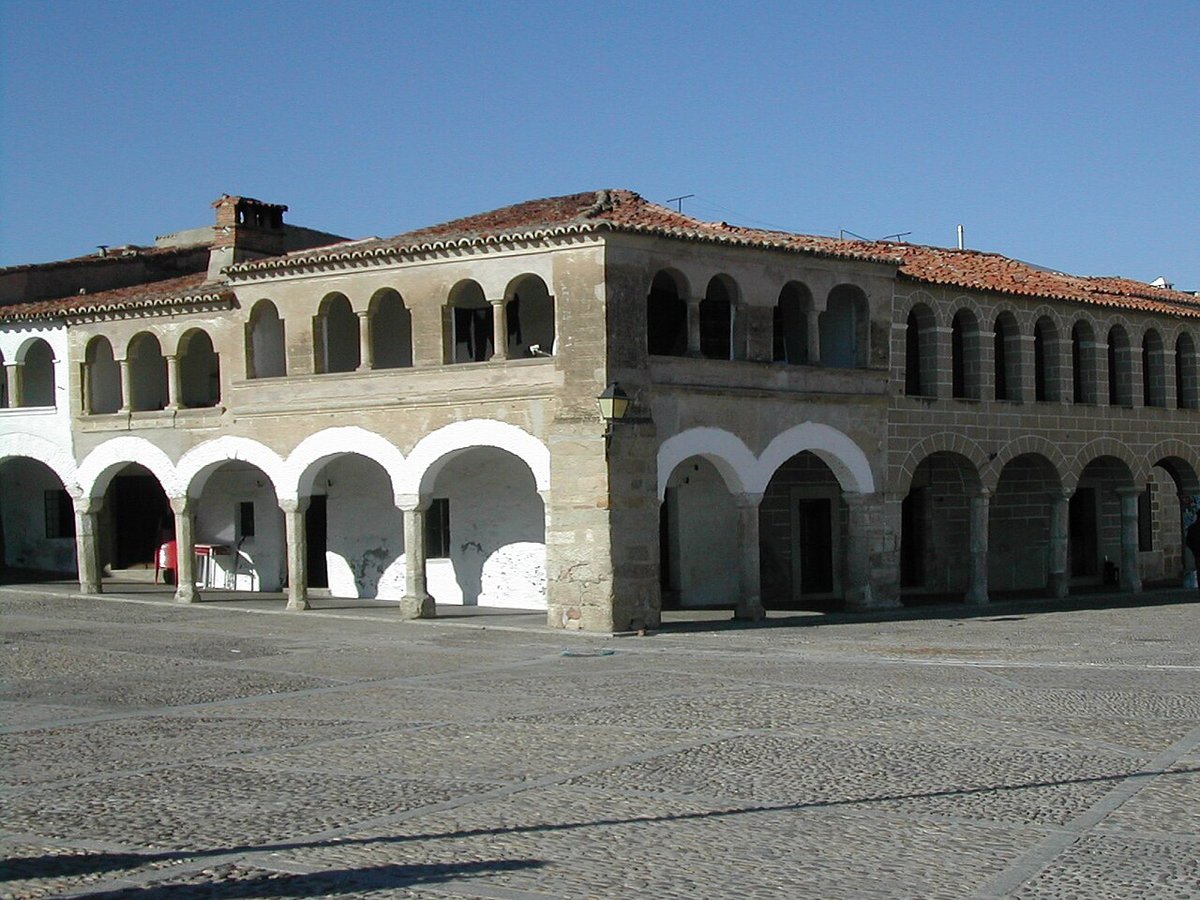
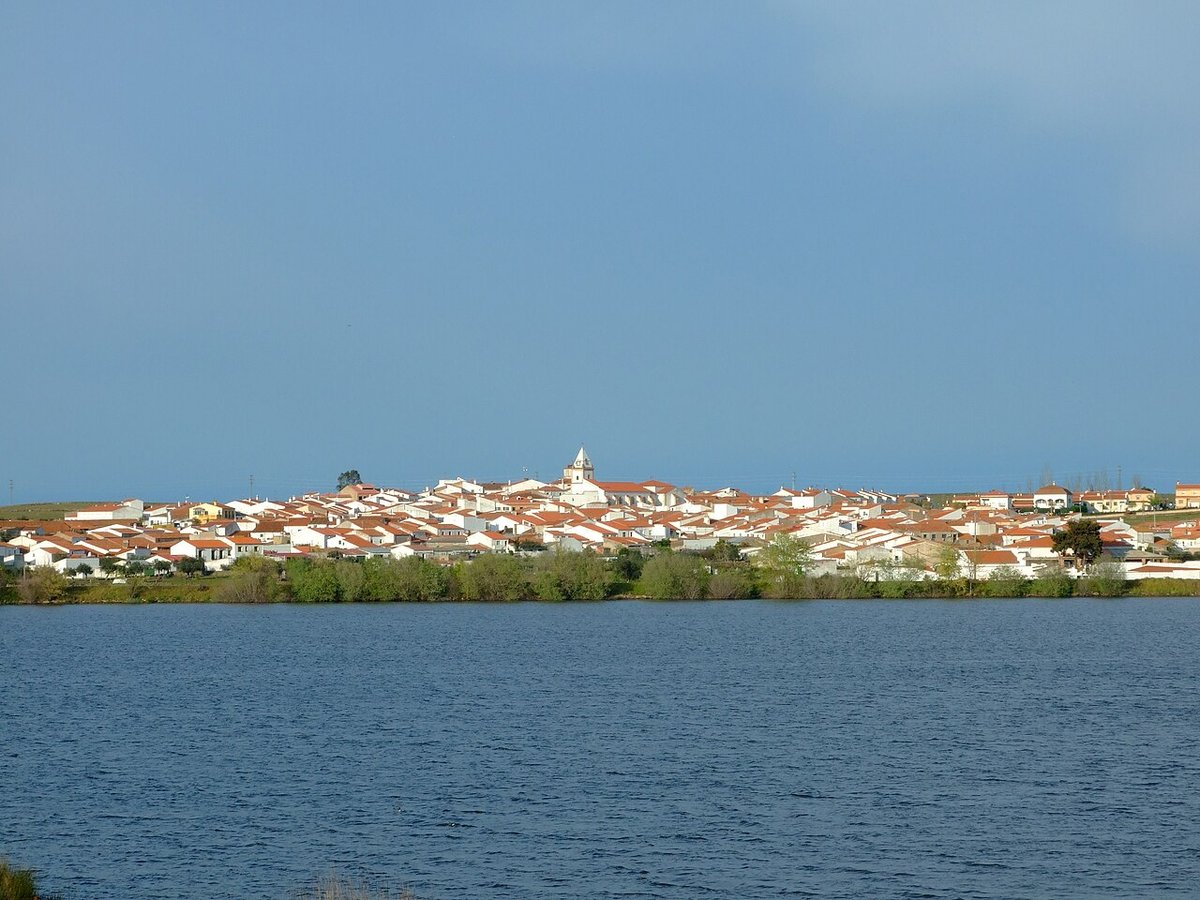
Any talk of tourism in Carbajo needs to start with its scale. The urban centre can be crossed in very little time. There are no large monumental complexes or streets designed for long strolls. What you find instead is a small village that continues at its own rhythm, with simple façades of stone and lime, and courtyards enclosed by low walls.
The village centre and the church
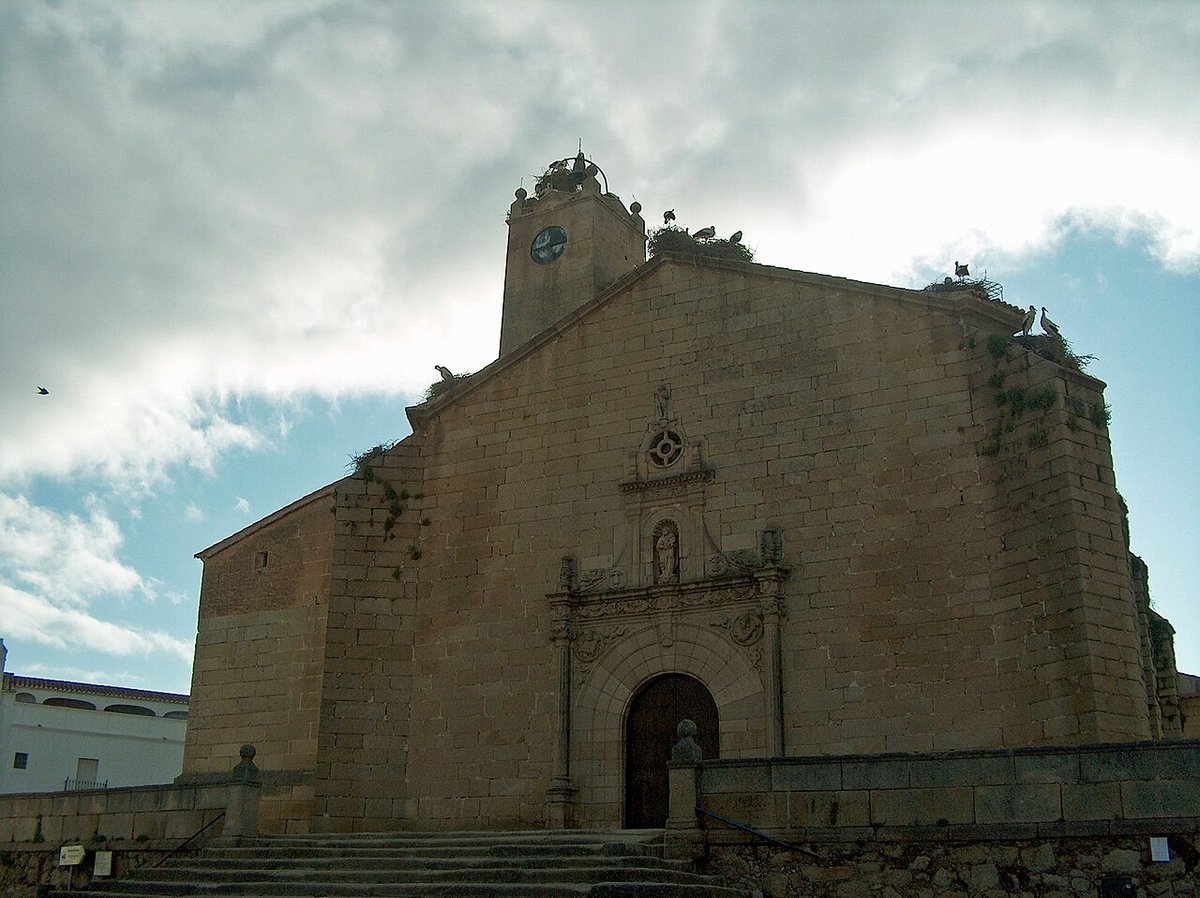
At the heart of the settlement stands the church of El Salvador, restrained in style, with a tiled bell tower. It does not dominate the skyline in a dramatic way. It simply sits there, as it always has, marking the centre of village life.
The oldest houses cluster around it. Some still have wide chimneys and thick walls, built to retain warmth during winter. A slow walk reveals details that are easy to miss: wooden doors worn smooth by decades of use, plant pots resting on window sills, the occasional vine climbing up into an inner courtyard.
By mid-morning the quiet begins to loosen. A car crosses the square, someone steps outside to sweep their doorway, a metal shutter rattles open.
Tracks through the dehesa
The landscape shifts quickly once you leave the built-up area. Within minutes, dirt tracks lead out into the dehesa, the traditional pastureland of this part of Spain, dotted with scattered holm oaks, dry stone walls and fenced grazing areas.
This area forms part of the surroundings of the Tajo Internacional, the cross-border natural space along the Tagus river. The countryside feels open and slightly harsh. In spring, birdlife is easy to spot over the clearings: groups of bee-eaters crossing the sky or hoopoes pecking near puddles left by the rain. Summer changes those same places. The ground dries out and turns a strong yellow that almost dazzles at midday.
Waymarking is limited. Many of these routes are simply agricultural tracks or paths shaped by regular use. Water is essential, and the middle of the day is best avoided when the heat builds, especially from June to September.
Small details in the surrounding countryside
Walking around Carbajo comes with a very specific atmosphere. The sound of boots on dry earth and the steady hum of insects define the warmer months. A stone trough might appear beside a fence, or a solitary holm oak casting a round patch of shade on the ground.
Human presence is intermittent. A flock of sheep might pass, lifting dust along the track, or a four-wheel drive vehicle may appear briefly before disappearing deeper into the land. For the rest of the time, quiet takes over.
Food when the temperature drops
The local cooking remains closely tied to what the land provides. Iberian pork and lamb feature regularly, particularly in the colder months, often served in thick stews or hot soups.
Autumn brings a different activity. When the soil retains some moisture, some residents head out into the countryside to look for mushrooms in spots they know well. It is a low-key, local practice. Anyone unfamiliar with the terrain should be cautious and respect the regulations that apply in the area.
When to come
Spring and autumn tend to be the most comfortable seasons for walking in the surroundings. The light softens and the colours of the countryside shift noticeably.
Summer can be intense. The sensible approach is to head out early or wait until late afternoon. Winter brings morning fog that wraps around the village and leaves the tracks damp. After several days of rain, some paths can become muddy.
Carbajo does not work as a destination built around a long list of sights. It makes more sense through short walks, a quiet conversation in the street, or that moment when the countryside falls completely silent as evening approaches. It is a small village, surrounded by dehesa, continuing its life without much hurry beside the borderlands of the Tajo Internacional.