Full Article
about Hinojal
Hill-country village with a striking Templar chapel and cattle-farming landscape.
Hide article Read full article
A Small Village in the Tajo‑Salor
Some places are reached almost by accident, the sort you find after turning off the road to stretch your legs and staying longer than planned. Hinojal has something of that feeling. With around 390 residents, this small municipality in the Tajo‑Salor comarca of Extremadura moves at its own speed, without headline attractions or signposts telling you where to look.
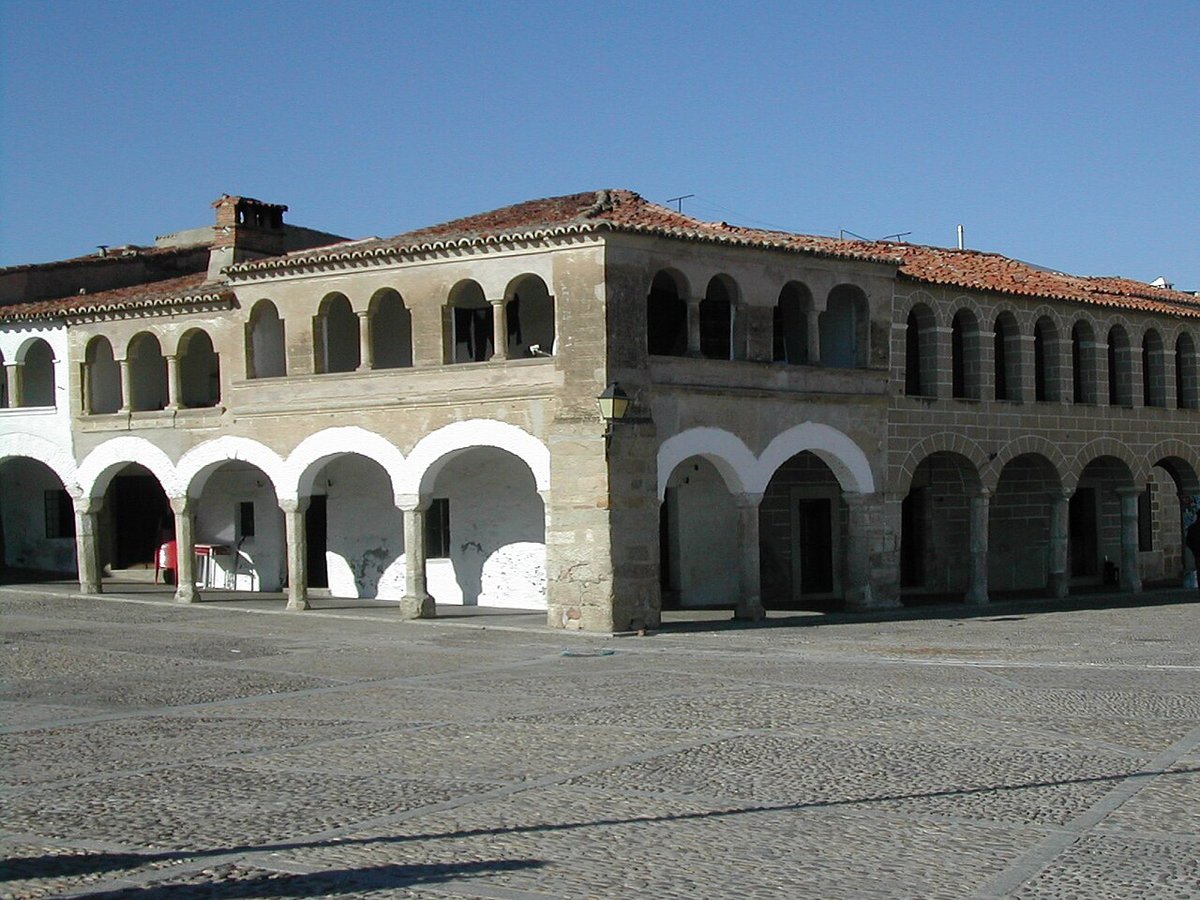
Whitewashed houses line the streets. Behind half‑open doors there are glimpses of interior courtyards. Walk through in the middle of the afternoon and it is quite possible that someone will greet you, even if you are a stranger. Daily life is visible in small details rather than set pieces.
Hinojal is not a place built around a checklist of sights. Its character lies in how ordinary life unfolds, quietly and without fuss.
Around the Church of San Sebastián
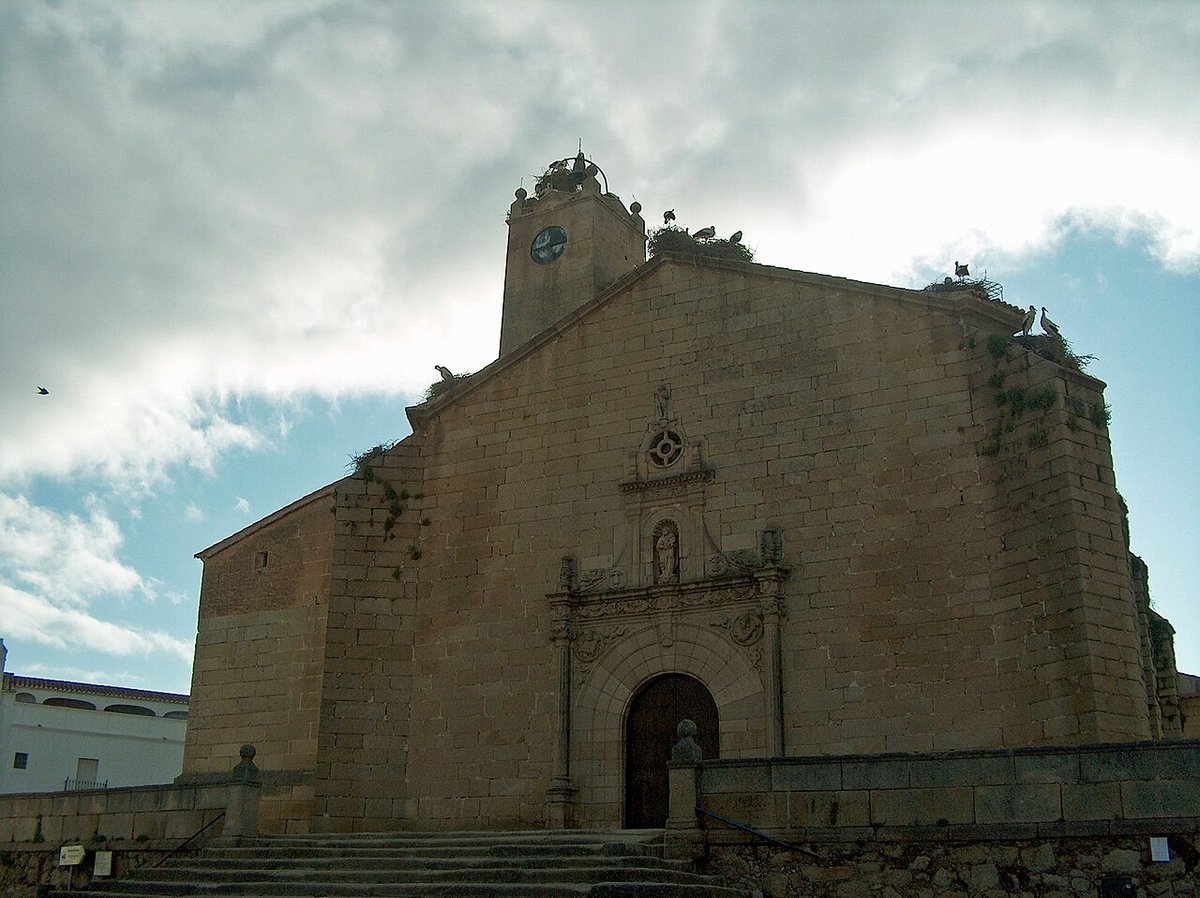
In Hinojal, most roads seem to lead back to the church of San Sebastián. It is not a monumental building and does not try to be, yet it marks the centre of village life. From here, several short streets branch out, some with stretches of stone paving and simple façades that reflect generations of the same families living in the same houses.
The centre can be explored in half an hour. That brevity is part of the appeal. There are no marked routes or interpretive panels on every corner. The experience is closer to wandering without a plan and observing how the village organises itself: a garage door left open, someone sweeping their doorstep, the weekday stillness that defines many small rural communities.
Nothing feels staged. The scale is intimate, and distances are short. It is a setting where everyday routines shape the atmosphere more than any single landmark.
The Dehesa Landscape
Step beyond the built‑up area and the landscape that defines Hinojal comes into view. This is dehesa country, the traditional pastureland of western Spain, with holm oaks spaced widely apart and dirt tracks cutting through livestock farms. The terrain stretches out towards the horizon, open and unobstructed.
There are no signposted hiking trails or purpose‑built viewpoints. Most people move along rural tracks used by locals to reach their farms. These paths are generally easy, with no major changes in elevation. They are better suited to a steady walk than to a mountain expedition.
Along the way you might cross a seasonal stream or pass cattle grazing calmly. The sense of space is constant. The horizon rarely disappears from view.
The dehesa changes with the seasons. In spring, wildflowers appear among the green. By summer, the landscape turns dry and golden, a look typical of the interior of Cáceres province. Winter often brings heavy grey skies that hang low over the fields, part of the rhythm of this corner of Extremadura.
The environment here is working countryside rather than curated parkland. Farms and livestock shape the view as much as the trees do. Walking these tracks is less about reaching a specific point and more about understanding how land and life fit together.
Food Rooted in Tradition
Cooking in Hinojal follows long‑established patterns. There is little interest in modern reinvention. Meals revolve around products that have been part of the area for generations: home‑cured embutidos, jamón, slow‑cooked pulses and stews that fill the plate without unnecessary decoration.
Dishes such as conejo guisado and patatas con chorizo still appear on many tables, particularly when colder weather calls for something hearty. These are meals designed for sitting down properly, eating at an unhurried pace and reaching again for bread.
The emphasis is on substance rather than presentation. Recipes are familiar, portions are generous and flavours are straightforward. In a setting like this, food connects directly to the surrounding farmland and to habits passed down within families.
Evenings Under Open Skies
As dusk approaches, the skies above Hinojal become part of the attraction. It takes only a short walk or drive along one of the rural tracks to leave the village lights behind. With few strong light sources nearby, sunsets appear clearly over the dehesa. After dark, a good number of stars come into view.
The experience is simple. Park by a gate, rest your arms on it and watch as the colours of the fields shift with the fading light. The change from gold to shadow happens gradually, and there is little to interrupt it.
These moments are quiet rather than dramatic. The open land and low levels of artificial light make the sky feel closer. In a region where distances are wide and settlements are small, evening often becomes the most memorable part of the day.
Festivals and Local Life
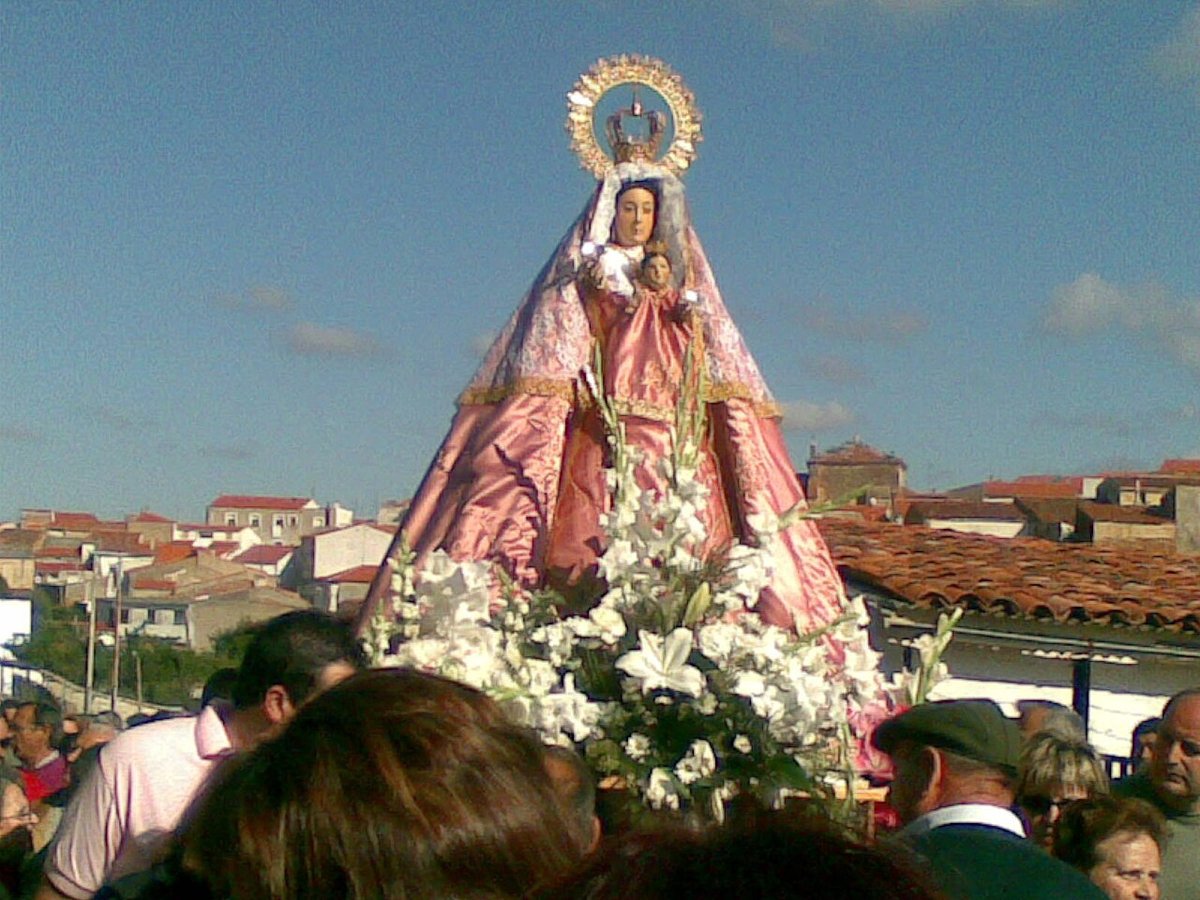
The village calendar revolves largely around traditional celebrations. The festival of San Sebastián in January is an important reference point for many residents. It marks the year in much the same way it has done for generations.
Spring often brings a romería or popular gathering in the surrounding countryside. These events are simple in spirit. People come together outdoors, share food and extend conversations well into the day.
Summer changes the atmosphere. Those who live elsewhere for work or study tend to return, and the village gains a little more movement and noise. Even then, Hinojal remains a quiet place overall. The increase in activity does not transform it into a busy destination; it simply adds another layer to community life.
Throughout the year, social ties and shared traditions shape the rhythm of the village more than any external event.
Getting There and Choosing the Season
Hinojal lies in the province of Cáceres, within the Tajo‑Salor comarca. From the city of Cáceres, it is reached by car along regional roads that pass through dehesa and livestock areas. The journey is not long and introduces the landscape before arrival.
Spring and autumn are usually the most comfortable times for walking in the surrounding countryside. Summer heat can be intense around midday, so it makes sense to organise the day as locals do: head out early or wait until late afternoon. Winter brings cooler temperatures and heavier skies, which alter the mood of the fields but remain part of the area’s identity.
Hinojal is not a destination packed with activities to fill an entire weekend. It works better as a calm pause on the map, a small village where the dehesa of Extremadura can be understood at ground level and where life unfolds slowly. In a world that often moves quickly, that slower rhythm can be reason enough to stop.