Full Article
about Mata de Alcántara
Town of the Order of Alcántara with a notable church
Hide article Read full article
A village shaped by light and distance
Late in the afternoon, when the sun sits low over the plain, the holm oaks cast long shadows and the air carries the dry scent of the earth. Mata de Alcántara appears almost without warning: a small cluster of streets, red-tiled roofs and the wide quiet of the dehesa all around. With around three hundred inhabitants, the village moves at an unhurried pace. Time here follows the daylight more than the clock.
The houses gather loosely around the centre, without a strict layout. In summer, shutters are often half closed during the siesta. Sound fades back to the occasional passing car or the steady hum of insects in the heat. It is a place where daily life unfolds without rush, and where even a short walk feels slower than expected.
San Bartolomé at the heart of the village
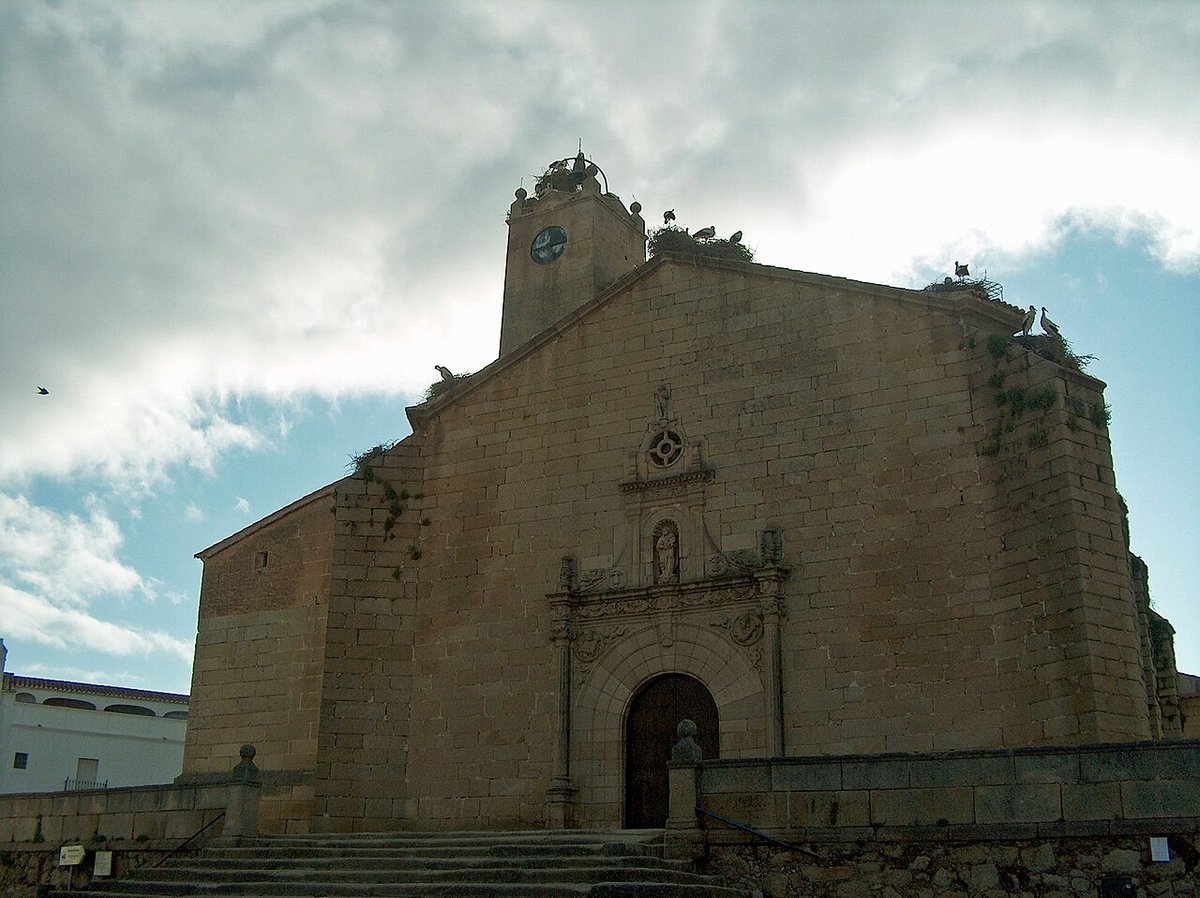
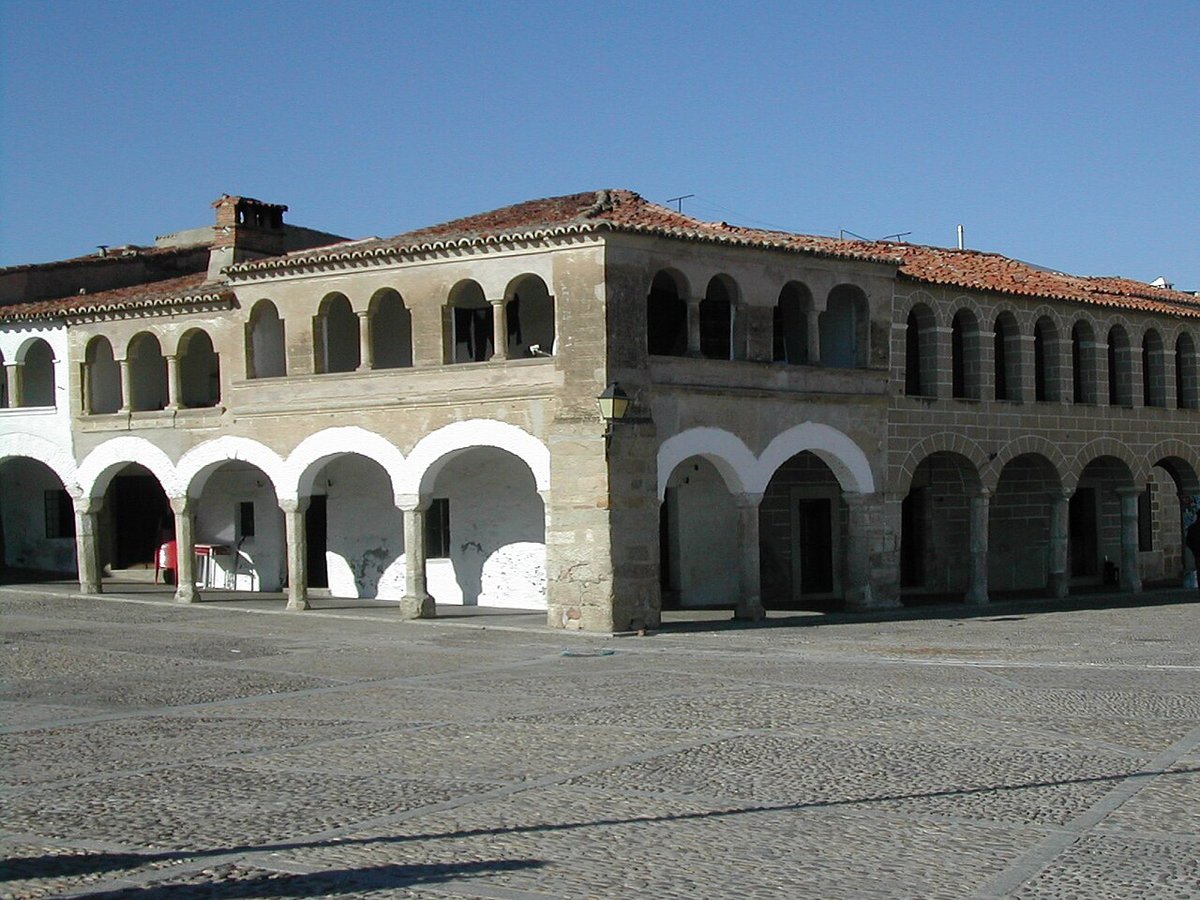
Most streets eventually lead to the church of San Bartolomé. The building is modest in scale, with stone walls and simple lines, set beside a square that often acts as a meeting point. At certain moments of the day, the bells carry easily across the village, which is small enough to cross in just a few minutes.
Inside, the temperature drops noticeably, even in the height of summer. Thick walls and soft light create a calm, understated interior. The space reflects the agricultural character of the area, with nothing excessive or ornamental, just a sense of continuity with the surrounding land.
Stepping out into the dehesa
A short walk beyond the last houses brings a clear shift in landscape. The ground becomes uneven, fences begin to appear, and the holm oaks spread out with wide gaps between them. These open areas of grass or bare soil are typical of the dehesa, a traditional landscape of pasture and scattered trees common in this part of Extremadura.
Some of the dirt tracks serve practical purposes, used for farm work and moving livestock. Gates may need to be opened and closed along the way, and it is important to leave them as they were found. Early in the morning or towards the end of the day, birds of prey such as kites and vultures can often be seen gliding above the treetops. With a bit of patience and a pair of binoculars, the stillness gradually reveals movement.
These are not marked walking routes in the usual sense. They are paths and tracks shaped by local use rather than signage. Good footwear and water are essential, especially during the hotter months when the sun can be intense and shade is limited.
Food, routines and a quiet rhythm
In a village of this size, services are limited and it is wise not to assume that everything will be open. The usual approach is to move slowly, pick up basic supplies if a shop happens to be open, or arrive prepared from a nearby town.
Food here is closely tied to the land and to domestic cooking. In local homes, recipes often centre on cured meats, sheep’s or goat’s cheeses, and hearty stews during colder weather. These are not elaborate dishes, but straightforward, rooted in tradition and shaped by what the surroundings provide.
Daily life follows a familiar rural rhythm. Activity rises and falls with the temperature and the season, and much of what happens remains closely linked to agricultural work and household routines.
Festivities and seasonal traditions
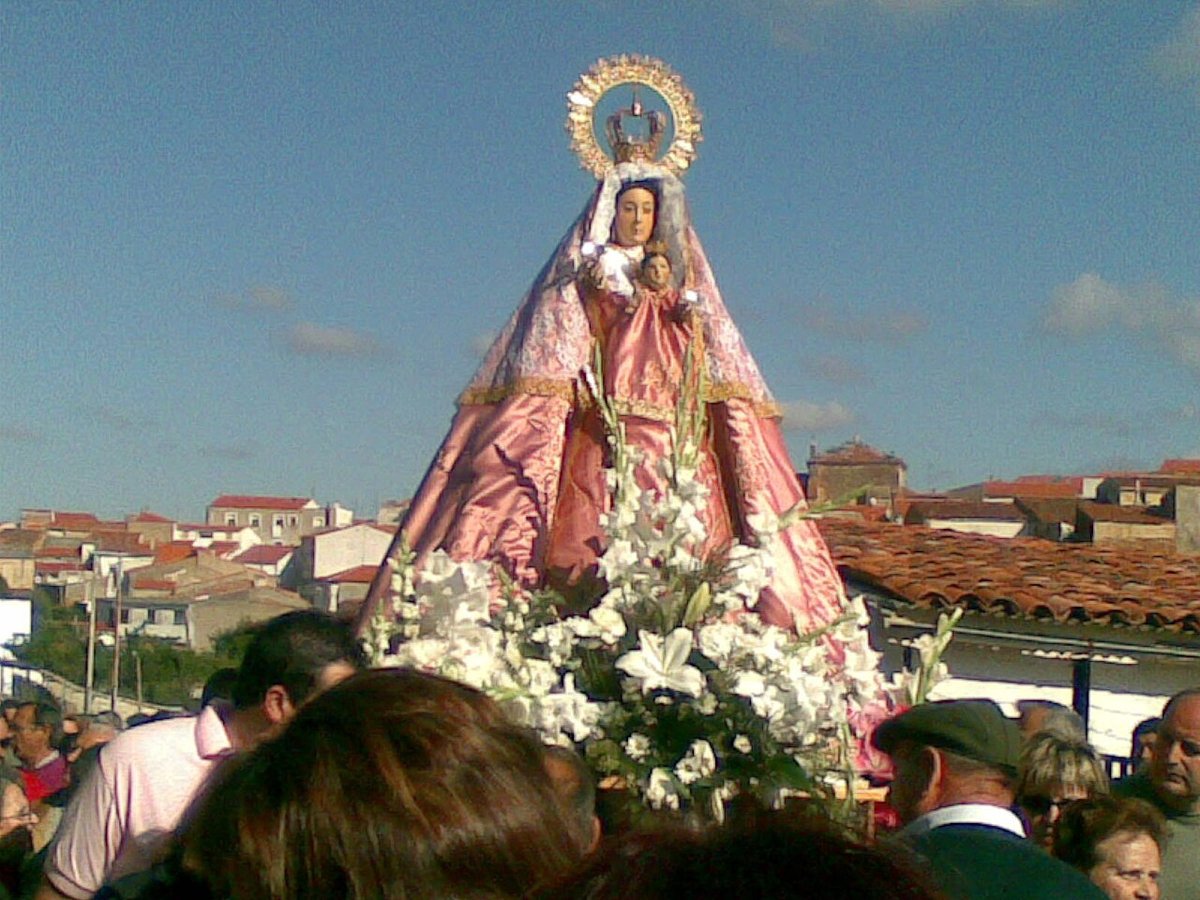
The main celebrations take place around San Bartolomé, usually towards the end of August. At that time, many people who live elsewhere during the year return to the village. The streets fill with music, parked cars in every available space, and long conversations that stretch into the night as the heat fades.
In winter, another tradition continues in some households: the matanza del cerdo, or pig slaughter. These are family gatherings rather than public events, where the work is shared across generations. The process is practical, tied to food preparation for the months ahead, and remains a part of rural life in the area.
When to come and how to get there
Spring and autumn tend to be the most comfortable times to visit. The dehesa changes noticeably with the seasons, turning a vivid green after the rains or shifting towards drier tones as the year progresses.
Summer brings strong midday heat. If visiting during that period, it makes sense to walk early in the day or wait until late afternoon, when a bit of air begins to move again and the landscape feels more active. In winter, daylight hours are shorter, but the clarity of the light allows long views across the plains.
Mata de Alcántara is usually reached from Cáceres by taking the road towards Alcántara and then turning onto smaller regional roads. The route passes through open estates and gentle undulations in the terrain, with isolated holm oaks and stretches of stone wall marking the landscape.
Arriving by car is the practical option, and distances between villages in this part of the Tajo-Salor area can feel longer than they appear on a map. Once there, the village itself can be explored quickly, perhaps within an hour if staying in the centre. What lingers is not the size of the place but what surrounds it: the open dehesa, the sense of space, and the late-day light that gives the holm oaks a copper tone just before dusk.