Full Article
about Membrío
Town known for its old gold mines and hunting grounds.
Hide article Read full article
A village shaped by the dehesa
Membrío sits in the Tajo-Salor area, in the western part of the province of Cáceres, close to the Portuguese border. With fewer than six hundred residents, it is a small place where daily life follows a slower, more practical rhythm. The surrounding landscape defines much of what happens here. This is dehesa country, a traditional system of land use made up of scattered holm oaks and cork oaks, open pasture and stone enclosures.
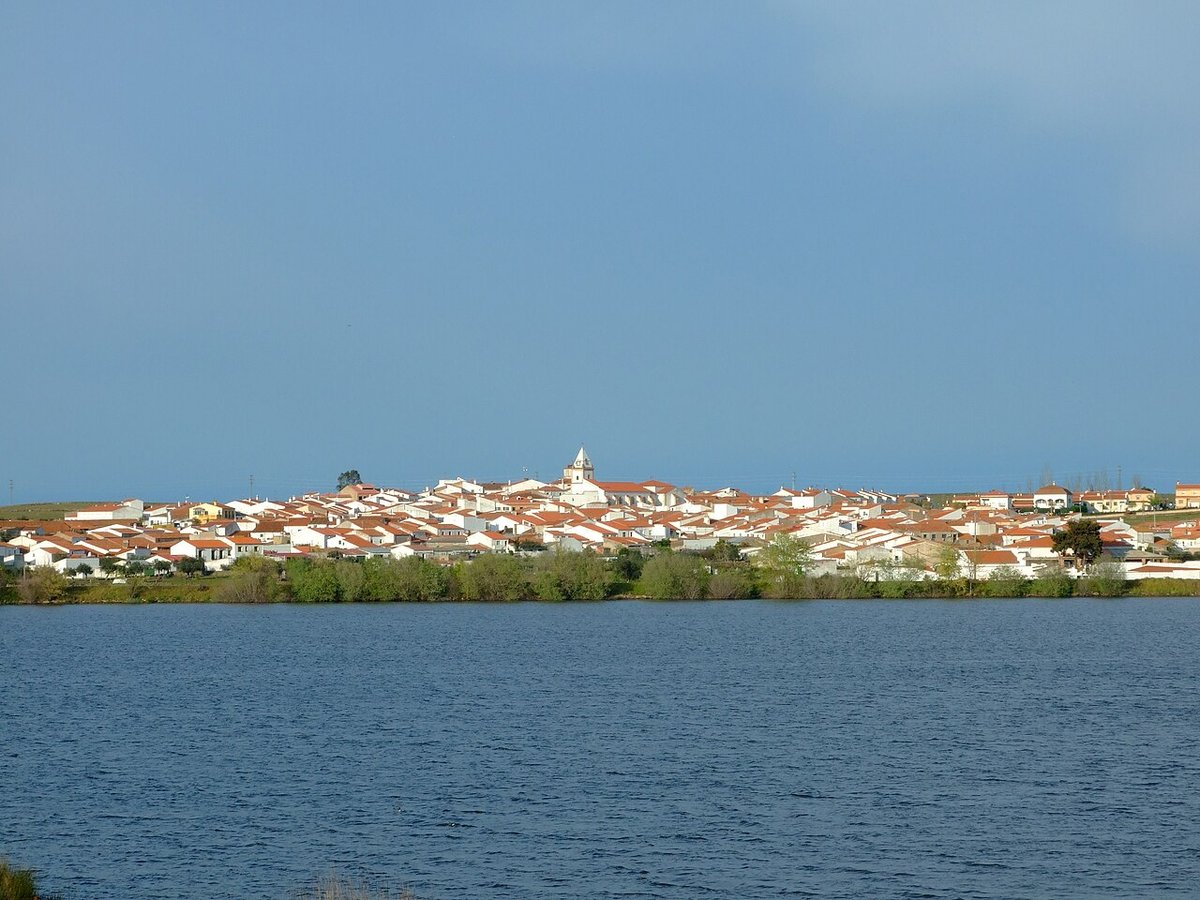
The village itself spreads across gently rolling ground, with the built-up area blending into the countryside. There is no sharp divide between town and field. The calendar here is still guided largely by agricultural tasks and livestock management rather than tourism. Visitors quickly notice that this is a working environment first and foremost.
Recent history in Membrío is closely tied to extensive livestock farming and the use of cork oak woodland. Cork extraction has long provided an additional source of income for local families, while Iberian pigs are another important part of the rural economy. The dehesa is not a backdrop designed for visitors. It is a productive system that continues to function much as it has for generations.
Nuestra Señora de los Remedios
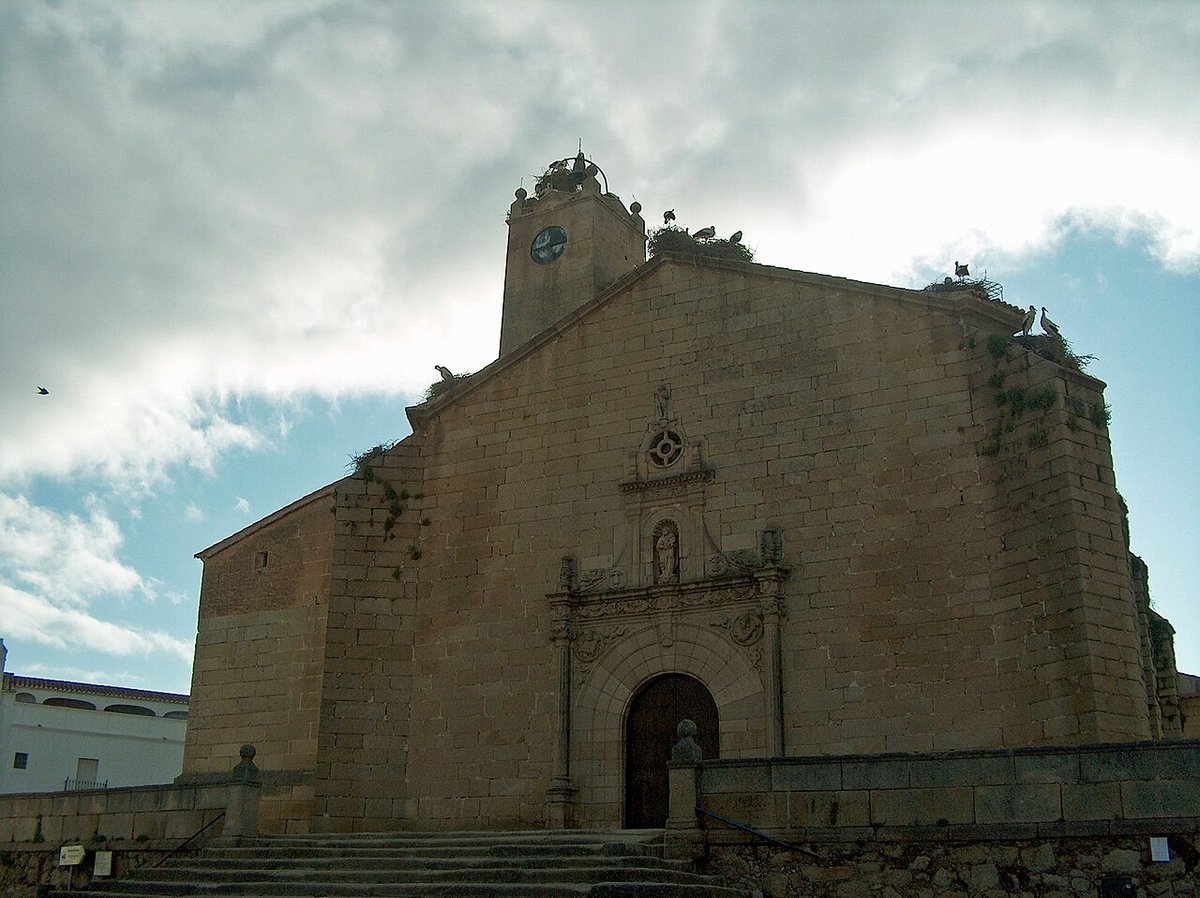
At the centre of the village stands the parish church of Nuestra Señora de los Remedios. The current building appears to date back to the 16th century, although later alterations have changed its appearance over time. Its stone tower rises above the surrounding streets and combines elements of late Gothic design with later additions.
Inside, the atmosphere is restrained. The main altarpiece and several devotional images reflect the role that religious practice has long played in local life. This is not an elaborate or heavily decorated space, but it carries a quiet sense of continuity with the past.
The church remains a focal point during key moments of the year, especially during religious celebrations. Even outside those times, its presence helps structure the layout and rhythm of the village.
Streets and everyday architecture
Membrío can be explored at an unhurried pace. The central streets follow patterns typical of many villages in this part of Extremadura. Houses are whitewashed, often with stone bases and iron window grilles. From the outside, these homes appear quite closed, with solid wooden doors and few hints of what lies within.
Behind those doors, interior courtyards are common, though they remain largely hidden from view. This inward-facing design reflects both climate and tradition, offering shade and privacy during the hotter months.
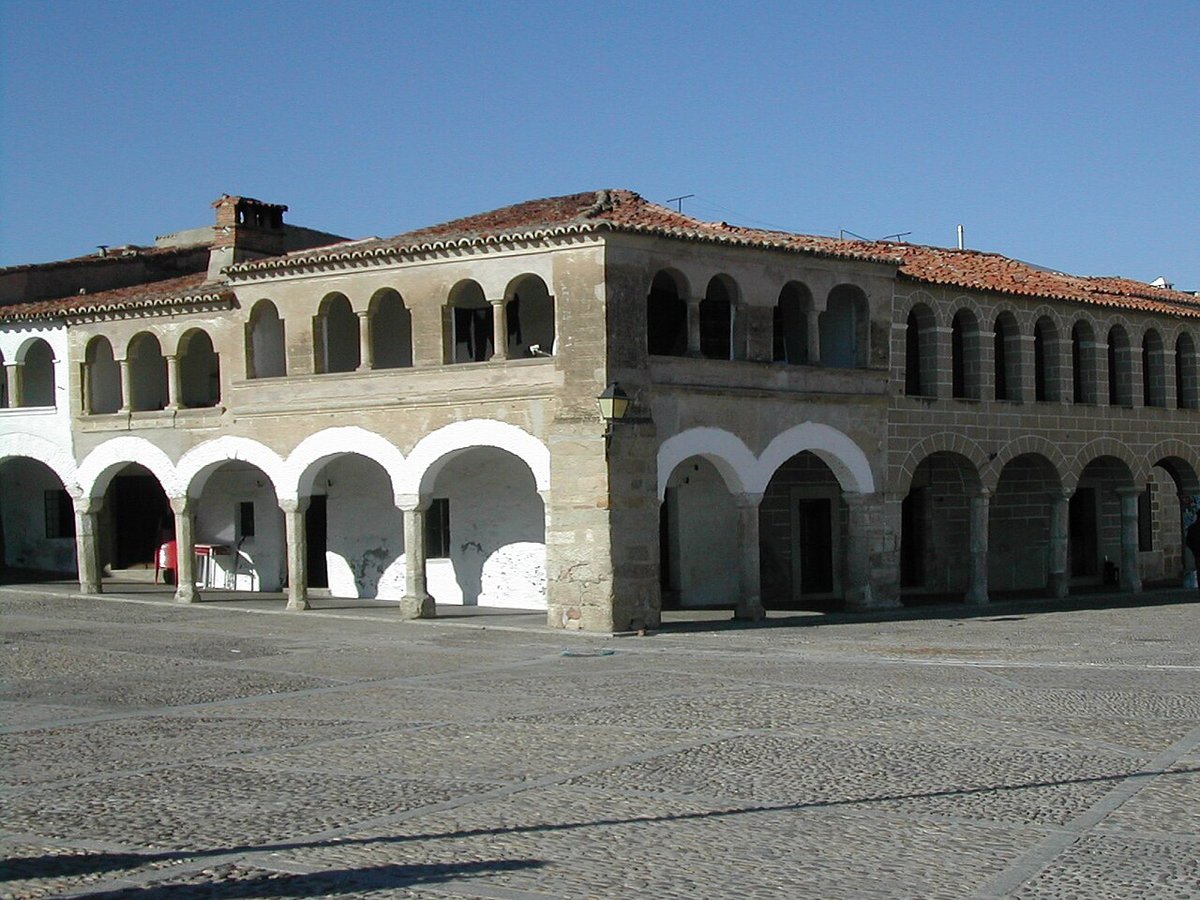
The main square acts as a daily meeting point. At certain times of day, much of the village’s social life gathers here. Conversations stretch out, people move between homes, and children cross the open space on bicycles. It is an ordinary scene, repeated day after day, rather than something staged for visitors.
The surrounding dehesa
A short distance from the edge of the village, the dehesa begins. Holm oaks and cork oaks create an open landscape that shifts noticeably with the seasons. In spring, the ground fills with grasses and wildflowers. By late summer, the same terrain becomes dry and dusty under the heat.
This environment supports a variety of birdlife. Depending on the time of year, it is possible to see kites or black storks moving above the treetops. Their presence is not guaranteed, but the area offers suitable conditions for observing them. Livestock is also a constant presence, with animals grazing freely across large enclosed estates.
One of the most distinctive activities in the surrounding countryside is the cork harvest, known as the “saca del corcho”. This takes place during the warmer months and remains an important seasonal task. Stripping the bark from cork oaks requires skill and care, and it continues to be carried out using traditional methods.
Walking routes and rural tracks
The area around Membrío is well suited to walking or cycling along dirt tracks that connect different parts of the countryside. Some of these paths link up with longer routes in the wider Tajo area, though signposting is not always clear. It is advisable to carry a map or GPS when exploring beyond the immediate surroundings.
These are not routes designed as attractions in themselves. What they offer instead is a direct view of a working landscape. Along the way, there are fenced plots, livestock ponds, dry stone walls and tracks that connect one estate to another. The experience is less about reaching a particular viewpoint and more about understanding how the land is used.
Festivities and local life
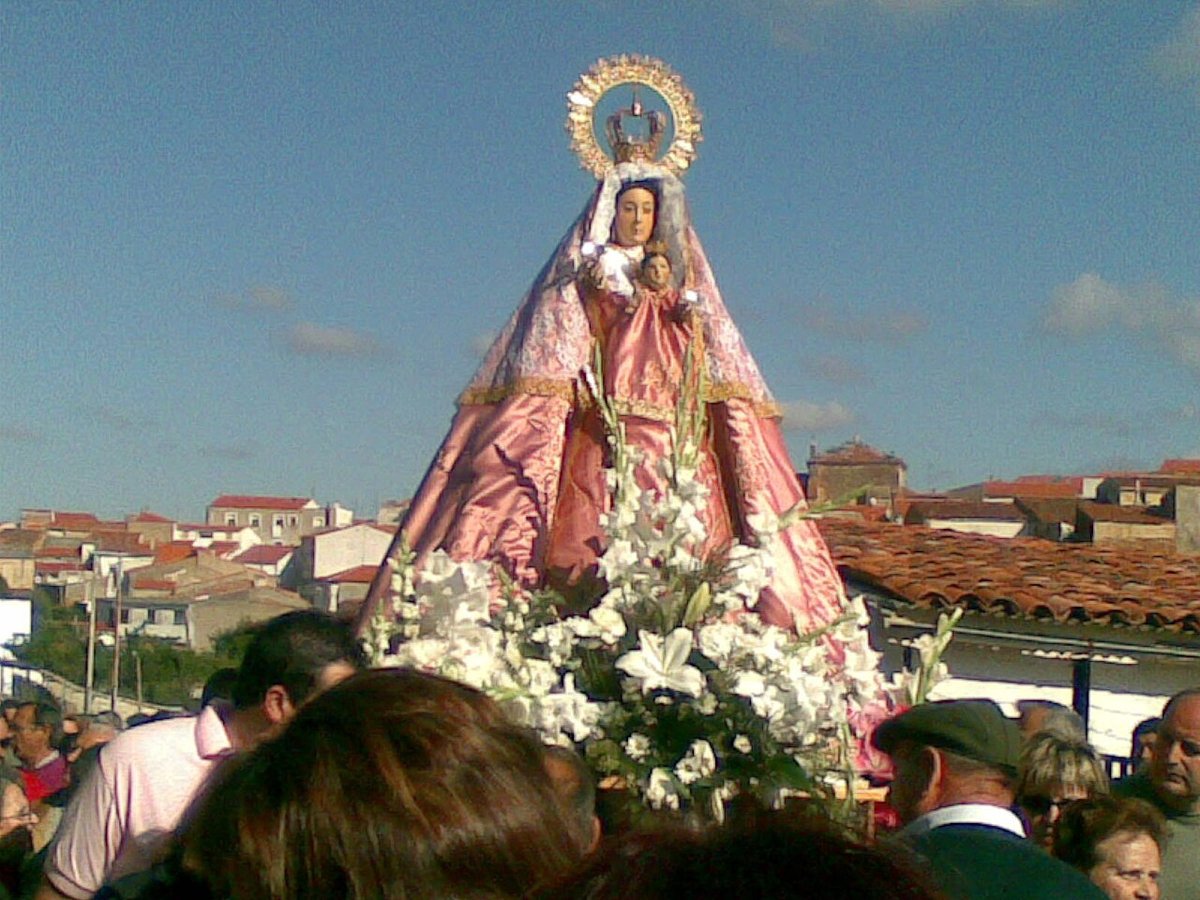
The main celebration in Membrío is dedicated to Nuestra Señora de los Remedios and takes place in September. During these days, the village hosts religious events alongside activities in the streets and the square. It is a time when the usual rhythm shifts slightly, with more people gathering outdoors and taking part in shared traditions.
Holy Week is also observed, with processions moving through the streets of the village. The atmosphere is simple and closely tied to local participation rather than large-scale spectacle.
In summer, when daytime temperatures rise, activity often shifts into the evening. The square becomes a place for night-time gatherings, offering some relief from the heat and a chance for neighbours to spend time together.
When to go and how to reach Membrío
Membrío can be reached from Cáceres by road, heading towards Valencia de Alcántara and then continuing along a regional route. The journey takes roughly three quarters of an hour by car, depending on traffic.
Spring and autumn are generally the most comfortable seasons for walking in the surrounding countryside. Summer brings intense heat, so it is more practical to head out early in the morning or later in the day.
Membrío is not a destination defined by major monuments or a long list of sights. It is a place where it makes sense to slow down, spend time on the tracks that cross the dehesa, and observe how this landscape continues to function as a place of work shaped by long-standing practices.