Full Article
about Santiago de Alcántara
Known for its Megalith Interpretation Center and dolmens
Hide article Read full article
A borderland shaped by land and distance
Santiago de Alcántara sits in the Tajo-Salor comarca, in the far south-west of the province of Cáceres, very close to the Portuguese border. With just over 450 residents, it is a place where landscape takes precedence over urban life. The surroundings are defined by open dehesa, large rural estates and a network of paths that have long served agricultural work more than communication between settlements.
Proximity to Portugal has influenced daily life for generations. Trade and movement across the territory followed patterns shaped by the border, and that legacy still lingers in how the area is organised. At around 340 metres above sea level, the village spreads across gently undulating ground. Its layout follows the terrain rather than imposing itself on it.
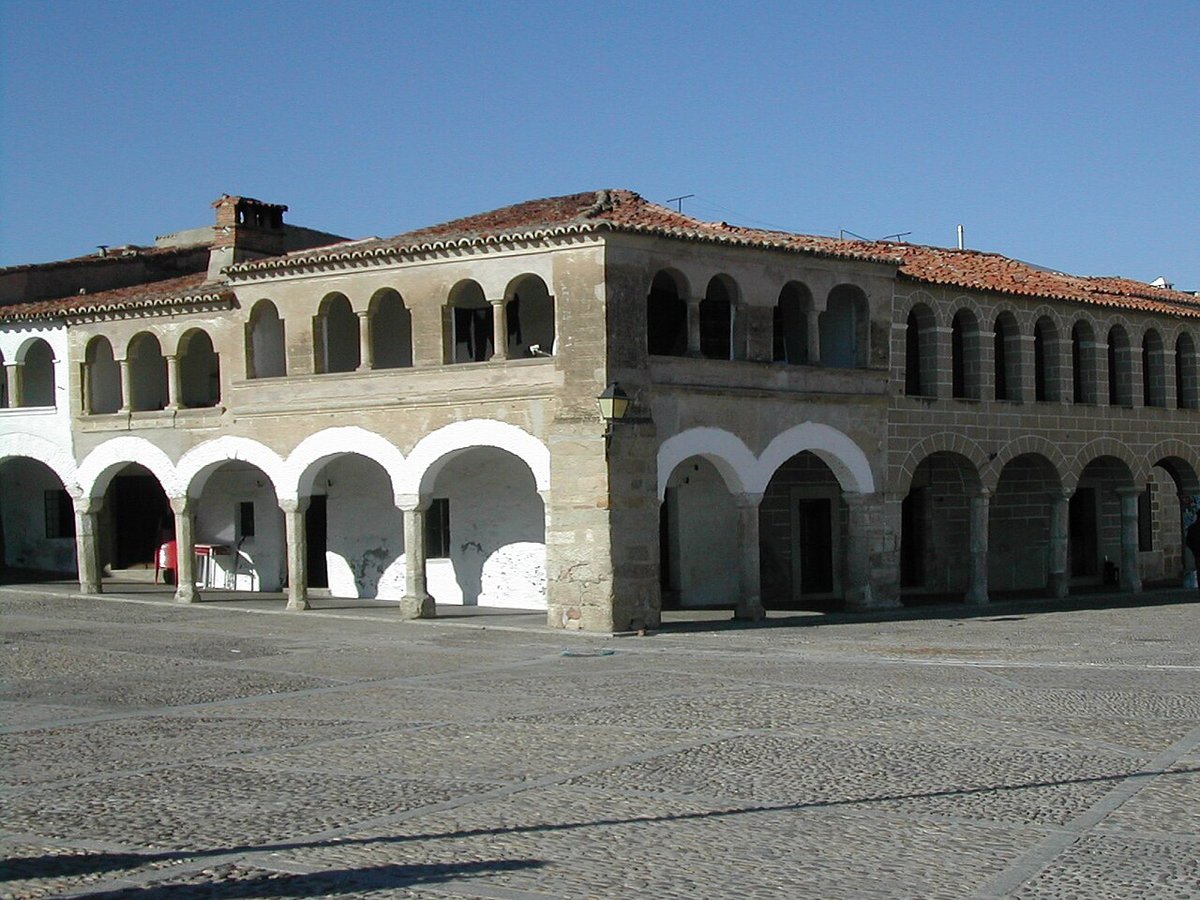
The streets are short and practical. Granite appears throughout, in walls, doorways as well as structural details, reflecting a long-standing agricultural and livestock tradition. Everything feels built for use rather than display, with materials chosen for durability and familiarity.
A quiet architectural identity
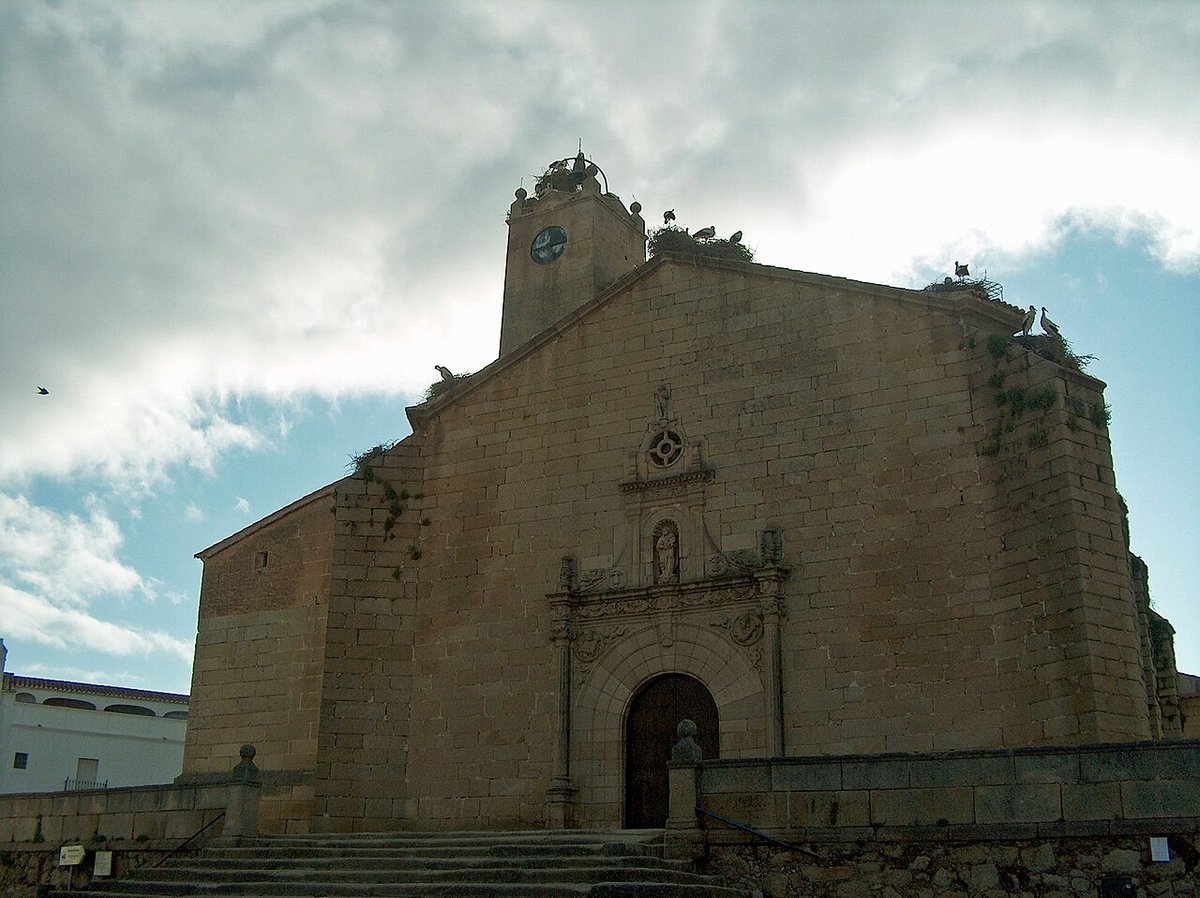
The built heritage of Santiago de Alcántara is understated. Interest lies less in landmark monuments and more in everyday architecture that reflects rural life over time. At the centre stands the parish church of Santiago Apóstol. Its structure is simple, constructed in granite, with a compact volume and a tower topped by an unadorned bell gable.
Inside, the church preserves modest liturgical elements, in keeping with a rural parish that has been altered gradually over the centuries. There is no sense of grandeur here, only continuity.
Many of the main streets extend outwards from the church. Houses are typically one or two storeys high, with thick walls and fairly closed façades facing the street. Large wooden gates are a common feature, originally designed to allow animals or carts to pass through. Wrought iron grilles protect low windows, adding another practical layer to the design.
Occasional glimpses into rear courtyards reveal another side of village life. From certain narrow lanes, it is still possible to spot stacked firewood, small enclosures for animals, or areas used to store tools and equipment. These details speak of routines that remain closely tied to the land.
The dehesa as a living landscape
The municipality is dominated by the dehesa, one of the most characteristic landscapes in western Extremadura. Scattered holm oaks stand over pastureland, while estates are marked out by dry stone walls. This mosaic has functioned for centuries with a careful balance between livestock, tree cover and land use.
Beyond the village, the surroundings include stone fountains, small hydraulic mills that are no longer in operation, and paths that connect farms as well as former crossing points towards Portugal. These are not curated sites or designated viewpoints. They are working elements of the landscape that remain in place because they still serve a purpose within the rural economy.
Walking through this environment offers a sense of openness and calm. Birds of prey often circle above the dehesa, while storks are a familiar sight on rooftops and nearby posts, especially during milder months. The rhythm here is slow and tied to natural cycles rather than visitor expectations.
Traditions rooted in the local calendar
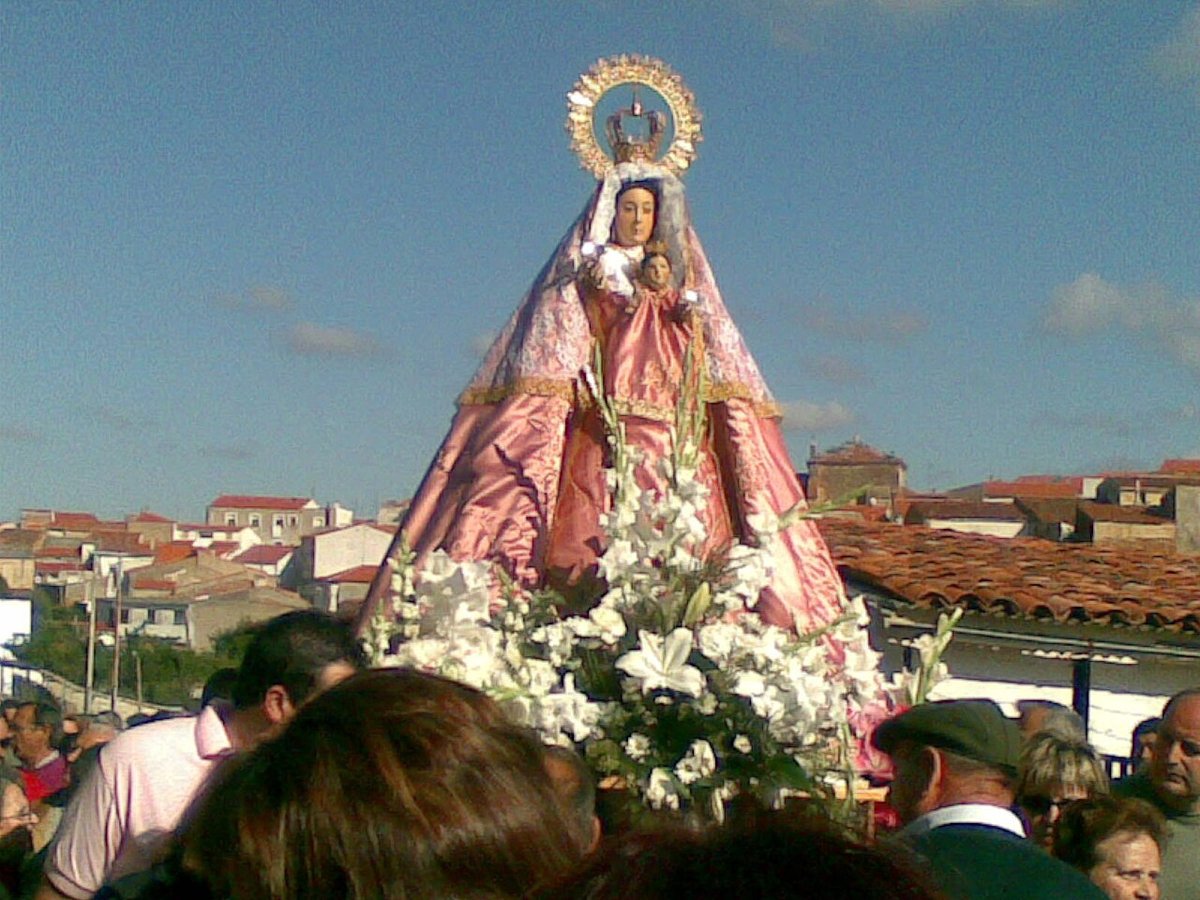
Festivities in Santiago de Alcántara revolve around Santiago Apóstol, usually at the end of July. As in many small towns, the programme combines religious observances with activities organised by residents themselves. The procession through the village streets tends to bring together a large part of the community.
Summer also brings other celebrations and gatherings, often linked to the return of people who live elsewhere for much of the year. These moments reinforce social ties and give the village a more animated atmosphere, even if only temporarily.
Autumn shifts attention back to the dehesa. The start of the montanera, the period when livestock feed on acorns, becomes a recurring theme in conversations and local activities. Livestock management, the use of natural resources and everything connected to the Iberian pig form part of everyday life as well as seasonal change.
Walking the surrounding countryside
Several rural tracks begin directly from the village, making it possible to explore the nearby landscape without steep climbs. These routes are not designed as formal hiking trails. They are agricultural paths and traditional tracks still used by farmers and landowners.
Approaching them requires the same awareness shown by locals. Gates should be respected, livestock given space and private property acknowledged. The experience is less about reaching specific viewpoints and more about observing how the dehesa operates on the ground.
Old stone walls divide plots of land, while pruned holm oaks show how trees are managed over time. Movement of animals across the terrain is part of what gives the landscape its character. Attention naturally shifts to these details rather than to sweeping panoramas.
Practical notes for a visit
Santiago de Alcántara lies in the western part of the province of Cáceres, within the Tajo-Salor comarca and close to Portugal. Access is via regional roads that cross wide stretches of dehesa.
It is a small municipality with basic services. Anyone planning to explore the surrounding area should come prepared with water, comfortable footwear and some foresight regarding fuel or supplies, as distances between villages in this part of Extremadura are not always short.
Spring and autumn are generally the most pleasant seasons for walking in the area, when temperatures are milder and the landscape is at its most balanced between activity and rest.