Full Article
about Santiago del Campo
A quiet farming village near Cáceres and Monfragüe.
Hide article Read full article
A pause in the Tajo-Salor
Tourism in Santiago del Campo feels a bit like stopping in a village to stretch your legs and, without quite planning it, ending up staying longer than expected. It is not a place that features on big lists or one that fills coaches. Around 250 people live here, and the rhythm becomes clear very quickly: calm streets, the occasional passing car and a wide stretch of countryside in every direction.
The village sits in the Tajo-Salor area, within the province of Cáceres. Landscape sets the tone in this part of Extremadura: holm oaks scattered across open land, with the odd rocky outcrop appearing beside the tracks. Agriculture and small game hunting still shape much of local life.
Most visitors arrive from Cáceres or from around Plasencia, usually by car. The access roads are the familiar kind of secondary routes, long straight sections, a few gentle bends and then, quite suddenly, the sign for the village.
Simple streets, everyday life
Walking through Santiago del Campo means moving along a small cluster of streets where most houses are built of stone or masonry. Some have solid granite doorways that seem designed to last longer than the people living behind them.
There are no tourist panels or marked routes. What you find instead are neighbours chatting in doorways or laundry hanging in courtyards just out of sight. For anyone used to city pace, it has a quiet effect that slows things down almost without notice.
The main street is Avenida de la Constitución. This is where most of the activity gathers: a few small shops, facilities linked to farming, and the parish church. Even so, “activity” here might mean two or three people talking calmly while a car stops briefly to park.
Step beyond the built-up area and rural tracks begin almost immediately. Locals use them to reach their land, and they are not signposted as walking routes. Still, following any of the clearer paths, marked by tractors or livestock, leads into the dehesa within minutes. The dehesa is a traditional Iberian landscape of open woodland, used for grazing and agriculture, and it defines much of this region.
Storks are a common sight on rooftops, and kites circle above the fields. With a bit of patience, other birds of prey appear too. It is a place suited to standing still and watching the sky for a while.
The church at the centre
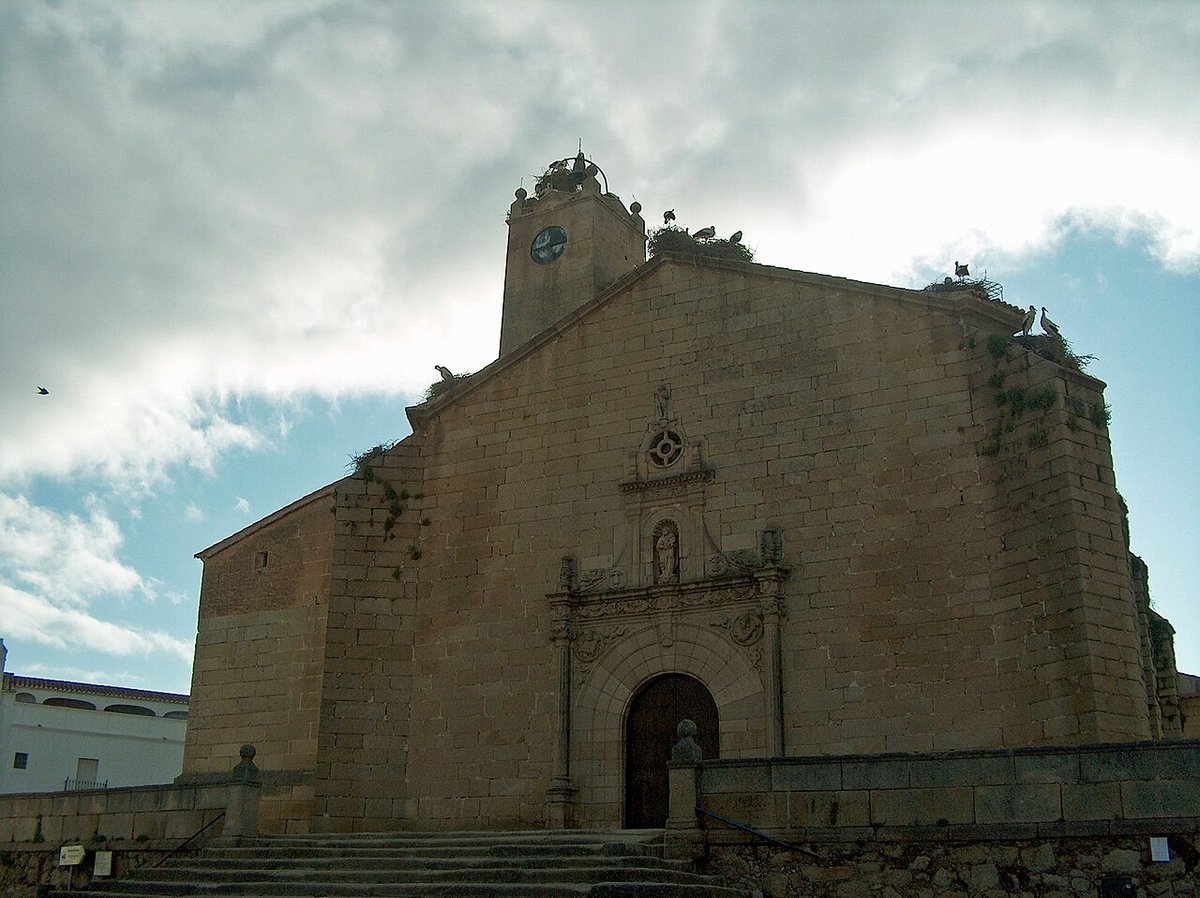
The most recognisable building is the parish church dedicated to Santiago Apóstol. It was probably built between the late Middle Ages and the beginning of the early modern period, which is typical for villages in this part of Cáceres.
The façade is restrained, with a Renaissance-style doorway and a simple tower. Inside, it does not aim to impress through scale or decoration, yet there are details worth noticing. A well-worn baptismal font stands out, and the interior reflects the same austere building style found across many nearby villages.
Around the church, traditional houses remain, some with wrought-iron window grilles and inner courtyards where olive trees, low lemon trees or small vegetable plots appear. In a few cases, spaces once used for storing tools or grain are still visible. They are fairly recent reminders of a time when most residents depended directly on the land.
Into the dehesa
A short walk from the village is enough to reach open countryside. Holm oaks stand apart from each other across gently undulating ground, and the quiet is only broken by the occasional vehicle on a dirt track or the movement of livestock.
There are no viewpoints or visitor facilities set up here. The landscape appears as it is: earth paths, stone walls and the occasional gate marking the edge of a property.
The atmosphere shifts with the seasons. In autumn and winter, migratory birds arrive, and the holm oaks begin to drop acorns. This still matters for the rural economy across the region, especially in landscapes like the dehesa where traditional uses continue.
Food, gatherings and getting there
Options for eating within the village are limited. It is more common to head to nearby, slightly larger towns for a proper meal. In the surrounding area, cooking is closely tied to local produce and traditions: embutidos ibéricos, migas, game stews and other hearty dishes that make sense after a morning outdoors.
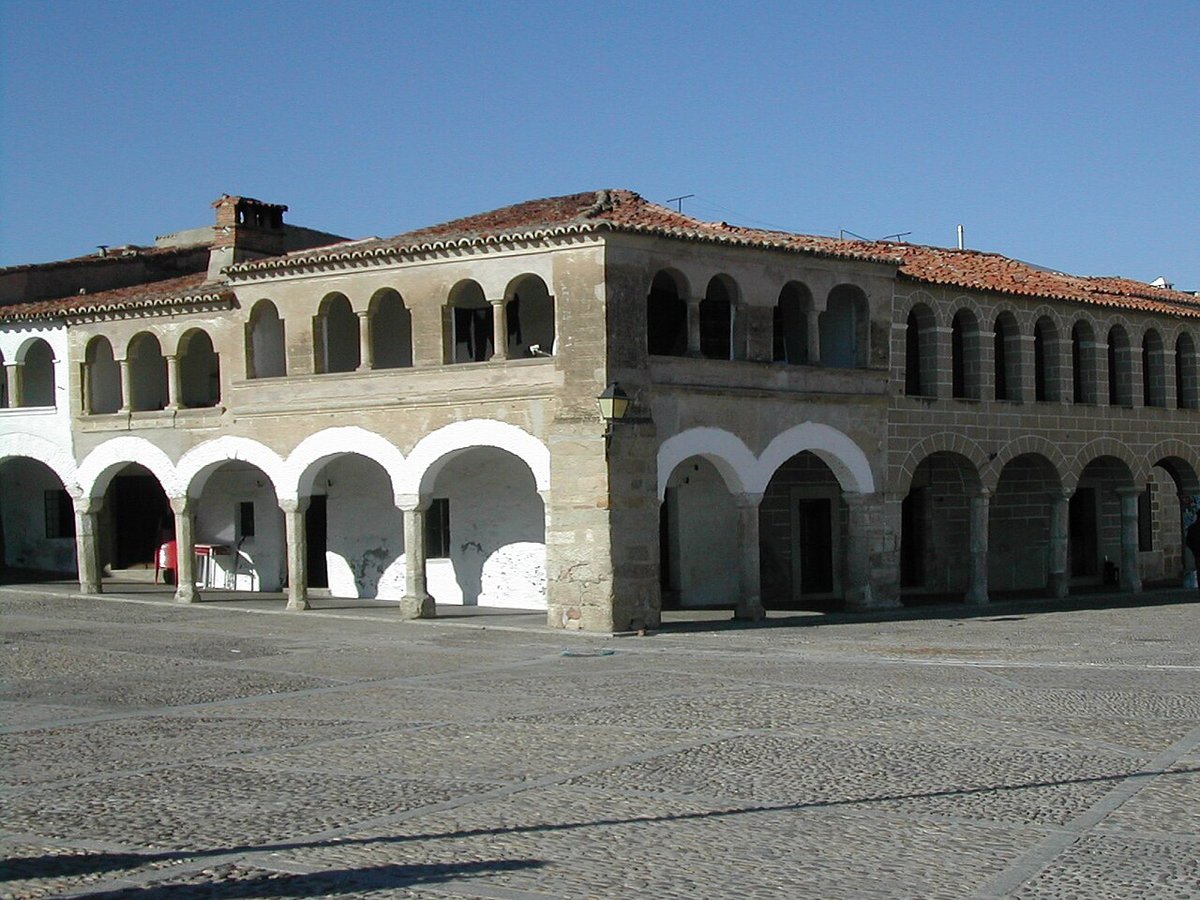
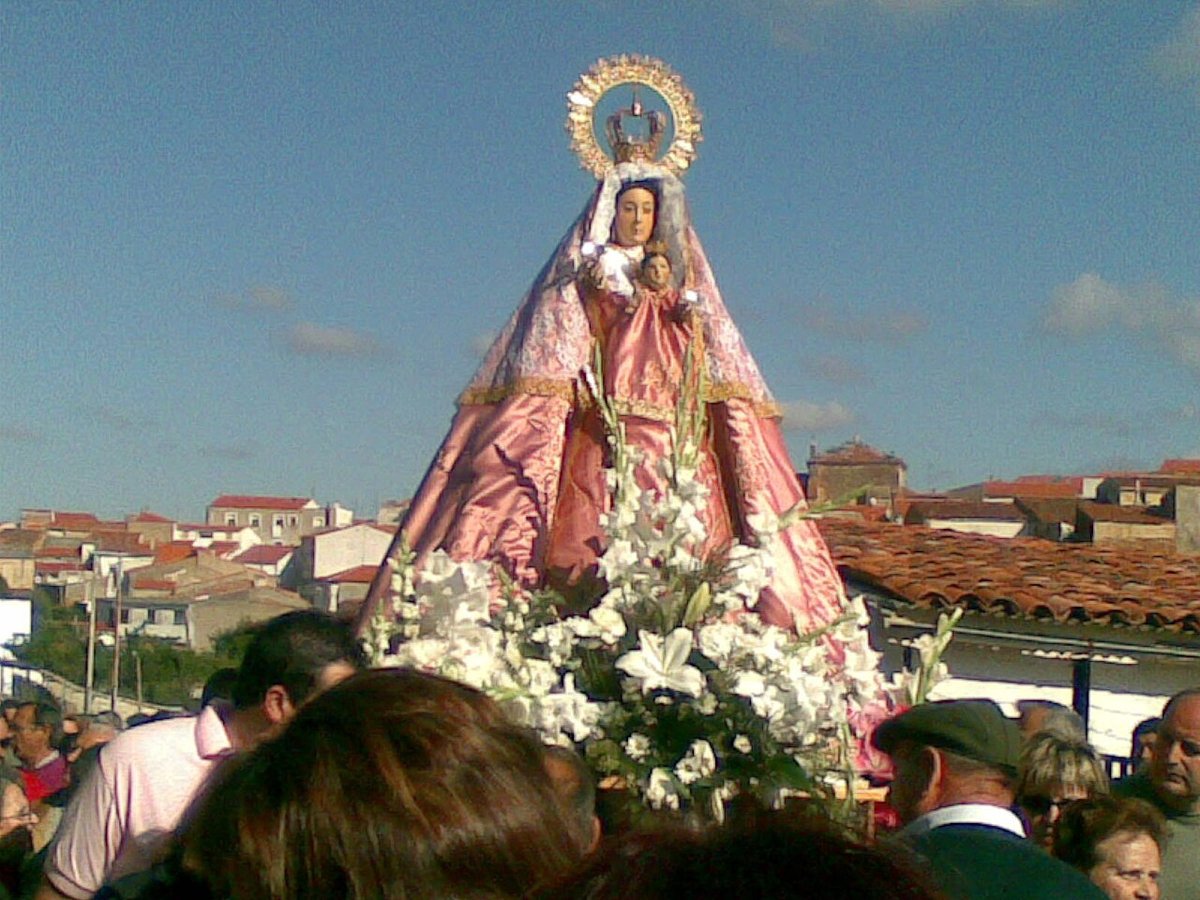
In Santiago del Campo itself, social life revolves more around the patron saint’s festivities and gatherings organised through the year. These are straightforward village celebrations, a procession, time with family and plenty of conversation in the square.
From Cáceres, the journey is around 40 to 45 kilometres, mostly along secondary roads that pass through farmland and dehesa. By car, it takes roughly three quarters of an hour, depending on the route.
It is not a destination filled with activities for an entire weekend. It works better as a quiet stop while travelling through the Tajo-Salor area or moving between Cáceres, Garrovillas and other nearby villages. A walk, a look across the landscape, and a pause before continuing on.