Full Article
about Valencia de Alcántara
Border town with one of Europe’s most important megalithic sites and a Gothic quarter.
Hide article Read full article
Where the Border Feels Shared
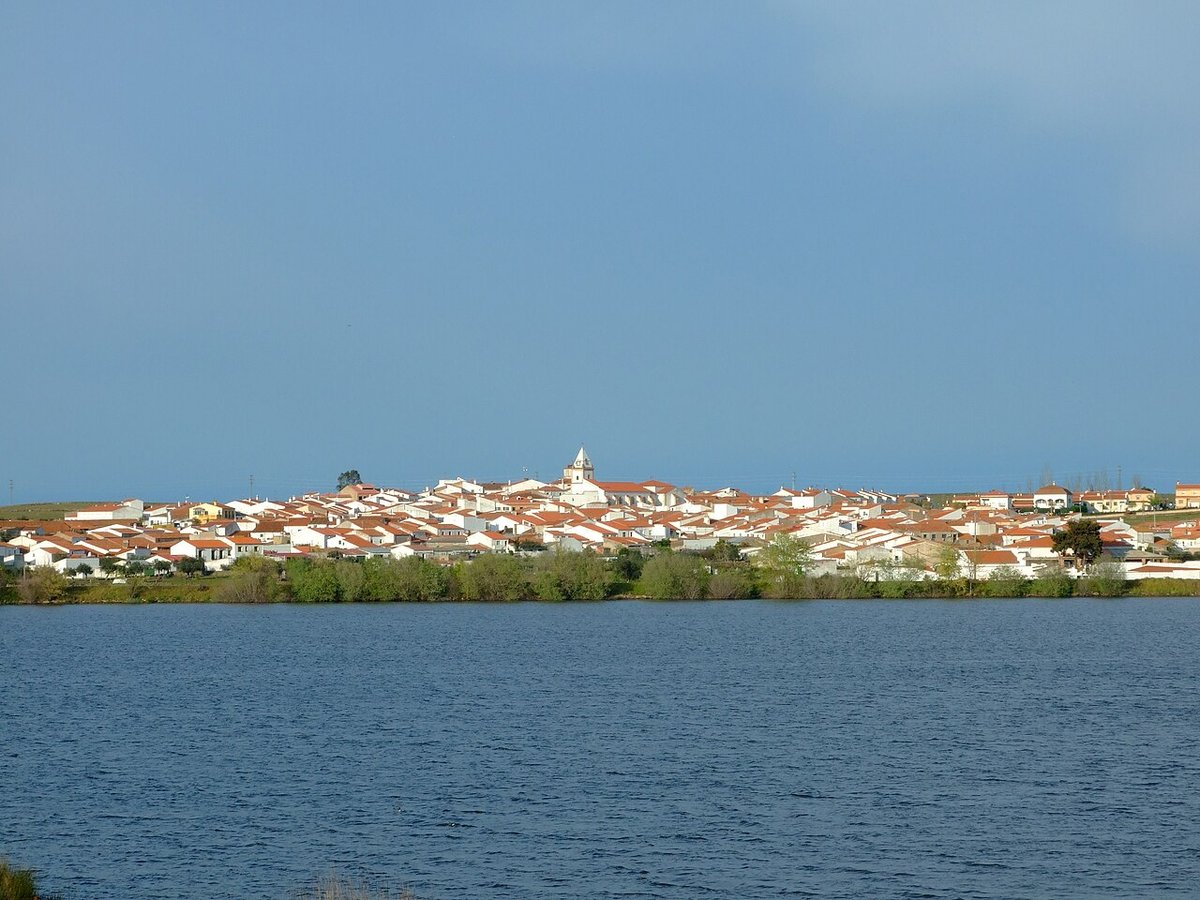
In Valencia de Alcántara, the frontier with Portugal has never been just a line on a map. It reads more like a shared landscape. The town looks out towards the river Sever, in the far west of Extremadura, where the boundary has shifted repeatedly over the centuries. It has advanced, retreated, and left its marks behind. Walking through the Gothic-Jewish quarter today gives a clear sense of that layered past.
For long stretches of history, this was a place of passage and watchfulness. Movement across the frontier needed to be observed, and sometimes controlled. The stone that remains tells that story more clearly than any written record.
A Quarter That Outlasted Change
The Jewish quarter stands out for how clearly its layout has been preserved. There are nineteen narrow lanes and more than two hundred medieval doorways still in place. This is not a reconstruction created for visitors. Much of the urban fabric is the same one inhabited by the Sephardic community before 1492, when Jews were expelled from Spain.
The houses are low and restrained. Some façades still carry carved coats of arms. There is a sense of continuity rather than display. It feels lived-in, not staged.
The former synagogue later became a small hermitage. Inside, a natural rock is still visible, forming the base on which the building was constructed. The stone has not been hidden or removed. According to Hebrew tradition, a house of prayer should rise directly from the ground beneath it. That connection to the earth remains tangible here.
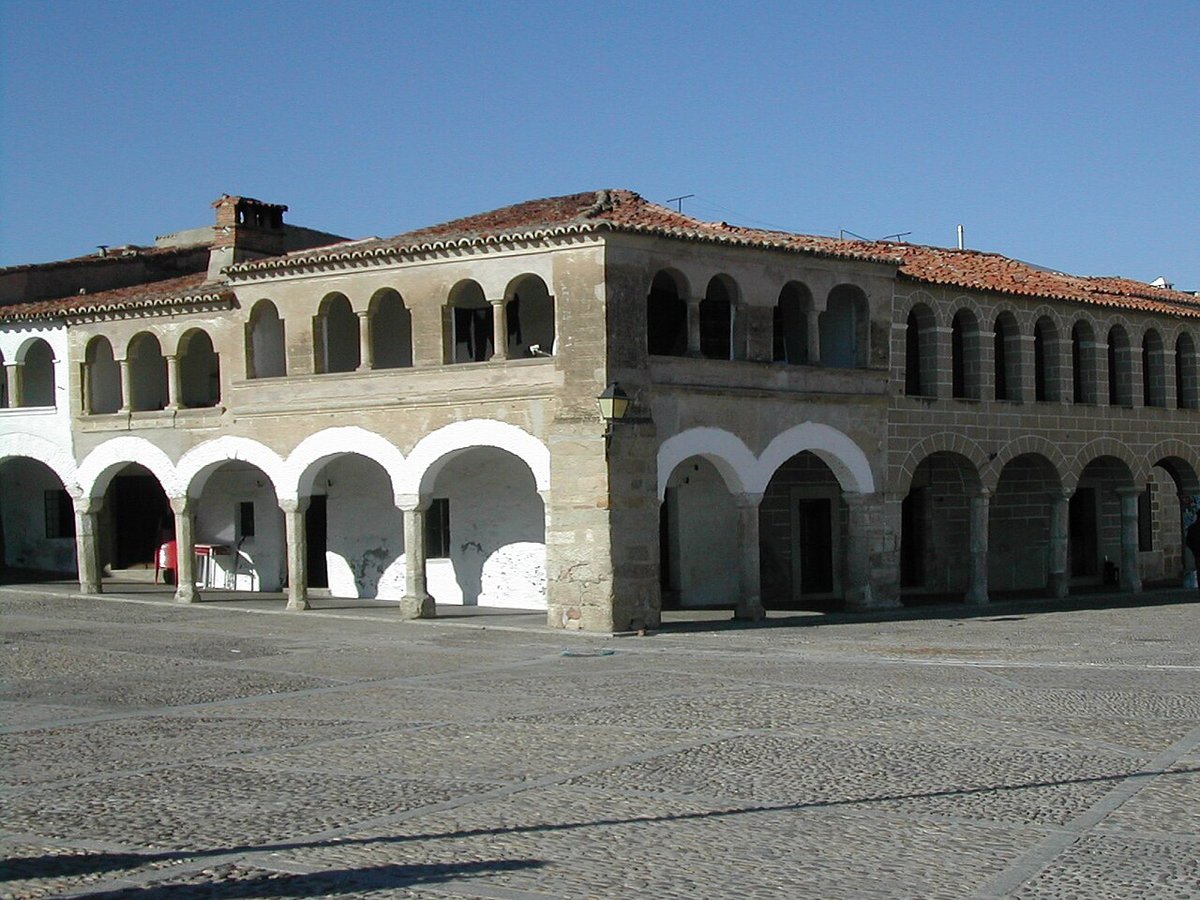
This quarter is part of a wider network of historic Jewish districts across the western Iberian Peninsula, including places such as Hervás and nearby Castelo de Vide in Portugal. Even so, Valencia de Alcántara does not depend on comparison to be understood. A simple walk towards the town hall square is enough. The streets have been converging there for centuries.
Stones from a Much Earlier World
A few kilometres from the town centre, the landscape shifts to something far older. The sierra de San Pedro holds a large group of megalithic remains. More than forty dolmens are known, spread across several routes.
These are not isolated fragments. They are collective tombs dating back to the fourth millennium BC. Many still retain their burial chambers and access corridors. Some can be entered, allowing a closer look at how they were built.
The so-called Ruta de los Dólmenes passes through dehesa, a traditional landscape of open pasture dotted with holm oaks and cork oaks. The paths are simple, mostly dirt tracks. At times, the only sound is the distant ringing of animal bells. There is a strong impression that the surroundings have changed very little since these stones were first set in place.
A Castle and a Royal Wedding
The castle rises on a modest hill beside the town. It is already mentioned in records from the early 13th century. The structure itself is straightforward, with masonry walls and a main tower.
Its importance lies in its position. From here, it was possible to watch the approaches towards Portugal and keep track of the routes crossing this part of Extremadura. Control of movement mattered here for generations.
Valencia de Alcántara also witnessed an unusual moment at the end of the 15th century. The infanta Isabel, daughter of the Catholic Monarchs, was married here to Manuel I of Portugal. Contemporary accounts describe several days of celebration, with the main square acting as the central stage.
Little remains today that visibly connects to that event. A few street names recall it. Even so, the episode places the town within a broader political context that extended beyond the immediate border.
Cooking on the Raya
Local cooking closely resembles that found just across the frontier. This border zone, known as the raya, shares ingredients and ways of preparing food between Portugal and Extremadura.
Dishes such as migas with torreznos, caldereta de cordero, and tomato soup with pimentón are typical. These are straightforward, rural recipes tied to everyday work and available produce.
Sheep’s milk cheese is also common, made in different parts of Extremadura. It often has a creamy texture and develops a slightly bitter note when fully matured.
The dehesa landscape shapes much of what appears on the table. Holm oaks, pastureland and Iberian livestock define the surroundings. From this come cured meats and hams, prepared using the dry inland climate.
Getting Your Bearings
Valencia de Alcántara lies in the west of the province of Cáceres, close to Portugal. The road from the provincial capital crosses wide stretches of dehesa, with few settlements along the way.
Access is also possible from the Portuguese side. In this section of the border, the river Sever acts as a natural reference point.
The historic centre is easy to explore on foot. Visiting the dolmens usually involves travelling by car first, then following marked paths. The terrain is open, with little shade during summer. Spring and autumn offer a clearer sense of the landscape.