Full Article
about Villa del Rey
Small border town with rural charm and quiet.
Hide article Read full article
A slower rhythm in Tajo-Salor
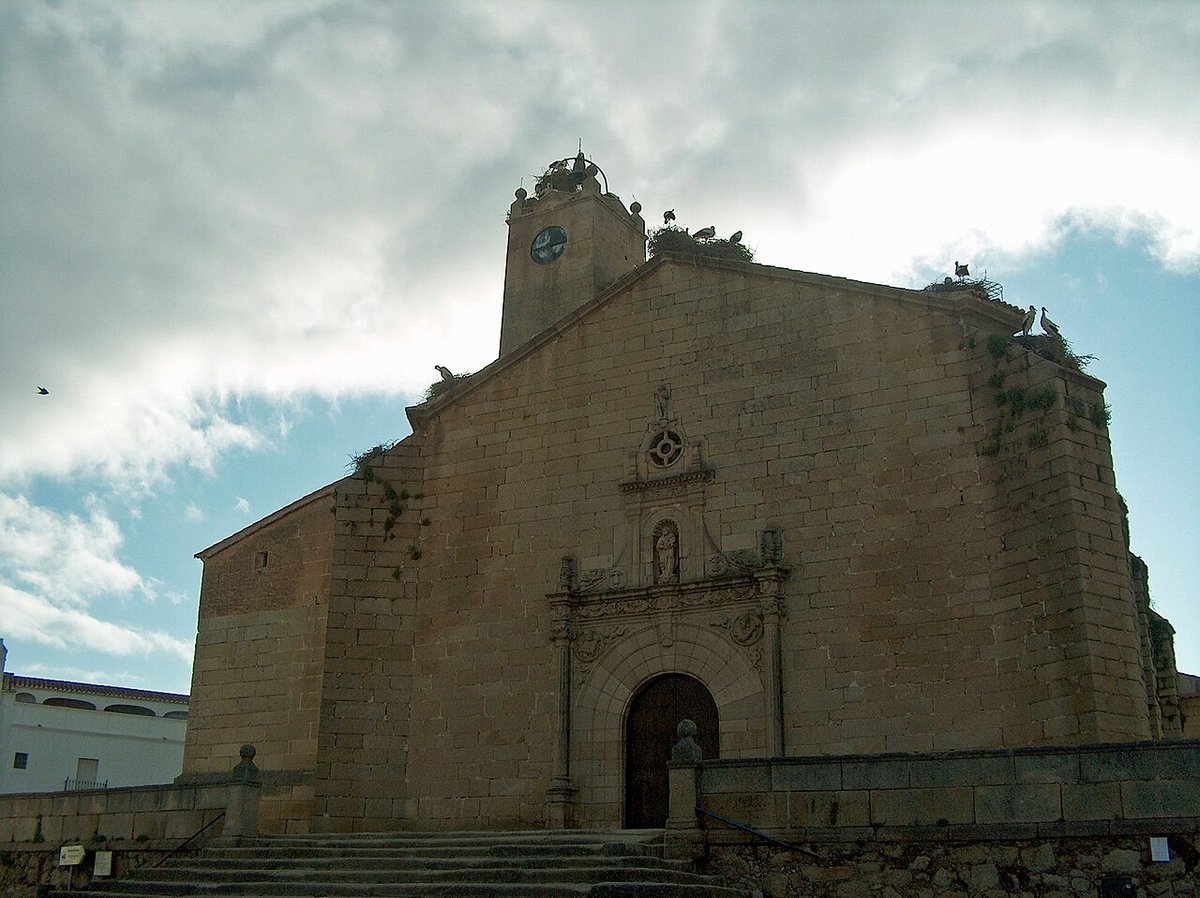
Some places seem to run at a different pace. Not in any exaggerated sense, but in the way daily life still follows the rhythm of the land. In Villa del Rey, in the Tajo-Salor area of Extremadura, that feeling arrives almost immediately. The first thing that stands out is the quiet. The kind where a stork clattering on a bell tower carries across the village, or where the distant sound of a tractor briefly breaks the stillness.
Villa del Rey has just over a hundred residents and lies around 45 kilometres from Cáceres. There are no headline attractions or carefully arranged experiences waiting for visitors. What you see is simply what is there. Low houses line short streets, some built from adobe or rough stone, and beyond them stretch olive groves that shape the horizon.
What remains in the village
The heritage here is understated. There are no grand monuments or historic ensembles that appear in guidebooks, but there are details that reflect how life has long been lived in this part of Extremadura.
The parish church, dedicated to Santiago Apóstol, appears to date back several centuries, probably around the 16th century. Its style is typical of rural churches in the region: thick walls, exposed stone and a simple tower that rises over the main square. Inside, older elements have been preserved in a modest way. These are not the result of major restoration projects, but rather of the care and attachment of the local community.
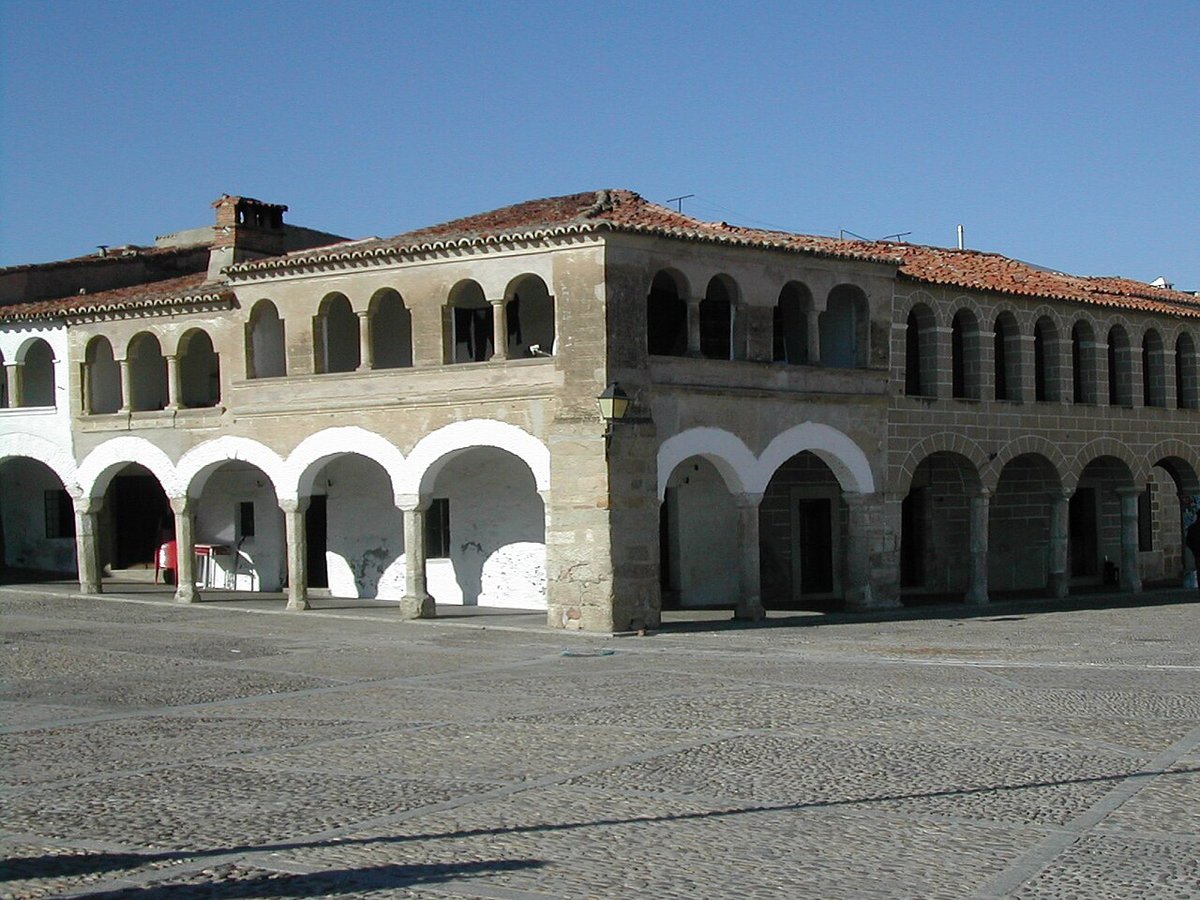
Walking through the centre reveals the everyday architecture of the village. Whitewashed houses sit alongside others built from mud and stone. Roofs are covered with traditional curved tiles, and large wooden doors open onto interior courtyards. In some corners, farm tools or small enclosures for animals are still visible. They are not there for display; they continue to be part of daily routines.
Walking out into the landscape
The surroundings of Villa del Rey reflect the wider landscape of western Cáceres. Holm oaks are scattered across the countryside, alongside cereal fields and extensive olive groves. The colours shift with the seasons. Spring brings a greener tone to the land, while summer introduces dry, straw-like hues that blend into the reddish earth of the tracks.
Several rural paths begin directly from the village. These are not mountain routes or demanding hikes. They are agricultural tracks, generally long and fairly flat, suitable for an unhurried walk or a relaxed cycle.
Birdlife adds movement to the otherwise quiet setting. White storks are a constant presence and almost part of the scenery itself. Birds of prey can often be seen circling above the open fields. Azure-winged magpies and other species typical of the dehesa, a traditional Iberian landscape of pasture and scattered trees, also appear, especially early in the day or towards evening.
Traditions tied to the land
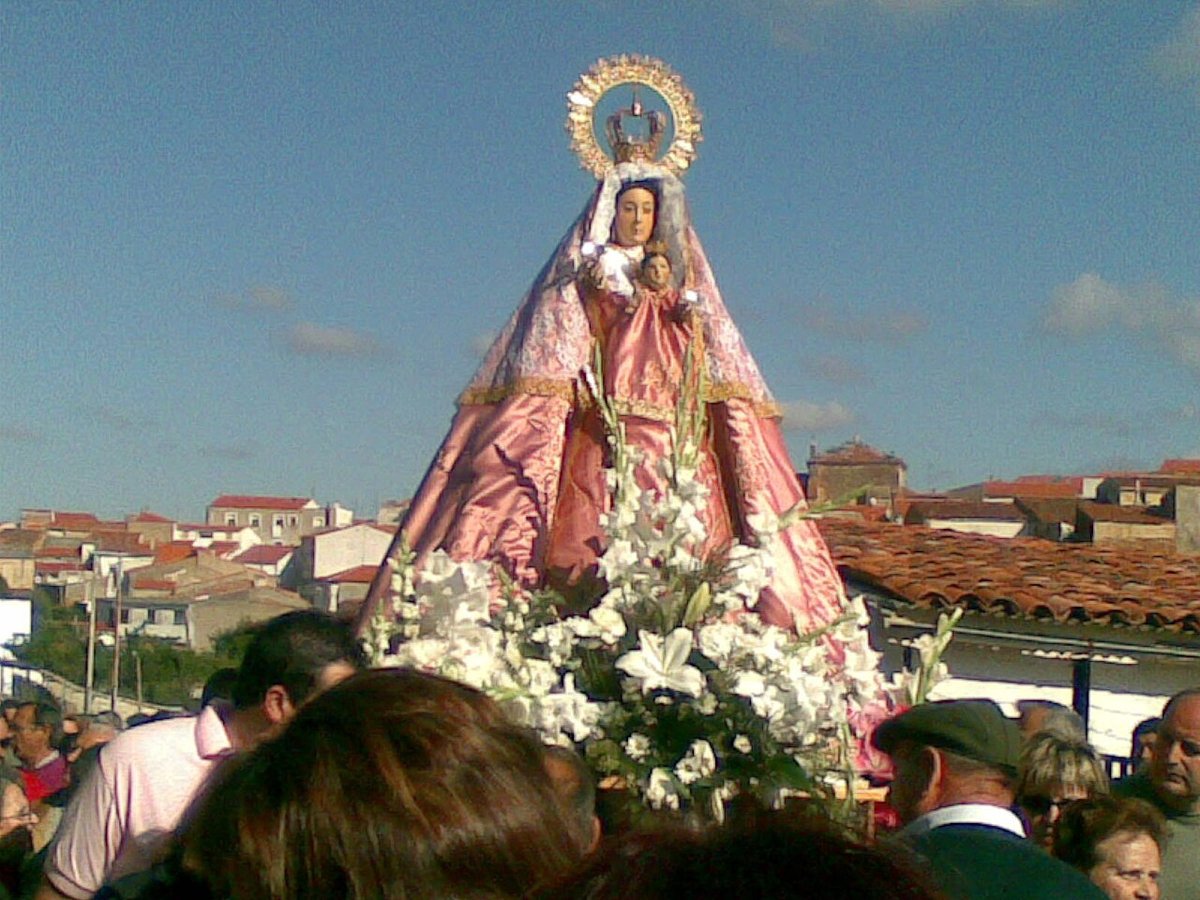
In a village of this size, local celebrations remain closely linked to the agricultural calendar. The festivities in honour of Santiago bring together residents and those who have moved away but return for a few days. These are simple events, with processions, shared meals and activities that echo older ways of celebrating.
Food plays its part. Migas, a traditional dish made from breadcrumbs, are often prepared in large pans and shared among everyone. There may also be traditional games or activities involving horses. Nothing is designed with tourism in mind; these are gatherings created by and for the village itself.
Spring includes another long-standing custom: the blessing of the fields. This practice, still found in agricultural areas of Extremadura, centres on asking for a good harvest and a favourable year ahead.
Getting there and how long to stay
Villa del Rey is reached from Cáceres by car in roughly three quarters of an hour, following regional roads. The journey itself sets the tone, passing through dehesas, livestock farms and small villages spaced out along the way.
It helps to arrive with the right expectations. Villa del Rey is not a place for a full day of sightseeing. It works better as a short stop if you are exploring the Tajo-Salor area, or if you feel like turning off the main road for a while to see what life looks like in one of these very small, still-inhabited villages.
A quiet walk through the streets, a look along the tracks leading out into the countryside, and within an hour or two the character of the place becomes clear. Sometimes that is enough. Not every destination needs more time to show what it is.