Full Article
about Zarza la Mayor
Border town with a history of smuggling and the Peñafiel castle.
Hide article Read full article
At nine in the morning, the air still holds a trace of the night’s coolness. On a corner, two dogs edge towards a strip of sunlight beside a whitewashed wall. Tourism in Zarza la Mayor often begins like this: wandering without a fixed plan through quiet streets, with the faint smell of damp soil drifting from a recently watered vegetable patch.
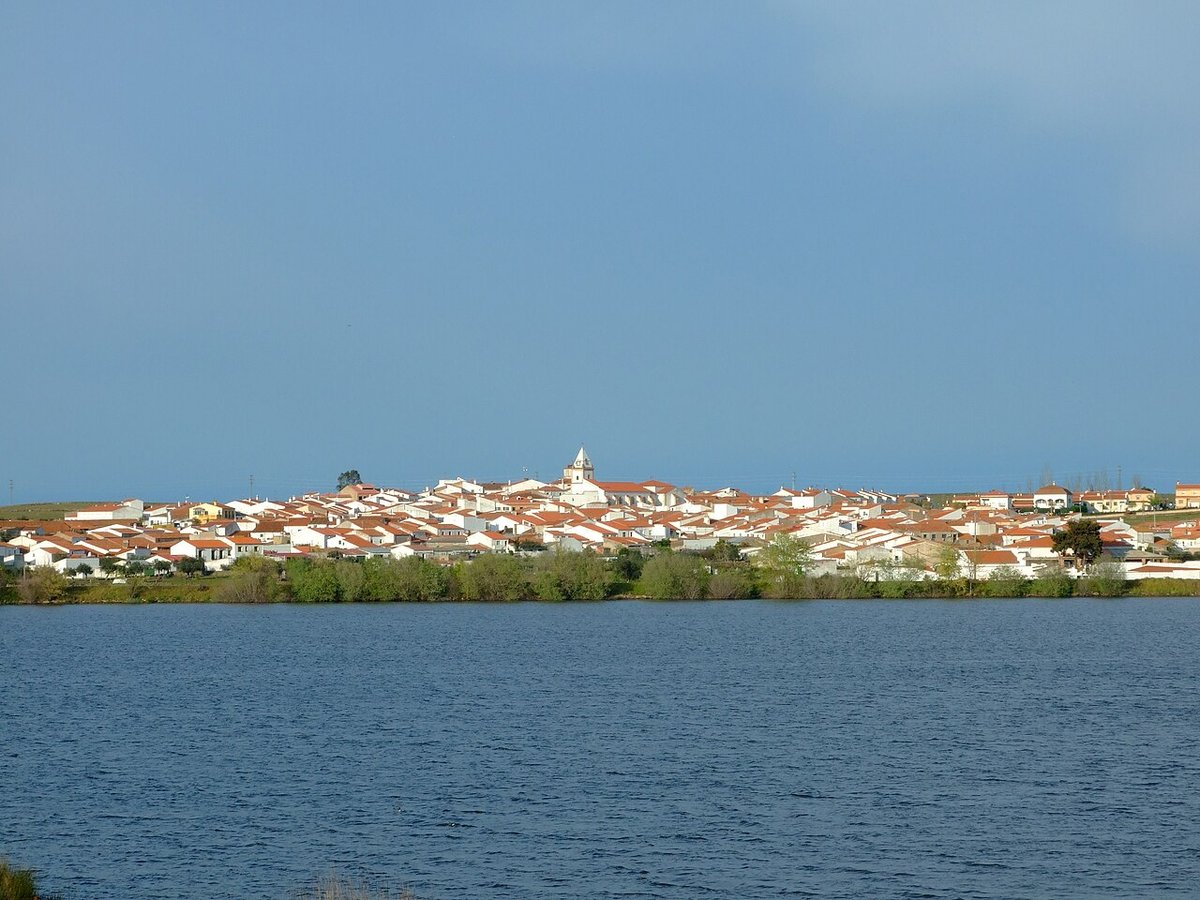
Set at around 300 metres above sea level, in the Tajo‑Salor area and close to the Portuguese border, Zarza la Mayor faces the countryside in every sense. The landscape around it is open dehesa, a traditional pastureland of scattered holm oaks and fields divided by low stone walls. Farming and livestock still shape the rhythm of the year here, and that steady pace filters into daily life.
Stone, Limewash and Small Details
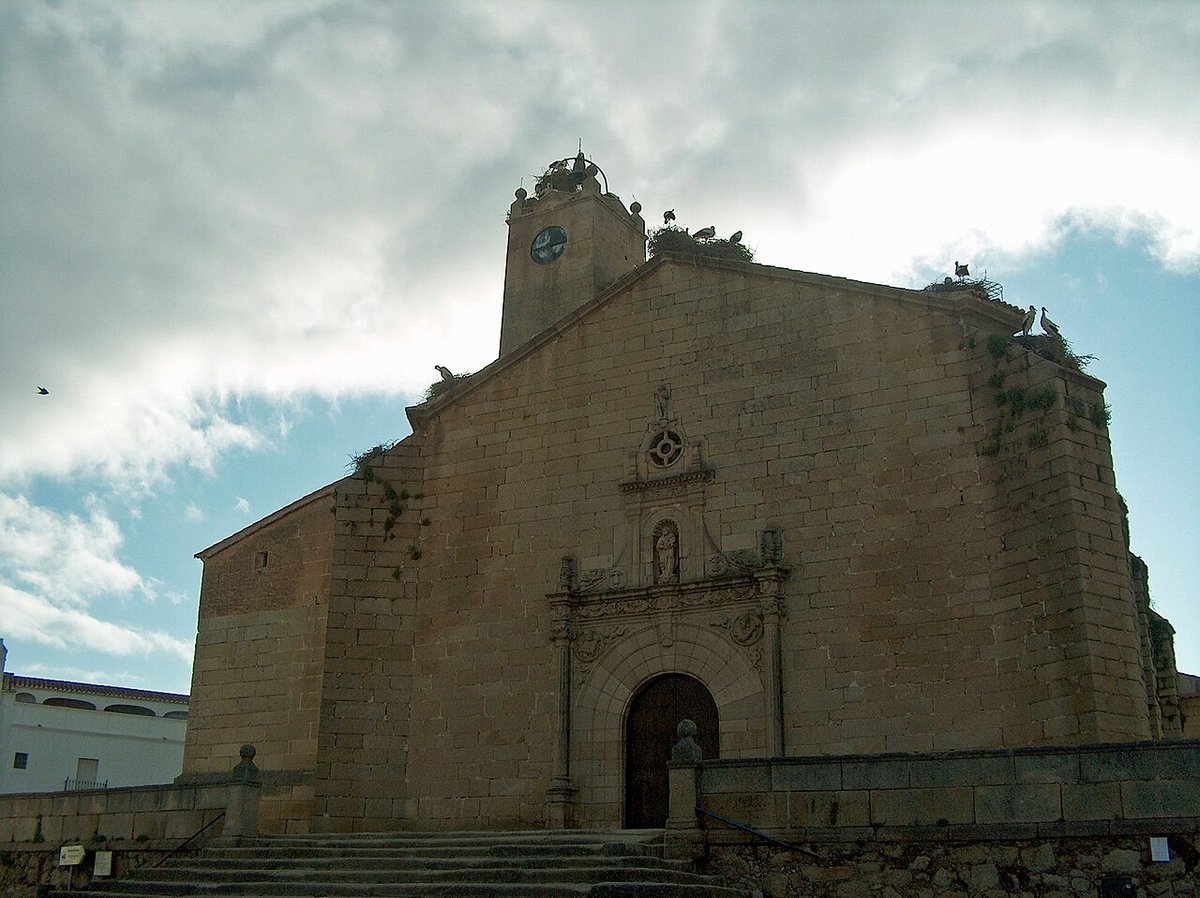
The centre of the village revolves around the parish church, dedicated to Nuestra Señora de la Asunción. The stone of its tower shifts in colour as the day moves on, pale grey in the morning and warmer, almost golden, as the sun lowers in the west.
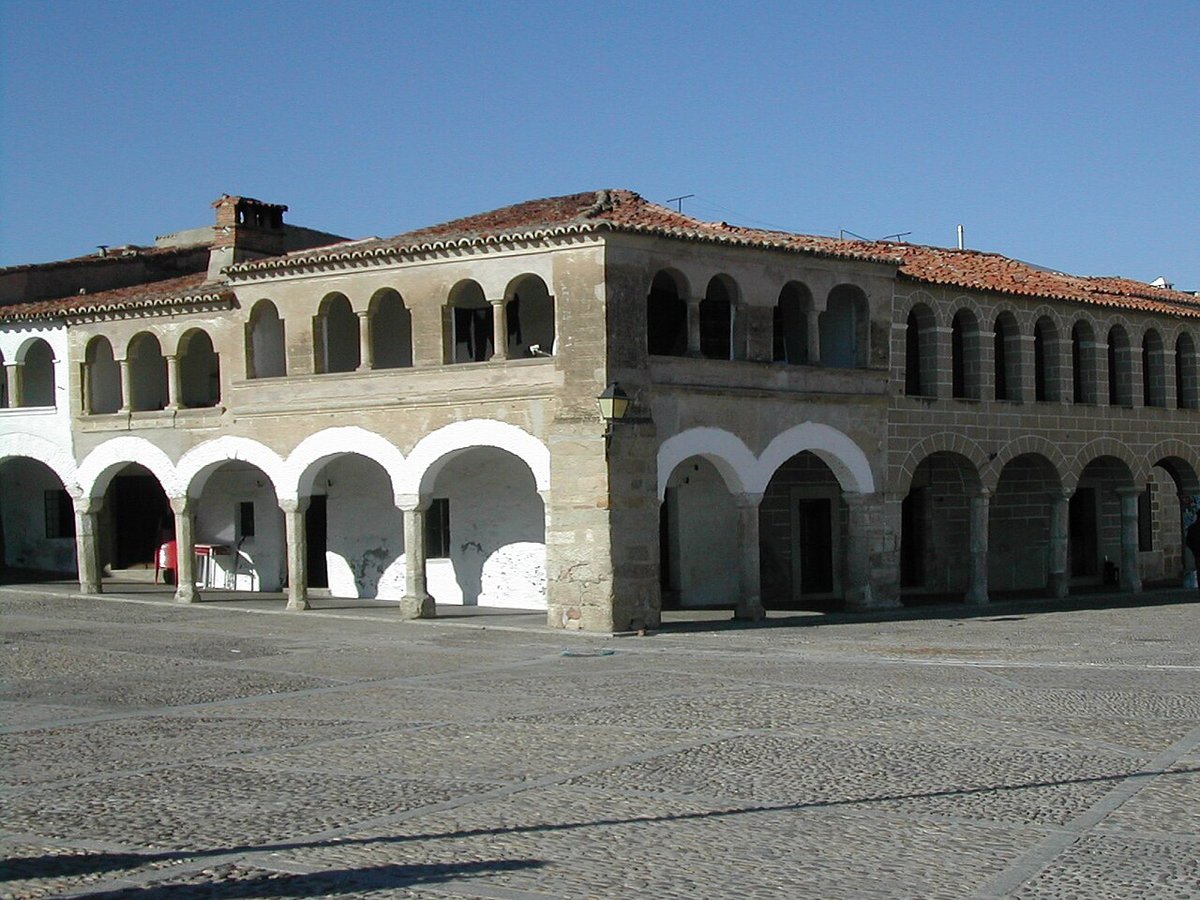
The surrounding houses follow the logic of this part of Extremadura. Thick walls, limewashed façades and small windows built to keep out the fiercest heat. On some doorways, carved stone coats of arms are still visible. Other houses show more recent renovations, yet the structure of the old quarter has barely changed.
Walking through the streets, it is the smaller details that stand out: worn wooden gates, plant pots resting directly on the ground, the echo of a radio drifting from an open window. This is not a place of grand avenues or monumental streets. It is a village that reveals itself slowly, at close range, in textures and sounds.
There is no sense of staging for visitors. The atmosphere feels shaped by routine rather than display, by the ordinary gestures of people going about their day.
Tracks Through the Dehesa
From the edge of the built‑up area, dirt tracks lead straight into the dehesa. There are no information boards and no marked routes. These are the same tracks used by farmers and livestock owners to move between their plots.
Out here, birds dominate the soundscape: greenfinches, magpies and, at times, a red kite circling above the fields. The holm oaks cast round shadows on the pale earth. In spring, low grass covers the ground. By summer, everything dries out and the air carries the scent of warm dust.
If heading out on foot, it is sensible to carry water and start early when the heat is at its strongest. Distances can be deceptive in this open landscape. A path that appears short can stretch far longer than expected under the sun.
The appeal lies in the simplicity. There are no viewpoints prepared for photographs and no signposted circuits. Just tracks, trees and the sense of space that comes from being near the border, where the land seems to widen as it approaches Portugal.
Everyday Life and Hearty Cooking
Daily life in Zarza la Mayor remains closely tied to the countryside. It is common to see tractors entering or leaving the village, or trailers loaded with firewood during winter.
Local cooking follows the same practical logic. The dishes are substantial, designed for long working days outdoors: meat stews, embutidos from the annual matanza, and migas when the colder months arrive. The matanza is the traditional family pig slaughter that takes place in winter, a long‑standing rural custom that provides cured meats for the year ahead.
In the village shops, it is usual to find locally produced olive oil, mature cheeses and homemade sweets. The food reflects what is grown and raised nearby, and what fits the agricultural calendar.
There is no programme of events designed specifically for visitors. What happens here tends to respond to the farming year. Winter brings family matanzas. At other points in the year, small fairs and gatherings take place, shaped more by local participation than by tourism.
Dark Skies by the Border
After nightfall, stepping a little way beyond the village brings a noticeable darkness. There are few surrounding lights, and the sky fills with stars.
On clear nights, the pale band of the Milky Way can be seen distinctly. The sounds change too. Crickets take over, a dog barks somewhere in the distance, and occasionally a car passes along the road towards Portugal.
There are no formal viewpoints. It is enough to drive a few kilometres along any rural track and switch off the car lights for a moment. In that pause, the scale of the sky becomes clear.
The experience is simple and unmediated. Darkness is part of everyday life here, not an attraction arranged for visitors.
Festivals in the Village Calendar
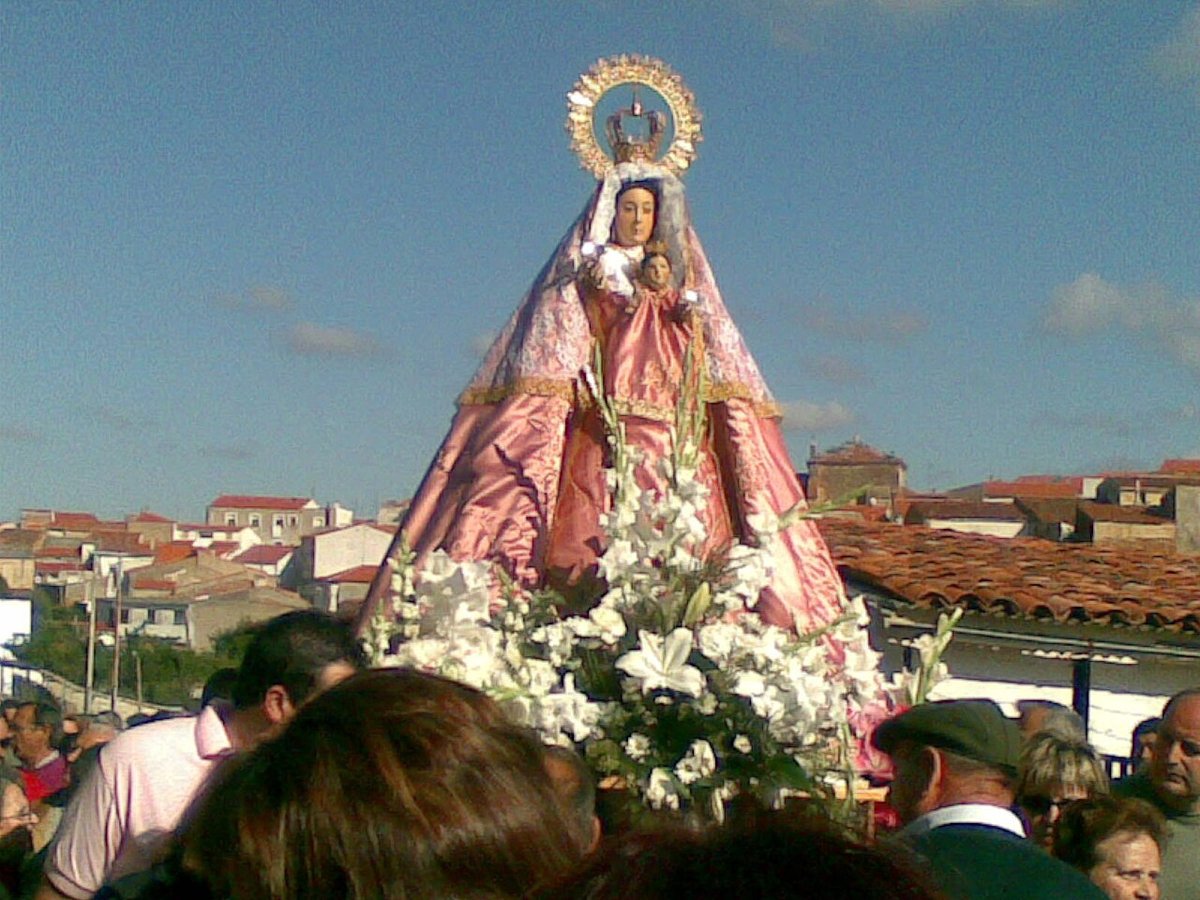
The main celebrations revolve around the Virgen de la Asunción in mid‑August. During those days, the village fills with residents returning from other cities. The tempo shifts. Conversations stretch late into the night in the squares, and the streets feel busier than at any other time of year.
Holy Week is marked by sober processions closely linked to the local brotherhoods. The tone is restrained and rooted in community tradition.
In January, it is common to see bonfires for San Antón, along with the blessing of animals. This custom is widespread in livestock‑raising villages and reflects the importance of animals in local life.
These festivities are lived from within. Anyone arriving from outside will notice it quickly: the priority is not to put on a show, but to come together.
Getting There and Choosing the Season
Zarza la Mayor lies around 80 kilometres from Cáceres. The usual access is by road, passing through stretches of dehesa where the landscape grows increasingly open as the border approaches.
For walking in the surrounding countryside, spring is often the most pleasant time. The fields are green and temperatures allow for unhurried exploration. Early autumn can also be comfortable.
In high summer, the heat presses hard in the middle of the day. If visiting then, it makes sense to start early or head out in the late afternoon. At those hours, the village settles back into near silence, and the day once again begins or ends with that familiar coolness in the air.