Full Article
about Bodonal de la Sierra
Set on the foothills of the sierra de Tentudía, it stands out for its holm-oak and cork-oak landscape and its ibérico production.
Hide article Read full article
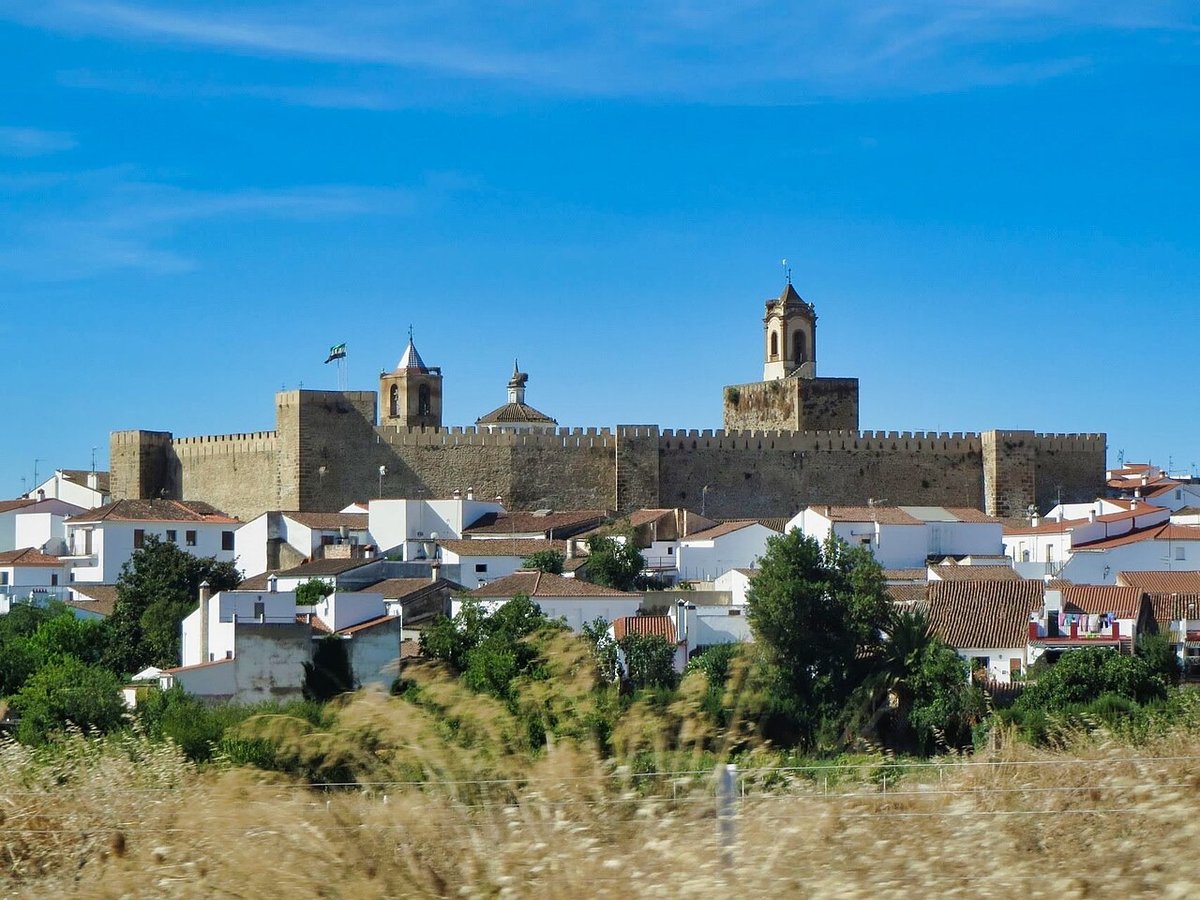
At first light, when the sun is still low, Bodonal de la Sierra appears almost white from the road. Lime-washed façades catch the early glow with a soft brightness, while rows of curved terracotta tiles trace an uneven line along the skyline. At that hour, there is barely any sound: a door opening somewhere, a car passing slowly, footsteps echoing along a narrow street. Bodonal de la Sierra is not defined by grand monuments. Its character sits in smaller details and in the steady, unhurried pace that still shapes many villages in the Tentudía area.
Quiet streets and the church of San Bartolomé
The centre is best explored without a plan. Short streets run in gentle slopes, lined with one or two-storey houses. Black metal grilles cover the windows, and layers of whitewash do not always fully hide what came before. There are flowerpots here and there, and heavy wooden doors darkened by time.
The iglesia de San Bartolomé emerges among the houses without much open space around it. It is a solid stone building, with a square bell tower rising above the nearby rooftops. There is some movement around it at certain times of day, though most of the time the atmosphere remains calm. When the bells ring, the sound carries clearly across almost the entire village.
Comfortable shoes are a good idea. The village is not large, but the streets can be uneven, with slight changes in level that make wandering slower and more deliberate.
The dehesa around the village
Step beyond the built-up area and the landscape shifts quickly. The dehesa, a traditional form of open woodland typical of western Spain, surrounds Bodonal de la Sierra. Holm oaks are scattered across wide clearings, where the soil turns reddish in summer and darkens after rain. Dry stone walls mark boundaries, and dirt tracks are used by farmers and livestock.
Walking here has a very particular feel. In autumn, there is the crisp sound of acorns underfoot. After rainfall, the air carries the scent of damp earth. In the warmer months, a constant hum of insects fills the background. There is little in the way of signposting or prepared routes as found in more visited areas. These are long-standing rural paths, so it is wise to bring water and have a clear sense of direction before heading further out.
Birdlife is easy to spot if you pause for a while. Iberian magpies, known locally as rabilargos, often move from tree to tree, and birds of prey can be seen gliding above the oaks during the middle of the day.
Paths and nearby villages
Several rural tracks lead out from Bodonal, linking farms and other villages in the Tentudía area. Many are used simply for walking, cycling, or spending some time outdoors among the oaks.
The light is at its best early in the morning and towards the end of the afternoon. In summer, the heat builds from midday onwards, making those hours less suitable for longer walks across open ground.
These routes are not designed as formal trails. They are part of everyday life in the countryside, shaped by use over time rather than by tourism. Moving through them means adapting to the terrain rather than following marked viewpoints or fixed itineraries.
Food shaped by the land
Local cooking reflects what is raised and grown nearby. Iberian pork features prominently, both in cured meats and in simple, slow-cooked stews. Game also appears on the table when it is in season.
Autumn brings chestnut gathering in the surrounding area, and in wetter years mushrooms appear in certain parts of the sierra. Anyone heading out to collect them needs proper knowledge of what they are picking. The practice exists here as a tradition, but it is knowledge passed from one person to another rather than something broadly signposted.
Village shops stock products from across the comarca. Honey, cheeses, cured meats and other staples form part of the everyday pantry, tied closely to the rhythms of the land.
When to come
Spring is often the most rewarding time for walking in the surrounding countryside. Temperatures are mild, and the dehesa turns green for a short period that does not last long. Autumn also offers good days, with lower light and fields shifting in colour.
In summer, the village becomes livelier as people return for holidays and for the fiestas patronales around San Bartolomé, traditionally held in August. Those looking for a quieter visit, with time to walk and take in the surroundings at a slower pace, may prefer to avoid those central days.
Bodonal de la Sierra does not rely on designated viewpoints or major attractions. Instead, there are small rises along the surrounding paths where the land opens up. From there, the dehesa stretches towards the horizon, with scattered oaks and a wide sky above the sierra. Sometimes it is enough to stop for a moment and simply look.