Full Article
about Calera de León
Historic gem in the Tentudía range; home to the Monasterio de Tentudía on the province’s highest peak and the Conventual santiaguista in town.
Hide article Read full article
A Village Shaped by Land and Lime
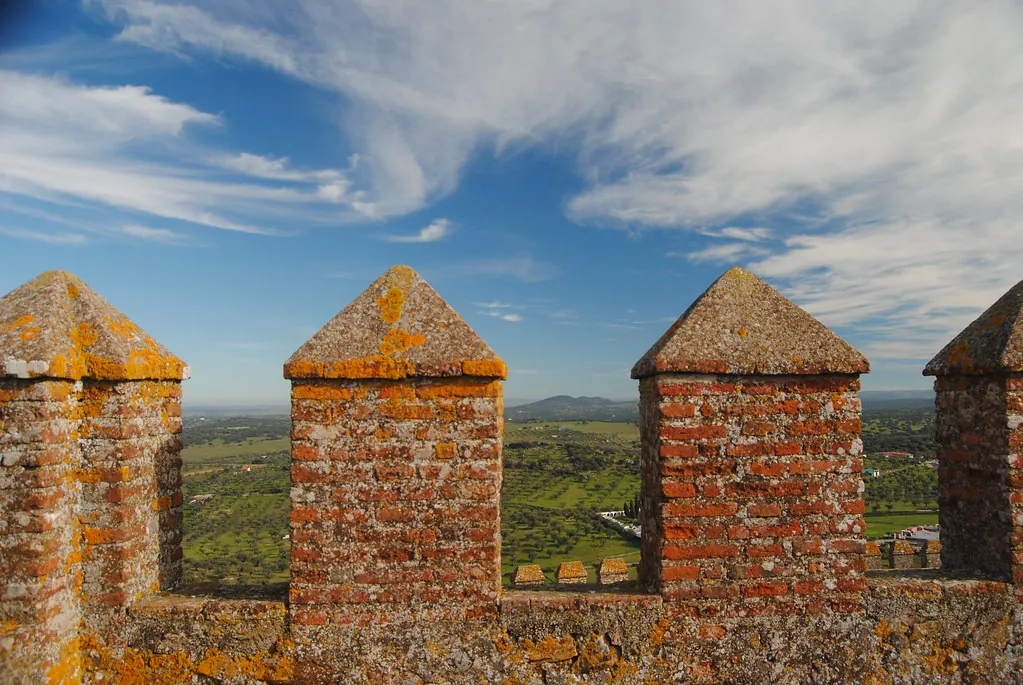
Any look at tourism in Calera de León begins with its setting. The village lies in the comarca of Tentudía, in the south of the province of Badajoz, at around 700 metres above sea level. All around stretches a broad dehesa of holm oaks and cork oaks, land that has been organised for livestock grazing for centuries. That long relationship with the surrounding woodland explains much of the village’s history and character.
The name Calera de León points to an activity that has now disappeared: lime production. For generations, limestone was extracted and fired in kilns scattered across the municipal area. Remains of these structures survive, and so does the memory of a trade that once shaped the local economy. Today the village itself feels restrained and orderly, with streets that quickly give way to open countryside.
Calera de León is not large, and it can be explored in a short time. The interest lies less in ticking off sights and more in understanding how the settlement has grown in step with the dehesa that surrounds it, and with the trades that sustained its inhabitants for centuries.
Stone, Whitewash and Devotion
The urban centre is organised around the parish church of Nuestra Señora de Gracia. Built in the 16th century and altered in later periods, particularly in the 18th century, the church is not monumental in scale. It is, however, representative of the religious architecture found across this part of Extremadura. Set slightly above the surrounding streets, it offers a clear sense of how the village developed and where its historic entrances once lay.
Nearby streets preserve whitewashed houses with iron grilles and interior courtyards. Many still follow a traditional layout: a simple façade, rooms arranged around a patio, and spaces intended for domestic tasks or livestock. Some homes have been restored in recent years, while others retain an appearance closer to what they might have looked like decades ago. The overall impression is practical rather than decorative, reflecting a way of life tied to work in the fields and with animals.
A short distance from the main cluster of houses stands the ermita de San Sebastián. It is a modest building associated with local devotion. From this point, the view opens out across the dehesa, reinforcing how closely the village and the surrounding land are connected.
The Dehesa as Working Landscape
The countryside around Calera de León follows the classic model of the dehesa found in the south-west of the Iberian Peninsula. Holm oaks and cork oaks are spaced widely apart, allowing natural pasture to grow beneath them. Fences mark out livestock estates. This is not scenery designed for leisure; it is a working landscape that remains active.
Cattle, sheep and Iberian pigs are common sights on these estates. The Iberian pig, in particular, is closely associated with the dehesa system, feeding on acorns during certain times of year. The network of dirt tracks that link one area to another partly overlaps with paths now used by walkers exploring the municipal territory. While walking these routes, it is worth remembering that they often cross privately owned land that is still in use.
Among these paths, the remains of old lime kilns can still be found. Built in simple stone structures, they were used to fire limestone for days at a time in order to produce lime. They are easy to miss without knowing what to look for, yet they help explain the origin of the village’s name and the economic activity that once supported it.
Produce from the Dehesa
The local economy remains closely tied to the resources of the dehesa. From this landscape come jamones and embutidos made from Iberian pigs, goat’s cheeses, honey produced from wild blossom, and olive oil made in the wider comarca. Production is not on a large industrial scale. Much of it remains in the hands of small producers.
These foods reflect the seasonal rhythms of the countryside. In autumn, it is common for residents and enthusiasts to head into the woodland in search of mushrooms. As in many dehesa areas, it is important to know the terrain and the species well before gathering anything. The practice forms part of a broader relationship with the land, based on knowledge passed down over time.
Livestock fairs are also held, recalling the historical weight of animal husbandry in this part of Tentudía. They serve as a reminder that agriculture and grazing are not simply background activities but central to the identity of Calera de León.
Local Festivities Through the Year
Celebrations in Calera de León are primarily local in character. In August, the village honours its patron saint, Nuestra Señora de Gracia. The festivities include religious events and activities organised by the municipality itself. These days bring residents together and reinforce ties between neighbours and families.
In January, San Sebastián is commemorated. The day usually centres on a bonfire and gatherings among residents, linking the small ermita on the outskirts with the social life of the village. The atmosphere is rooted in community participation rather than spectacle.
Throughout the year, the calendar reflects the agricultural cycle and the traditions of Tentudía. Even when visitors are present, these events retain their essentially local focus.
When to Visit
Spring and autumn are generally the most comfortable times to explore the area. Temperatures are milder, and the appearance of the countryside shifts noticeably from one season to another. In summer, heat can be intense. In winter, nights are cold, which is typical for villages at this altitude.
Calera de León does not present itself through grand monuments or dramatic landmarks. Its appeal lies in observing how the built environment, the dehesa and the memory of trades such as lime burning fit together. The village streets, the church of Nuestra Señora de Gracia, the ermita de San Sebastián and the scattered lime kilns all form part of the same story.
In the end, visiting Calera de León means paying attention to the land. The dehesa is not a backdrop but the framework within which the village developed and continues to function. Understanding that relationship gives meaning to what might otherwise seem like a quiet settlement in southern Extremadura.