Full Article
about Fuentes de León
Known for the Cuevas de Fuentes de León Natural Monument; mountain village with white streets and unique karst landscape.
Hide article Read full article
The First Thing You Notice
Tourism in Fuentes de León announces itself in an unexpected way: through smell. Before the village fully comes into view, there is already the scent of the dehesa, that distinctive landscape of southern Spain where holm oaks grow wide and scattered. It carries notes of dry earth, trees and ham curing slowly in the air.
Fuentes de León appears without much ceremony. The approach is along quiet roads, the village leaning gently against the low mountains. Everything seems to move at a different pace, as if time stretches slightly once you arrive.
A Village That Doesn’t Put on a Show
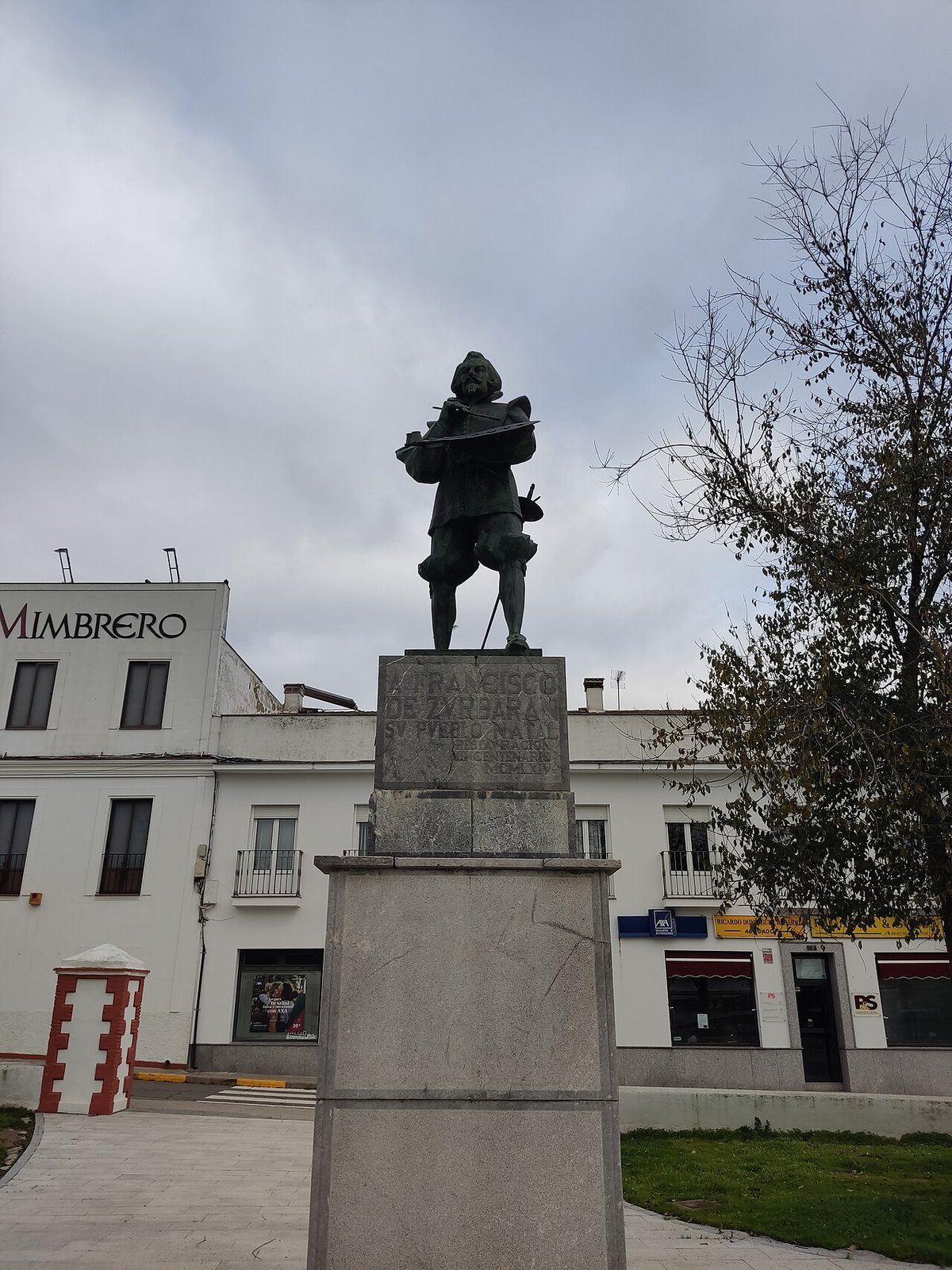
With around two thousand inhabitants, Fuentes de León operates on a human scale. Daily life centres on a handful of streets: the square, the market, the church, a few terraces where people sit without rushing anywhere.
There is very little in the way of staged tourism, which feels refreshing. A walk along Calle Mayor is enough to grasp how things work here. People know each other, cars pass slowly, conversations begin with a casual greeting and carry on without urgency.
Here, jamón is not a display item or a marketing tool. It is simply part of the surroundings. On the outskirts, curing sheds can be seen, while in the nearby dehesa Iberian pigs continue a routine that has barely changed over centuries: feeding on acorns and wandering beneath the holm oaks.
Beneath the Surface: The Cuevas de Fuentes de León
Below Fuentes de León lies something quite different. Beneath the village and its surroundings stretches another world.
The Monumento Natural de las Cuevas de Fuentes de León is a group of caves that can be visited with a guide. At first glance, it might sound like just another cave system, but the experience shifts once inside. As the path descends, the scale becomes clear: large chambers open up, filled with formations that resemble strange, natural sculptures.
The temperature drops noticeably underground, even when the heat outside is intense, so a light layer is useful. Looking upwards reveals another detail: colonies of bats often inhabit the caves, quietly going about their lives.
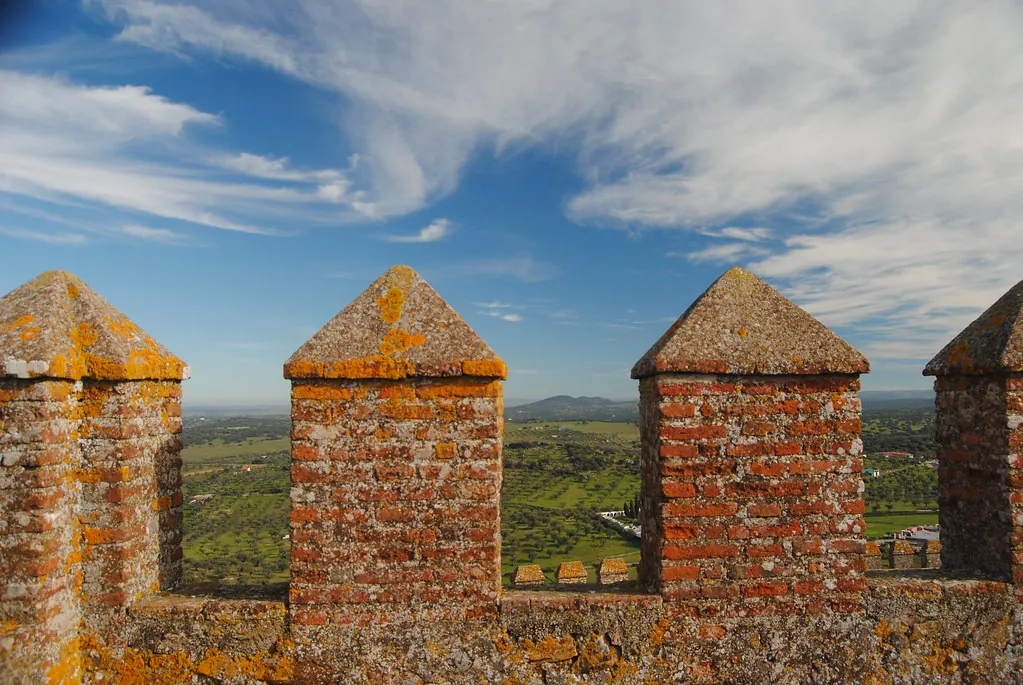
Around the caves, several walking routes wind through the landscape. These trails cross the dehesa and small mountain ranges, with the soft, undulating scenery typical of southern Extremadura. The terrain rises and falls gently, like a blanket laid over the land.
When the Village Comes Alive
At certain times of year, Fuentes de León shifts its rhythm. One of the most striking moments comes during Corpus Christi.
For this celebration, neighbours decorate the streets with carpets made from coloured wax and other materials. These designs cover the ground, forming intricate patterns that transform the village into something resembling a vast mosaic.
What stands out is how temporary it all is. Once the procession passes, the carpets disappear. The work lasts only a short time, but seeing the streets before the procession, completely covered in colour and detail, leaves a strong impression.
Summer brings a different kind of energy. Many people who live elsewhere return to the village for a few days or weeks. The effect is immediate: squares fill up, evenings stretch longer, and there is a noticeable sense of reunion. It is less about organised events and more about the simple fact of people coming back and spending time together.
Food That Reflects the Land
Eating well in Fuentes de León requires no special effort. This is dehesa country, and the food reflects that.
Jamón ibérico appears in many forms. It might be served in a simple sandwich or arranged on a shared board while stories circulate around the table. Alongside it, there are dishes such as caldereta de cordero, a lamb stew, migas made from breadcrumbs, and local sheep’s cheeses.
These are hearty meals, the kind that naturally lead to a slow walk afterwards.
Fuentes de León is not a place that encourages ticking items off a list. The rhythm is different. A visit might include a walk through the village, a trip to the caves, a pause to look out towards the surrounding hills, and time spent sitting without a plan.
For those looking for a perfectly staged backdrop for quick photographs, it may not hold attention for long. For anyone interested in how a village in this part of Extremadura actually lives, this is the kind of place where hours pass almost unnoticed, and an afternoon can quietly stretch into something longer.