Full Article
about Monesterio
Capital of Iberian ham on the Vía de la Plata; a landscape of dehesa and sierra with a ham museum.
Hide article Read full article
Monesterio, la parada que huele a jamón
Monesterio es ese tipo de pueblo por el que pasas camino de Sevilla cuando decides dejar la autovía. Se agarra a la vieja N-630, en esa Extremadura sur que ya respira aire andaluz. No es un destino en sí mismo para la mayoría; es más bien una pausa, un lugar donde estirar las piernas y donde, de repente, el aire te golpea con un olor intenso y salado. Es el olor del jamón curándose. No es un aroma discreto; está ahí, como recordatorio de que aquí se trabaja con eso.
Con unos cuatro mil habitantes, no es un pueblo que haya crecido. Más bien se ha quedado como está, cómodo en su tamaño. No hay prisa. Las conversaciones en la calle son de pienso, de tiempo, de los precios. Lo monumental brilla por su ausencia; lo cotidiano lo llena todo.
El jamón no es solo algo que se come
Aquí el cerdo ibérico no es un tema folclórico, es la economía local. Lo notas al pasar junto a secaderos y naves de curación, y lo entiendes mejor si entras en el Museo del Jamón Ibérico. Es pequeño, pero va al grano: explica sin rodeos qué es la dehesa, la montanera y por qué todo ese proceso importa. No es un museo para pasar horas, pero sí para ponerle contexto al bocata que te vas a comer después.
La clave está en que aquí el jamón no tiene vitrina. Lo sirven en bares sin pretensiones, en raciones generosas y a precios que no asustan. En temporada de ferias, el pueblo se llena un poco más y el producto sube al escenario principal, pero el resto del año es simplemente parte del paisaje diario.
El castillo (o lo que queda) tiene vistas gratis
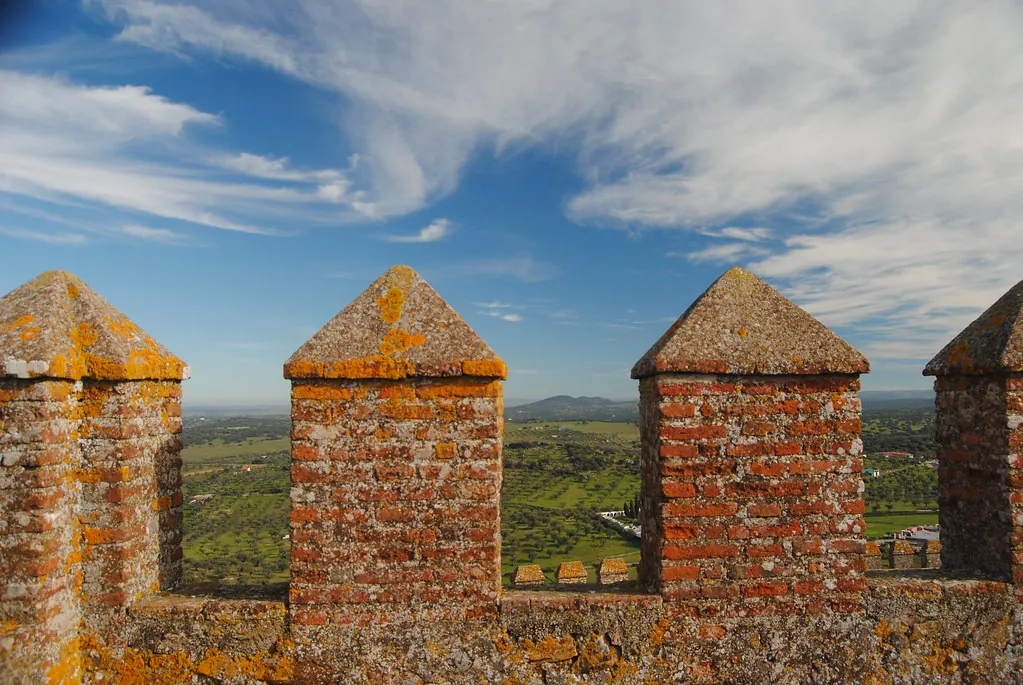
En las afueras hay una cuesta con ruinas encima. La llaman "el castillo". Gestiona tus expectativas: lo que verás son algunos muros derruidos y la sensación de que fue algo más. Pero la caminata merece la pena.
Se sube andando desde el pueblo por un sendero entre encinas. Es corto y nada exigente. La recompensa está arriba: Monesterio se ve desde arriba, aplastado junto a la carretera nacional, rodeado por el manto verde y marrón de la dehesa infinita. Suele haber cigüeñas anidando en las ruinas, dándole más vida al sitio. Desde ahí se entiende la geografía: estás justo en esa raya difusa donde Extremadura empieza a fundirse con Andalucía.
Tentudía está a tiro de piedra
El nombre de esta comarca viene del Monasterio de Tentudía, que está a pocos kilómetros, ya en término de Calera de León. Merece el desvío corto.
El monasterio está encaramado en uno de los puntos más altos de la zona. Subir ya forma parte del plan. Dentro guarda un retablo de azulejos famoso por aquí, pero lo mejor suele estar fuera: los días claros las vistas hacia el sur son enormes. Es como si toda la serranía se desplegara ante ti. Mucha gente para en Monesterio y luego sube hasta aquí; son dos partes del mismo relato.
Estás pisando una ruta histórica (y viva)
Por Monesterio pasa la Vía de la Plata. No es solo historia; sigue siendo una ruta viva. Comparten asfalto peregrinos caminando hacia Santiago desde el sur, camiones pesados moteros haciendo ruta y cicloturistas con cara de esfuerzo.
La carretera atraviesa el pueblo sin rodeos, dándole ese carácter de lugar-de-paso perpetuo pero sin estrés veraniego costero). Hay movimiento constante pero pausado; nadie parece llegar con urgencia frenética.
Cómo enfocar la visita
Monesterio no es un pueblo para hacer checklist turística. Funciona así: llegas, caminas un poco por su centro anodino pero vivo, hueles el jamón, comes bien (y barato) en cualquier bar, subes al cerro si te apetece moverte, y sigues camino. En dos o tres horas has captado su esencia.
Su verdadero valor está en esa escala intermedia entre Mérida y Sevilla. No vengas buscando postal perfecta; ven buscando una parada honesta donde entender cómo huele y sabe este rincón extremeño. Te llevas el estómago lleno y una idea clara de cómo vive un pueblo donde cada día gira alrededor de un cerdo, una bellota y mucho tiempo