Full Article
about San Vicente de Alcántara
Cork capital; surrounded by cork oak forests and dolmens, with a strong cork industry and megalithic heritage.
Hide article Read full article
A town shaped by the dehesa
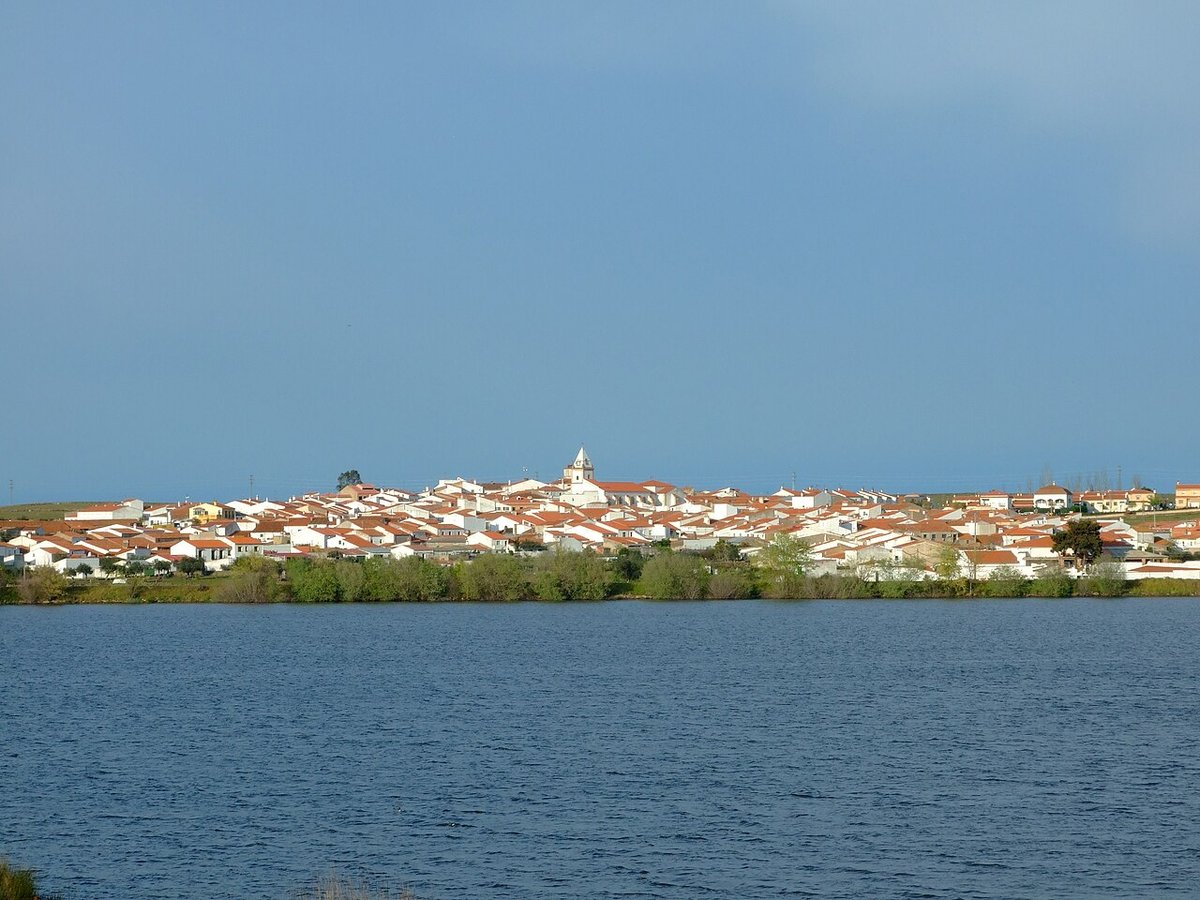
San Vicente de Alcántara makes most sense when viewed from the dehesa that surrounds it. Its municipal area stretches across a wide belt of cork oak trees along La Raya, the historic border with Portugal. Much of the town’s more recent story revolves around that tree and the landscape it creates.
Long before cork factories appeared, people were already settled here. Dolmens scattered through the nearby hills show that organised communities lived in this territory thousands of years before the present-day town took shape. These megalithic tombs, built with large upright stones and once covered by earth mounds, still stand among scrub and low vegetation, linking the area to a very distant past.
Between those prehistoric remains and the cork industry of the twentieth century lies a long rural tradition. The Knights Templar were present in the wider area at one point. A parish church was built in the eighteenth century. Agriculture and livestock have continued to structure daily life, closely tied to the dehesa, the periodic stripping of cork and the montanera, the season when Iberian pigs feed on acorns in the oak pastures.
When cork set the pace
San Vicente de Alcántara has had a long relationship with cork, although the concentration of factories grew mainly during the twentieth century. The raw material was quite literally on the doorstep: thousands of hectares of cork oak that are stripped roughly every nine years, following a well-established local calendar.
For decades, cork harvesting and processing provided employment for a large part of the population. Many Portuguese workers also crossed the nearby border during the busiest periods, reinforcing the cross-border character of this corner of Extremadura. The industry shaped the rhythm of the town, from the seasonal work in the countryside to the activity inside workshops and warehouses.
The sector no longer operates on the same scale as in its peak years. Even so, cork remains visible. There are still industrial buildings where freshly cut slabs are stacked after coming down from the hills. San Vicente is often described as one of the cork capitals of Extremadura, a reflection of that long-standing specialisation.
From this traditional base, production has also diversified into more technical items. Cork stoppers for different types of drinks and other industrial applications are part of an effort to keep the trade alive by adapting it to changing markets. The tree and the knowledge associated with it continue to define the local identity.
Megaliths among scrub and tracks
The municipality preserves several dolmens scattered along tracks and low rises in the sierra. They do not form a single organised archaeological complex, nor are they surrounded by large visitor facilities. Most appear at the edge of dirt roads or after a short walk through rockrose and heather.
The best known is the Dolmen de Juan Durán I, usually the most clearly signposted. It is a megalithic structure that was originally covered by a substantial earthen mound and used as a collective burial site over a long period. Its stone chamber and passage evoke the communal rituals of prehistoric societies in this region of the Iberian Peninsula.
Close by stands another dolmen, known as El Mellizo. Smaller in size, it still preserves part of its corridor, which makes its original layout easier to imagine. These monuments are open archaeological sites without permanent supervision. Their conservation depends largely on the care of those who visit.
Exploring them tends to involve a combination of driving and short stretches on foot. After several days of rain, some of the dirt tracks can become muddy, which is worth bearing in mind when planning a visit.
From dependent hamlet to independent town
San Vicente de Alcántara was not always an independent town. For centuries it was administratively dependent on Valencia de Alcántara, one of the historic settlements of this border region. Separation came in the seventeenth century after a long process during which residents gathered a considerable sum of money to obtain the privilege of villazgo, the right to be recognised as a town in its own right.
This growth and new status left its mark on the urban layout. The parish church of San Vicente Mártir, built in the eighteenth century on the site of an earlier temple, dominates the main square. Its tower combines stone and brick, a fairly common solution when construction extended over time and builders had to adapt to available materials.
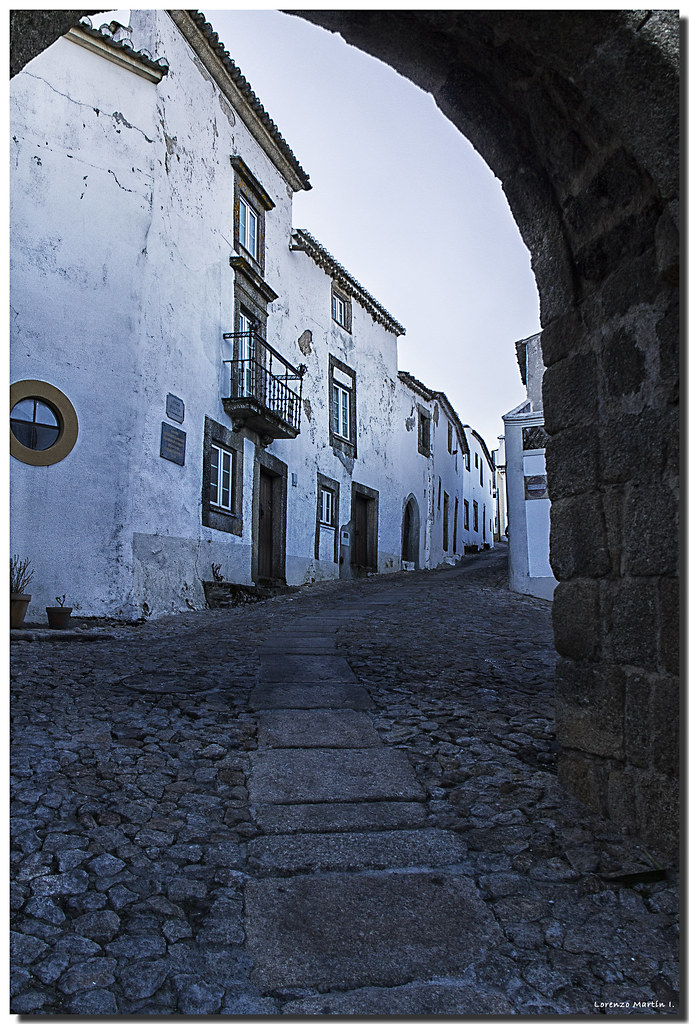
Nearby streets still feature two-storey houses with wrought-iron balconies and broad entrances. These were once designed to store carts or goods connected to agricultural and livestock activities. The architecture reflects a community rooted in rural work yet keen to assert its independence.
The town centre can be explored easily on foot. Streets lead towards the main square and branch out into residential areas where everyday life continues at an unhurried pace.
Winter fires and masked carnival
Winter brings some of the most visible traditions in the local calendar. Around the feast of San Vicente Mártir, at the end of January, bonfires fill streets and squares. Bundles of firewood and scrub are burned while residents gather around the flames. Smoke, glowing embers and long conversations shape a night that centres on shared warmth during the coldest part of the year.
Carnival also retains older elements. Masks made from wood or leather are still seen, accompanied by cowbells and outfits that recall rural celebrations in other parts of Extremadura and across the Portuguese border. The tone is largely local. Families return for those days and neighbours continue customs that have been passed down year after year.
Getting there and getting around
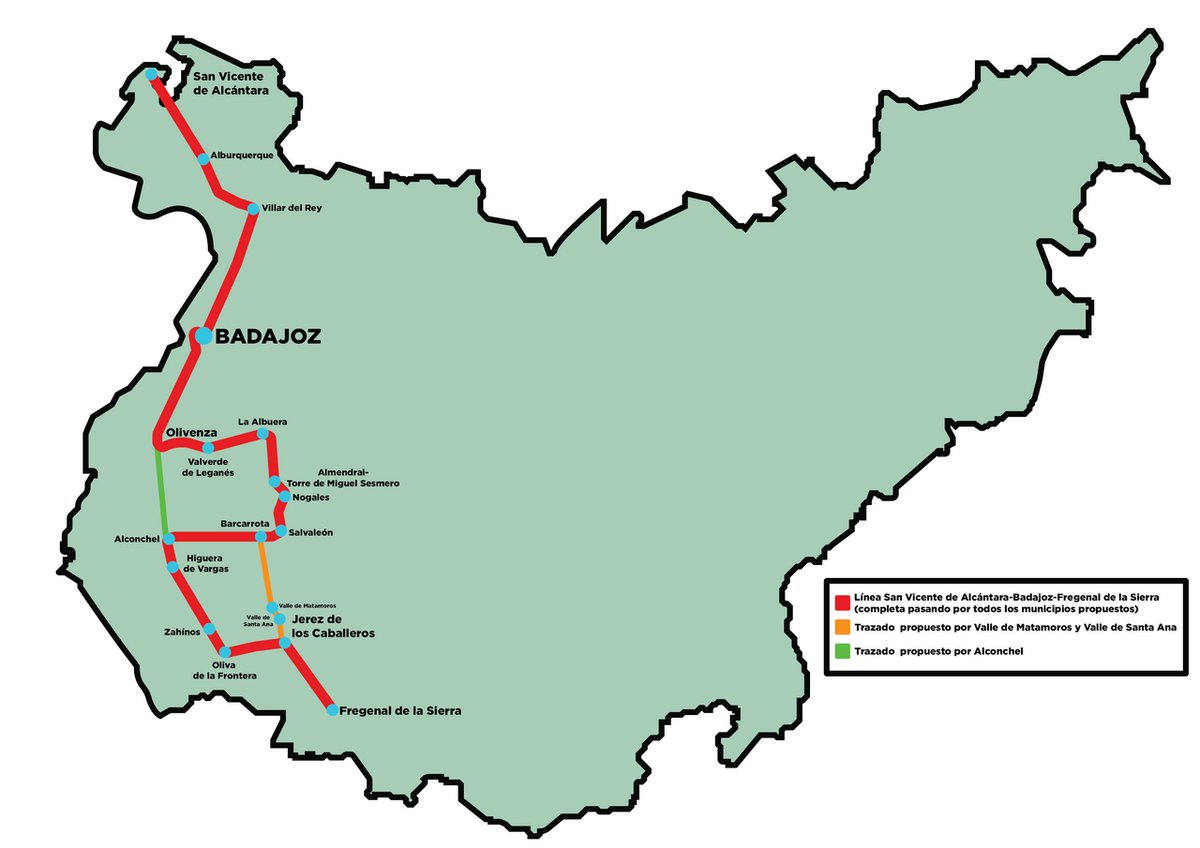
San Vicente de Alcántara lies in the west of the province of Badajoz, close to Portugal. Access is via regional roads that cross open dehesa landscapes dotted with cork oaks and grazing livestock.
Reaching the dolmens generally requires a car, with short walks to the sites themselves. Sturdy footwear is advisable, especially if rain has softened the tracks. Within the town, distances are manageable on foot.
For something to eat, the simplest approach is to head to one of the bars in the centre and ask what is available that day. The answer usually revolves around Iberian pork and, when in season, game dishes. Food here remains closely linked to the surrounding countryside, just as it has been for generations.