Full Article
about Villar del Rey
Town known for its slate quarries and the Peña del Águila reservoir; set in dehesa countryside.
Hide article Read full article
A town where Epiphany feels different
Villar del Rey is known for one very specific thing: the Three Kings visit homes one by one. Literally. There is no parade, no floats. They arrive by car, get out, ring the bell and step inside. This has been the custom for more than forty years, every 5 January, the night before Epiphany, when children in Spain traditionally receive gifts.
It is unusual enough to make the national news from time to time. Outside that date, life in the town moves at a much calmer pace. Streets are quiet, routines are simple, and nothing suggests the spectacle that unfolds once a year.
Getting there and moving around
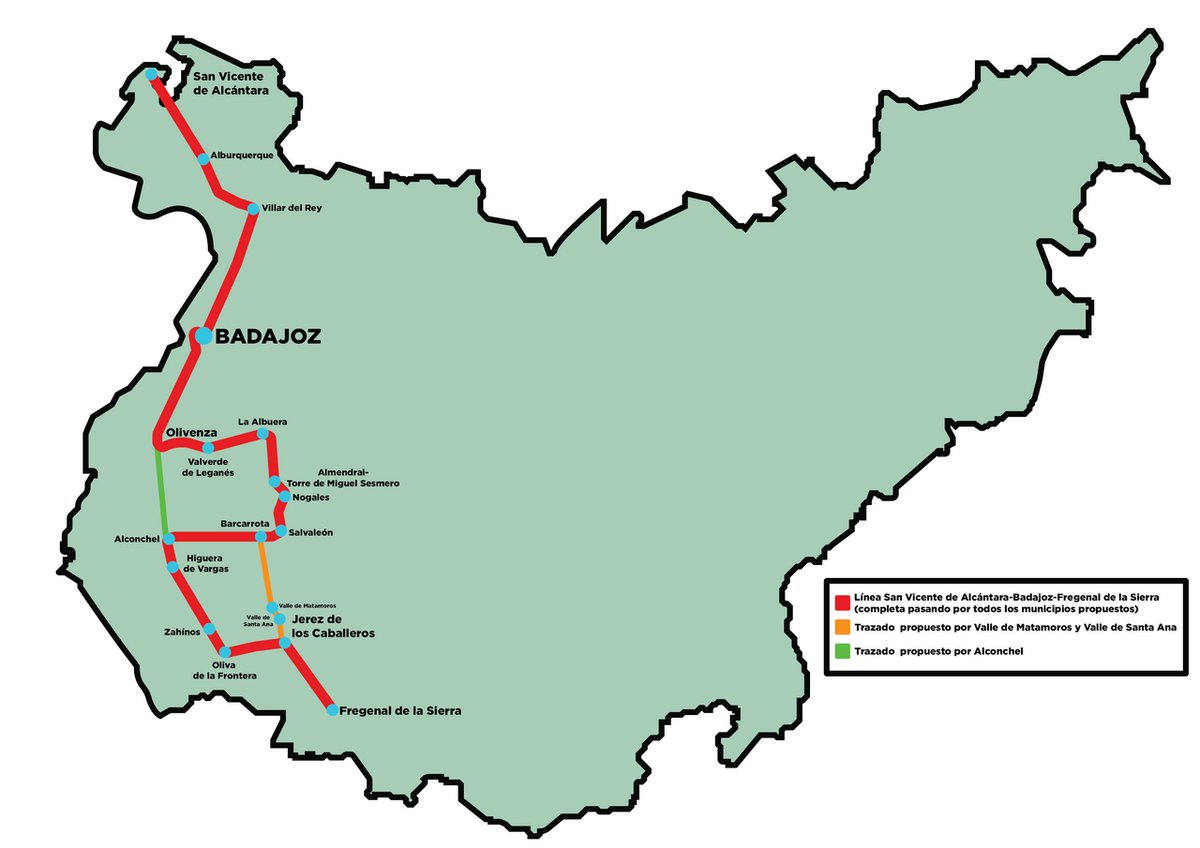
Villar del Rey sits about thirty kilometres from Badajoz and less than twenty from Alburquerque. The road is in good condition overall, although the final stretch includes a few tight bends that slow things down.
Parking works on a find-a-space basis. There are no large car parks and the centre fills quickly. The scale of the place makes this manageable, as everything can be covered on foot in just a few minutes. On Sundays or during local festivities, arriving early makes things easier.
Once parked, there is little need to think about transport again. The layout invites a short wander rather than a structured visit.
A handful of places, and one worth the detour
The main landmark in the centre is the church of Nuestra Señora del Rosario, which dates from the 16th century. It is well preserved and easy to find, though the visit itself does not take long.
More unusual is the Pozo de las Nieves. This is a traditional snow well, generally said to have been built in the 17th century. It is, in essence, a large underground chamber where ice was once stored. Today it holds the status of Bien de Interés Cultural, a protected heritage site. The space is sometimes used for concerts and events, as its acoustics work particularly well.
Just outside the town, around three kilometres away, lie the remains of the castle of Azagala. Reaching it involves taking rural tracks and walking a short distance. The structure itself is not intact, with scattered remains rather than a standing fortress. The setting, however, offers open views over the surrounding dehesa, the characteristic landscape of this part of Extremadura.
Slate underfoot, water all around
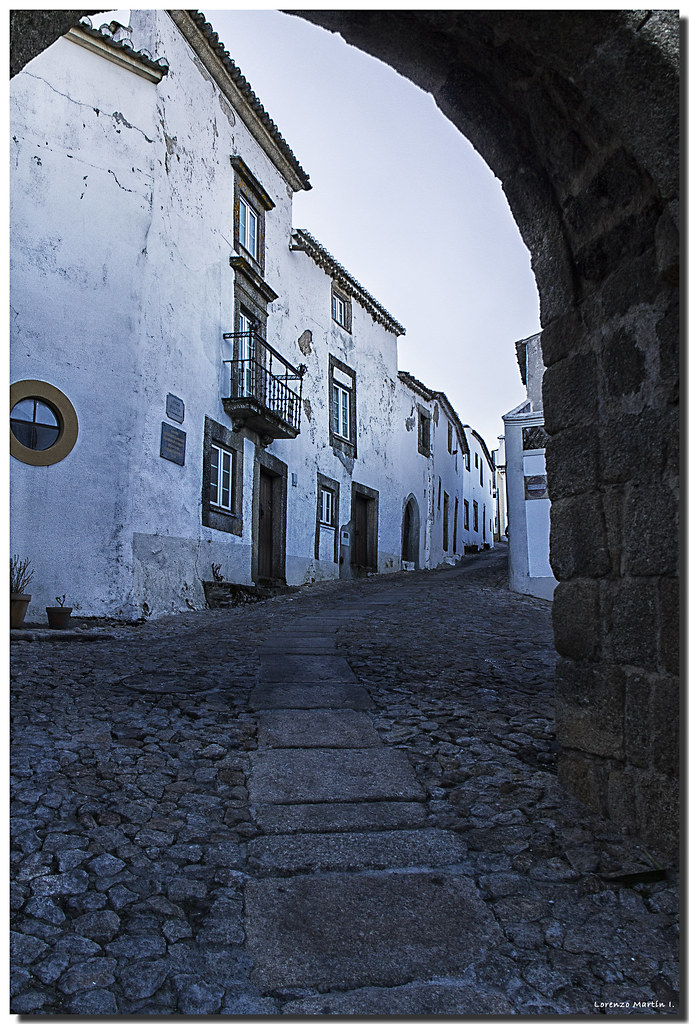
Slate defines the look of Villar del Rey. It appears on façades, benches and kerbs, and in many of the houses throughout the town centre. For centuries, it has been extracted from nearby quarries and continues to shape the visual identity of the place.
Water has also played a central role here. The nearby Peña del Águila reservoir has formed part of the system supplying Badajoz since the 19th century. Much of the water consumed in the provincial capital passes through this area first, linking the quiet surroundings of Villar del Rey with a much larger urban network.
These two elements, stone and water, sit quietly in the background but explain much about how the town looks and functions.
Food and the moments when things come alive
The local food reflects what is typical in this part of Extremadura. Dishes such as migas, tomato soups, gazpacho extremeño and caldereta appear regularly. They are straightforward, rooted in tradition and tied to the rhythms of rural life.
Several dates in the calendar bring more movement to the streets. In winter, the town celebrates San Sebastián. Another well-known event is the romería of the Virgen de Finibusterre, held on Easter Sunday, when people head out into the countryside. Good Friday brings the Procesión del Silencio, a procession marked by near silence as it moves through the town.
Each of these moments shifts the atmosphere, drawing people together and briefly changing the pace that defines the rest of the year.
A simple visit, or a very specific day
Villar del Rey can be seen in a single morning without rushing. A look at the church, a stop at the Pozo de las Nieves and a walk through the slate-lined streets is enough to get a sense of the place.
Those who feel like stretching their legs can head towards Azagala and its remains. Others may find that a couple of turns around the centre is sufficient.
The choice of date, however, makes all the difference. On 5 January, the town becomes something else entirely. The Three Kings move from house to house, climbing stairs with parcels under their arms, knocking on doors and stepping into family homes. It is a scene that is rarely seen elsewhere. Here, it is not a performance from a distance but something that unfolds at each doorstep, one visit at a time.