Full Article
about Almendralejo
Capital of Tierra de Barros and International Wine City; birthplace of Romanticism and hub of cava and olive production.
Hide article Read full article
Any account of Almendralejo tends to begin with an archaeological find that altered how the place is understood. In the mid-19th century, the so-called Disco de Teodosio was discovered nearby, a large ceremonial silver piece depicting the Roman emperor Theodosius I alongside his sons. The object, now kept outside Extremadura, placed this part of the Tierra de Barros within the sphere of late Roman imperial power. This was not an isolated rural corner. Routes, military movement and administration all passed through here.
A crossroads in the Tierra de Barros
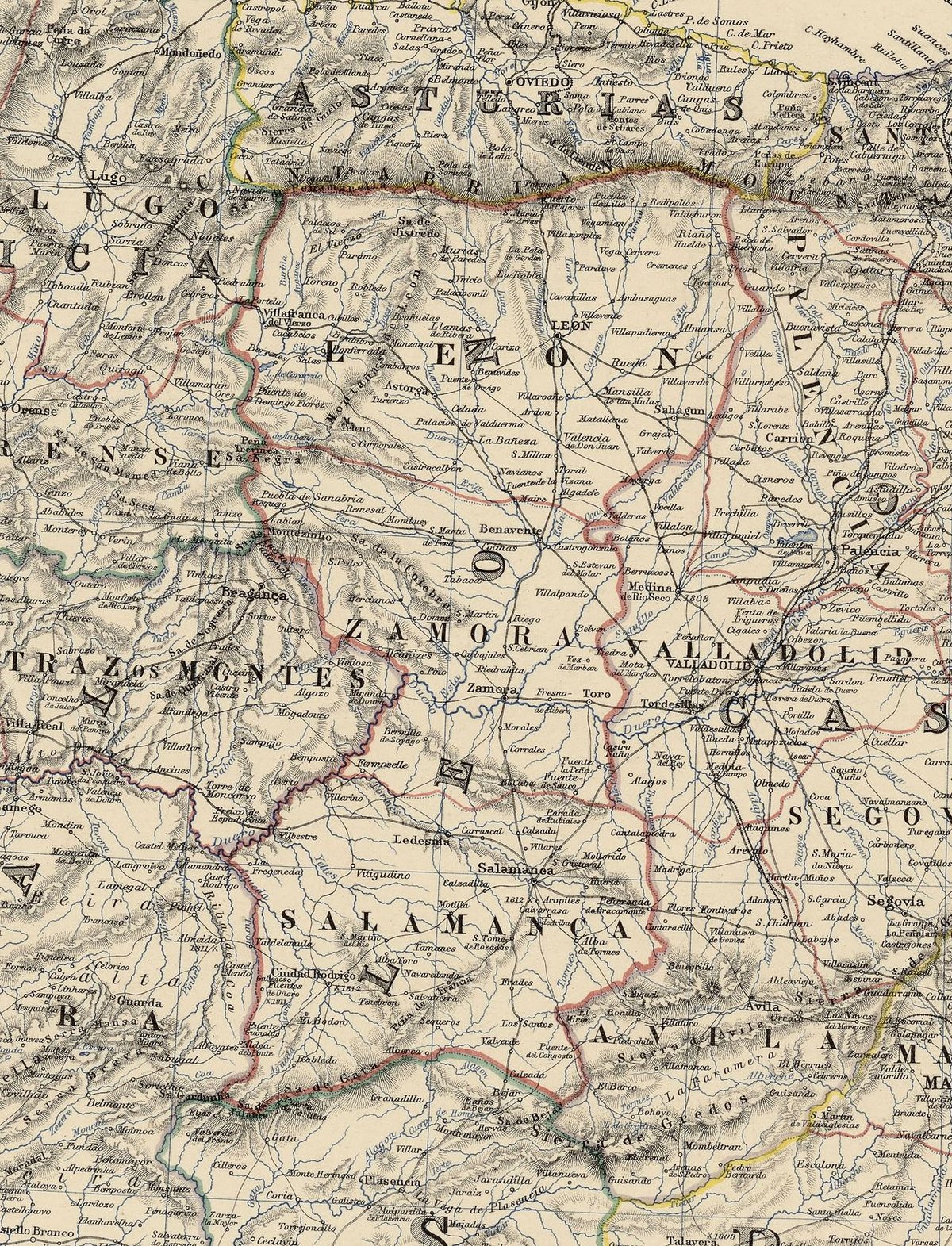
Almendralejo stands on a gentle rise in the Tierra de Barros, an agricultural region stretching between Mérida, Zafra and Villafranca de los Barros. The name is quite literal. The reddish clay soil has shaped both farming practices and local building traditions over centuries.
In Roman times, the area was crossed by secondary routes connected to the Vía de la Plata, one of the main north–south corridors in the Iberian Peninsula. Some researchers place a small stopping point or mansio somewhere in this area, though its exact location is not always clear in the sources. What does seem evident is that this territory fell within the influence of Augusta Emerita, present-day Mérida, which lies just over thirty kilometres away.
After the Christian conquest in the 13th century, the settlement was reorganised as a town under the Crown of León. A charter attributed to Alfonso IX is often cited as the starting point for its growth. From that moment, Almendralejo gradually established itself as an agricultural centre within the comarca.
The church of La Purificación
The most prominent historic building in the centre is the parish church of Nuestra Señora de la Purificación. Construction began in the 16th century, at a time when many towns in Extremadura were expanding or replacing earlier religious structures. The result combines late Gothic forms with Renaissance elements added over the course of the works.
It is not a vast cathedral-scale monument, yet it defines the rhythm of the historic centre. The tower and façade dominate the square and offer a sense of how urban life was organised, with religious space, market activity and the main houses arranged around it.
Outside, a 20th-century sculpture of Cristo de la Paz by Juan de Ávalos was installed. Its presence reflects how many Spanish churches have incorporated later artistic interventions while leaving their original structure largely intact.
Wine and landscape in the Tierra de Barros
Vineyards are part of the immediate surroundings of Almendralejo. The region has been dedicated to viticulture for centuries, although cultivation methods and production techniques have changed significantly over the past hundred years.
At the beginning of the 20th century, an oenological station was established here to study grape varieties and improve production. This initiative contributed to the professionalisation of a sector that was already central to the local economy. Today, Almendralejo forms part of the Denominación de Origen Ribera del Guadiana, a protected designation that covers wines from across this area of Extremadura.
One of the more unusual places to understand the relationship between wine and town life is the bullring, built in the 19th century. Beneath its seating, underground cellars were constructed, making use of the stable temperature below ground. This combination is not commonly found and reflects a practical approach to storage that adapted existing structures to local needs.
Two figures of Romanticism
Almendralejo also appears in the literary history of 19th-century Spain as the birthplace of two Romantic writers: José de Espronceda, born in 1808, and Carolina Coronado, born in 1820.
Espronceda spent only a short time in the town, as his family moved away early on. Even so, his origins in Almendralejo are still noted locally. Coronado maintained a longer connection with both the town and the wider region of Extremadura. Her work and her figure are studied as an important part of Spanish Romantic literature.
Finding your way around
Almendralejo is well connected within Extremadura. It lies close to the A-66, a major route linking Mérida with Zafra and continuing south towards Seville as well as northwards across the peninsula.
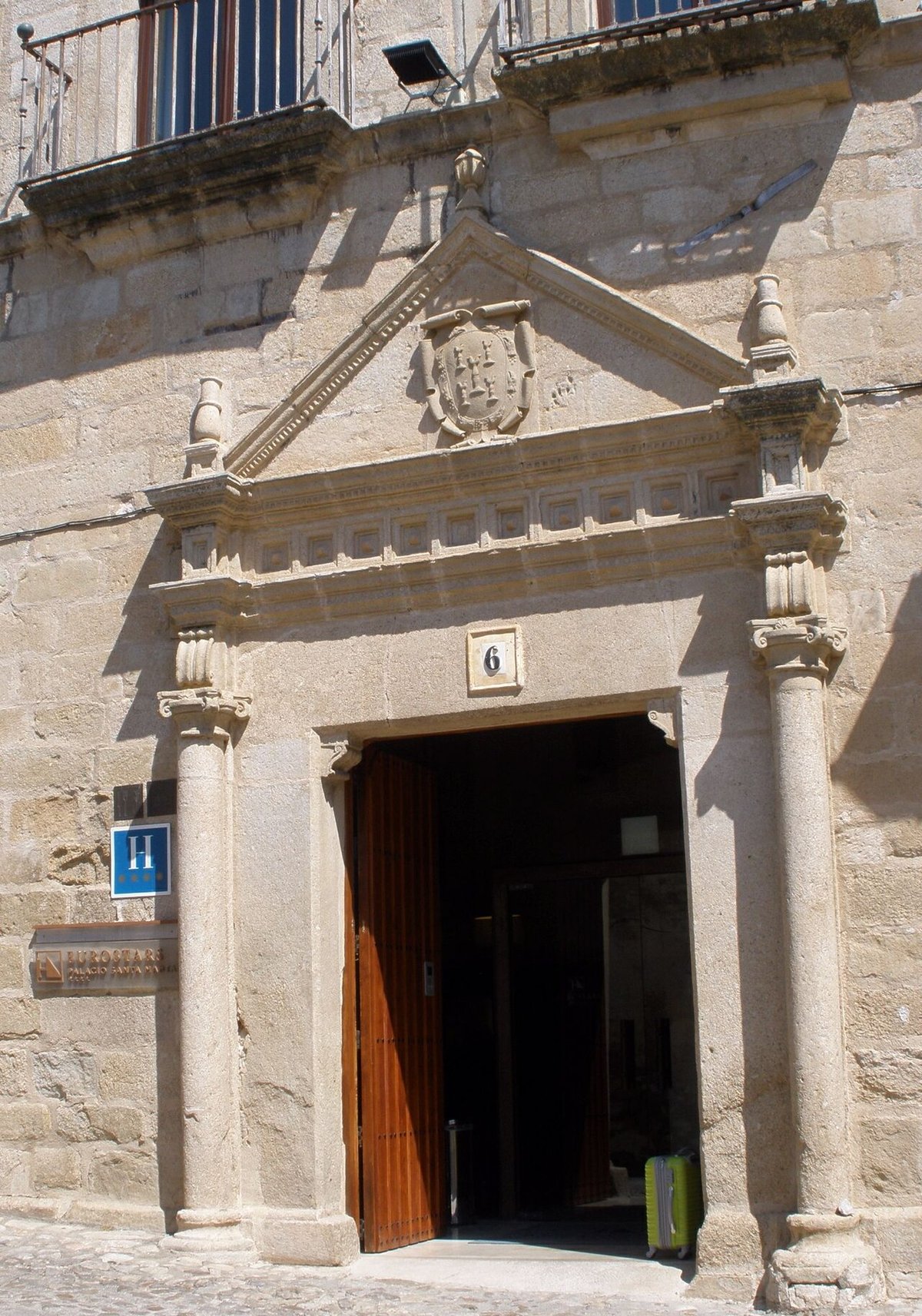
The centre is easy to explore on foot. A relaxed walk links key points such as the church of La Purificación, the Palacio de Monsalud, which now houses the town hall, and the bullring with its underground cellars. From there, travelling a short distance beyond the town brings the wider landscape into view. Vineyards dominate, with scattered olive groves and neighbouring towns located relatively close to one another.
Almendralejo does not rely on a single landmark or headline attraction. Its interest lies in how these elements fit together: a Roman-era context hinted at by an artefact, a town shaped by medieval reorganisation, and an economy rooted in the land. The result is a place where history and agriculture remain closely connected, and where the wider Tierra de Barros can be understood through what surrounds the town as much as what stands within it.