Full Article
about Santa Marta
Tierra de Barros town with mining and farming tradition; noted for its church and lively atmosphere
Hide article Read full article
A landscape built on red earth
Tourism in Santa Marta makes most sense when starting with the land around it. The town sits in Tierra de Barros, a comarca in Extremadura defined by very fertile clay soils. For centuries, this reddish earth, known locally as barro, has supported vineyards, olive groves and cereal crops. It is a landscape that explains both how people have lived and how they have built.
That same clay has left its mark on the architecture. Traditional houses tend to have thick, whitewashed walls designed to cope with long, dry summers. The look is practical rather than decorative, shaped by climate and by the demands of agricultural life.
Santa Marta itself is a medium-sized town within the comarca. It does not have the large monuments found in some nearby places, yet it preserves a clear sense of how it grew. Its layout of broad streets and low houses took shape between the 16th and 18th centuries, when dry farming became firmly established and the settlement stabilised. What remains today reflects that steady, work-based history rather than any single moment of grandeur.
The parish church and the town centre
The parish church of Santa Marta anchors the historic centre. The current building dates from the 16th century, although later alterations have changed parts of the interior over time. Its main doorway retains a restrained late Gothic style, something often seen in rural churches across Baja Extremadura from that period.
Inside, the space reflects centuries of additions and repairs. Rather than standing as a singular monument, the church acts as a point of orientation. The main square, the streets that branch out from it and much of daily life continue to revolve around this area.
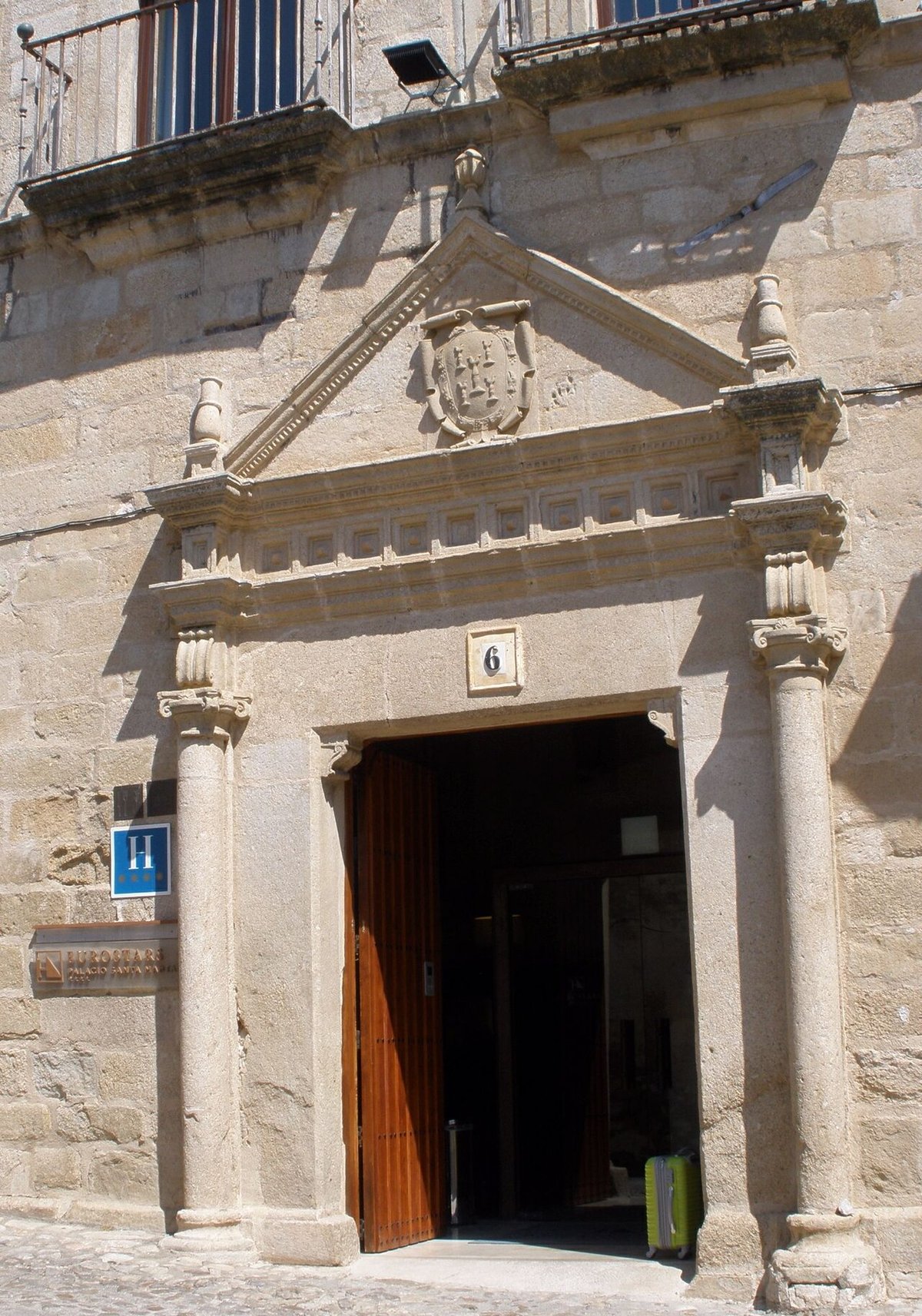
Nearby, several two-storey houses line the streets, many with iron balconies and wide entrances originally designed for carts and agricultural work. These are simple constructions, yet they offer a clear picture of how the town functioned when most activity depended directly on the surrounding land. The scale is modest, the design straightforward, and everything points back to a working rural economy.
Land of vines
Agriculture still sets the rhythm of the year in Santa Marta. Tierra de Barros is one of the main wine-producing areas in Extremadura, and a large part of the municipality is covered with vineyards. The landscape becomes especially easy to understand during the grape harvest, or vendimia. At that time, tractors move constantly in and out of the town, trailers are filled with grapes, and local cooperatives operate at full capacity.
The same clay soil that gives the comarca its name has also been used traditionally to make tiles, bricks and other building materials. On the outskirts, it is still possible to see former facilities linked to these trades, many now abandoned. They are a reminder that the local economy once combined farming with small-scale production tied directly to the land.
The terrain itself is gently undulating, without dramatic changes in height. It is a working landscape rather than a scenic one in the conventional sense, but it explains clearly why this area has relied on agriculture for so long.
Festivities and home cooking
Local celebrations in Santa Marta remain closely tied to the traditional calendar. In winter, bonfires are lit for the festival of Las Candelas, a custom found across this part of Extremadura. Vine cuttings, known as sarmientos, are burned, and people gather outdoors around the fire. Food prepared at home plays a central role in these occasions, reinforcing a sense of continuity with past practices.
Cooking in Santa Marta reflects its agricultural setting. The dishes are filling and rooted in everyday ingredients. Chickpeas appear in different preparations, alongside stewed meats and a range of cured sausages. These are recipes repeated in many households and passed down with little change from one generation to the next.
There is no emphasis on reinvention or presentation. The food is closely linked to the rhythms of work and season, designed to sustain rather than to impress. That consistency is part of what defines the local identity.
Getting there and moving around
Santa Marta lies in the centre of Tierra de Barros and can be reached by road from various towns in the comarca and from Badajoz. Once there, it is easy to get around on foot. Starting from the square and the church, the main streets and the overall layout quickly become clear.
For anyone interested in the agricultural landscape, it is enough to head a short distance out along the secondary roads. The vineyards and the gentle rolling terrain offer a direct explanation of how this comarca has lived off the land for centuries. There are no dramatic viewpoints or complex routes needed. The setting speaks for itself through its continuity and its scale.