Full Article
about Villalba de los Barros
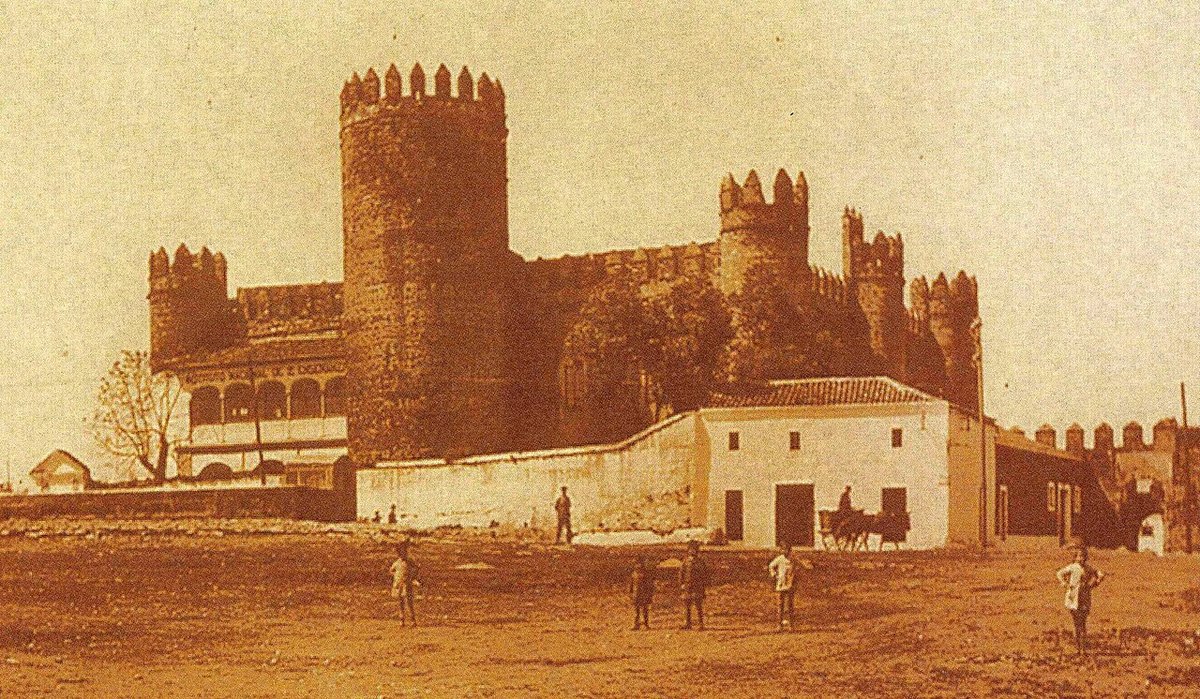
Known for its imposing Castillo de los Duques de Feria; a town with a wine- and olive-growing tradition.
Hide article Read full article
Morning light over Tierra de Barros
By ten, the streets of Villalba de los Barros still hold the cool damp of the night. Sunlight cuts through the gaps between whitewashed houses, landing in sharp rectangles on the cobbles. In the plaza, the sound is sparse: a few words exchanged between two men on a bench, the metallic scrape of a shutter being rolled up, the low hum of a refrigerator from an open doorway. This isn’t a place you visit for a checklist. The rhythm here comes from the land itself, from the deep red barro and the endless rows of vines that start where the last house ends.
The fields are wide-open, geometric. Low stone walls, worn smooth, mark some boundaries. For generations, this view has been one of vines. It’s not scenery; it’s the reason the bakery opens at dawn and why, by mid-afternoon, a heavy quiet settles over everything.
A church of red stone
The parish church of Santiago Apóstol is built from a stone the colour of rust. Against all that whitewash, it feels solid, permanent. Its 16th-century tower isn’t grand, but it’s visible from almost every lane, a fixed point in the maze. Up close, you can see where the stone has been pocked by weather.
When its bells ring out mid-morning, the sound seems to hang in the air for a moment before dissolving into the ordinary noise of a car passing or a dog barking down an alley. It’s a good sound to get your bearings by.
The clay underfoot
Tierra de Barros means what it says: land of clay. In Villalba, you can still find it on hands and boots and in a handful of working workshops. Don’t expect a showroom. These are places of function—dusty floors, wheels stained with mud, shelves bowed under the weight of pots drying.
If the door is open and you ask, you might watch for a while. The shapes that emerge are for use: deep bowls for gazpacho, water jars, simple plates. The potter’s hands move with a routine that has nothing to do with an audience. It’s the same motion that would have been made here two hundred years ago.
Paths into the vineyard
Walk five minutes from the plaza and the pavement turns to dirt. The tracks are wide and straight, laid out for tractors between endless lines of vines. This is Ribera del Guadiana country. The air smells different out here—dry earth and green leaves.
In spring, the new growth is a sharp, almost electric green. By late summer, the soil between rows is pale dust and the heat rises in visible waves. These walks aren’t hikes; they’re flat, open circuits where you can lose an hour just following a track to see where it goes. Bring water if you go in July or August. There is no shade.
You’ll pass things that weren’t built for you: a stone cross at a junction, a small hermitage alone in a field with its door locked. They feel like part of the terrain.
On the table
The food here doesn’t try to surprise you. It’s built from what’s close: bread, garlic, olive oil, game from the surrounding countryside. Migas is a staple—crumbs fried with garlic and paprika until crisp. Gazpacho extremeño is thicker than its Andalusian cousin, often with bread blended right in.
Wine is always on the table, usually a robust red from a nearby cooperative or a family bodega down the road. Lunch is the main event, and it unfolds slowly.
Notes on time
If you want to see Villalba animated, come at the end of July for the fiestas of Santiago Apóstol. The plaza fills, there’s music after dark, and a different energy runs through the streets.
In September, the harvest begins. Some years, if you ask around, you might find someone willing to let you help pick a row of grapes or taste the fresh mosto, but it’s not a staged event.
Carnival brings homemade costumes and parades that feel improvised, moving up Calle Real with more laughter than precision.
A practical silence
Villalba de los Barros is about 25 kilometres from Badajoz. You’ll need a car to get here; the road runs through open fields and past other small towns of pale stone and tile roofs.
Come for the light. Early morning lays long shadows across the plazas. Late afternoon turns everything gold before fading to blue. Midday in summer is for staying indoors; the heat is blunt and heavy.
This village reveals itself in quiet moments: the scrape of a chair being pulled onto the street in the evening, the smell of woodsmoke from an old kitchen fireplace mixing with jasmine, watching a kestrel hover motionless over a vineyard before dropping out of sight. Nothing happens quickly. That’s rather the point.