Full Article
about Alange
Famous for its Roman baths, a World Heritage site; set beside a large reservoir and topped by an Arab castle with sweeping views.
Hide article Read full article
A village shaped by water
Alange has the feel of those public swimming pools that sit in the middle of nowhere yet somehow become the social centre of a town. Here it works on a much larger scale. Tourism in Alange revolves around water. The reservoir, the thermal baths, the slopes that look out over the water. Everything leads back to the same element.
It lies less than 20 kilometres from Mérida, so many people arrive expecting a quick stop. It can be that. Yet it also has the effect of a sunny bench in winter. You sit down for a moment, and when you check the time, more of the day has passed than expected.
There are no streets packed with shops or a monumental old quarter. What you find instead is water close at hand, traces of the past and a village that moves at its own steady rhythm.
The reservoir: a shifting mirror
The Embalse de Alange appears suddenly as you descend towards the village. It is like walking into a room where all the blinds have been thrown open at once. Light and water take over the view.
It sits right next to the town. There is no need to drive or plan anything complicated. A short walk is enough to reach the shore and see that broad surface that looks like a misplaced mirror set in the countryside.
Among the reeds, herons, cormorants and ducks move quietly. At times the scene becomes so still it feels frozen. Then a flock passes through and the calm breaks, like the sound of paper being crumpled in a silent room.
The reservoir also has a practical role. It regulates water for Mérida and nearby towns. In some stretches, people can still be seen fishing, the kind who spend hours watching a float with a patience that feels increasingly rare.
Sit by the water for a while and it becomes clear. It is like watching a lit fireplace. Very little seems to happen, yet getting up takes effort.
Roman waters and an Arab skyline
Close to the centre stands the balneario, linked to thermal waters already used by the Romans. The springs still release hot water. At first glance it is not particularly striking. It feels more like looking at the foundations of an old house while someone explains they have been there for centuries.
Some Roman structures have been uncovered in nearby excavations. They are not always fully visible, but they help explain why this place mattered for so long. Hot water emerging from the ground was once something close to a natural resource of great value.
Above the village rises the Arab castle. The walk up is straightforward, though the slope makes itself known, especially in summer. It is one of those short climbs that seem easy until the sun presses against your back like an oversized heater.
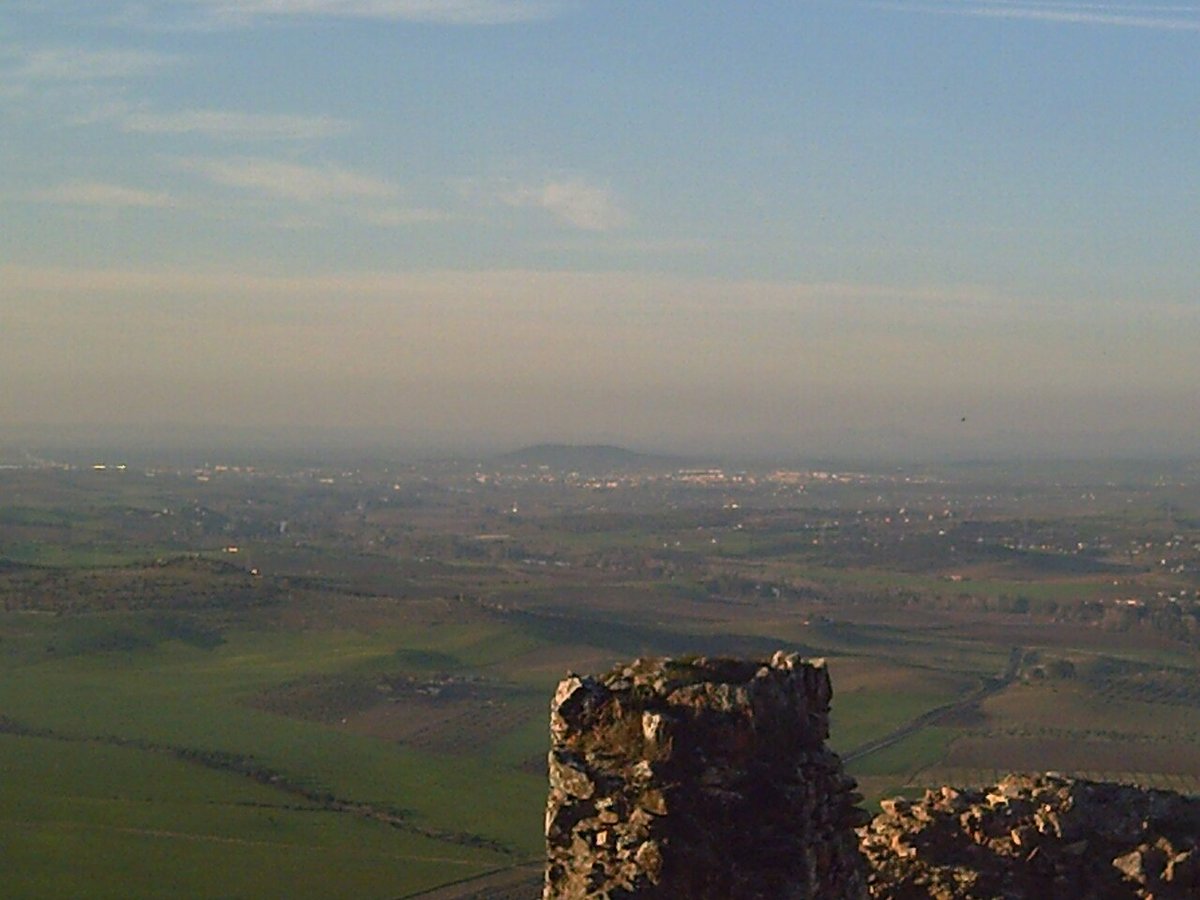
At the top, sections of wall and parts of a tower remain. The real draw is the view. The reservoir stretches out completely, and the valley of the Guadiana spreads below like a crumpled map.
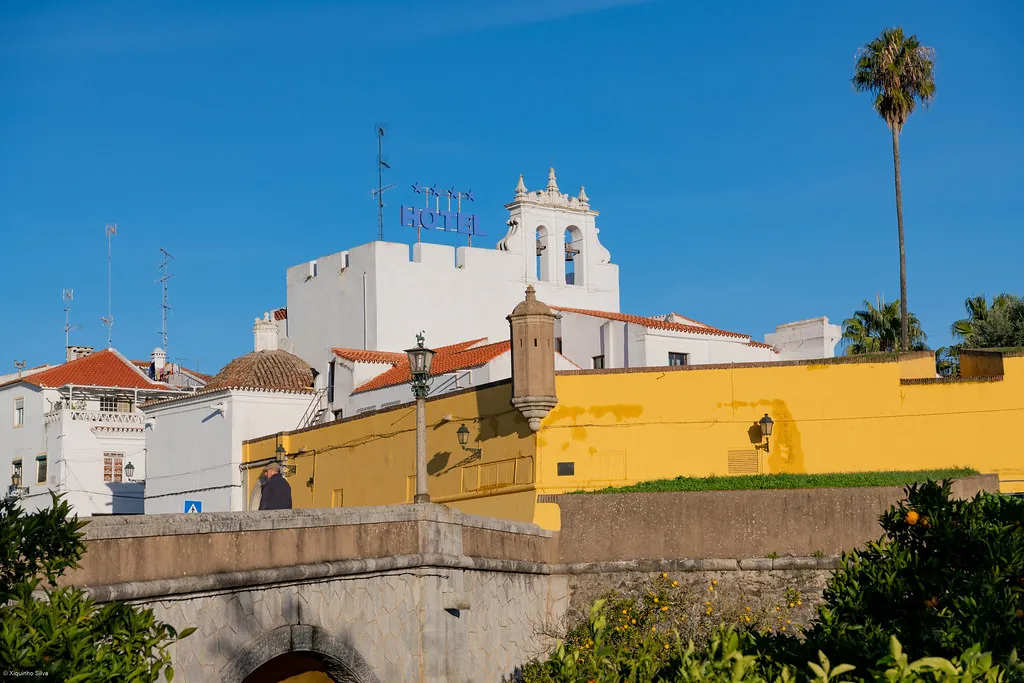
The parish church of Santa Eulalia, dating from the 17th century, continues to define the village skyline. Its tower appears between narrow streets, acting as a useful point of reference when moving around, the sort you instinctively look for to find your way back.
Walking by the water
The paths around the reservoir are wide and easy to follow. This is not technical hiking. It is more about long, unhurried walks where conversation flows without the need to watch every step.
Some sections have scattered trees, others feel more open. At times the landscape resembles a quiet country road without cars, just earth, water and wind.
The shores are not sandy. Instead there is compacted earth and small stones. Places where people sit for a while, take out something to eat or simply watch the water.
In summer there is more local activity, with people looking for patches of shade. In winter the atmosphere shifts. On some mornings the reservoir is covered in mist and everything feels half assembled, as though the world has been turned down a notch.
A simple plan if time is short
If time is limited, starting with the castle early in the day works well. The climb is brief and the view helps make sense of the setting. From above, the reservoir and the village sit together like a large-scale model.
Afterwards, wander down through the streets without a fixed route. Whitewashed houses, gentle slopes and the occasional corner where time seems to slow slightly.
The walk can end near the balneario and the edge of the reservoir. There is no need to plan much more. Alange works like a long after-lunch conversation. It does not require constant activity to feel complete.
In two or three hours, it is possible to get a clear sense of the place.
When to go
Spring and autumn are the most comfortable seasons for walking. The heat softens and being outside becomes more enjoyable.
In summer, starting early is advisable. By mid-morning the sun is strong, the kind that hits like a rush of heat when opening an oven door.
Winter brings a different mood. Some days the mist settles over the reservoir and the landscape changes entirely. It is worth noting that daylight fades early and the cold arrives quickly.