Full Article
about Carmonita
Small municipality surrounded by cork-oak pastures; a quiet, rural stop on the Vía de la Plata.
Hide article Read full article
A Quiet Corner of the Vegas Bajas
By mid-morning, when the sun falls straight onto the whitewashed walls, Carmonita almost falls silent. A door opens, a car passes slowly, and further off sheep shift beneath the holm oaks. In this stretch of the Vegas Bajas del Guadiana, tourism in Carmonita has little to do with grand monuments or busy streets. What you find instead is a small village with an unhurried rhythm, surrounded by open dehesa.
The approach is along a dirt track that cuts through pastureland divided by stone walls and widely spaced holm oaks. In winter the grass turns a deep green. In summer everything shifts to ochre and the air carries the scent of warm dust. Livestock, mainly sheep and some cattle, form part of the everyday scene. At around 380 metres above sea level, the land opens out considerably. From certain points on the edge of the village, the view stretches across the dehesa with barely a building in sight.
This is a landscape typical of Extremadura: broad horizons, working farmland and a sense of space that shapes daily life as much as the weather does.
Streets Shaped by Time
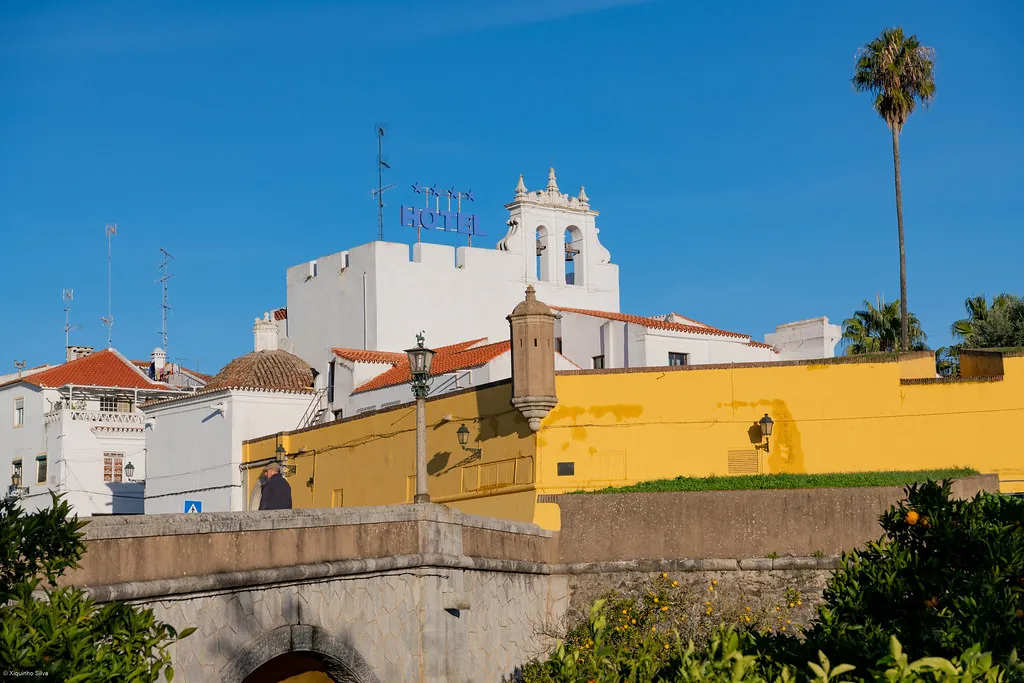
At the centre stands the church of Santa María Magdalena, its simple tower visible from several streets. The current building is usually dated to the 16th century, although, as in many villages in the area, it has seen alterations and additions over the years.
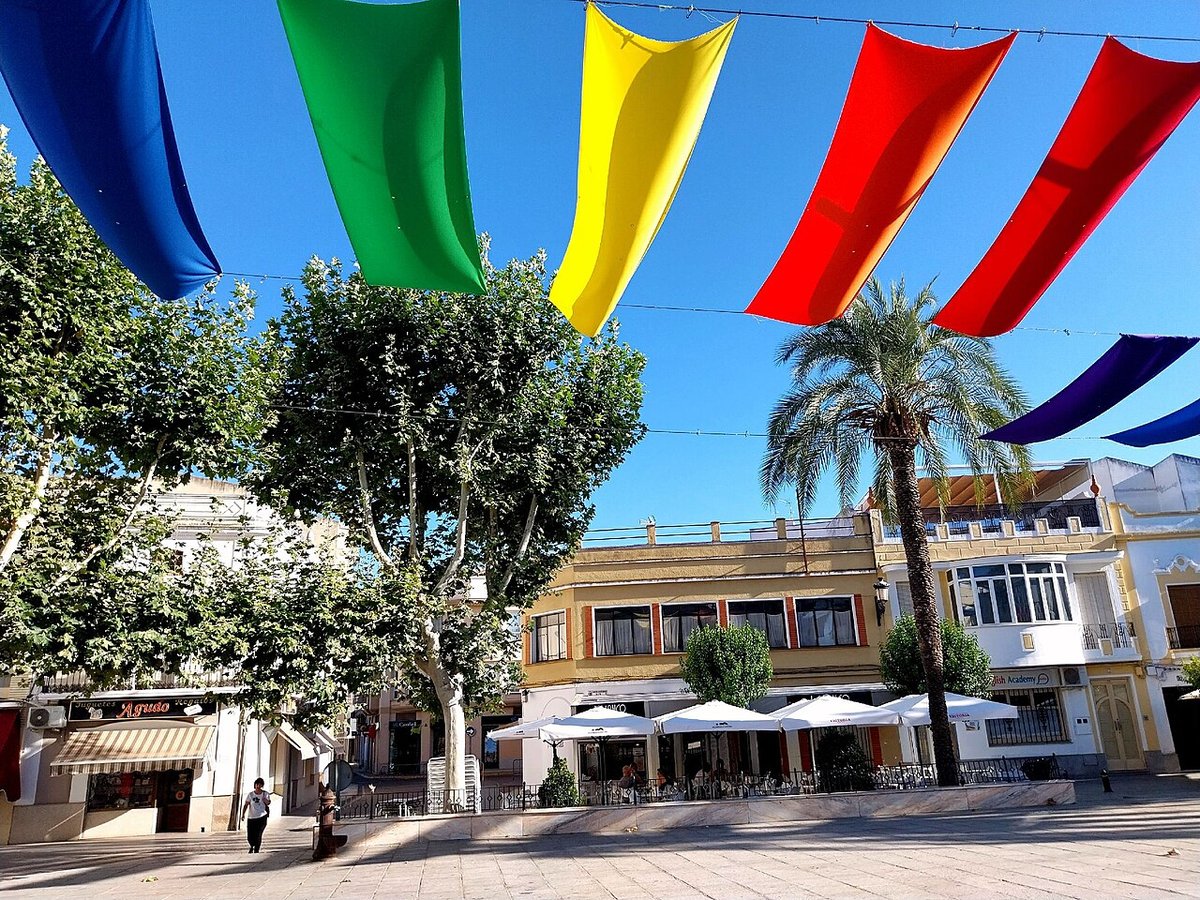
The streets are narrow and short, laid out more for walking than for cars. Calle Real remains one of the main axes. In the side streets there are low houses with white façades, wooden doors and sometimes a bench set against the wall, ready for anyone who wants to sit outside when evening brings cooler air.
There are no shops designed with visitors in mind. Instead, there are the everyday village businesses where locals call in to buy what they need and stay for a chat. Early in the morning there is a gentle coming and going that lasts until around midday. After that, the pace slows noticeably.
Carmonita does not present itself as a destination of highlights. Its structure and atmosphere are straightforward, shaped by routine rather than spectacle.
Paths into the Dehesa
Several agricultural tracks lead directly out from the built-up area into the surrounding countryside. They are not marked as official hiking routes and many cross working farmland, so it is important to walk respectfully and close any gates if you pass through.
In spring the ground fills with wildflowers. Poppies appear among the grass, broom adds bright patches of colour, and small yellow flowers spread low across the fields. As the day warms, the scent of rockrose hangs in the air. White storks often perch on electricity poles, and if you look up for a while you may spot a bird of prey riding the thermals.
The best time to walk is usually early in the morning or later in the afternoon. Summer heat in this part of Extremadura becomes intense from mid-morning onwards, and the tracks offer little shade. In winter, after several days of rain, some stretches of earth can turn muddy.
The appeal here lies in simple movement through open land: the crunch of dry ground underfoot in the hotter months, the shifting light across the pasture, the distant sound of a bell from grazing animals.
Food from Field and Farm
The cooking found in Carmonita follows the pattern common to many villages in this part of Extremadura. These are country dishes, designed for long working days rather than display. Migas, made from fried breadcrumbs, appear frequently. There are lamb stews and cured sausages prepared at home. Local cheeses are produced with sheep’s or goat’s milk from the surrounding area.
Honey from beehives scattered across the dehesa is also typical, with flavours that change depending on the season’s flowering. During the hottest months, gazpacho and other cold soups are common at lunchtime tables, offering relief from the heat.
This is not a cuisine adapted for visitors. It reflects what the land provides and what has long been prepared in family kitchens across the comarca.
Festivals and Seasonal Customs
In August, Carmonita celebrates the fiestas dedicated to Santa María Magdalena, the village’s patron saint. During those days the streets fill more than usual, and residents who live elsewhere return.
In spring there is often a romería, a traditional pilgrimage-style outing to nearby hermitages or countryside spots. Carts are decorated, food is shared and the atmosphere is rooted in village life. These gatherings are as much about meeting up as about the destination itself.
Autumn and winter still see, in some houses and farms, the traditional matanzas del cerdo. This is the seasonal pig slaughter that has long been part of rural life in the region, providing meat and cured products for the months ahead. In this comarca it continues to carry strong family importance.
The calendar here follows agricultural cycles and religious traditions rather than tourist seasons.
Getting There and Choosing the Moment
Carmonita lies in the comarca of Tierra de Mérida – Vegas Bajas, less than an hour by car from Badajoz along the EX‑209 road. The drive passes through open fields and long straight stretches, characteristic of this part of Extremadura.
For walking in the surrounding countryside, spring and autumn are generally the most pleasant times. Summer heat can be very intense from midday onwards, so earlier starts make more sense if you plan to explore the tracks. In winter, after prolonged rain, some dirt sections become muddy and harder to navigate.
There are no organised activity programmes or guided visits. Carmonita works best when approached without hurry: a slow walk through its streets, a pause near the church of Santa María Magdalena, then a stroll out towards the dehesa to listen to what carries across the open land. Wind moving through the holm oaks, a distant animal bell, and little else.
In a region known for wide landscapes and agricultural tradition, Carmonita offers a clear example of both. It is a place defined less by sights than by setting, and by the steady rhythm that continues whether anyone is watching or not.