Full Article
about Cristina
Small municipality near Guareña; noted for its quiet and its parish church amid farmland.
Hide article Read full article
A Morning That Takes Its Time
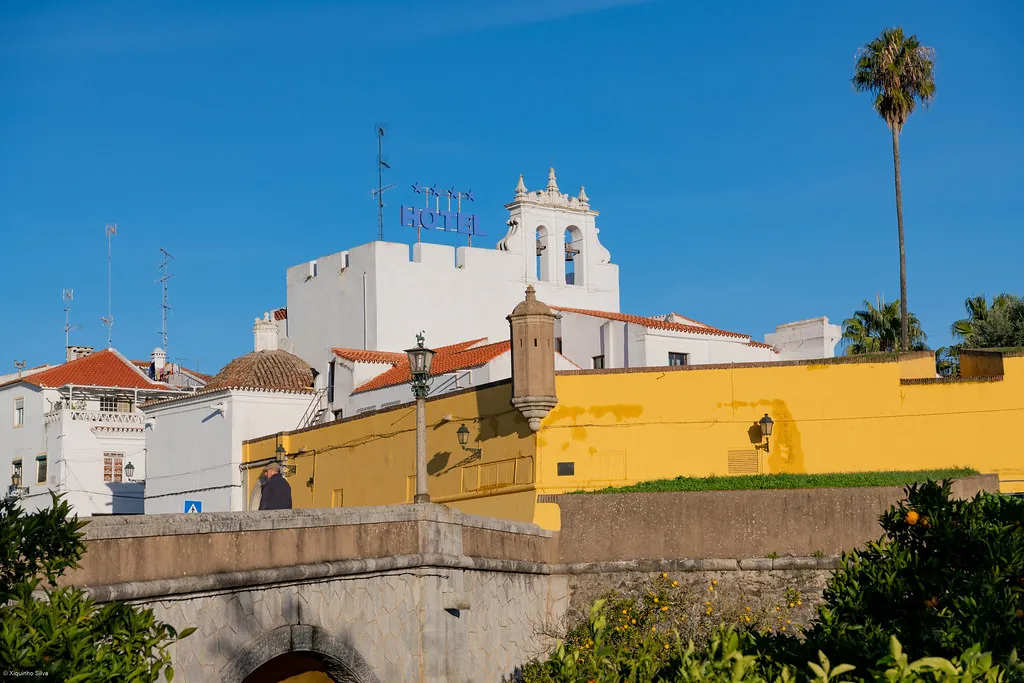
At that hour when the sun starts to warm the whitewashed walls, Cristina is still half quiet. A shutter lifts. Someone sweeps the pavement in slow, steady strokes. The air carries the smell of damp soil from the surrounding fields. This is how many mornings begin in Cristina, a place where visiting is more about looking than doing, and where the rhythm never feels rushed.
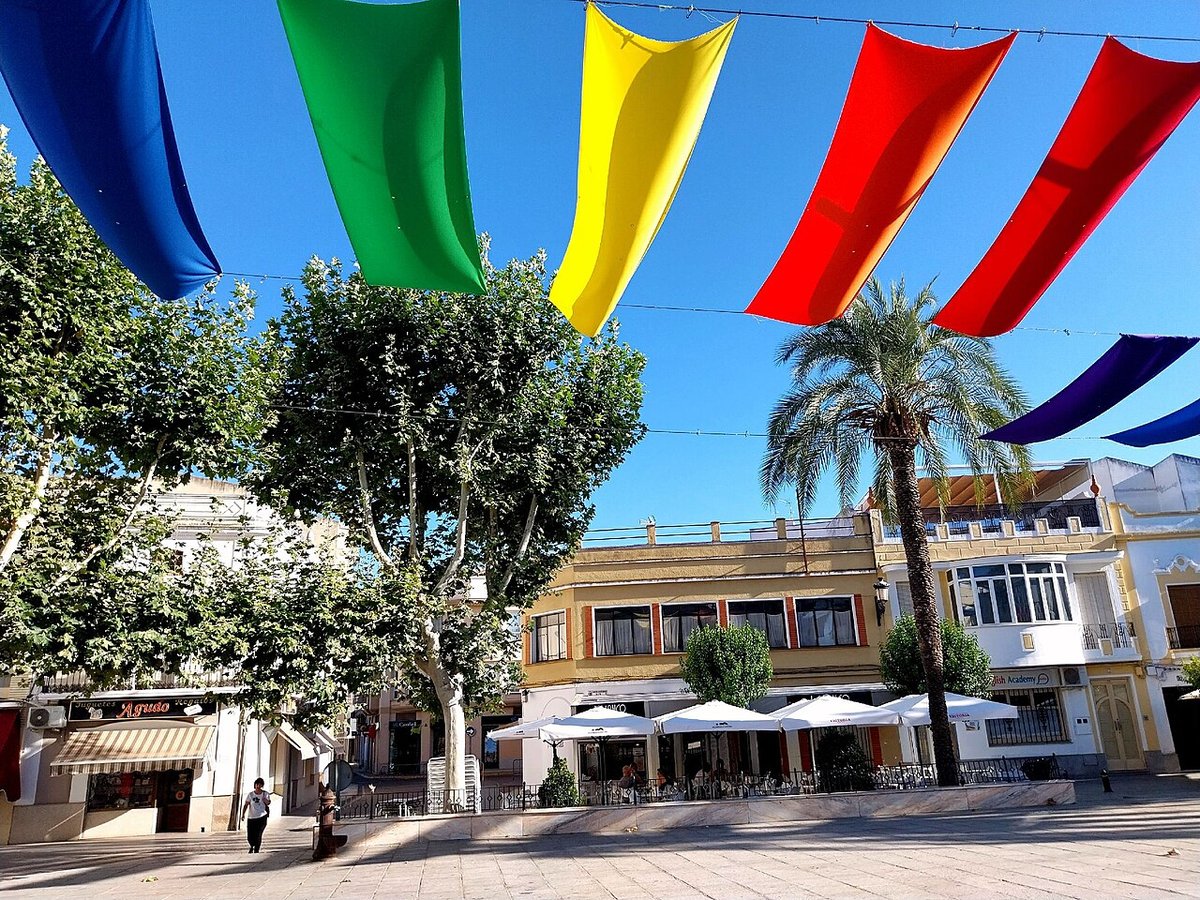
The square gathers almost everything. Low houses, white paint slightly worn, short shadows as the morning moves on. The clearest sound is usually the bells of the parish church, a simple building constructed in the late 19th century. Its sandstone has faded over time, with darker patches of damp showing near the base.
Here, the square works as a thoroughfare. People cross it with shopping bags, neighbours pause for a quick exchange. Nothing is arranged for display. It is simply part of daily life.
Streets Where the Patio Still Speaks
Several straight streets lead away from the square, often bearing familiar names found across towns in the region, such as Calle Real or Calle Mayor. There is no real need for a map. Walking and glancing side to side is enough.
Most houses rise one or two storeys. Thick wooden doors, black iron grilles that in summer hold flowerpots. If a door is left open, the interior patio comes into view: a concrete floor, an orange tree, sometimes a lemon tree. In spring, the scent drifts out into the street.
There are no major historic landmarks here. Instead, small details stand out: a bench set against a wall, a garage where a tractor is kept, a freshly whitewashed façade next to another where the paint has begun to crack.
The Fields Around Cristina
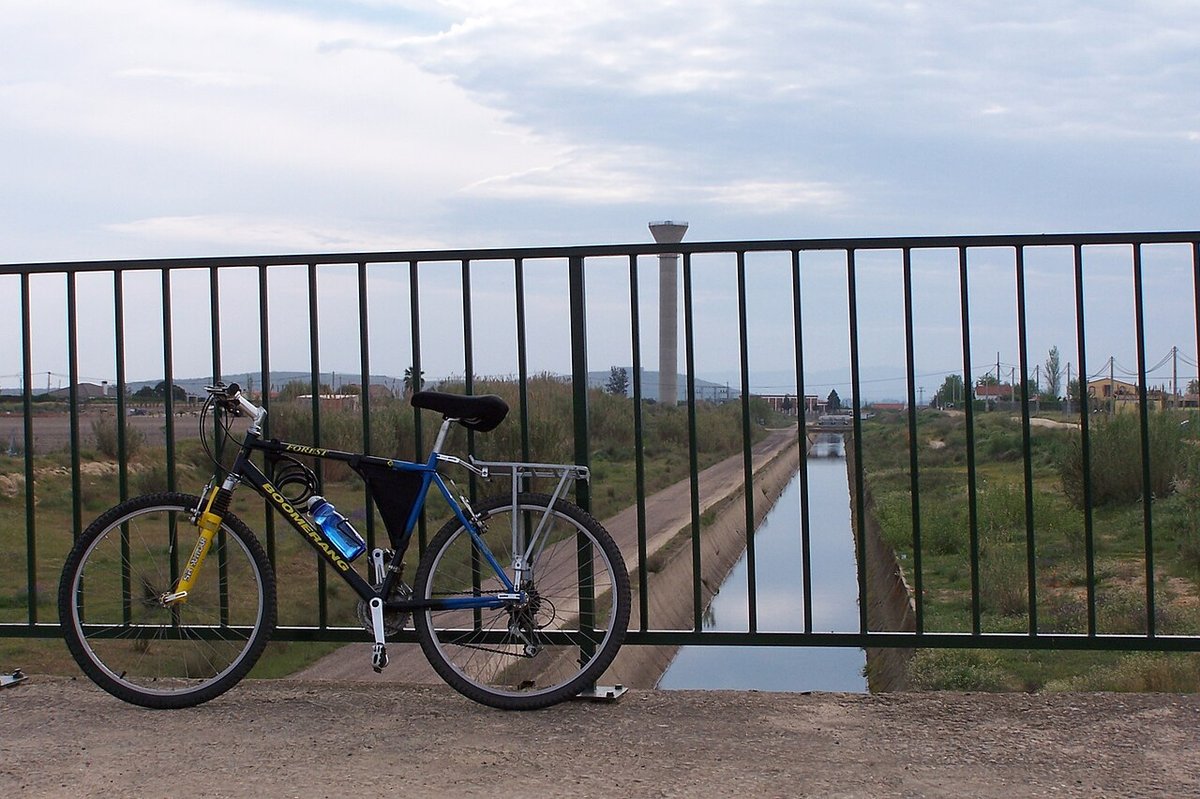
The town ends quickly. Step out along any path and the land opens into long agricultural plots. Wheat and barley dominate for most of the year, forming straight lines that shift in colour with the seasons.
Further out, scattered holm oaks appear. They are remnants of the dehesa, a traditional landscape of open woodland that still shapes this part of the Vegas Bajas. Towards evening, birds of prey are often visible, gliding high and almost motionless against the sky.
The paths are made of compacted earth. Some follow older agricultural routes that once connected farms with the town. There are no signs or prepared viewpoints. Just tractor tracks, dry grass at the edges, and quiet.
If you plan to walk here, early morning or late afternoon is best. The land is very open and shade is scarce.
Eating as It Has Always Been Done
Local cooking remains closely tied to agricultural life. The dishes are filling, with little decoration. Migas, a traditional preparation based on breadcrumbs, are served with roasted peppers. Stews use vegetables from nearby gardens. Lamb appears when the time is right.
Pork features heavily, both in cured meats and in recipes traditionally prepared during the matanza, the seasonal slaughter that has long been part of rural life in Spain. These dishes continue to circulate mainly in private homes and family gatherings.
Between Cristina and Mérida
Cristina lies relatively close to Mérida. The drive follows regional roads, and in less than an hour the landscape shifts completely: from open countryside to Roman remains and the movement of a small city.
Many locals travel there regularly. For anyone passing through, it offers a way to combine a quiet morning in Cristina with a longer visit to the Extremaduran capital.
When to Go
Spring is usually when the surroundings feel most alive. The crops are green and the air remains mild. Autumn works well too, with softer light, golden fields and less heat.
Summer can be intense. At midday the streets are almost empty, and the ground gives off heat. In those months, it is easier to go out early and return again in the evening.
Cristina is small and quick to cross. In a couple of hours it is possible to walk through the square, wander along two or three streets, and reach a dirt path that looks out towards the horizon. Sometimes that is enough to understand the pace of the place. What matters here is not how many stops are made, but taking a moment to stand still and listen to how a town sounds when it carries on as it always has.