Full Article
about El Carrascalejo
One of the smallest municipalities in the province; noted for its church with Visigothic elements and its complete tranquility.
Hide article Read full article
A village where little happens
There are places where you glance at your phone and realise half an hour has passed without touching it. Not because something remarkable is going on, but because almost nothing is. That is the feeling on arriving in El Carrascalejo, in the Vegas Bajas del Guadiana in Extremadura.
Tourism here does not follow the usual pattern. This is not a place packed with sights or attractions. People come more to observe everyday life than to tick off landmarks. The rhythm is quiet and steady, shaped by routine rather than spectacle.
The village has around 80 inhabitants and sits just over 300 metres above sea level. Agriculture still sets the pace. Early in the morning, the sound of a tractor starting up might carry across the fields. After that, the day settles into softer noises: birds, wind moving through holm oaks, and voices drifting out from open doorways.
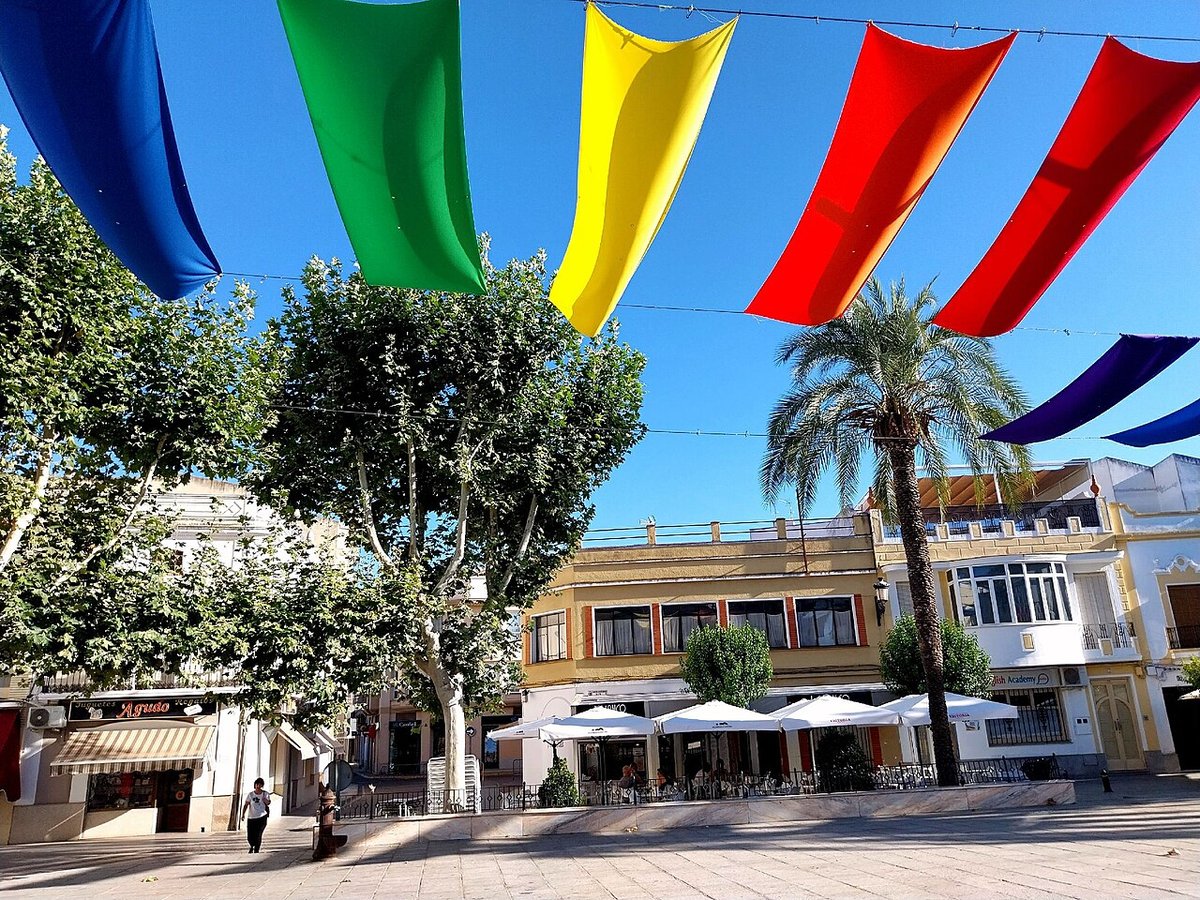
The streets are simple, with some stretches still unpaved. Houses are low, many of them whitewashed, with wooden gates that have seen many winters. A walk along Calle Mayor or near the fountain suggests that the layout of the village has barely shifted in decades.
At the centre stands the parish church of Nuestra Señora de la Asunción. It is a sober stone building, without decorative features that draw much attention. Its bell still rings clearly across the village. In a place this small, that sound continues to act as a shared clock.
Small traces of the agricultural past appear as you walk. There are old threshing floors where cereal was once processed, and paths that locals still call “del molino”, referring to mills that no longer exist. For years, many streets did not even have official names. Directions were practical instead: the one that goes down to the fields, the one that leads to the fountain.
Fields and open ground
Beyond the edge of the village, the landscape opens out into cereal plots and scattered olive groves. Wheat and barley change the colour of the land as the months pass. In summer, the fields turn a strong yellow. After the harvest, a more muted tone of stubble takes over much of the Vegas Bajas.
Holm oaks stand here and there, and low stone walls mark out small plots of land. There are no signposted walking routes or interpretive panels. The usual approach is simple: follow one of the agricultural tracks that leave the village and turn back when it feels right.
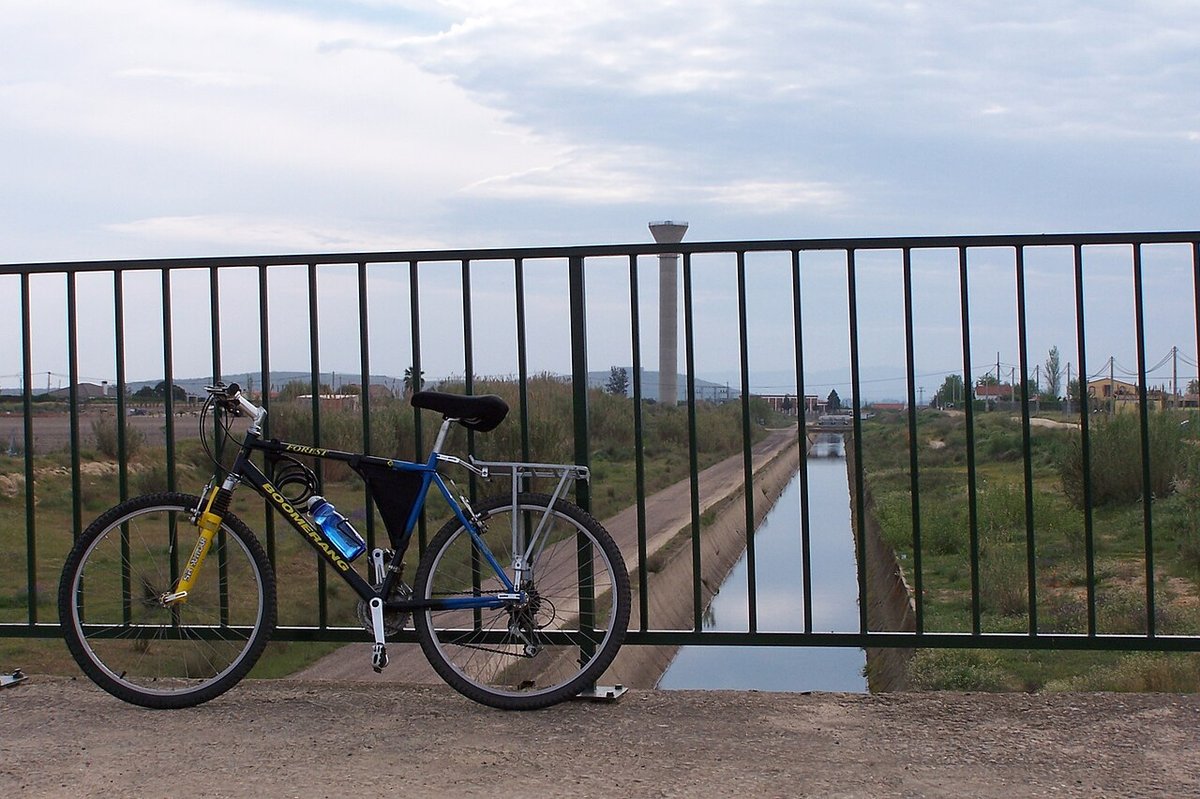
The terrain is mostly flat. What stands out is not dramatic scenery but small details. A kite circling slowly above the crops. Storks perched on metal structures near the Guadiana. After rain, puddles appear and attract small birds searching for food.
Walking through everyday life
El Carrascalejo can be explored quickly. An hour is enough to cross the built-up area and step out onto the surrounding paths. There are no major monuments that demand long stops. The interest lies in the ordinary.
A yard with a few chickens. A vegetable patch next to a house. Someone repairing a gate. These are the moments that define a walk here.
For those interested in birdlife, there is quiet activity in the area. White storks are easy to spot. Kestrels sometimes hover briefly in the air before dropping down. At certain times of year, a harrier may pass low over the fields. The village is not known as a birdwatching destination, but the open landscape makes it easy to notice movement.
Food and local traditions
Cooking in El Carrascalejo remains closely tied to what the surrounding land provides. Dishes are familiar across Extremadura and prepared without much fuss. Migas, made with day-old bread, appear regularly. Lamb stews reflect local livestock. During the season of the matanza, the traditional pig slaughter, different types of cured meats are produced. Vegetables often come from nearby kitchen gardens.
Festivities revolve mainly around the religious calendar. The patron saint celebrations dedicated to Santa María Magdalena bring back people who now live in Mérida or nearby villages. Processions pass through only a few streets, yet in a place this small that involves almost everyone.
Summer also keeps certain traditions alive that are linked to the matanza. Large pots are set up, smoke rises slowly, and neighbours gather to help or simply to talk.
When to visit
Spring and autumn are usually the most comfortable times to walk the surrounding tracks. Summer in this part of Badajoz can be intense, and at midday the village often falls quiet and nearly empty. Winter brings greener fields and visible agricultural activity.
El Carrascalejo does not try to be anything other than what it is: a very small village in the Tierra de Mérida – Vegas Bajas where life continues to revolve around the land. Passing through, it is easy to stop for a while, take a walk, and quickly understand how things work here. Sometimes that is enough.