Full Article
about Esparragalejo
Town near Mérida with a major Roman dam; known for irrigated farming and hydraulic heritage.
Hide article Read full article
Midday Quiet and White Streets
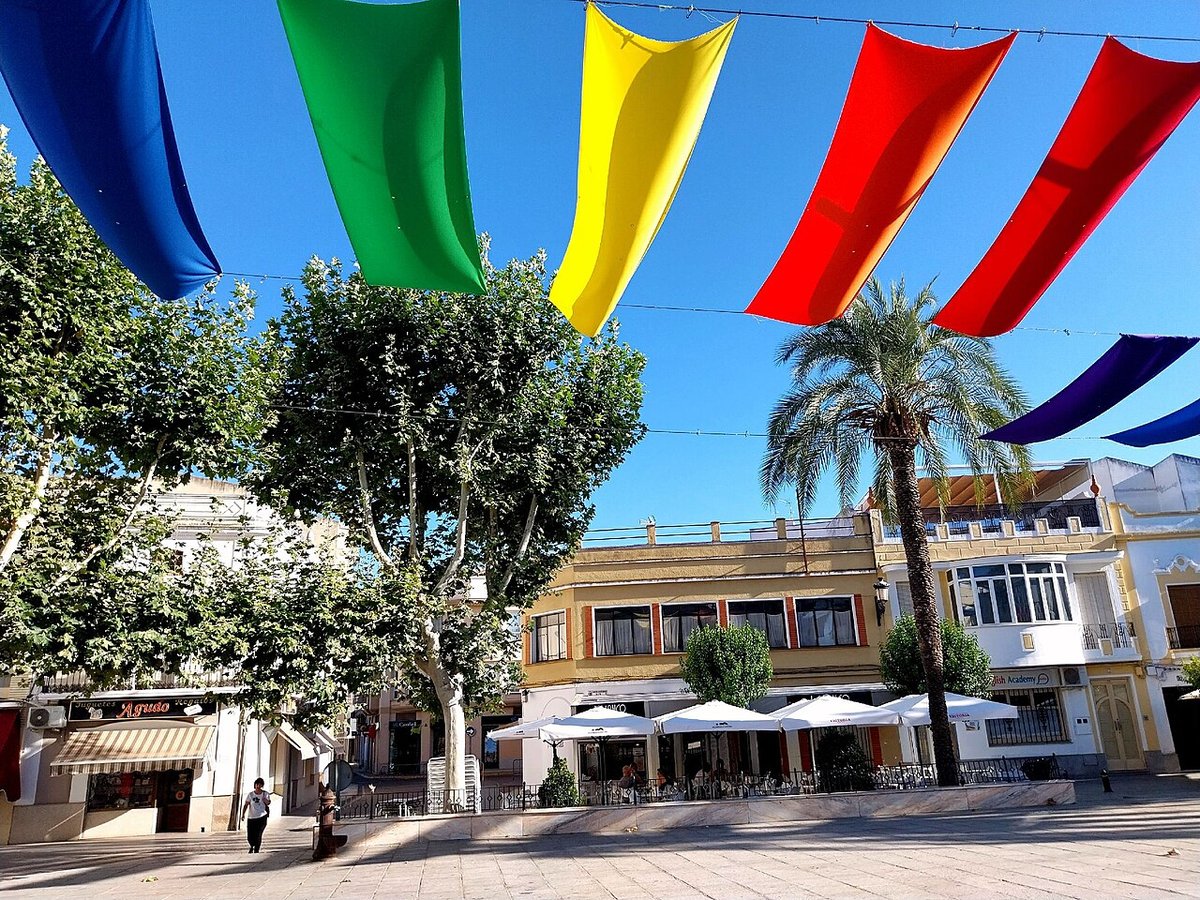
At midday, when the sun drops almost straight onto the whitewashed streets, Esparragalejo falls nearly silent. There is little more than the hum of an insect and the distant sound of a car passing along the road. The air carries the smell of warm dust and freshly applied limewash. In the square, at that hour, there is rarely any hurry: a neighbour sitting in the shade, a brief exchange of words, the sound of water from the fountain if it is running.
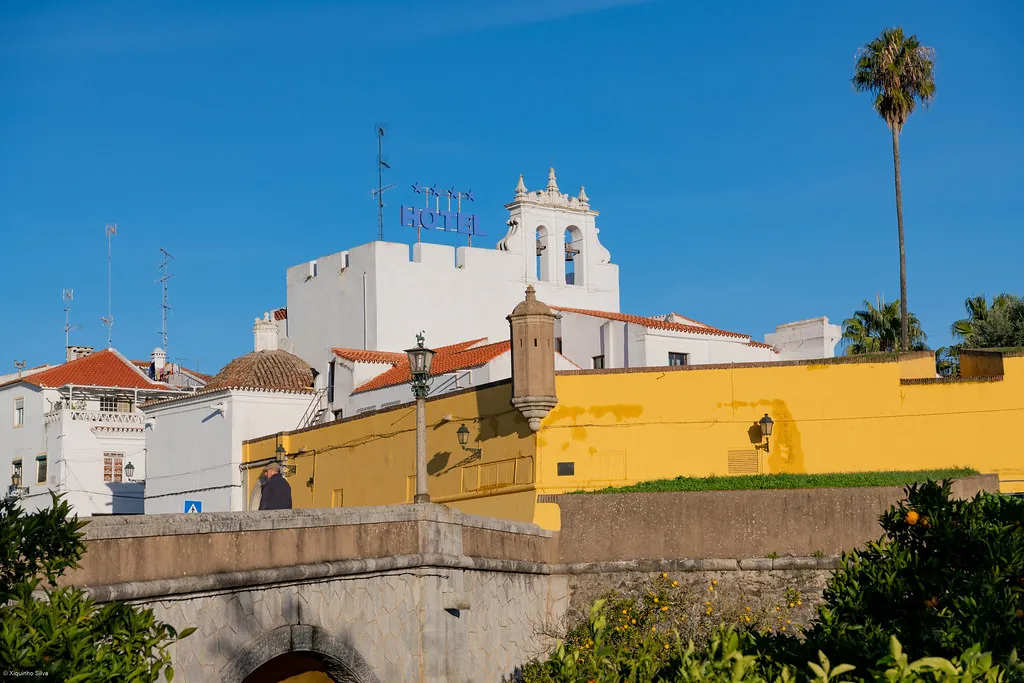
Tourism in Esparragalejo does not revolve around monuments or major attractions. It has more to do with slowing down and watching how a small village in the Vegas Bajas del Guadiana goes about its day. The centre is made up of short streets lined with low houses, their very white façades reflecting the summer light with intensity. Some still have stone bases and dark iron grilles.
On hot days, doors are often left slightly open. Inside, glimpses of interior courtyards appear, with potted plants where jasmine or geraniums bring a touch of colour against the walls. These are small, everyday details, easy to miss if moving too quickly.
The Church and Daily Life
The church of the Purísima Concepción is the most recognisable point in the village. Its tower can be seen from several streets and works almost as a reference point when walking without a plan. The interior is simple, with wooden pews and a calm atmosphere that shifts mainly on important dates in the religious calendar.
Around the church and the square, much of daily life gathers. At certain times, small groups form in doorways, and conversations pass from one pavement to the other. This is not a place designed for ticking off sights from a list. What stands out are the ordinary moments: the metallic rattle of a shutter being pulled up, the smell of food drifting out of a kitchen in the early afternoon.
Fields of the Vegas Bajas
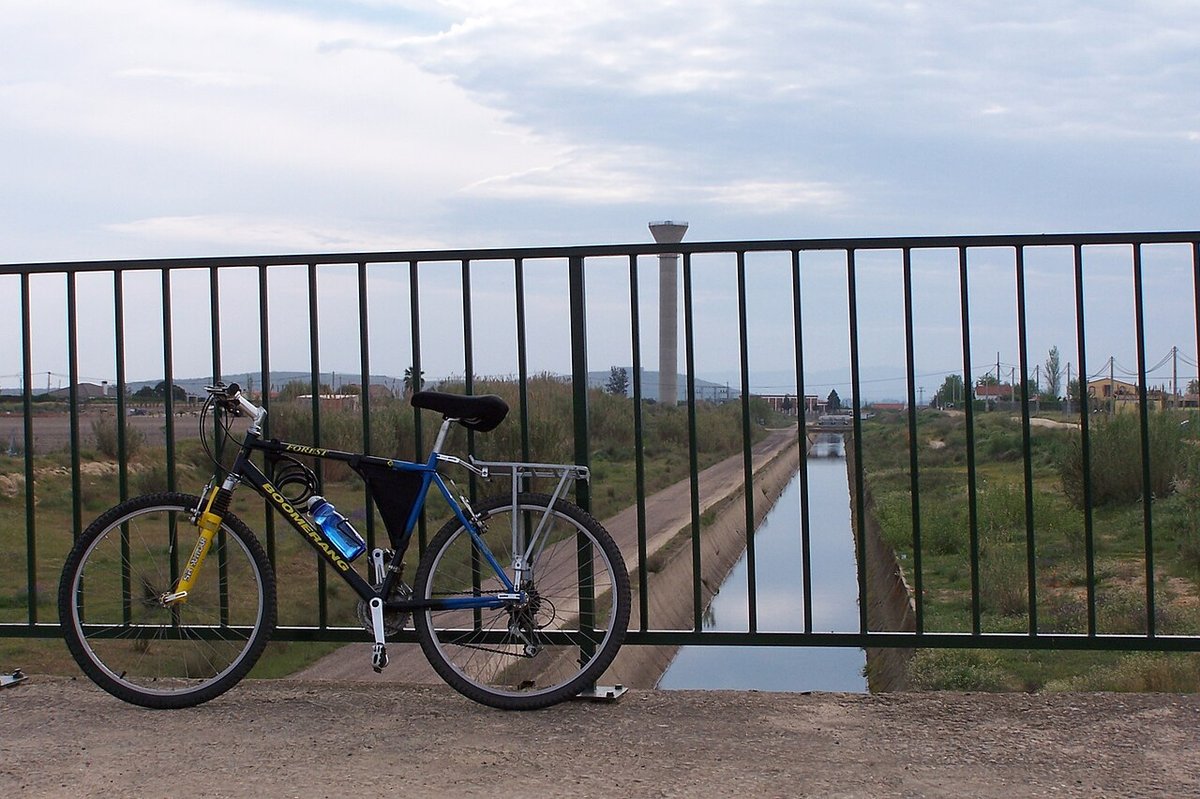
Step beyond the edge of the village and the landscape opens out quickly. This area is part of the Vegas Bajas del Guadiana, a flat agricultural region shaped by cultivation. The scenery changes with the seasons: plots of farmland, irrigation channels known as acequias, dirt tracks and wide horizons.
In spring, the green tones are more vivid and the air carries the scent of damp earth. In summer, the colours turn dry, with stubble fields and fine dust rising behind passing tractors. The shift is gradual but noticeable, and it defines the rhythm of the place.
Rural paths lead out from the outskirts and run between the fields. They are not marked routes, but they can be followed on foot or by bicycle with a bit of orientation. Shade is scarce, so carrying water becomes important when the heat builds. These tracks are less about reaching a particular point and more about moving through the open landscape that surrounds the village.
Birds, Water and the End of the Day
As the temperature begins to drop towards evening, the soundscape changes. Cicadas can be heard along the edges of the fields. A kestrel may hover motionless above a post. At certain times of year, bee-eaters cross the sky with their quick, distinctive flight.
The irrigation channels and the edges of cultivated land attract a fair amount of wildlife. Hoopoes can often be seen pecking at the ground, and frogs can be heard where there is water nearby. There is no need to go far from the village to notice these small shifts. They are part of the everyday surroundings rather than something set apart.
Even a short walk at this time of day can feel different from the stillness of midday. The light softens, movement returns, and the village connects more visibly with the fields around it.
Festivities and Local Rhythm
The calendar brings moments when Esparragalejo changes pace. Traditional celebrations linked to the patron saint are part of the year, along with summer gatherings when many residents who live elsewhere return for a few days. During these periods, the streets become busier and the square fills with a level of noise that is mostly absent in winter.
During Semana Santa, or Holy Week, there are also processions that pass through some of the main streets. They are modest compared to those in nearby cities such as Mérida or Badajoz, but they retain a distinctly local character. The scale may be smaller, yet the sense of continuity within the community remains clear.
A Short Walk to Understand It
Esparragalejo can be explored in a relatively short time. A simple walk might begin in the square, circle around the church, and continue along nearby streets until the houses gradually give way to open land. From there, the flat expanse of cultivated fields becomes visible.
In one or two hours, a clear sense of the place emerges: a small village closely tied to agriculture and shaped by its proximity to Mérida. There is no need for a detailed plan. The experience comes from observing how the built space transitions into farmland, and how daily life unfolds within that setting.
Before You Go
Esparragalejo lies just a few kilometres from Mérida, making it an easy journey by car over a short distance. Parking is generally straightforward in streets near the centre.
In summer, it is worth adjusting the timing of a visit. Early morning or the end of the afternoon tends to be more comfortable, as the sun is strong and the streets can be almost empty at midday. After rainfall, some of the dirt tracks around the village may become quite muddy, so suitable footwear is advisable if planning to walk out into the fields.
Esparragalejo does not try to impress with grand landmarks. Its character is found in quieter things: the rhythm of the day, the changing fields, and the way life continues at a steady, unhurried pace.