Full Article
about La Garrovilla
A town in the Vegas Bajas near Mérida; farming tradition and on the Vía de la Plata route.
Hide article Read full article
Arrival Between Poplars and Tracks
There is a brief moment, just before the train pulls into the station, when the church tower appears between the poplar trees and it is easy to wonder if this is a real place or the set of a film. Then you step down onto the platform and the impression settles. La Garrovilla is firmly grounded. Around 2,300 residents, flat streets, and a station that feels larger than expected for a town of this size.
The railway line towards Lisbon passes through here, and for years there was talk of the high-speed AVE. It leaves a sense that this is a place people pass through on their way somewhere else. That idea lingers, quietly shaping how the town feels at first glance.
Learning to See the Landscape
The first encounter does not always reveal much. In winter, many come for the cranes at the embalse de Los Canchales, a reservoir just outside the town. The expectation is clear: arrive early, camera ready, and watch the sky fill with birds. Sometimes, though, only a handful appear. A few photos, and it is tempting to move on.
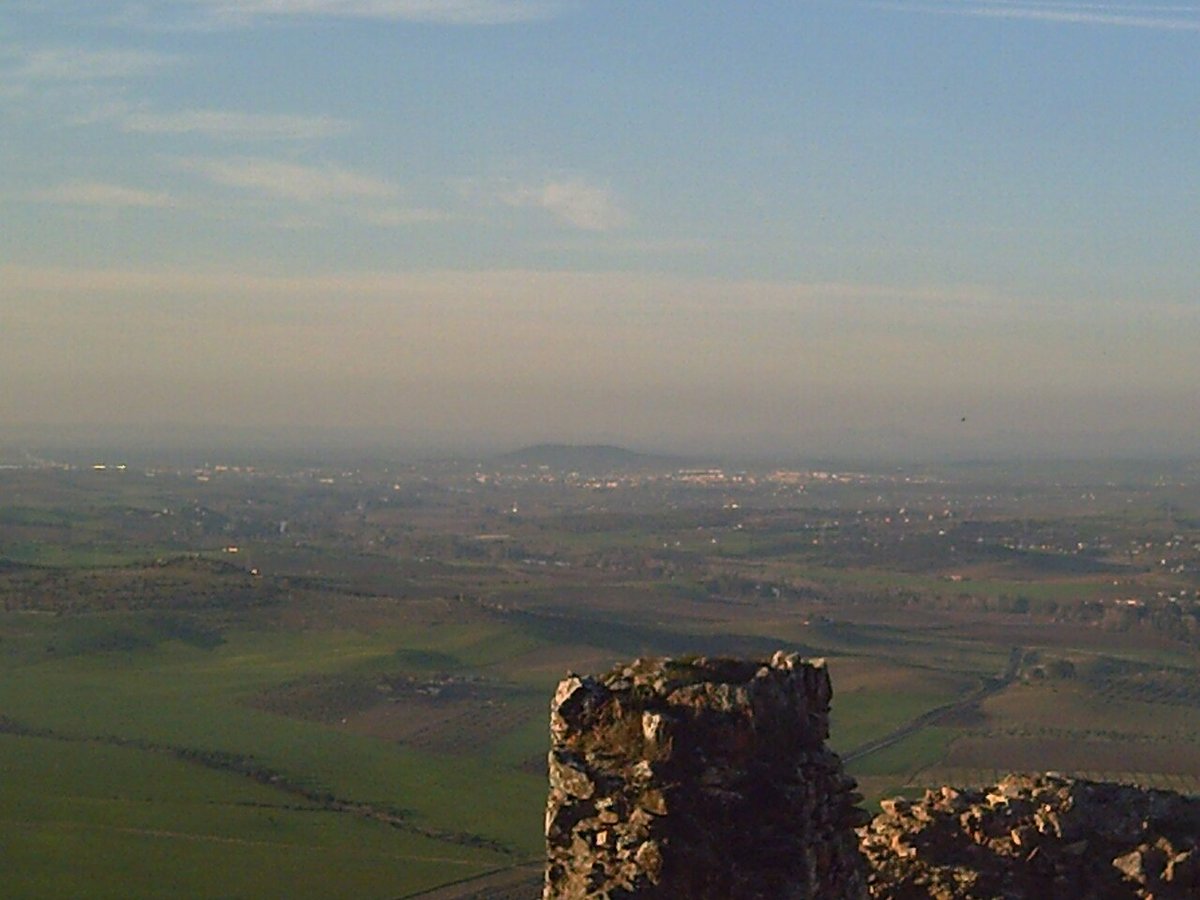
The key is perspective. La Garrovilla does not immediately impress from within its streets. The view opens up when you turn towards the vega, the fertile lowland plain, and look beyond the town itself. There, between olive groves, irrigated plots and almond trees, the character of the Vegas Bajas begins to emerge.
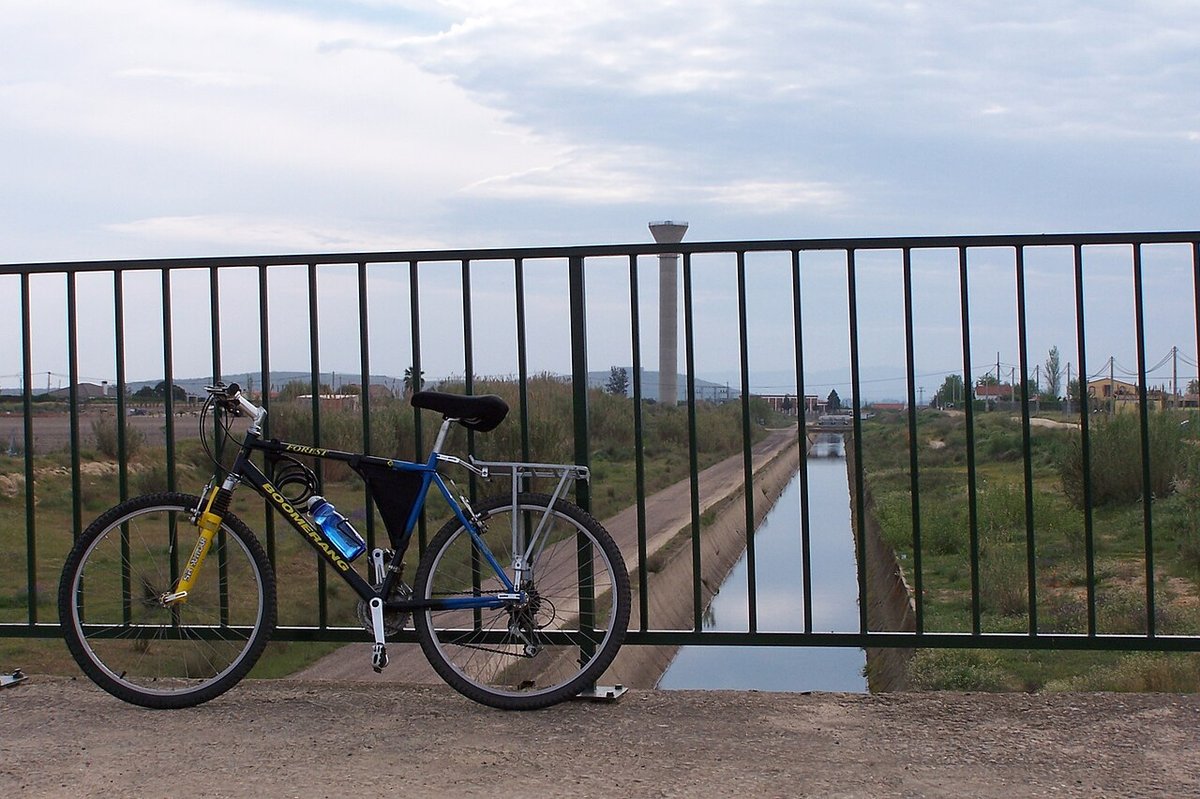
Water from the Guadiana river and the irrigation canals shapes everything. It changes the colour of the fields and sets the rhythm of the year. What looks plain at first becomes more nuanced the longer you look.
And then there are the storks. They are everywhere. On rooftops, perched on church structures, and most strikingly on the electricity pylons that cross the vega. Long lines of poles carry enormous nests, as if someone had carefully placed crowns of branches on each one. These birds are meant to migrate, yet some seem so settled that they might as well belong permanently to the town.
A Walk Through the Centre
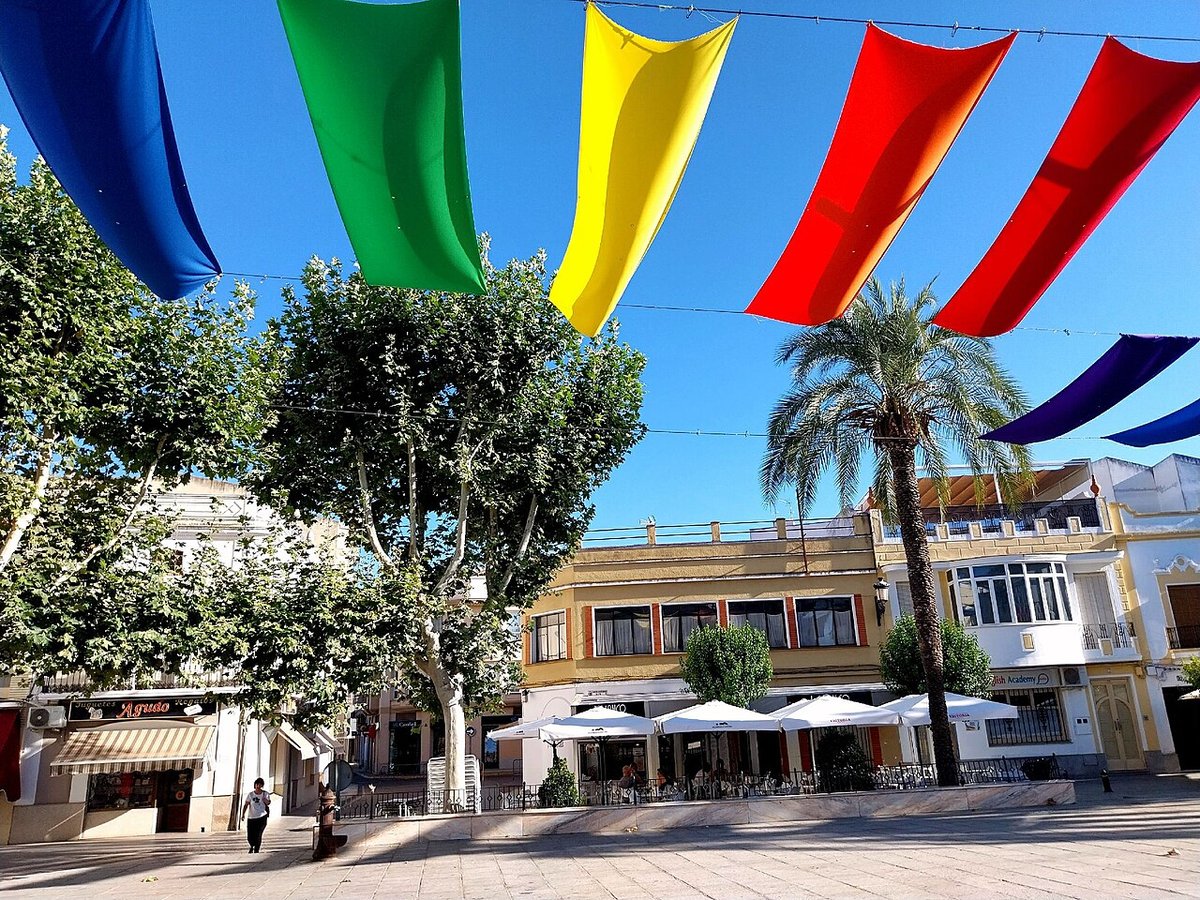
The centre of La Garrovilla is easy to cover on foot. It begins in the main square, where the town hall stands, and from there several short streets lead off in different directions, often looping back in a way that feels familiar within minutes.
Calle Real leads towards the Iglesia de Nuestra Señora de la Asunción. From the outside, the building is restrained, even austere. Inside, though, it holds a detail that surprises: a 16th-century marble tabernacle, finely carved and delicate in its workmanship. It is the kind of feature that feels unexpected in a small town.
Nearby stands the clock tower, still marking the hours with a certain presence. From the more open edges of the town, looking out towards the vega, the wider setting becomes clear. This part of Badajoz is defined by flat land, fields stretching into the distance, and straight roads linking nearby towns that sit close to one another across the plain.
Traditions Marked on the Calendar
Ask what defines the year here and the answer often comes back to local celebrations.
In February, San Blas is usually observed, with the tradition of blessing small loaves of bread and a strong presence of foods linked to the matanza, the traditional pig slaughter that produces a variety of cured meats and sausages. Shortly afterwards comes carnival, modest and homemade, with costumes put together from whatever is at hand and a clear sense of humour.
The feria dedicated to the Virgen de la Caridad takes place around the time of Semana Santa, the Holy Week period leading up to Easter. In May, San Isidro brings people out into the countryside for the day. By September, the Cristo festivities mark the close of summer, with evening gatherings and activity in the streets.
Winter brings attention back to the cranes. Some years they gather in large numbers at the reservoir, other times fewer appear. The scene remains similar regardless: families walking towards the water, sandwiches packed in bags, binoculars hanging from necks, and someone pointing up at the sky while others debate whether the birds overhead are cranes or something else entirely.
When to Go and Getting There
Spring suits the vega particularly well. The fields turn green and the landscape shifts noticeably compared with the dry tones of summer. When the heat intensifies, the flatness becomes more apparent and the middle hours of the day can feel long.
La Garrovilla lies very close to Mérida, the regional capital. By car, the journey is short, following the roads that cross the Vegas Bajas. There is also a train station on the outskirts of the town. From there, the centre is within walking distance, a straightforward stroll, though it is worth checking train times in advance.
With a few hours to spare, it is enough to step into the church, walk through the central streets, and then head out towards the surroundings of the embalse de Los Canchales or along the paths that lead into the vega. That gives a clear sense of the place.
La Garrovilla works well as a brief stop near Mérida, the kind that shows how life unfolds in this part of Extremadura without embellishment. A walk, a look at the fields, a pause by the water, and then the journey continues. Sometimes that is exactly what is needed.