Full Article
about La Roca de la Sierra
A town of dehesas and storks, known for its church and Franciscan convent in a well-preserved natural setting.
Hide article Read full article
A Small Town Shaped by the Land
La Roca de la Sierra sits in the comarca of Tierra de Mérida – Vegas Bajas, not far from the regional capital of Extremadura. The setting is typical of this part of western Spain, where the landscape shifts between dehesa, cultivated fields and small watercourses that appear and disappear with the seasons.
The town has around one and a half thousand inhabitants and retains a structure closely tied to rural life. Agriculture and livestock farming remain central, with dehesa estates playing a key role in how the surrounding land is used. Daily life still follows rhythms that are closely linked to the countryside.
The terrain around La Roca de la Sierra is gently undulating rather than dramatic. Streams and seasonal channels connected to the Almonte basin run through the area, and these have historically shaped how the land is worked. Farming and grazing patterns here are not random but adapted to the availability of water and the natural contours of the land.
San Bartolomé and the Shape of the Old Town
The most prominent building in the town centre is the parish church of San Bartolomé. Its origins are generally placed in the 16th century, although later alterations have changed parts of its appearance. The tower stands out for its solid, restrained form and acts as a reference point from various parts of the town.
Inside, the church reflects the simplicity common in many rural parishes across Extremadura. It is less about grandeur and more about continuity. For generations, it has been the setting for the events that mark the local calendar, from baptisms to the celebrations dedicated to the town’s patron saint.
Around the church, the older part of La Roca de la Sierra takes shape. The streets are short and practical, lined with whitewashed houses whose façades show little ornamentation. This is architecture shaped by function rather than display. Iron window grilles and thick walls are not decorative choices but responses to the intense summer heat, helping to keep interiors cool.
The layout feels coherent and unforced, with everything arranged at a human scale. It is a place designed for living and working, not for spectacle.
The Dehesa Landscape
Beyond the built-up area, the defining feature of the municipality comes into view: the dehesa. This traditional landscape, found across parts of Extremadura, consists of scattered holm oaks, open pasture and enclosed plots of land. It has been managed for centuries, particularly for livestock such as pigs and sheep.
The dehesa is not untouched nature but a carefully maintained environment. Its balance allows grazing, tree cover and agricultural use to coexist. In La Roca de la Sierra, this system continues to shape both the economy and the appearance of the land.
Scattered across the countryside are structures linked to this way of life. Small stone huts, traditional enclosures and older agricultural buildings can still be found in different states of use. Some remain active, while others stand as reminders of earlier working practices.
The tracks that cross these estates tend to be long and flat, designed with agricultural movement in mind rather than leisure walking. Even so, they offer a clear view of how the territory is organised. Large plots, gated entrances and stretches of rural track connect different farming areas, revealing a landscape structured by use rather than by tourism.
Open Skies and Birdlife
The openness of the dehesa makes it a favourable environment for birdlife, especially birds of prey and species adapted to wide, unobstructed spaces. It is common to see them gliding overhead, particularly during the milder months.
For those interested in birdwatching, the rural paths leading away from the town provide suitable vantage points. As the landscape opens up, noise fades and visibility improves. The experience is quiet and observational rather than curated.
Respect for the working landscape is important here. These are active estates, not designated parks, so moving carefully and closing any gates along the way is part of being in the area.
Food Rooted in the Countryside
Local food in La Roca de la Sierra reflects the same environment that surrounds it. The Iberian pig holds a central place, especially during the months of the matanza, the traditional home slaughter that still takes place in some households. This practice is part of a wider rural culture, where families prepare and preserve meat for the year ahead.
Cheeses made from sheep’s or goat’s milk are also common, alongside honey produced in local apiaries. These products come directly from the surrounding land and its long-established uses.
Vegetables and legumes grown in family plots complete the picture. The cuisine here is straightforward and tied to the agricultural calendar, shaped more by what is available and stored than by any attempt to cater to visitors. It is a domestic, seasonal approach to food rather than a restaurant-driven one.
Festivities and the Local Calendar
The main celebration in La Roca de la Sierra is dedicated to San Bartolomé, the town’s patron saint, and takes place in August. This is when many residents who live elsewhere return, and the population temporarily increases. For a few days, the atmosphere becomes more lively, with the town regaining a fuller sense of activity.
Semana Santa also has its place in the local calendar. Processions move through the streets of the centre, following routes that have been repeated over time. These events are modest in scale but closely tied to local identity.
In spring, romerías are often held. These are traditional outings, usually involving a visit to a nearby hermitage or natural spot, combining religious devotion with a day spent outdoors. As in many parts of Extremadura, these gatherings blur the line between ritual and social occasion.
A Short Walk Through La Roca de la Sierra
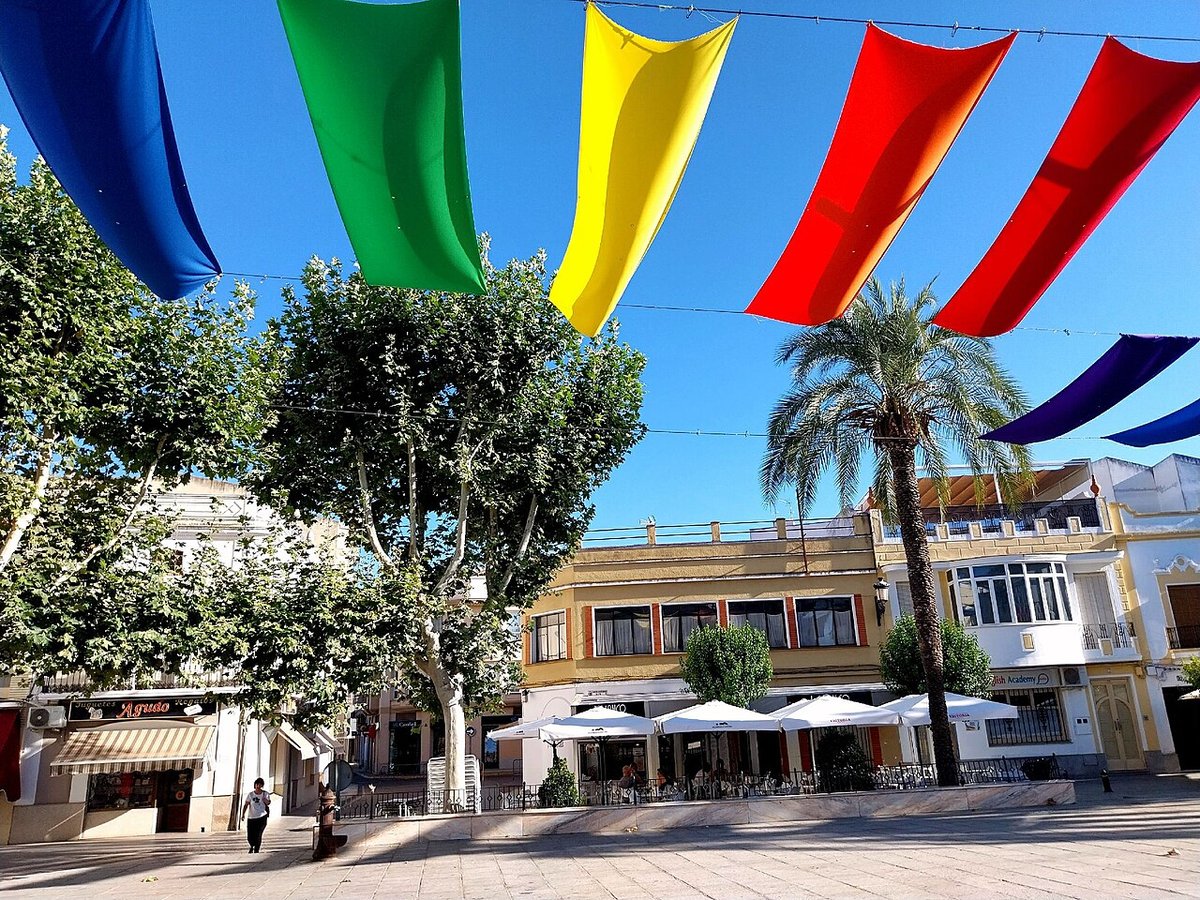
The town can be explored easily on foot. A simple walk might begin in the main square and continue towards the parish church and the surrounding streets. This central area gives a clear sense of how the town is organised and lived in.
From there, stepping out towards the paths that edge the urban area helps place the town in its wider setting. Within a few minutes, the built environment gives way to open land, and the presence of the dehesa becomes clear.
This transition is key to understanding La Roca de la Sierra. It is a small town whose identity is inseparable from its surroundings, shaped over generations by agricultural work and a close relationship with the land.