Full Article
about Lobón
Known as the Balcony of the Vegas Bajas for its views over the Guadiana valley; a stop-off town with history.
Hide article Read full article
Between Two Cities, Still Its Own Place
Lobón is one of those villages many people notice only in passing on the road between Badajoz and Mérida. It often works as a brief stop, the sort of place where you stretch your legs and then realise that, just a couple of streets away, there is a proper viewpoint over the Guadiana. What looks like a quick pause can easily turn into a longer stay.
The name suggests wolves, although none have been seen here for centuries. The municipal coat of arms still features them, as if reluctant to move on from that older story.
Set in the comarca of Tierra de Mérida – Vegas Bajas, Lobón sits close to the Guadiana and within easy reach of two larger cities. By car, both Badajoz and Mérida are only a short journey away, which makes the village a convenient and quieter base for exploring the area.
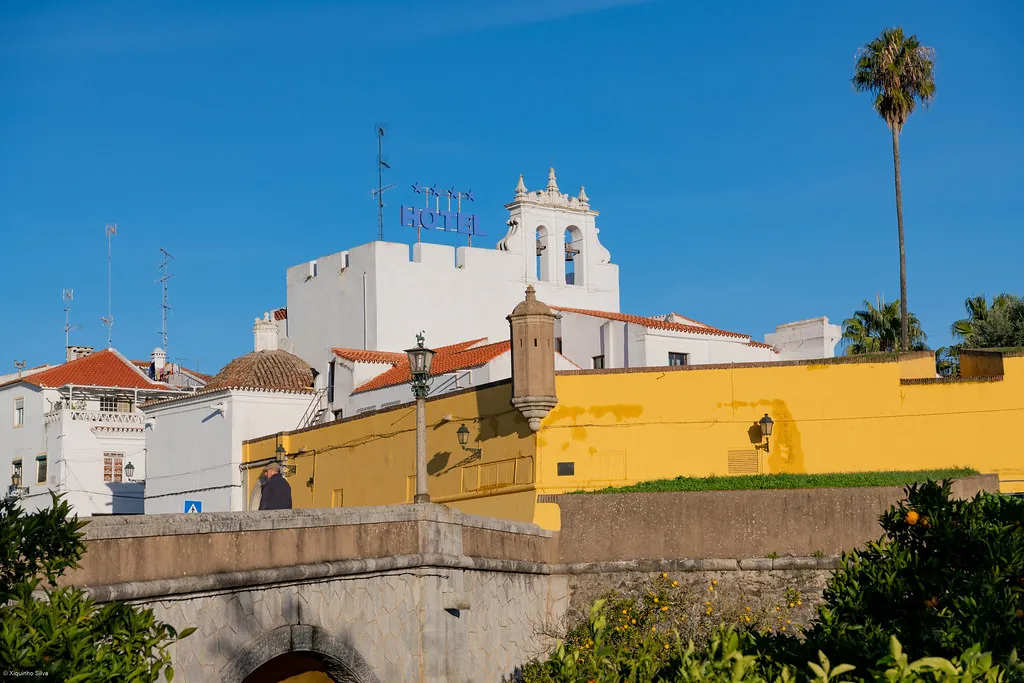
Even so, reducing Lobón to a practical stop would miss the point. It moves at its own pace, without much concern for appearances. Low houses line streets where neighbours still gather outside in the evening, and the small centre can be crossed in minutes. Life here unfolds in a way that feels steady and familiar.
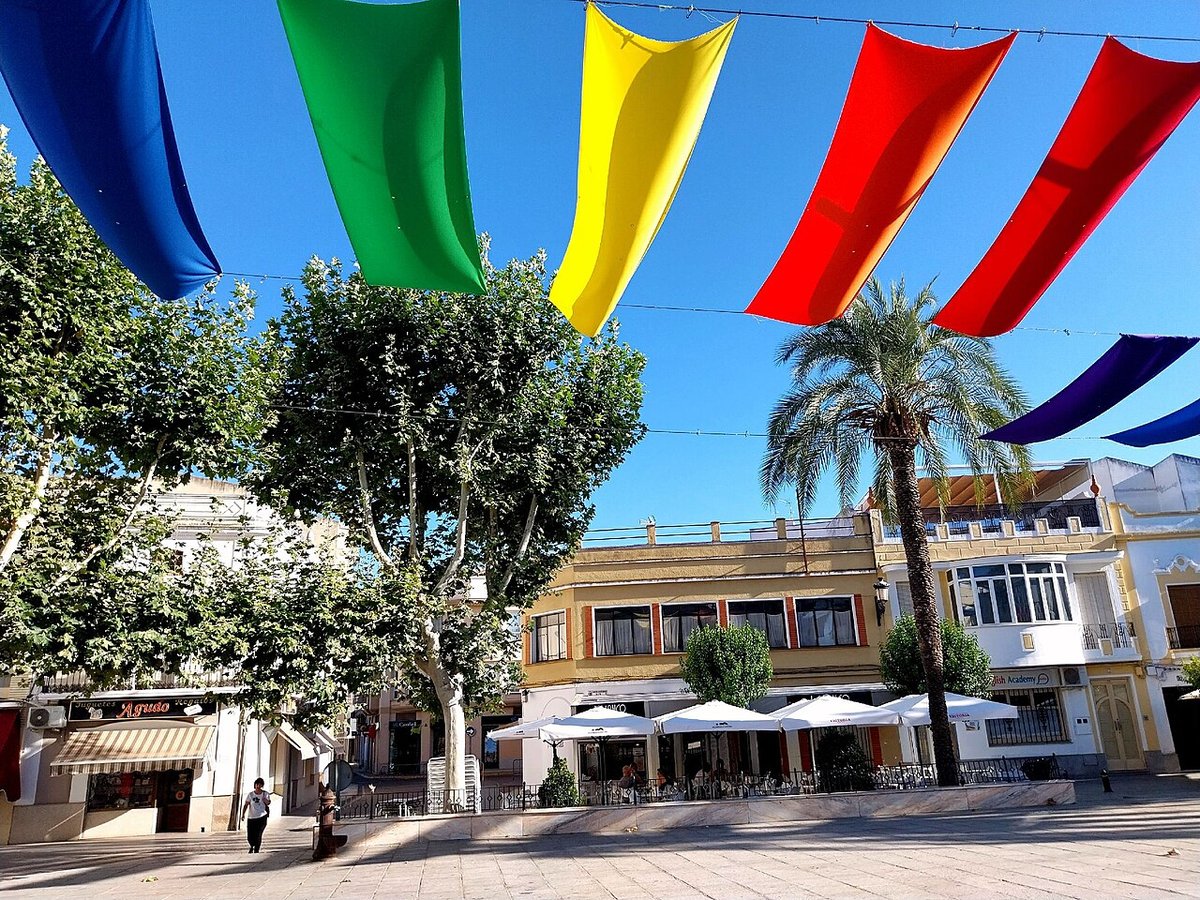
In August, the rhythm becomes more visible. The heat pushes people into the shade, and conversations drift across the main square about the organisation of the Asunción festivities, including debates over whether the procession should take place before or after mass. It is an ordinary scene, but it reveals how the village works.
The Guadiana from Above
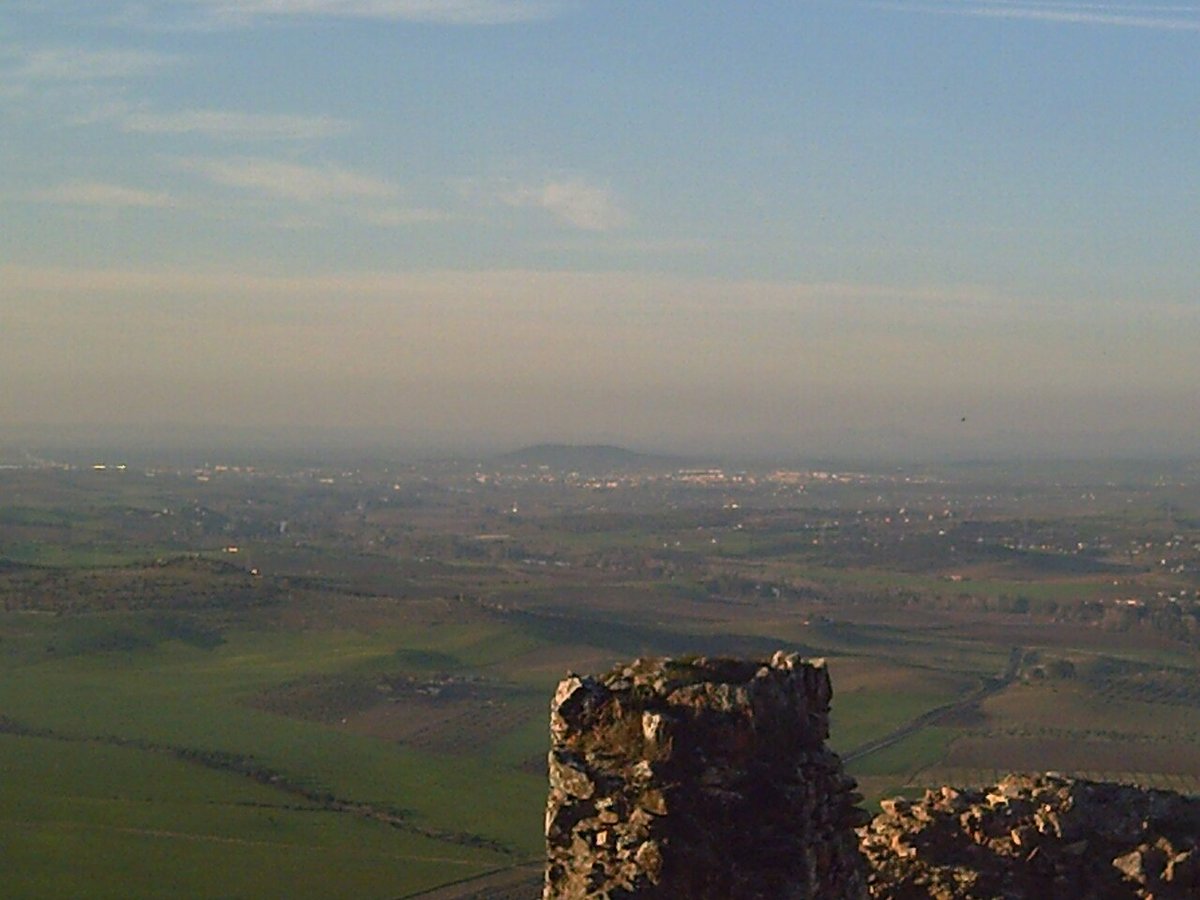
One of Lobón’s best-known spots is the viewpoint often referred to as the Balcón de Extremadura. The name may sound ambitious, but it makes sense once you look out across the landscape.
From here, the Guadiana winds its way through fertile vegas and cultivated plots that shift in colour with the seasons. This is not a dramatic setting of steep mountains or sharp cliffs. Instead, it offers something characteristic of Extremadura: open space, quiet, and a horizon that seems to stretch without end.
Reaching the viewpoint is straightforward from the village centre. It is more of a gentle walk than a planned excursion, the kind where the journey itself is part of the experience, with pauses to take in the river and the surrounding land.
August and the Asunción Festivities
If there is a time when Lobón feels especially alive, it is August. The fiestas of the Asunción bring together much of the village’s social life: religious processions, music in the evenings, and the return of people who spend the rest of the year living elsewhere.
The atmosphere will be familiar to anyone who has experienced summer in a Spanish village. Chairs appear outside front doors, families gather once the sun begins to drop, and conversations flow easily from one house to the next. Within a short time, connections between neighbours become clear, who is related to whom, which family lived where.
Food also plays its part. When a caldereta appears on a long shared table, it is best not to hesitate. This traditional dish, made with lamb, paprika and slow cooking over hours, encourages everyone to sit down and take their time.
Walking the Surroundings
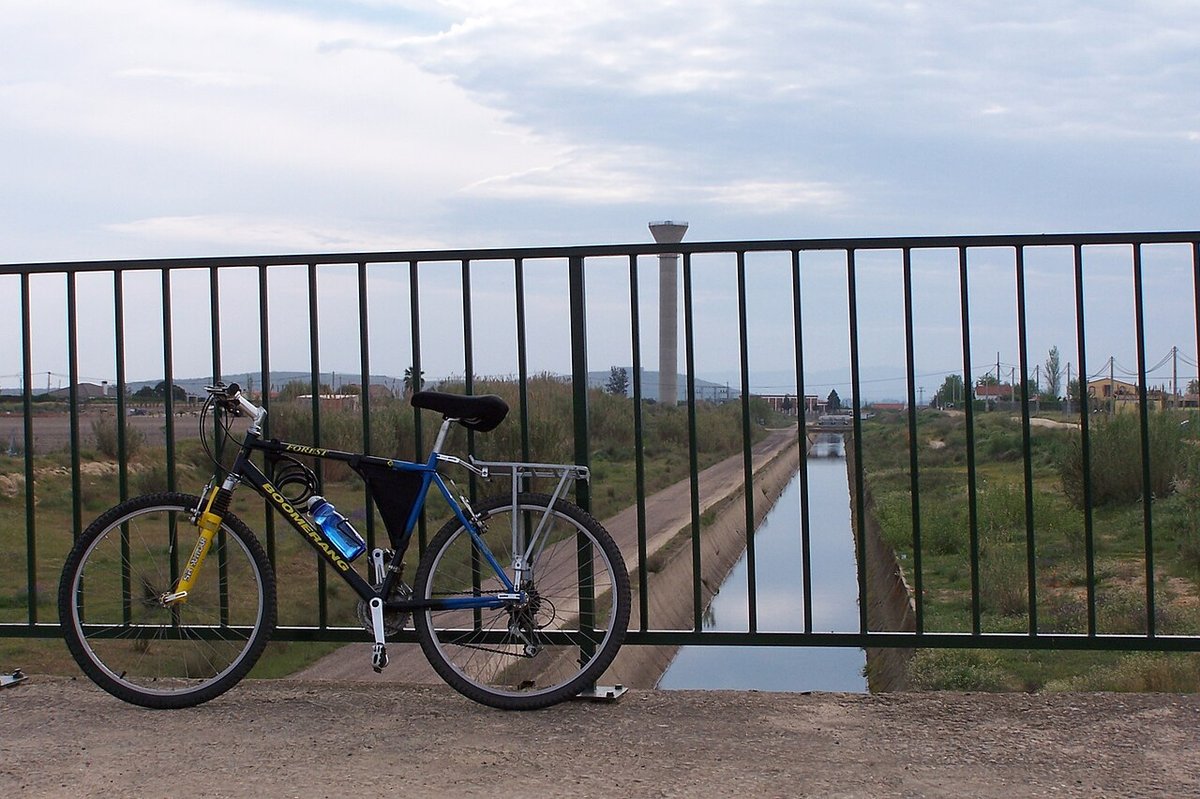
The landscape around Lobón is flat and open, well suited to unhurried walks. Fields, olive groves and agricultural tracks shape the area, and locals use these paths for walking or cycling.
Some routes follow older milling areas near smaller watercourses that eventually feed into the Guadiana. These are not heavily signposted trails with clear markers at every turn. Dirt tracks are the norm, and it is common to ask for directions or retrace steps if needed.
There are also gentle rises in the terrain nearby. They are not mountains, but low hills that offer a clear view of the valley. From these points, it becomes easier to understand how the landscape fits together: the river below, cultivated vegas spreading outwards, and villages scattered across the plain.
An Old Landscape Beneath a Quiet Surface
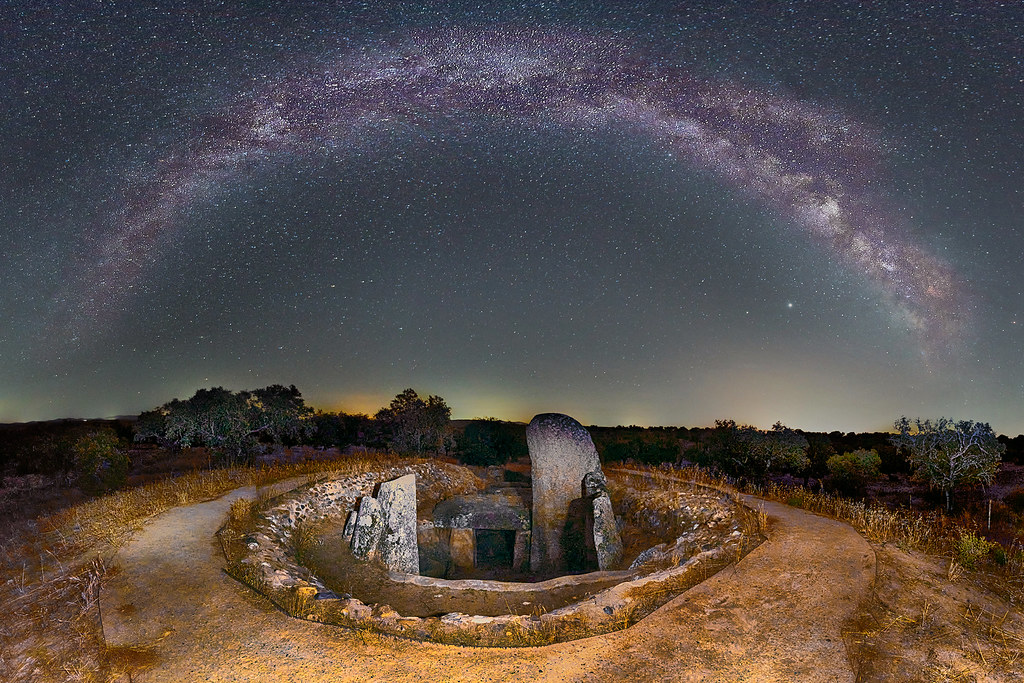
Although Lobón appears today as a calm agricultural village, the surrounding area has a long history. Archaeological finds point to ancient settlements linked to the Tartessian world, followed later by Roman presence along the Guadiana valley.
This is not a place defined by large, curated ruins or major visitor sites. Instead, history is more subtle, appearing in the form of modest archaeological remains or references in regional studies.
Within the village itself, the parish church reflects the passage of time through its mix of styles. As in many towns across Extremadura, different periods have left their mark through successive modifications over the centuries.
How Lobón Fits into a Journey
Lobón is not a destination for ticking off a list of monuments. It works better as a quiet pause between Mérida and Badajoz, or as a place to spend a slow morning.
A short walk through the village, a visit to the Guadiana viewpoint, and some time wandering the surrounding paths is often enough. Then the journey continues.
It is the kind of place that does not try to draw attention. Yet staying a little longer than planned often makes the experience clearer.